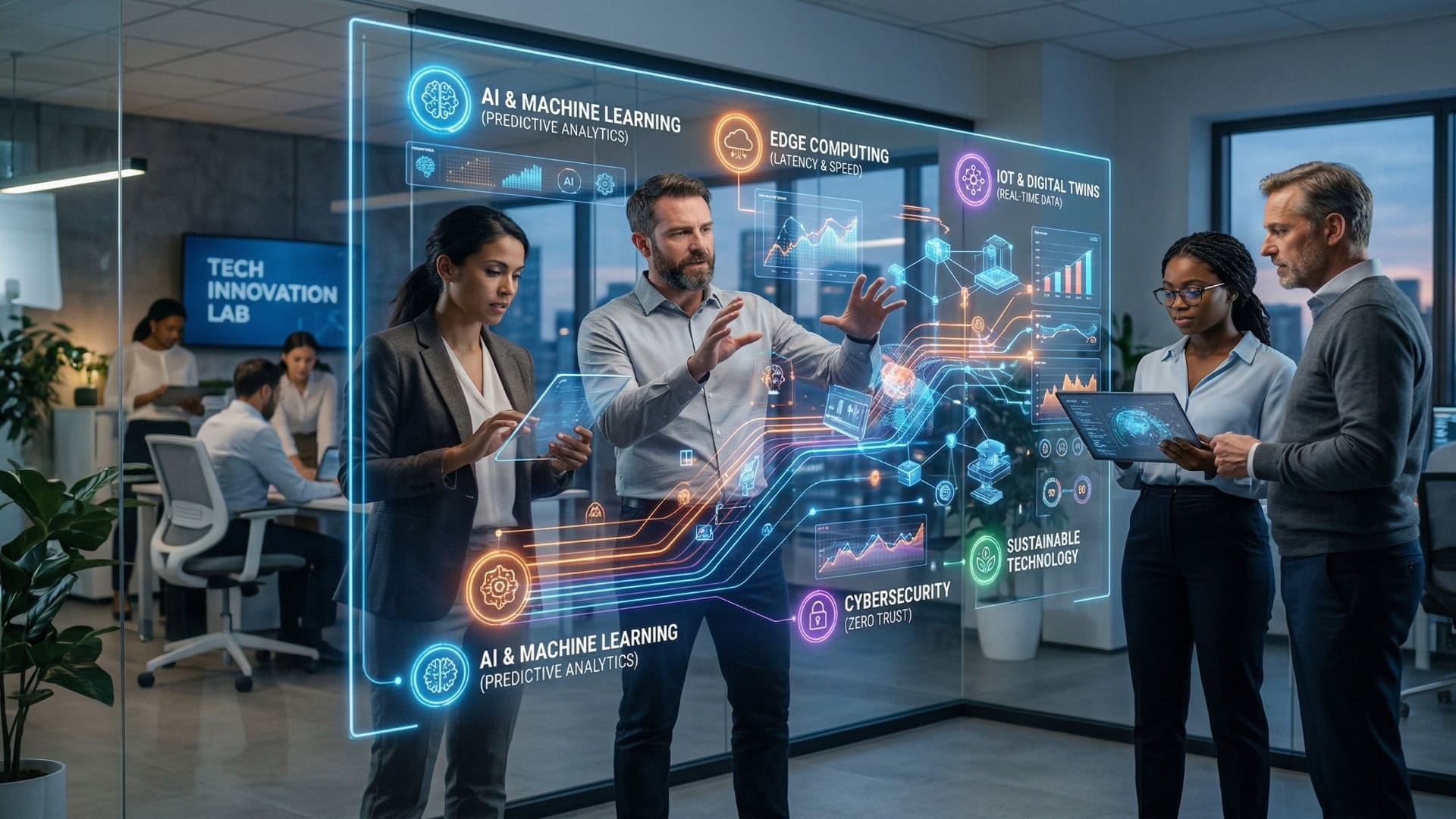
The business landscape is undergoing a profound shift. The days when “digital transformation” was just a buzzword are long gone; today, it is the fundamental baseline for survival and growth. As we navigate an increasingly interconnected global economy, the technology trends transforming businesses are doing more than just upgrading legacy systems—they are entirely rewriting how organizations operate, serve their customers, and empower their workforce.
Whether you are a local startup or a multinational enterprise, understanding these shifts is crucial. Technology is no longer merely a department within a company; it is the central nervous system of the modern organization. In this comprehensive guide, we will explore the pivotal tech trends driving business innovation, examine how they foster more inclusive and accessible work environments, and provide actionable insights to help your organization stay ahead of the curve.
1. The Mainstreaming of Artificial Intelligence and Generative AI
Artificial Intelligence (AI) has transitioned from the realm of science fiction into the boardroom. However, the current transformation is largely driven by Generative AI and advanced machine learning models. These tools are democratizing access to complex data analysis, content creation, and strategic planning.
Redefining Operational Efficiency
AI is taking over repetitive, time-consuming tasks, allowing human employees to focus on high-value, creative, and strategic initiatives. This shift is not about replacing people; it is about augmenting human capabilities. By automating routine workflows, companies can reduce burnout and create a more engaging, accessible workplace for everyone.
- Customer Experience (CX): AI-powered chatbots and virtual assistants provide 24/7, multilingual support, ensuring that customer service is accessible to a global audience.
- Predictive Analytics: Businesses use machine learning to forecast market trends, anticipate supply chain disruptions, and personalize marketing efforts at scale.
- Content Generation: From drafting emails to writing code, Generative AI tools are accelerating production timelines across marketing, sales, and software development teams.
2. The Rise of Edge Computing and Next-Gen Cloud Infrastructure
While cloud computing has been a staple for over a decade, the sheer volume of data generated by modern businesses requires a new approach. Enter Edge Computing.
Processing Data Where It Lives
Edge computing involves processing data closer to its source (the “edge” of the network) rather than sending it all to a centralized data center. This drastically reduces latency, saves bandwidth, and improves real-time decision-making capabilities.
-
Manufacturing and IoT: Factory sensors can detect machinery faults instantly, preventing costly downtime without waiting for a cloud server’s response.
-
Retail: Smart shelves and localized inventory systems process data in-store, offering real-time stock updates and personalized shopper experiences.
-
Hybrid Work Models: Upgraded cloud infrastructures support seamless, flexible work environments. This flexibility is a cornerstone of inclusive hiring practices, allowing companies to recruit talent regardless of their geographic location or physical mobility.
For a deeper dive into how cloud architecture is evolving, Gartner offers excellent research on the transition toward distributed cloud systems.
3. Zero Trust Cybersecurity in a Boundaryless Workplace
As companies adopt decentralized technologies and remote workforces, the traditional “castle and moat” approach to cybersecurity is obsolete. The modern imperative is the Zero Trust Architecture (ZTA).
“Never Trust, Always Verify”
The core philosophy of Zero Trust is exactly what it sounds like: no user, device, or application is trusted by default, regardless of whether they are inside or outside the corporate network.
- Continuous Authentication: Systems require continuous verification using multi-factor authentication (MFA) and biometrics, ensuring that data is accessed only by authorized personnel.
- Micro-segmentation: Networks are divided into smaller, secure zones. If a breach occurs, the lateral movement of ransomware or malware is severely restricted.
- Empowering Employees safely: A robust security framework actually enables greater freedom. When IT teams implement secure, accessible identity management systems, employees can work securely from anywhere, fostering a culture of trust and flexibility.
4. The Internet of Things (IoT) and Digital Twins
The Internet of Things (IoT) connects physical objects to the digital world, providing unprecedented visibility into business operations. When combined with Digital Twins—virtual replicas of physical systems—the potential for optimization is staggering.
Bridging the Physical and Digital Worlds
A digital twin allows businesses to run simulations, test variables, and predict outcomes without risking physical assets.
- Supply Chain Resilience: Logistics companies use IoT trackers to monitor the real-time location, temperature, and condition of goods, ensuring product integrity from warehouse to delivery.
- Urban Planning and Smart Buildings: Facilities managers use IoT to monitor energy usage, air quality, and space utilization. This not only lowers operational costs but ensures workspaces are comfortable, safe, and optimally designed for all physical abilities.
- Healthcare: Hospitals utilize digital twins of their facilities to optimize patient flow and resource allocation, ultimately improving the quality of care.
5. Sustainable Technology and the Green Tech Revolution
Technology is not just transforming how businesses make money; it is transforming their impact on the planet. Sustainable technology is rapidly moving from a corporate social responsibility (CSR) checklist item to a core business strategy.
Driving ESG (Environmental, Social, and Governance) Goals
Consumers, investors, and regulatory bodies are demanding transparency and action regarding environmental impact. Businesses are leveraging tech to track, report, and reduce their carbon footprints.
-
Carbon Accounting Software: Platforms that track Scope 1, 2, and 3 emissions help companies set and meet net-zero targets.
-
Circular Economy Tech: Innovations in material science and supply chain tracking enable companies to design products for reuse, recycling, and longevity.
-
Energy-Efficient IT: The shift toward renewable-powered data centers and energy-efficient coding practices reduces the environmental toll of the digital infrastructure itself.
6. Spatial Computing and Augmented Reality (AR)
With the introduction of advanced mixed-reality headsets and spatial computing platforms, the line between digital screens and physical environments is blurring. AR and Virtual Reality (VR) are moving beyond gaming and into enterprise applications.
Immersive Training and Collaboration
Spatial computing provides a more intuitive way for people to interact with digital information.
-
Accessible Training Programs: High-risk industries (like aviation, medicine, or heavy manufacturing) use VR to safely train employees. These immersive environments accommodate various learning styles, making technical training more inclusive and effective.
-
Remote Collaboration: Teams dispersed globally can collaborate in shared virtual spaces, manipulating 3D models of products or architectural designs as if they were in the same room.
-
Retail and E-commerce: AR applications allow consumers to visualize furniture in their living rooms or “try on” clothing virtually, significantly reducing return rates and enhancing the buyer’s journey.
7. Hyperautomation and Orchestrated Workflows
Hyperautomation is the concept that anything that can be automated in an organization should be automated. It is not reliant on a single tool but rather the orchestration of multiple technologies—like Robotic Process Automation (RPA), AI, and low-code/no-code platforms.
Democratizing Innovation
One of the most exciting aspects of hyperautomation is the rise of low-code and no-code platforms. These tools empower employees who do not have formal computer science backgrounds to build custom applications and automate their own workflows.
- Citizen Developers: By giving front-line workers the tools to solve their own software bottlenecks, companies foster a highly inclusive culture of innovation.
- Streamlined HR and Onboarding: Automating the paperwork and logistical steps of employee onboarding allows HR professionals to focus on the human element—building relationships and ensuring new hires feel welcome and supported.
- Agile Responses: In a volatile market, the ability to rapidly redesign automated processes gives businesses the agility needed to pivot their strategies overnight.
How to Prepare Your Business for the Future
Understanding these trends is only the first step. To truly harness the power of enterprise technology, organizations must cultivate a culture that embraces change. Here are three steps to get started:
- Invest in Continuous Learning: Technology moves fast, and human adaptability must keep pace. Provide accessible, ongoing training programs for your entire workforce to prevent skills gaps.
- Prioritize Data Privacy and Ethics: As you integrate AI and extensive data collection, ensure that ethical guidelines are clearly established. Protect user data and ensure AI algorithms are regularly audited for bias.
- Start Small, Scale Smart: Do not attempt to adopt all these technologies at once. Identify the biggest friction points in your current operations and pilot a specific technology (like RPA for data entry or Edge computing for inventory) before a company-wide rollout.
Conclusion
The technology trends transforming businesses today—from the cognitive power of AI to the immersive potential of spatial computing—are fundamentally reshaping the economic landscape. By adopting a forward-thinking mindset, prioritizing inclusive implementation, and focusing on sustainable growth, businesses can utilize these tools to not only survive the digital age but to define it. The future belongs to those who view technology not as a challenge to overcome, but as a canvas for innovation.
Frequently Asked Questions (FAQ)
Q1: What is the most important technology trend for small businesses?
While it varies by industry, Cloud Computing and Generative AI are generally the most impactful for small businesses. Cloud infrastructure allows small teams to access enterprise-grade software without massive upfront costs, while AI tools can act as a “force multiplier” for small marketing, sales, and customer service teams.
Q2: Will Artificial Intelligence replace human jobs?
AI is designed to automate tasks, not entirely replace jobs. The current trend is toward augmented intelligence, where AI handles repetitive data processing, allowing humans to focus on empathy, complex problem-solving, and strategic creativity. Workers who learn to use AI effectively will be in high demand.
Q3: How does technology promote an inclusive workplace?
Technology removes physical and geographical barriers. Cloud computing enables remote work, accommodating people with mobility constraints or caregiving responsibilities. Furthermore, digital accessibility tools (like screen readers, AI-generated closed captions, and ergonomic hardware) ensure that digital environments are accessible to individuals of all abilities.
Q4: What is the difference between Cloud Computing and Edge Computing?
Cloud computing relies on centralized data centers to process and store information. Edge computing moves that processing power to the “edge” of the network, closer to where the data is actually being generated (like a smart factory machine or an autonomous vehicle). This reduces response time (latency) for critical real-time operations.
Q5: How can a non-technical company implement these trends?
You don’t need to be a software company to be a tech-driven business. Start by partnering with reliable IT consultants or Managed Service Providers (MSPs). Focus on user-friendly SaaS (Software as a Service) products that address your specific operational bottlenecks, and utilize low-code/no-code platforms to allow your existing staff to automate their daily tasks safely.
Leave a Reply