Author: yousufatik

  • 15 Game-Changing Healthy Habits That Take Less Than 5 Minutes (And Actually Work!)

    15 Game-Changing Healthy Habits That Take Less Than 5 Minutes (And Actually Work!)

    Let’s be completely honest with each other for a second: whenever we hear the phrase “healthy habits,” our minds almost instantly jump to hour-long sweat sessions at the gym, complicated meal prep that takes up your entire Sunday, or sitting in absolute silence on a meditation cushion until your legs fall asleep.

    But what if I told you that transforming your well-being doesn’t actually require a massive overhaul of your schedule? What if the secret to a healthier, more balanced life is hiding in the tiny pockets of time you already have?

    We all have incredibly full plates. Between work, family responsibilities, social lives, and simply trying to keep our heads above water, finding an extra hour in the day can feel impossible. But finding five minutes? That is something we can all do. You have five minutes while waiting for your coffee to brew, five minutes between Zoom meetings, and five minutes before your head hits the pillow.

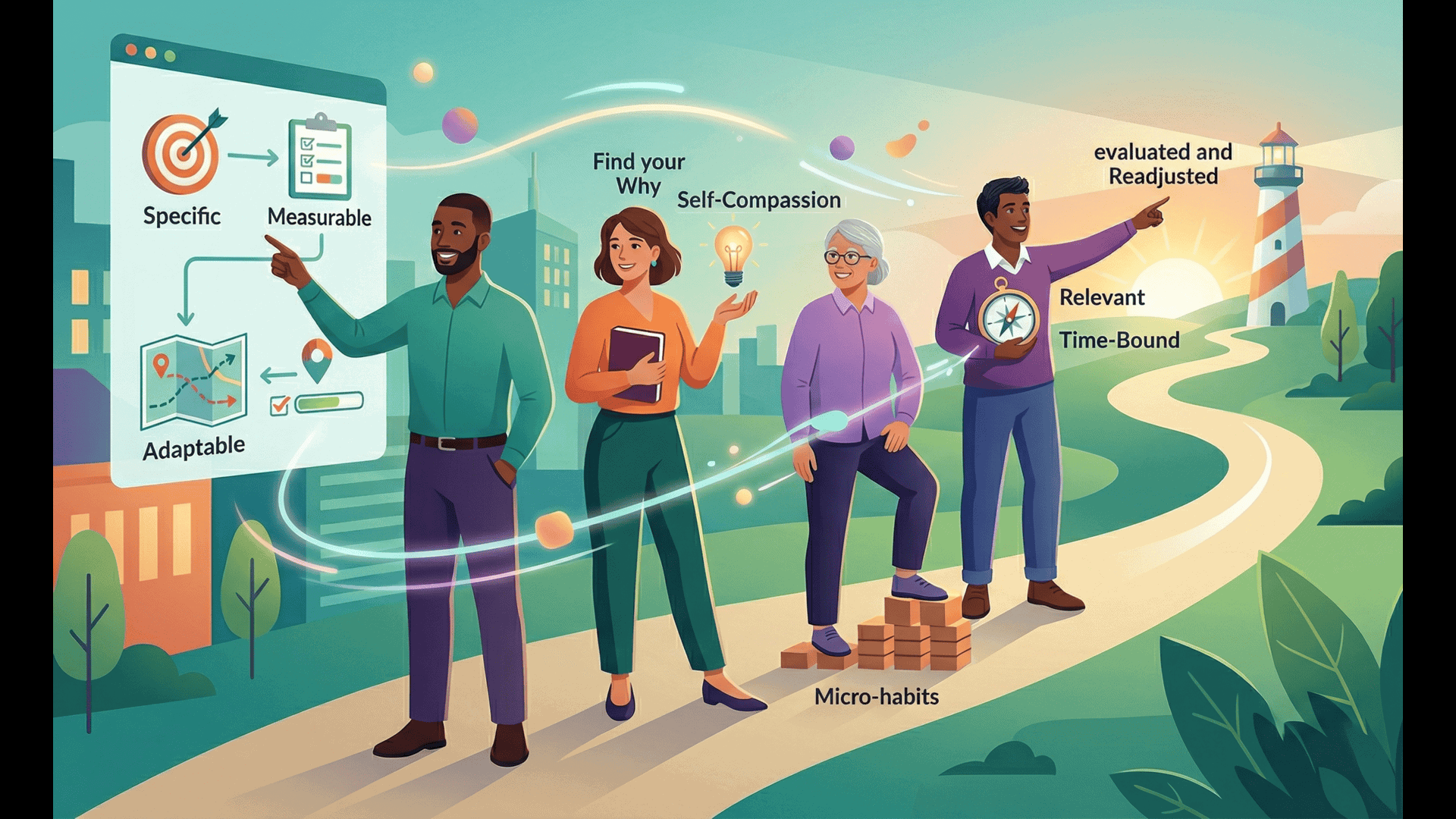
    In this guide, we are going to dive deep into the world of micro-habits. These are bite-sized, incredibly actionable healthy habits that take less than five minutes to complete. They are designed to fit effortlessly into your existing routine, regardless of your fitness level, your living situation, or how neurodivergent your brain might be. Wellness is not a one-size-fits-all concept, and these habits are easily modified to meet you exactly where you are today.

    Grab your favorite beverage, get comfortable, and let’s explore how you can hack your daily routine for better physical, mental, and emotional health—five minutes at a time.


    The Magic of Micro-Habits: Why Small Steps Lead to Huge Leaps

    Before we jump into the actual habits, it is important to understand why we are focusing on such short timeframes. You might be wondering, “Is five minutes really enough to make a difference?”

    The short answer is: absolutely.

    When we set massive, sweeping goals (like “I am going to work out for two hours every single day”), we rely heavily on motivation. The problem with motivation is that it is a fleeting emotion. It is high on January 1st, but by February 15th, it is completely depleted.

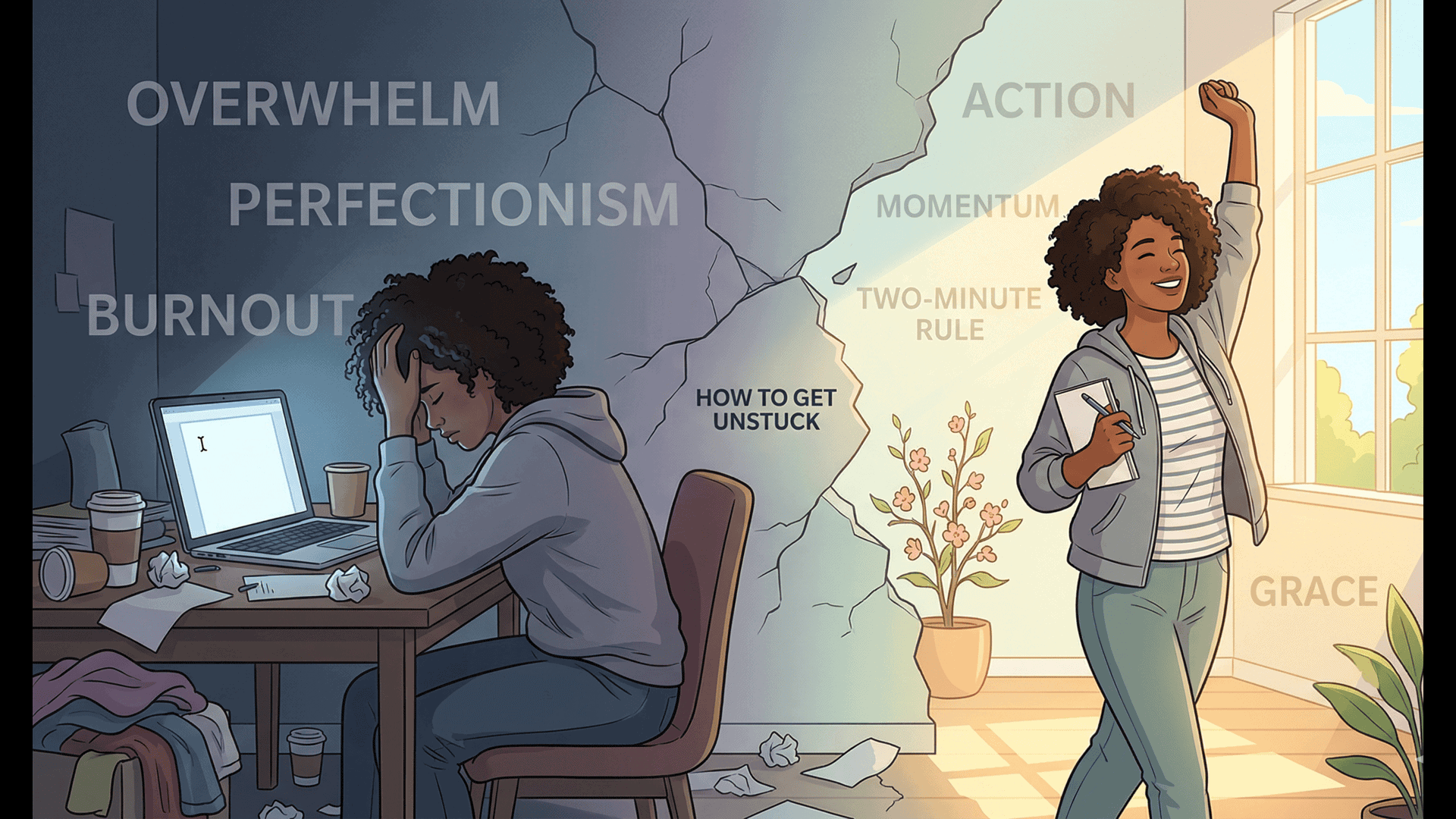
    Micro-habits, on the other hand, rely on consistency over intensity. By shrinking the requirement down to just five minutes, you completely remove the friction. It takes away the excuse of “I don’t have time.” When a habit is so small that it is almost impossible to fail at it, you start building consistency. That consistency builds self-trust, and that self-trust creates momentum. Over months and years, those five-minute habits compound into massive lifestyle changes.

    Now, let’s get into the actionable steps you can start taking today.


    Morning Momentum: Start Your Day on Your Terms

    The way you start your morning often dictates the tone for the rest of your day. These quick habits will help you wake up your body and center your mind before the chaos of the world comes rushing in.

    1. The “Internal Shower” (Hydrate Immediately)

    After sleeping for several hours, your body wakes up mildly dehydrated. Before you reach for that cup of coffee or tea, drink a large glass of water.

    • Why it works: Hydration kickstarts your metabolism, aids in digestion, and clears out the brain fog that often accompanies waking up. Think of it as an internal shower for your organs.
    • How to do it: Leave a glass or a reusable water bottle on your nightstand the night before. The moment your feet hit the floor, drink it.
    • Make it inclusive: If plain water makes you nauseous in the morning, try adding a squeeze of lemon, a splash of juice, or drinking it at room temperature rather than ice cold.

    2. The 3-Minute Bed Making Ritual

    Naval Admiral William H. McRaven famously said that if you want to change the world, start off by making your bed.

    • Why it works: It is a quick, easy psychological win. It gives you an immediate sense of accomplishment and sets an organized tone for the day. Plus, getting into a made bed at night feels like a gift you gave to your future self.
    • How to do it: Don’t worry about hospital corners or perfect throw pillow arrangements. Just pull the sheets up, smooth the comforter, and straighten the pillows.
    • Make it inclusive: If you have chronic pain or limited mobility that makes adjusting heavy mattresses difficult, just focus on straightening your top blanket. The goal is the habit of tidying your immediate space, not achieving perfection.

    3. Seek the Sun (Light Exposure)

    Getting natural light into your eyes as early in the day as possible is one of the most powerful things you can do for your sleep cycle.

    • Why it works: Morning sunlight halts the production of melatonin (the sleep hormone) and signals to your circadian rhythm that it is time to be alert. This helps you feel energized now and helps you fall asleep easier tonight.
    • How to do it: Step outside onto your porch, balcony, or just open a window and look out (without sunglasses) for 2 to 5 minutes.
    • Make it inclusive: If you live in a place with dark winters or lack access to a safe outdoor space, a sun-lamp or light therapy box used for five minutes while you drink your water can offer similar benefits.

    Workday Wellness: Defeating the Mid-Day Slump

    Whether you work at a desk, in a hospital, or managing a busy household, the middle of the day is usually when our energy takes a nosedive. Use these five-minute health habits to stay sharp and physically comfortable.

    4. The 20-20-20 Rule for Digital Eye Strain

    If you stare at screens all day, your eyes are likely begging for a break. Screen fatigue can lead to headaches, blurred vision, and neck pain.

    • Why it works: Our eye muscles get tired from focusing on a fixed distance for too long. According to the [American Optometric Association](https://www.google.com/search?q=https://www.aoa.org/healthy-eyes/eye-health-for-life/adult-vision-19-to-40-years of age), giving your eyes a structured break prevents the symptoms of digital eye strain.
    • How to do it: Every 20 minutes, look away from your screen and focus on an object that is at least 20 feet away, for a total of 20 seconds.

    5. The “Desk-Bound” Posture Reset

    Sitting or standing in one position for hours wreaks havoc on your spine and hips.

    • Why it works: Moving your body lubricates your joints and sends freshly oxygenated blood to your brain, giving you a natural energy boost that is better than a second cup of coffee.
    • How to do it: Take five minutes to do a few simple stretches. Roll your shoulders back, do a few gentle neck circles, and stretch your arms overhead.
    • Make it inclusive: Movement is highly personal. If you are a wheelchair user or have limited lower-body mobility, focus on seated spinal twists and opening up your chest. If you are able-bodied and want more intensity, do 20 air squats next to your desk.

    6. The “Brain Dump” Declutter

    Feeling overwhelmed by a swirling tornado of to-dos, anxieties, and random thoughts? Get them out of your head.

    • Why it works: Our working memory can only hold so much information. When we try to keep all our tasks in our head, it creates immense background anxiety.
    • How to do it: Grab a piece of paper and a pen. Set a timer for three minutes. Write down literally everything on your mind—errands, work projects, random worries, things you need to buy. Don’t organize it, just dump it. Once it is on paper, your brain can relax.

    7. Mindful Transitioning Between Tasks

    Instead of jumping frantically from one Zoom meeting to the next, create a buffer zone.

    • Why it works: Context switching is exhausting for the brain. Taking a moment to close out one task before opening another reduces cortisol (the stress hormone) levels.
    • How to do it: When you finish a task, close the browser tabs associated with it. Take three deep breaths, remind yourself what you accomplished, and deliberately state what you are going to focus on next.

    Nutrition and Fuel: Nourishing Without the Prep

    Eating healthy doesn’t have to mean spending your entire weekend chopping vegetables into Tupperware containers. Here are rapid-fire ways to improve your nutrition.

    8. The “Add One” Philosophy

    Diet culture often focuses on restriction—what we can’t have. Let’s flip the script and focus on what we can add to our plates.

    • Why it works: Adding nutrient-dense foods naturally crowds out less nutritious options without triggering feelings of deprivation.
    • How to do it: Take less than five minutes to wash a handful of berries to throw on your morning oatmeal, grab an apple to eat with your afternoon snack, or toss a handful of spinach into whatever you are microwaving for lunch.

    9. Pre-Portion Your Snacks

    When we are stressed and hungry, we reach for whatever is easiest, which usually means eating directly out of a family-sized bag of chips.

    • Why it works: Putting a boundary between you and mindless eating helps you actually register what you are consuming.
    • How to do it: When you get home from the grocery store, take five minutes to divide large bags of snacks into smaller, individual, reusable containers. When hunger strikes, you just grab one portion.

    10. Mindful Chewing for the First 3 Bites

    Digestion actually begins in your mouth, not your stomach.

    • Why it works: Chewing your food thoroughly breaks it down, making it easier for your gut to absorb nutrients and reducing bloating. Furthermore, slowing down gives your brain time to register that you are full.
    • How to do it: You don’t have to eat your entire meal in meditative silence. Just commit to eating the first three bites of your meal with complete focus. Put your fork down, chew thoroughly, and notice the texture and flavor.

    Mental and Emotional Wellness: Tending to Your Mind

    Your mental health requires maintenance just like your physical health. These quick emotional check-ins can drastically alter your mood and perspective.

    11. The 4-7-8 Breathing Technique

    When you are feeling a panic attack coming on, or your anxiety is spiking due to an approaching deadline, your breath becomes shallow. You can hack your nervous system by changing how you breathe.

    • Why it works: Deep, rhythmic breathing stimulates the vagus nerve, which triggers your parasympathetic nervous system (the “rest and digest” mode), instantly lowering your heart rate and blood pressure.
    • How to do it: Breathe in quietly through your nose for 4 seconds. Hold your breath for 7 seconds. Exhale completely through your mouth, making a whoosh sound, for 8 seconds. Repeat this cycle four times.
    • Make it inclusive: If holding your breath causes you more anxiety, or if you have respiratory issues, simply focus on making your exhales twice as long as your inhales (e.g., breathe in for 3 seconds, out for 6).

    12. Send a 60-Second Message of Gratitude

    Human connection is one of the strongest predictors of long-term health and happiness.

    • Why it works: Expressing gratitude shifts your brain away from negative biases. Sending it to someone else strengthens your social bonds, releasing oxytocin (the bonding hormone) in both you and the recipient.
    • How to do it: Think of someone who positively impacted your week. Pull out your phone and send them a quick, genuine text. “Hey, I was just thinking about how much I appreciated your help with X yesterday. Hope you’re having a great day!” It takes 30 seconds but makes a massive impact.

    13. The “Rose, Bud, Thorn” Reflection

    This is an incredibly easy mindfulness practice to do by yourself or with family members over dinner.

    • Why it works: It provides a structured way to process your day, acknowledging both the good and the bad without dwelling unnecessarily on either.
    • How to do it: Take two minutes to identify your:
      • Rose: A highlight, success, or small win from the day.

      • Thorn: A challenge you faced or something that caused you stress.

      • Bud: Something you are looking forward to tomorrow.


    Evening Wind-Down: Setting Up for Success

    A great morning actually begins the night before. These five-minute evening habits are investments in your future self’s peace of mind.

    14. The 5-Minute “Room Rescue”

    Waking up to a messy environment immediately spikes your morning stress levels.

    • Why it works: A tidy space promotes a tidy mind. Doing a rapid cleanup prevents daily clutter from turning into an overwhelming, hours-long chore on the weekend.
    • How to do it: Set a timer on your phone for exactly five minutes. Run through your main living area and put away obvious things: load the dishwasher, put the throw blankets back in the basket, toss junk mail in the recycling, and wipe the kitchen counter. When the timer goes off, you are done. No matter what.

    15. The “Launchpad” Prep

    Decision fatigue is real. Every choice you make throughout the day drains your mental energy battery. Minimize morning choices to save that energy for things that matter.

    • Why it works: Removing obstacles from your morning routine makes it infinitely easier to get out the door on time and without panic.
    • How to do it: Take five minutes before bed to set up your “launchpad.” Lay out the clothes you are going to wear tomorrow. Put your keys, wallet, and bag by the front door. Prep the coffee maker so you just have to push a button.

    How to Make These Habits Stick: The Art of “Habit Stacking”

    Reading a list of 15 healthy habits is great, but trying to implement all 15 of them tomorrow is a recipe for instant burnout.

    If you want these micro-habits to become a permanent part of your lifestyle, you need to use a technique called Habit Stacking. Coined by author S.J. Scott and popularized by James Clear in Atomic Habits, habit stacking involves pairing a new habit you want to build with an old habit that you already do automatically every single day.

    Your brain already has strong neural pathways built for your current routines. You can take advantage of those strong pathways by simply attaching a new behavior to them.

    The Habit Stacking Formula:

    “After I [CURRENT HABIT], I will [NEW 5-MINUTE HABIT].”

    Here are some real-life examples of how you can stack the habits we just discussed:

    • After I start the coffee maker in the morning (Current Habit), I will drink my glass of water (New Habit).
    • After I brush my teeth at night (Current Habit), I will lay out my clothes for tomorrow (New Habit).
    • ,After I close my laptop for my lunch break (Current Habit), I will do 2 minutes of stretching (New Habit).
    • After I get into bed (Current Habit), I will identify my Rose, Bud, and Thorn for the day (New Habit).

    By linking the new behavior to an established anchor, you don’t have to rely on your memory or motivation. The old habit serves as an automatic trigger for the new one.

    Start incredibly small. Pick just one or two habits from this list to focus on this week. Write your habit stack formula on a sticky note and put it where you will see it. Once that five-minute habit feels completely automatic and effortless, come back to this list and pick another one to stack on top of it.


    A Gentle Reminder on Your Wellness Journey

    As you begin to incorporate these healthy habits that take less than five minutes into your daily life, please remember to be deeply compassionate with yourself.

    We live in a society that constantly tells us we need to be optimizing every single second of our day. That is exhausting and, quite frankly, impossible. The goal of these micro-habits is not to turn you into a productivity robot who never wastes a minute. The goal is to give you simple, accessible tools to care for your physical body and your mental health when life feels overwhelming.

    There will be days when you forget to drink your water. There will be nights when you are too tired to do the five-minute room rescue, and you leave the dishes in the sink. That is completely okay. Missing one day doesn’t erase your progress. Wellness is not about perfection; it is about direction. It is about the overall trend of how you are treating yourself. When you stumble, gently acknowledge it without judgment, and simply try again the next time you have five spare minutes. You are worthy of care, regardless of how perfectly you execute a routine.


    Frequently Asked Questions (FAQ)

    Can a habit that only takes 5 minutes actually improve my health?

    Yes, absolutely! The power of a 5-minute habit lies in compounding interest. Drinking one glass of water or stretching for two minutes won’t magically transform your body overnight. However, doing those things every single day for a year adds up to hundreds of hours of positive behavior. Furthermore, small habits shift your identity. When you consistently do 5-minute healthy routines, you start to view yourself as a “healthy person,” which naturally leads to making better choices throughout the rest of your day.

    How long does it actually take to form a new habit?

    You have probably heard the myth that it takes 21 days to form a habit. The reality is a bit more nuanced. Research shows it can take anywhere from 18 to 254 days for a new behavior to become automatic, depending on the complexity of the habit and the individual. Because these 5-minute habits are so small and simple, they tend to fall on the shorter end of that spectrum, especially if you use the Habit Stacking method described above.

    I have a chronic illness/disability, and some of these physical habits are difficult for me. What should I do?

    The most important rule of habit-building is that it must work for your specific body and mind. If a habit causes pain or massive fatigue, it is not a healthy habit for you. Please freely modify these suggestions! If standing to stretch isn’t accessible, look up adaptive seated stretches. If making the bed takes too many “spoons” (energy), your habit can simply be opening the blinds to let light in. Focus on the intention of the habit (e.g., moving your body, creating a pleasant environment) and adapt the physical action to suit your abilities.

    What is the absolute best habit to start with if I am completely overwhelmed?

    If you only choose one habit from this entire list, make it the Brain Dump Journaling or the 4-7-8 Breathing Technique. When we are overwhelmed, our nervous systems are usually in “fight or flight” mode. You cannot logic your way out of physical overwhelm. You have to regulate your nervous system first. Taking 3-5 minutes to breathe deeply or get the swirling thoughts out of your head onto paper will create the mental clarity you need to tackle the rest of your day.

    How many of these 5-minute habits should I try to do per day?

    Please do not try to do all 15! That defeats the purpose of keeping things low-stress. Start with one to three habits maximum. For example, pick one for the morning (like drinking water), one for work (like the 20-20-20 rule), and one for the evening (like the 5-minute tidy). Do those three consistently for a month before you consider adding any more to your plate.

    What do I do if I keep forgetting to do my new micro-habit?

    This is completely normal! If you keep forgetting, it means your “trigger” isn’t obvious enough. First, make sure you are using Habit Stacking (tying the new habit to an old one). Second, alter your environment to make it impossible to ignore. If you want to take your vitamins, don’t leave them in the medicine cabinet; put the bottle literally on top of your coffee mug or right next to your toothbrush so you have to physically touch it. Visual cues are your best friend.

  • The Importance of Sleep: Your Ultimate Guide to Better Rest (And Why You Deserve It)

    The Importance of Sleep: Your Ultimate Guide to Better Rest (And Why You Deserve It)

    Let’s be entirely honest with ourselves for a second: how many times have you hit the snooze button this week? How often have you relied on that third or fourth cup of coffee just to make it through a Tuesday afternoon? If you are nodding your head right now, you are definitely not alone.

    We live in a world that often glorifies the “hustle.” We are constantly bombarded with the message that doing more, working longer, and sleeping less is the ultimate key to success. But here is the truth: treating sleep like a luxury instead of a biological necessity is a fast track to burnout. Sleep is not just a period of doing nothing; it is an incredibly active, foundational process that our bodies and minds desperately need to function, heal, and thrive.

    Whether you are a student pulling all-nighters, a parent trying to juggle a million responsibilities, a shift worker dealing with irregular hours, or just someone whose brain decides to overthink everything the minute your head hits the pillow—this guide is for you. We are going to break down the science of why sleep matters, what happens when we skip it, and, most importantly, provide you with realistic, actionable tips to finally get the rest you deserve.

    Grab a cozy blanket, maybe a cup of herbal tea, and let’s dive deep into the importance of sleep.


    The Hidden Magic: What Actually Happens When We Snooze?

    To understand the importance of sleep, we first have to understand that our brains don’t just “shut off” when we close our eyes. In fact, some parts of your brain are more active while you sleep than when you are awake!

    Sleep is divided into a complex architecture made up of different cycles. Throughout the night, we cycle through these stages multiple times, usually in 90 to 120-minute loops. According to the experts at the National Institutes of Health (NIH), sleep is broadly categorized into two main types: Non-Rapid Eye Movement (NREM) and Rapid Eye Movement (REM) sleep.

    1. NREM Stage 1: The Transition

    This is the lightest stage of sleep. You are just drifting off, transitioning from wakefulness to slumber. Your heartbeat, breathing, and eye movements begin to slow down, and your muscles relax with occasional twitches. If someone wakes you up during this stage, you might even claim you weren’t sleeping at all! This stage usually only lasts a few minutes.

    2. NREM Stage 2: Light Sleep

    Before you enter deep sleep, you spend a significant amount of your night in Stage 2. Your heart rate and breathing slow down even more, and your body temperature drops. Your brain waves slow down, but there are brief bursts of electrical activity called “sleep spindles.” These spindles are thought to play a role in memory consolidation—the process of gathering the information you learned during the day. We spend about half of our total sleep time in this stage.

    3. NREM Stage 3: Deep Sleep (The Healing Phase)

    This is the magic stage where the physical restoration happens. Deep sleep is crucial so that you can wake up feeling refreshed in the morning. Your heartbeat and breathing drop to their lowest levels during sleep. Your muscles are completely relaxed, and it can be quite difficult to wake you up. During deep sleep, your body repairs tissues, builds bone and muscle, and strengthens the immune system.

    4. REM Sleep: The Dream State

    REM sleep usually begins about 90 minutes after you fall asleep. As the name suggests, your eyes move rapidly from side to side behind closed eyelids. Your brain wave activity looks very similar to what it looks like when you are awake! Your breathing becomes faster and irregular, and your heart rate and blood pressure increase to near-waking levels.

    This is the stage where most of our vivid dreaming occurs. To stop us from acting out our dreams (which could be dangerous!), our arm and leg muscles become temporarily paralyzed. REM sleep is absolutely vital for cognitive functions like memory, learning, and emotional regulation.


    Why We Desperately Need Sleep: The Full-Body Benefits

    Now that we know how we sleep, let’s talk about why we sleep. The importance of sleep touches every single system in our bodies. It is the ultimate preventative medicine, and best of all, it’s completely free.

    Physical Health and Healing

    • Heart Health: During normal sleep, your blood pressure goes down, giving your heart and blood vessels a much-needed break. Lack of sleep is linked to worse blood pressure and higher cholesterol, which are risk factors for heart disease and stroke.
    • Immune System Boost: Have you ever noticed that you are more likely to catch a cold when you are exhausted? While you sleep, your immune system produces protective, infection-fighting substances like cytokines. It uses these to combat foreign invaders such as bacteria and viruses. Sleep also gives your immune system the energy it needs to mount a strong defense.
    • Weight Management and Metabolism: Sleep and metabolism are deeply connected. When you don’t get enough rest, your body produces more ghrelin (the hormone that tells you that you are hungry) and less leptin (the hormone that tells you that you are full). This hormonal imbalance can lead to intense cravings, particularly for high-sugar, high-carbohydrate foods.
    • Muscle Growth and Repair: For the athletes and gym-goers out there, sleep is when the real gains happen. The release of human growth hormone is at its highest during deep sleep, facilitating muscle repair and recovery after a tough workout.

    Mental Health and Cognitive Function

    • Memory Consolidation: Think of your brain like a chaotic office desk at the end of the day. Sleep is the filing system. It takes all the short-term memories and experiences from your day, organizes them, and stores them in your long-term memory so you can access them later.
    • Focus and Problem Solving: A well-rested brain is a sharp brain. Sleep improves our ability to pay attention, solve complex problems, and make sound decisions. Without it, our reaction times plummet.
    • Emotional Regulation: Have you ever snapped at a loved one or cried over a minor inconvenience just because you were tired? Sleep deprivation impacts the amygdala, the emotional center of the brain. A good night’s rest helps us process our emotions properly, making us more resilient, patient, and equipped to handle the daily stresses of life.

    The Danger Zone: What Happens When We Are Sleep Deprived?

    We often brush off a bad night’s sleep with a laugh and an extra shot of espresso, but chronic sleep deprivation is a serious public health issue. The Centers for Disease Control and Prevention (CDC) has even declared insufficient sleep a public health epidemic.

    When we consistently fail to get the recommended 7 to 9 hours of sleep per night (for most adults), the consequences accumulate. This is often referred to as “sleep debt.”

    Short-Term Impacts:

    • Brain fog and severe lack of concentration.
    • Mood swings, irritability, and heightened anxiety.
    • Increased risk of accidents (drowsy driving is incredibly dangerous and comparable to driving under the influence of alcohol).
    • Poor judgment and impulsive behavior.

    Long-Term Health Risks:

    If sleep deprivation becomes a chronic lifestyle, the risks become much more severe. Long-term lack of sleep is strongly associated with:

    • Type 2 Diabetes: Sleep deprivation affects how your body processes glucose, leading to insulin resistance.
    • Cardiovascular Disease: Chronic high blood pressure from lack of sleep strains the heart.
    • Obesity: Due to the hormonal imbalances in leptin and ghrelin mentioned earlier.
    • Mental Health Disorders: Chronic insomnia is closely linked to depression, anxiety, and other mood disorders. It becomes a vicious cycle: poor sleep worsens mental health, and poor mental health makes it harder to sleep.
    • Weakened Immunity: Leaving you susceptible to frequent infections and illnesses.

    It is crucial to recognize that trying to “catch up” on sleep during the weekend doesn’t fully erase the sleep debt accumulated during the week. Consistency is the true key to restorative rest.


    The Ultimate Guide to Sleep Hygiene: Actionable Tips for Better Rest

    Alright, we have covered the science and the stakes. Now, let’s get practical. “Sleep hygiene” refers to the habits and practices that are conducive to sleeping well on a regular basis.

    It is important to acknowledge that not everyone has the same lifestyle. Shift workers, parents of newborns, people with neurodivergent traits, and individuals with chronic pain face unique challenges when it comes to sleep. The goal here isn’t perfection; it is about finding small, incremental changes that work for your specific situation.

    Here are comprehensive, actionable tips to help you build a better relationship with sleep:

    1. Master Your Sleep Environment

    Your bedroom should be a sanctuary dedicated to two things: sleep and intimacy.

    • Keep it Cool: Your body temperature naturally drops as you fall asleep. A room that is too hot will disrupt this process. Most experts recommend keeping your bedroom between 60°F and 67°F (15°C to 19°C) for optimal sleep.
    • Make it Dark: Light is the most powerful cue for your circadian rhythm (your body’s internal clock). Even small amounts of ambient light from streetlamps or electronics can suppress melatonin production. Invest in high-quality blackout curtains, or wear a comfortable, breathable sleep mask.
    • Embrace the Quiet (or the Right Kind of Noise): Sudden noises can jolt you out of deep sleep. If you live in a noisy area, try using earplugs. Alternatively, use a white noise machine or a fan to create a consistent, soothing background sound that masks disruptive noises.
    • Invest in Your Bed: You spend a third of your life in bed. If your mattress is old, lumpy, or unsupportive, it is going to cause physical discomfort that wakes you up. The same goes for pillows. Choose bedding that is breathable (like cotton or linen) to help regulate your temperature.

    2. Respect Your Circadian Rhythm

    Your body craves routine. It wants to know when to be awake and when to power down.

    • Consistent Sleep Schedule: Try to go to bed and wake up at the exact same time every day—yes, even on weekends! This trains your internal clock and makes falling asleep at night much easier over time.
    • Seek Morning Sunlight: Getting natural sunlight in your eyes within the first hour of waking up is crucial. It stops the production of melatonin and signals to your brain that the day has started. Aim for 10-15 minutes of outdoor light each morning.
    • Limit Evening Blue Light: The blue light emitted by our smartphones, tablets, and laptops tricks our brains into thinking it is still daytime. Try to impose a “digital curfew” and put away all screens at least an hour before bed. If you must use screens, use blue-light-blocking glasses or activate the “night mode” on your devices.

    3. Mind What You Consume

    What you put into your body throughout the day profoundly impacts how you sleep at night.

    • The Caffeine Cut-off: Caffeine has a half-life of about 5 to 6 hours. That means if you have a coffee at 4:00 PM, half of that caffeine is still in your system at 10:00 PM. Try to limit caffeine intake to the morning and early afternoon.
    • Rethink the Nightcap: It is a common misconception that alcohol helps you sleep. While a glass of wine might make you feel drowsy and help you fall asleep faster, it severely disrupts the quality of your sleep, particularly REM sleep. You are much more likely to wake up in the middle of the night as the alcohol wears off.
    • Avoid Heavy, Late Meals: Eating a large, rich, or spicy meal right before bed can cause indigestion and acid reflux, making it incredibly uncomfortable to lie down and sleep. Try to finish your last large meal a few hours before bedtime.

    4. Build a Relaxing Pre-Sleep Routine

    Transitioning from the stress of the day to a state of rest requires a buffer zone. Create a relaxing routine that signals to your body that it is time to wind down.

    • Read a Book: A physical book, not an e-reader that emits light. Fiction is often best as it takes your mind away from real-world stressors.
    • Warm Bath or Shower: Taking a warm bath or shower an hour or two before bed can help. When you get out, your core body temperature drops rapidly, which signals to your brain that it’s time for sleep.
    • Gentle Stretching or Yoga: Light, restorative stretching can help release the physical tension stored in your muscles from the day.
    • Brain Dump: If racing thoughts keep you awake, keep a journal next to your bed. Spend five minutes writing down everything you are worried about, or your to-do list for the next day. Getting it out of your head and onto paper can be incredibly freeing.

    5. Movement and Exercise

    Regular physical activity is fantastic for sleep, but timing matters.

    • Exercise Daily: Engaging in moderate aerobic exercise (like brisk walking, swimming, or cycling) increases the amount of deep sleep you get.
    • Watch the Timing: For some people, doing intense, high-heart-rate workouts right before bed can leave them too energized to sleep. If you find this is the case for you, try to move your intense workouts to the morning or afternoon.

    A Note for Shift Workers and New Parents

    The standard advice doesn’t always apply if you work nights or have an infant who wakes every two hours. If this is you, give yourself grace.

    • Shift Workers: Focus intensely on controlling your environment. When you sleep during the day, use the heaviest blackout curtains possible and white noise. Wear sunglasses on your commute home in the morning to prevent the sun from resetting your circadian rhythm before you can get to bed.
    • Parents: “Sleep when the baby sleeps” is cliché, but prioritizing rest over chores during those early months is vital. Don’t be afraid to ask for help from partners, family, or friends so you can get an uninterrupted block of 4-5 hours of sleep, which is the minimum required to complete a full sleep cycle.

    When Is It Time to See a Doctor?

    Sometimes, despite having perfect sleep hygiene, rest remains elusive. If you consistently struggle to fall asleep, stay asleep, or wake up feeling exhausted despite getting enough hours, it might be time to consult a healthcare professional.

    You should reach out to a doctor or a sleep specialist if you experience:

    • Chronic insomnia lasting more than a few weeks.
    • Loud snoring, gasping, or choking sounds during sleep (these are strong indicators of Sleep Apnea).
    • An overwhelming, uncontrollable urge to move your legs while resting (Restless Legs Syndrome).
    • Falling asleep suddenly and uncontrollably during the day (Narcolepsy).
    • Severe daytime fatigue that impacts your ability to work, drive, or function safely.

    There is zero shame in seeking help. Sleep disorders are highly treatable medical conditions.


    The Bottom Line

    Reclaiming your sleep is one of the most profound acts of self-care you can undertake. It is not selfish to prioritize your rest; it is essential for showing up as the best version of yourself for your family, your career, and your own well-being.

    By understanding the science of sleep, recognizing its incredible benefits, and actively implementing better sleep hygiene, you can transform your nights and, consequently, your days.

    Start small. Pick one or two tips from this guide to implement tonight. Maybe it’s turning off your phone an hour earlier, or finally ordering those blackout curtains. Your body and your brain will thank you for it. Sweet dreams!


    Frequently Asked Questions (FAQ)

    To make this the most comprehensive guide possible, let’s address some of the most common questions people have about sleep, backed by insights from organizations like the Sleep Foundation.

    1. How many hours of sleep do I really need?

    While the exact number varies from person to person based on genetics and lifestyle, the general consensus across medical professionals is that healthy adults need between 7 and 9 hours of sleep per night. Teenagers need more (8 to 10 hours), and school-aged children need even more (9 to 12 hours). If you feel completely refreshed and alert throughout the day on 7 hours, that might be your sweet spot. If you need 9 hours to function, honor that!

    2. Are naps a good idea, or do they ruin nighttime sleep?

    Naps can be a fantastic tool to boost alertness and mood, but they have to be done correctly.

    • The Power Nap: A 20 to 30-minute nap is ideal. It gives you a burst of energy without letting you enter deep sleep.

    • The Danger Zone: Napping for 45 to 60 minutes often results in “sleep inertia”—that groggy, disoriented feeling when you wake up in the middle of a deep sleep stage.

    • Timing: Try to nap in the early afternoon (between 1:00 PM and 3:00 PM). Napping too late in the day will definitely interfere with your ability to fall asleep at night.

    3. Is taking Melatonin every night safe?

    Melatonin is a hormone your body produces naturally to signal that it’s time to sleep. Over-the-counter melatonin supplements are generally considered safe for short-term use (like getting over jet lag or adjusting to a new shift schedule). However, it is not a cure-all for chronic insomnia. Relying on it long-term isn’t highly recommended without a doctor’s supervision, as the long-term effects aren’t fully understood, and it can interact with other medications. It is always better to encourage your body’s natural melatonin production by managing your light exposure.

    4. Why do I always wake up at 3:00 AM?

    Waking up in the middle of the night is incredibly common and incredibly frustrating. It often happens because we naturally transition into lighter stages of sleep in the early morning hours. During this light sleep, we are more easily awakened by minor things: a full bladder, a change in room temperature, a noise outside, or a sudden spike in cortisol (the stress hormone). If you wake up, avoid looking at the clock! Keep the lights low, and if you can’t fall back asleep within 20 minutes, get out of bed and do a quiet, non-stimulating activity (like reading a book in dim light) until you feel tired again.

    5. Can I “catch up” on sleep during the weekend?

    Yes and no. If you miss a few hours of sleep one night, you can sleep a little longer the next night to recover. However, you cannot reverse the effects of chronic, long-term sleep deprivation simply by binge-sleeping on Saturday and Sunday. In fact, sleeping in too late on the weekends actively shifts your circadian rhythm, a phenomenon known as “social jet lag,” making it significantly harder to fall asleep on Sunday night and wake up on Monday morning. Consistency is vastly superior to trying to play catch-up.

    6. What is the best sleeping position?

    There is no single “perfect” position, as it depends on your specific health needs:

    • Side Sleeping: Generally considered the healthiest, especially for breathing and reducing snoring/sleep apnea. Sleeping on your left side is highly recommended for pregnant individuals and those with acid reflux, as it aids digestion and blood flow.

    • Back Sleeping: Great for spinal alignment and preventing wrinkles (since your face isn’t smashed into a pillow), but it is the worst position for snoring and sleep apnea because gravity pulls the tongue back into the airway.

    • Stomach Sleeping: Mostly discouraged by professionals. It can strain your neck and lower back significantly. If you must sleep on your stomach, use a very thin pillow or no pillow at all to keep your neck as neutral as possible.

    7. Does hitting the snooze button actually make me more tired?

    Unfortunately, yes. When your alarm goes off, it often pulls you out of a sleep cycle. When you hit snooze and drift back off, your body tries to start a new sleep cycle. Ten minutes later, your alarm jolts you awake again, right at the beginning of that cycle. This repeated fragmentation of sleep causes severe sleep inertia, leaving you feeling far more groggy and exhausted than if you had just gotten up with the first alarm. Try placing your alarm across the room so you physically have to stand up to turn it off!

  • 15 Easy Ways to Improve Your Mental Health Every Day

    15 Easy Ways to Improve Your Mental Health Every Day

    Let’s be real for a second: life can be incredibly overwhelming. Between balancing work or school, managing relationships, keeping up with the news, and just trying to figure out what to cook for dinner, our brains are constantly running a marathon. It is completely normal to feel stretched thin.

    We talk a lot about physical health—hitting the gym, eating our greens, getting our steps in—but what about our mental well-being? Just like we all have physical health to maintain, every single one of us has mental health to nurture. And taking care of your mind doesn’t have to mean booking a month-long silent retreat in the mountains (though, let’s be honest, that does sound nice).

    Improving your mental health is often about making small, manageable tweaks to your daily routine. It’s about finding accessible, realistic habits that support your unique brain and body. Whether you are currently thriving and want to maintain that momentum, or you are navigating a particularly heavy season, these strategies are here to help.

    Grab a cozy beverage, get comfortable, and let’s dive into 15 easy, actionable ways to improve your mental health.


    Daily Habits for Your Body and Brain

    It might sound cliché, but the mind and body are deeply connected. How we treat our physical vessel has a massive impact on our cognitive function and emotional regulation.

    1. Prioritize Restorative Sleep

    We are putting this at number one because it is truly the foundation of mental well-being. When we don’t get enough sleep, our brain’s ability to regulate emotions plummets. Everything feels harder, sharper, and more stressful after a night of tossing and turning.

    • The “Why”: During sleep, your brain processes emotions, consolidates memories, and clears out toxins.
    • How to start today: Try going to bed just 15 minutes earlier than usual. Create a wind-down routine that doesn’t involve screens. If you want to dive deeper into sleep hygiene, check out the excellent resources at the Sleep Foundation.

    2. Move Your Body in a Way That Feels Good

    Exercise gets a bad rap when it’s framed as punishment for eating or something you “have” to do to look a certain way. Let’s reframe that: movement is a celebration of what your body can do, and it is a powerful tool for your mind. Physical activity releases endorphins, which are your brain’s natural mood lifters.

    • The “Why”: Movement helps flush stress hormones like cortisol out of your system.
    • How to start today: Don’t force yourself to run if you hate running. Dance in your kitchen while making coffee, do some gentle stretching on your living room rug, or take a 10-minute walk around the block. All movement counts.

    3. Fuel Your Brain with Nourishing Foods

    The connection between your gut and your brain is very real. In fact, a massive percentage of your body’s serotonin (the “happy chemical”) is produced in your digestive tract.

    • The “Why”: Giving your body the nutrients it needs helps stabilize your blood sugar, which in turn stabilizes your mood.
    • How to start today: Focus on adding to your plate rather than restricting. Can you add a handful of spinach to your smoothie? Can you snack on some walnuts or almonds for an omega-3 boost? Drink a glass of water when you wake up.

    4. Hydrate Like It’s Your Job

    Did you know your brain is made up of about 73% water? Even mild dehydration can lead to brain fog, fatigue, and increased feelings of anxiety and tension.

    • The “Why”: Water is essential for delivering nutrients to the brain and removing toxins.
    • How to start today: Keep a reusable water bottle within your line of sight. If plain water bores you, infuse it with cucumber, lemon, or mint.

    5. Get a Daily Dose of Sunlight

    Getting natural light in your eyes, especially early in the morning, is a game-changer for your mental health. It helps regulate your circadian rhythm, which dictates your sleep-wake cycle and influences your energy levels throughout the day.

    • The “Why”: Sunlight triggers the release of serotonin and helps your body synthesize Vitamin D, both of which are crucial for warding off depressive symptoms.
    • How to start today: Try to step outside for 5 to 10 minutes within the first hour of waking up. Sip your morning tea or coffee on the porch or by an open window.

    Managing Stress and Navigating Emotions

    Life is always going to throw curveballs. Improving your mental health isn’t about eliminating stress entirely—that’s impossible. It’s about building a toolkit to handle stress when it inevitably shows up.

    6. Practice Bite-Sized Mindfulness

    Mindfulness can sound intimidating. You might picture someone sitting perfectly still on a cushion for an hour. But mindfulness just means paying attention to the present moment without judgment. It is a powerful way to pull your brain out of anxiety (worrying about the future) or rumination (dwelling on the past).

    • The “Why”: It literally rewires your brain to be less reactive to stress.
    • How to start today: Next time you wash your hands, focus entirely on the sensation. The temperature of the water, the smell of the soap, the feeling of the bubbles. That is mindfulness! For guided practices, platforms like Mindful.org offer fantastic, beginner-friendly resources.

    7. Do a Daily “Brain Dump” Journaling Session

    When our minds are racing with to-do lists, worries, and random thoughts, it can feel like a browser with 100 tabs open. Journaling is like hitting the refresh button.

    • The “Why”: Getting thoughts out of your head and onto paper reduces the cognitive load on your brain.
    • How to start today: Grab a notebook and write stream-of-consciousness for 5 minutes. Don’t worry about spelling, grammar, or making sense. Just write whatever comes to mind until the timer goes off.

    8. Set Boundaries with Screens and Social Media

    We are consuming more information in a single day than our ancestors consumed in a lifetime. Doomscrolling—the act of obsessively scrolling through negative news or comparing yourself to highlight reels on social media—is a fast track to anxiety and low self-esteem.

    • The “Why”: Constant digital stimulation keeps our nervous system in a state of high alert.
    • How to start today: Implement a “no screens in bed” rule. Buy an old-school alarm clock so your phone doesn’t have to be the first and last thing you see every day.

    9. Learn to Set Boundaries and Say “No”

    People-pleasing is exhausting. Saying “yes” to everything out of guilt or obligation leads straight to burnout and resentment. Your time and energy are finite resources; you are allowed to protect them.

    • The “Why”: Boundaries create safety. They teach people how to treat you and ensure you have enough energy left for yourself.
    • How to start today: The next time someone asks you for a favor, practice saying, “Let me check my schedule and get back to you,” instead of an immediate “yes.” This gives you space to decide if you actually have the capacity to do it.

    10. Challenge Your Inner Critic

    We all have a voice in our heads, and for many of us, that voice can be incredibly mean. If you wouldn’t say it to a good friend, you shouldn’t say it to yourself.

    • The “Why”: Persistent negative self-talk reinforces neural pathways of low self-worth and depression.
    • How to start today: Catch yourself when you make a mistake. Instead of thinking, “I am so careless,” reframe it to, “I made a mistake, and I am still learning.” Practice treating yourself with the same compassion you would offer a loved one.

    Cultivating Connection and Joy

    Mental health isn’t just about surviving; it’s about finding ways to thrive. Incorporating elements of joy, play, and community into your life is essential for a resilient mind.

    11. Connect with Your Community

    Humans are inherently social creatures. We are biologically wired for connection. Isolation is one of the biggest risks to our mental well-being, while feeling understood and supported is a powerful protective factor.

    • The “Why”: Social interaction releases oxytocin, a hormone that promotes feelings of trust and safety while reducing stress.
    • How to start today: Send a quick text to a friend you haven’t spoken to in a while. Join a local club, attend a community class, or simply strike up a friendly chat with the barista at your local coffee shop.

    12. Engage in a Hobby Just for Fun

    In our hustle culture, we often feel like everything we do needs to be productive, monetized, or goal-oriented. We forget how to just play. Engaging in activities purely for the joy they bring is vital for your mental health.

    • The “Why”: Hobbies provide a mental break from daily stressors and allow you to enter a state of “flow,” where time seems to stand still and you are fully immersed in the present.
    • How to start today: Think about what you loved doing as a kid. Was it coloring? Building models? Playing a video game? Doing puzzles? Pick it back up, with zero pressure to be “good” at it.

    13. Practice Intentional Gratitude

    Gratitude is more than just a trendy buzzword; it is a scientifically backed way to boost your mood. Our brains have a natural “negativity bias,” meaning we are wired to notice threats and negative events more easily than positive ones. Gratitude helps balance the scales.

    • The “Why”: Actively looking for things to be thankful for trains your brain to spot the good in your daily life.
    • How to start today: Keep a small notebook by your bed. Every night, write down three specific things that went well that day. They don’t have to be massive—it could be the fact that the sun was shining, or that you had a really good cup of tea.

    14. Do Something Kind for Someone Else

    There is a concept in psychology known as the “helper’s high.” When we do good things for others, our brains reward us with feel-good neurotransmitters. Helping others takes us out of our own heads and shifts our perspective.

    • The “Why”: Altruism fosters a sense of belonging, purpose, and self-worth.
    • How to start today: Pay for the coffee of the person behind you in the drive-thru. Leave a kind note for a coworker. Volunteer a few hours of your time at a local animal shelter or food bank.

    15. Seek Professional Support When You Need It

    There is absolutely no shame in asking for help. Just as you would see a doctor for a broken arm, it makes perfect sense to see a professional when your mental health is struggling. Therapy is a fantastic tool for anyone, regardless of whether you have a diagnosed mental health condition.

    • The “Why”: A therapist provides a safe, objective, and non-judgmental space to process your emotions, identify unhealthy patterns, and learn new coping skills.
    • How to start today: Look into resources in your area or explore teletherapy options. If you aren’t sure where to start, the National Alliance on Mental Illness (NAMI) provides excellent guidance, helplines, and support groups for people from all walks of life.

    The Bottom Line

    Improving your mental health is a journey, not a destination. It is completely normal to have days where you feel on top of the world and days where getting out of bed feels like a monumental task. Give yourself grace.

    You don’t have to implement all 15 of these tips tomorrow. In fact, trying to do so would probably be overwhelming! Pick one or two that resonate with you and gently incorporate them into your routine. Small, consistent steps build the foundation for lasting mental and emotional resilience. You are absolutely worth the effort.


    Frequently Asked Questions (FAQ)

    1. How long does it take to see an improvement in my mental health?

    There is no single timeline because everyone’s brain, environment, and starting point are different. Some habits, like getting a good night’s sleep or spending time in nature, might make you feel better almost immediately. Other practices, like challenging negative self-talk or seeing the benefits of therapy, are cumulative and might take weeks or months to show significant shifts. The key is consistency and patience.

    2. Do I really need therapy if I have good friends to talk to?

    Friends are an incredibly important support system, but they aren’t therapists. A mental health professional is trained to help you unpack complex trauma, identify blind spots, and teach evidence-based coping strategies. They also offer an objective, neutral perspective that friends and family simply cannot provide due to their personal involvement in your life. Therapy is a dedicated space entirely for you.

    3. I’m too exhausted to exercise or cook healthy meals. What should I do?

    When you are dealing with depression, burnout, or severe stress, your energy levels can tank. This is completely valid. On low-energy days, lower the bar. Instead of a 45-minute workout, do a 3-minute stretch in bed. Instead of cooking a complex meal, grab an apple with peanut butter or a pre-made salad. Focus on the absolute basics: drink a glass of water, take a deep breath, and rest without guilt.

    4. Is it normal for my mental health to fluctuate?

    Absolutely. Mental health is not linear. You will experience setbacks, bad days, and seasons of increased stress. A decline in your mental health does not mean you have failed or that your coping strategies aren’t working; it usually just means you are reacting normally to the ups and downs of being human.

    5. What is the difference between “self-care” and taking care of my mental health?

    Self-care often gets marketed as bubble baths, face masks, and treating yourself. While those things are lovely and relaxing, true mental health care often involves less glamorous work. It means setting difficult boundaries, going to bed early, managing your finances to reduce stress, or doing the hard emotional work in therapy. True self-care is about building a life you don’t regularly need to escape from.

  • A Beginner’s Guide to a Healthier Lifestyle: Simple, Sustainable Steps to Feel Your Best

    A Beginner’s Guide to a Healthier Lifestyle: Simple, Sustainable Steps to Feel Your Best

    Welcome! If you’re reading this, chances are you’ve decided it’s time to make some positive changes in your life. First of all, congratulations. Taking that first step and setting the intention to live a healthier lifestyle is a massive victory all on its own.

    But let’s be totally real for a second: the world of health and wellness can be incredibly overwhelming. With endless streams of conflicting information on social media, extreme fitness challenges, and complicated meal plans that require a degree in nutritional science to understand, it’s easy to feel defeated before you even start.

    Take a deep breath. We are going to strip all of that away.

    A healthier lifestyle isn’t about striving for an impossible standard of perfection. It is not about punishing your body, restricting the foods you love, or forcing yourself into a routine that makes you miserable. True health is inclusive. It’s about finding joyful, sustainable ways to nourish your unique body and mind, no matter your starting point, your schedule, or your physical abilities.

    In this comprehensive beginner’s guide, we are going to break down the foundations of a healthier lifestyle into actionable, bite-sized pieces. From building rock-solid habits and managing your time, to exploring natural wellness and joyful movement, we’ll cover everything you need to start feeling more energized, centered, and vibrant. Let’s dive in!


    Part 1: The Mindset Shift and Building Better Habits

    Before we talk about what goes onto your plate or how you move your body, we need to talk about what goes on in your head. Your mindset is the foundation upon which your entire lifestyle is built. If the foundation is shaky, the house won’t stand.

    Ditch the “All-or-Nothing” Mentality

    One of the biggest traps beginners fall into is the “all-or-nothing” approach. You might tell yourself, “If I can’t do a full hour-long workout today, I just won’t do anything,” or “I ate a donut for breakfast, so my whole day is ruined; I might as well eat junk the rest of the day.” This mindset is exhausting and ultimately sets you up for failure. A healthier lifestyle is built on consistency, not perfection. A ten-minute walk is infinitely better than zero minutes. Eating a balanced dinner after a less-than-stellar lunch is a massive win. Give yourself grace. Progress is rarely a straight line.

    The Power of Micro-Habits

    Trying to overhaul your entire life overnight is a recipe for burnout. Instead, focus on habit transformation through micro-habits. These are tiny, almost embarrassingly easy actions that you can seamlessly weave into your daily routine.

    Instead of saying, “I will drink a gallon of water today,” your micro-habit could be, “I will drink one glass of water immediately after waking up.” Instead of “I will meditate for 30 minutes,” try “I will take three deep breaths before I open my laptop for work.”

    Over time, these micro-habits compound. They build self-trust and momentum. Once a micro-habit becomes second nature, you can easily stack another one on top of it.

    Time Management and Prioritizing Yourself

    Often, the biggest barrier to a healthier lifestyle is the feeling that there simply aren’t enough hours in the day. Effective time management is actually a crucial health skill.

    Start by auditing your day. Where are you losing time to mindless scrolling or activities that don’t serve you? You don’t need to find a spare two hours to be healthy. Can you find 15 minutes in the morning to stretch? Can you spend 20 minutes on Sunday chopping vegetables to make weeknight cooking faster? Treat your personal well-being appointments (like a walk or meal prep time) with the same respect you would a meeting with your boss.


    Part 2: Nourishing Your Body Without the Rules

    Let’s talk about food. For far too long, diet culture has taught us to view food as the enemy—something to be restricted, measured, and feared. It’s time to reframe that narrative. Food is fuel, it is comfort, it is culture, and it should be enjoyed.

    Focus on Addition, Not Subtraction

    Instead of agonizing over what you need to cut out of your diet, focus entirely on what you can add to it. This simple psychological shift makes eating well feel like an abundance rather than a punishment.

    • Add more color: Can you add a handful of spinach to your morning smoothie? Can you throw some bell peppers into your pasta sauce?
    • Add more hydration: If you love soda, you don’t have to quit cold turkey. Just try adding a large glass of water alongside it.
    • Add more fiber: Beans, lentils, whole grains, and fruits are incredible for gut health and keeping you satisfied.

    Embracing Natural Wellness in Your Kitchen

    You don’t need expensive supplements to boost your well-being; your spice cabinet is actually a treasure trove of natural health benefits. Incorporating traditional culinary ingredients into your daily meals is a simple, delicious way to support your body’s natural functions.

    • Turmeric: Known for its vibrant yellow color, turmeric contains curcumin, a powerful compound that helps manage inflammation. Try adding a dash to your scrambled eggs, stirring it into a cozy golden milk latte, or mixing it into roasted vegetables.
    • Ginger: Excellent for digestion and soothing an upset stomach. Keep fresh ginger on hand to steep in hot water for a comforting tea, or grate it into stir-fries and marinades for a zesty kick.
    • Garlic: Beyond making everything taste incredible, garlic is a fantastic way to support your immune system.
    • Cinnamon: A wonderful, naturally sweet spice that can help balance blood sugar levels. Sprinkle it generously over your oatmeal or mix it into your morning coffee.

    Listen to Your Body (Intuitive Eating)

    Every body is different. What makes your best friend feel energized might make you feel sluggish. Start paying attention to how different foods make you feel rather than just how many calories they have. Do you feel vibrant and focused after a certain meal, or do you feel ready for a nap? Learning to tune into your body’s unique hunger and fullness cues is one of the most powerful steps you can take on this journey.

    For more comprehensive, science-backed guidance on building a balanced plate, you can always refer to trusted resources like the Harvard T.H. Chan School of Public Health’s Nutrition Source.


    Part 3: Joyful Movement for Every Body

    The word “exercise” carries a lot of baggage. For many, it brings up memories of grueling P.E. classes or the intimidating atmosphere of a crowded gym. Let’s replace the word “exercise” with “movement.”

    Our bodies were designed to move, but how you move should be entirely up to you. Movement should be a celebration of what your body is capable of doing today, right now.

    Finding Your “Why”

    If your only motivation to work out is to change the way you look, your motivation will likely fizzle out when results aren’t instantaneous. Instead, dig deeper into your “why.”

    • Do you want to move so you have the stamina to play with your kids or pets?
    • Do you want to move to relieve the stress of a long workday?
    • Do you want to move to improve your posture after sitting at a desk all day?
    • Do you want to move to sleep better at night?

    When movement becomes a tool for enhancing your daily life rather than a chore, you are much more likely to stick with it.

    Explore Until It Clicks

    If you hate running, please do not run. There is no single “best” way to move your body. The best movement is the one you actually enjoy and will do consistently.

    • Love music? Try a living room dance party or a local Zumba class.
    • Craving peace and quiet? Explore yoga or take a long, mindful walk in nature.
    • Want to feel strong? Look into bodyweight exercises, Pilates, or beginner weightlifting.
    • Need to stay low-impact? Swimming, water aerobics, and cycling are incredibly gentle on the joints while providing excellent cardiovascular benefits.

    Acknowledge Your Starting Line

    It is absolutely vital to honor where your body is right now. If you are recovering from an injury, managing a chronic illness, or simply haven’t been active in years, your movement will look different than someone else’s—and that is exactly how it should be. Start small. Five minutes of gentle stretching on your living room floor counts. Walking to the end of your street and back counts. All movement is good movement.


    Part 4: Mental Well-being, Rest, and Recovery

    We often focus so heavily on diet and exercise that we completely neglect the third pillar of a healthier lifestyle: rest and mental well-being. You cannot hustle your way to good health. If your stress levels are constantly maxed out and you are chronically sleep-deprived, no amount of broccoli or jogging will bridge the gap.

    The Magic of Quality Sleep

    Sleep is not a luxury; it is a biological necessity. It is the time when your brain processes information, your muscles repair themselves, and your hormones balance out.

    To improve your sleep hygiene, focus on consistency. Try to go to bed and wake up at the same time every day, even on weekends. Create a relaxing wind-down routine: turn off the bright, futuristic, neon screens at least an hour before bed. Instead, read a book, do some light stretching, or drink a cup of tulsi (holy basil) or chamomile tea to signal to your nervous system that it’s time to power down.

    Managing Stress and Embracing Minimalism

    Chronic stress wreaks havoc on your physical and mental health. While we can’t eliminate stress entirely, we can change how we respond to it.

    One highly effective way to reduce daily anxiety is by incorporating elements of minimalism into your life. We are often overwhelmed by decision fatigue and physical clutter.

    • Digital Minimalism: Unfollow accounts on social media that make you feel inadequate or stressed. Curate a digital feed that inspires and uplifts you.
    • Physical Minimalism: Declutter your immediate workspace or kitchen counters. A clean, spacious, and organized environment heavily promotes mental clarity and calmness.
    • Schedule Minimalism: Practice saying “no.” You do not have to attend every event or take on every project. Guard your free time fiercely.

    Cultivating Mindfulness

    Mindfulness doesn’t necessarily mean sitting cross-legged on a mountain top for hours. It simply means being fully present in the current moment. You can practice mindfulness while washing the dishes (focusing on the warmth of the water and the smell of the soap), while walking (noticing the feeling of your feet hitting the ground), or while eating (chewing slowly and truly tasting the flavors of those spices we talked about earlier).

    Taking just a few minutes a day to center yourself can dramatically lower your heart rate and reduce feelings of overwhelm.


    Part 5: Putting It All Together – Your Next Steps

    Reading this guide is a great start, but information is only useful when it’s applied. How do you actually put this into practice today?

    1. Pick One Thing: Do not try to change your sleep, your diet, and your movement all today. Pick exactly one small, manageable thing. Maybe it’s drinking an extra glass of water, or maybe it’s going to bed 15 minutes earlier.
    2. Write It Down: Make your goal concrete. Instead of “I will walk more,” write down, “I will take a 10-minute walk after lunch on Tuesday and Thursday.”
    3. Find Your Cheerleaders: Share your goals with a supportive friend, family member, or online community. Having a positive support system makes the journey much less lonely and a lot more fun.
    4. Track Your Wins, Not Just Your Scale: The scale is a terribly inaccurate measure of your overall health. Track other victories: Do your clothes fit more comfortably? Are you waking up with more energy? Is your mood more stable? Are you handling stress better? These are the true markers of a healthier lifestyle.

    Remember, building a healthier lifestyle is a lifelong journey, not a 30-day sprint. There will be days when you skip your workout, eat a heavy meal, and stay up too late. That doesn’t mean you’ve failed; it just means you’re human. Wake up the next day, treat yourself with kindness, and simply pick up where you left off. You’ve got this.


    Frequently Asked Questions (FAQ)

    Q: I have literally zero time to work out. What should I do?

    A: Throw out the idea that a workout has to be a solid hour at the gym! Break it up. Can you do 5 minutes of stretching when you wake up? Can you take a brisk 10-minute walk during your lunch break? Can you do a few squats while waiting for your coffee to brew? “Exercise snacks”—short bursts of movement throughout the day—are incredibly effective and add up quickly!

    Q: Healthy eating seems so expensive. How can I do this on a budget?

    A: It is a huge myth that eating well has to drain your wallet. The key is planning. Base your meals around affordable, shelf-stable staples like rice, beans, lentils, and oats. Buy frozen fruits and vegetables—they are often cheaper than fresh, last much longer, and are flash-frozen at peak ripeness, meaning they are just as nutritious. Also, utilizing dried spices like garlic powder, ginger, and cinnamon is a cost-effective way to add massive flavor and health benefits without buying expensive specialty sauces.

    Q: I always start strong but lose motivation after a week. How do I stay consistent?

    A: This usually happens because you’re trying to do too much too fast, relying purely on willpower. Willpower is a finite resource; it runs out. Instead, rely on systems. Make the healthy choice the easiest choice. Lay out your workout clothes the night before. Prep some healthy snacks so they are ready to grab when you’re hungry. And most importantly, tie your actions to a deeper “why” that isn’t just about appearance.

    Q: Are carbohydrates bad for me? Should I cut them out?

    A: Absolutely not! Carbohydrates are your brain and body’s preferred source of energy. The confusion comes from the type of carbs. Try to lean towards complex carbohydrates like sweet potatoes, whole grains, quinoa, and fruits, which provide sustained energy and fiber. But completely cutting out an entire macronutrient group is usually unsustainable and unnecessary for the average person.

    Q: How much water do I actually need to drink?

    A: The old “eight glasses a day” rule is a decent baseline, but your actual needs depend on your body size, activity level, and climate. A good rule of thumb is to drink enough water so that your urine is a pale yellow color. If you struggle with plain water, try infusing it with cucumber, lemon, or a sprig of fresh mint.

    Q: I messed up my routine over the weekend. Should I do a detox on Monday?

    A: No detoxes required! Your body already has a highly advanced, built-in detoxification system—it’s called your liver and your kidneys. If you had a weekend of heavy eating and minimal movement, the absolute best thing you can do on Monday is simply return to your normal, balanced habits. Drink some water, eat some vegetables, go for a walk, and move on. Guilt has no place in a healthy lifestyle!

  • A Beginner’s Guide to a Healthier Lifestyle: Simple, Sustainable Steps to Feel Your Best

    A Beginner’s Guide to a Healthier Lifestyle: Simple, Sustainable Steps to Feel Your Best

    Welcome! If you’re reading this, chances are you’ve decided it’s time to make some positive changes in your life. First of all, congratulations. Taking that first step and setting the intention to live a healthier lifestyle is a massive victory all on its own.

    But let’s be totally real for a second: the world of health and wellness can be incredibly overwhelming. With endless streams of conflicting information on social media, extreme fitness challenges, and complicated meal plans that require a degree in nutritional science to understand, it’s easy to feel defeated before you even start.

    Take a deep breath. We are going to strip all of that away.

    A healthier lifestyle isn’t about striving for an impossible standard of perfection. It is not about punishing your body, restricting the foods you love, or forcing yourself into a routine that makes you miserable. True health is inclusive. It’s about finding joyful, sustainable ways to nourish your unique body and mind, no matter your starting point, your schedule, or your physical abilities.

    In this comprehensive beginner’s guide, we are going to break down the foundations of a healthier lifestyle into actionable, bite-sized pieces. From building rock-solid habits and managing your time, to exploring natural wellness and joyful movement, we’ll cover everything you need to start feeling more energized, centered, and vibrant. Let’s dive in!


    Part 1: The Mindset Shift and Building Better Habits

    Before we talk about what goes onto your plate or how you move your body, we need to talk about what goes on in your head. Your mindset is the foundation upon which your entire lifestyle is built. If the foundation is shaky, the house won’t stand.

    Ditch the “All-or-Nothing” Mentality

    One of the biggest traps beginners fall into is the “all-or-nothing” approach. You might tell yourself, “If I can’t do a full hour-long workout today, I just won’t do anything,” or “I ate a donut for breakfast, so my whole day is ruined; I might as well eat junk the rest of the day.” This mindset is exhausting and ultimately sets you up for failure. A healthier lifestyle is built on consistency, not perfection. A ten-minute walk is infinitely better than zero minutes. Eating a balanced dinner after a less-than-stellar lunch is a massive win. Give yourself grace. Progress is rarely a straight line.

    The Power of Micro-Habits

    Trying to overhaul your entire life overnight is a recipe for burnout. Instead, focus on habit transformation through micro-habits. These are tiny, almost embarrassingly easy actions that you can seamlessly weave into your daily routine.

    Instead of saying, “I will drink a gallon of water today,” your micro-habit could be, “I will drink one glass of water immediately after waking up.” Instead of “I will meditate for 30 minutes,” try “I will take three deep breaths before I open my laptop for work.”

    Over time, these micro-habits compound. They build self-trust and momentum. Once a micro-habit becomes second nature, you can easily stack another one on top of it.

    Time Management and Prioritizing Yourself

    Often, the biggest barrier to a healthier lifestyle is the feeling that there simply aren’t enough hours in the day. Effective time management is actually a crucial health skill.

    Start by auditing your day. Where are you losing time to mindless scrolling or activities that don’t serve you? You don’t need to find a spare two hours to be healthy. Can you find 15 minutes in the morning to stretch? Can you spend 20 minutes on Sunday chopping vegetables to make weeknight cooking faster? Treat your personal well-being appointments (like a walk or meal prep time) with the same respect you would a meeting with your boss.


    Part 2: Nourishing Your Body Without the Rules

    Let’s talk about food. For far too long, diet culture has taught us to view food as the enemy—something to be restricted, measured, and feared. It’s time to reframe that narrative. Food is fuel, it is comfort, it is culture, and it should be enjoyed.

    Focus on Addition, Not Subtraction

    Instead of agonizing over what you need to cut out of your diet, focus entirely on what you can add to it. This simple psychological shift makes eating well feel like an abundance rather than a punishment.

    • Add more color: Can you add a handful of spinach to your morning smoothie? Can you throw some bell peppers into your pasta sauce?
    • Add more hydration: If you love soda, you don’t have to quit cold turkey. Just try adding a large glass of water alongside it.
    • Add more fiber: Beans, lentils, whole grains, and fruits are incredible for gut health and keeping you satisfied.

    Embracing Natural Wellness in Your Kitchen

    You don’t need expensive supplements to boost your well-being; your spice cabinet is actually a treasure trove of natural health benefits. Incorporating traditional culinary ingredients into your daily meals is a simple, delicious way to support your body’s natural functions.

    • Turmeric: Known for its vibrant yellow color, turmeric contains curcumin, a powerful compound that helps manage inflammation. Try adding a dash to your scrambled eggs, stirring it into a cozy golden milk latte, or mixing it into roasted vegetables.
    • Ginger: Excellent for digestion and soothing an upset stomach. Keep fresh ginger on hand to steep in hot water for a comforting tea, or grate it into stir-fries and marinades for a zesty kick.
    • Garlic: Beyond making everything taste incredible, garlic is a fantastic way to support your immune system.
    • Cinnamon: A wonderful, naturally sweet spice that can help balance blood sugar levels. Sprinkle it generously over your oatmeal or mix it into your morning coffee.

    Listen to Your Body (Intuitive Eating)

    Every body is different. What makes your best friend feel energized might make you feel sluggish. Start paying attention to how different foods make you feel rather than just how many calories they have. Do you feel vibrant and focused after a certain meal, or do you feel ready for a nap? Learning to tune into your body’s unique hunger and fullness cues is one of the most powerful steps you can take on this journey.

    For more comprehensive, science-backed guidance on building a balanced plate, you can always refer to trusted resources like the Harvard T.H. Chan School of Public Health’s Nutrition Source.


    Part 3: Joyful Movement for Every Body

    The word “exercise” carries a lot of baggage. For many, it brings up memories of grueling P.E. classes or the intimidating atmosphere of a crowded gym. Let’s replace the word “exercise” with “movement.”

    Our bodies were designed to move, but how you move should be entirely up to you. Movement should be a celebration of what your body is capable of doing today, right now.

    Finding Your “Why”

    If your only motivation to work out is to change the way you look, your motivation will likely fizzle out when results aren’t instantaneous. Instead, dig deeper into your “why.”

    • Do you want to move so you have the stamina to play with your kids or pets?
    • Do you want to move to relieve the stress of a long workday?
    • Do you want to move to improve your posture after sitting at a desk all day?
    • Do you want to move to sleep better at night?

    When movement becomes a tool for enhancing your daily life rather than a chore, you are much more likely to stick with it.

    Explore Until It Clicks

    If you hate running, please do not run. There is no single “best” way to move your body. The best movement is the one you actually enjoy and will do consistently.

    • Love music? Try a living room dance party or a local Zumba class.
    • Craving peace and quiet? Explore yoga or take a long, mindful walk in nature.
    • Want to feel strong? Look into bodyweight exercises, Pilates, or beginner weightlifting.
    • Need to stay low-impact? Swimming, water aerobics, and cycling are incredibly gentle on the joints while providing excellent cardiovascular benefits.

    Acknowledge Your Starting Line

    It is absolutely vital to honor where your body is right now. If you are recovering from an injury, managing a chronic illness, or simply haven’t been active in years, your movement will look different than someone else’s—and that is exactly how it should be. Start small. Five minutes of gentle stretching on your living room floor counts. Walking to the end of your street and back counts. All movement is good movement.


    Part 4: Mental Well-being, Rest, and Recovery

    We often focus so heavily on diet and exercise that we completely neglect the third pillar of a healthier lifestyle: rest and mental well-being. You cannot hustle your way to good health. If your stress levels are constantly maxed out and you are chronically sleep-deprived, no amount of broccoli or jogging will bridge the gap.

    The Magic of Quality Sleep

    Sleep is not a luxury; it is a biological necessity. It is the time when your brain processes information, your muscles repair themselves, and your hormones balance out.

    To improve your sleep hygiene, focus on consistency. Try to go to bed and wake up at the same time every day, even on weekends. Create a relaxing wind-down routine: turn off the bright, futuristic, neon screens at least an hour before bed. Instead, read a book, do some light stretching, or drink a cup of tulsi (holy basil) or chamomile tea to signal to your nervous system that it’s time to power down.

    Managing Stress and Embracing Minimalism

    Chronic stress wreaks havoc on your physical and mental health. While we can’t eliminate stress entirely, we can change how we respond to it.

    One highly effective way to reduce daily anxiety is by incorporating elements of minimalism into your life. We are often overwhelmed by decision fatigue and physical clutter.

    • Digital Minimalism: Unfollow accounts on social media that make you feel inadequate or stressed. Curate a digital feed that inspires and uplifts you.
    • Physical Minimalism: Declutter your immediate workspace or kitchen counters. A clean, spacious, and organized environment heavily promotes mental clarity and calmness.
    • Schedule Minimalism: Practice saying “no.” You do not have to attend every event or take on every project. Guard your free time fiercely.

    Cultivating Mindfulness

    Mindfulness doesn’t necessarily mean sitting cross-legged on a mountain top for hours. It simply means being fully present in the current moment. You can practice mindfulness while washing the dishes (focusing on the warmth of the water and the smell of the soap), while walking (noticing the feeling of your feet hitting the ground), or while eating (chewing slowly and truly tasting the flavors of those spices we talked about earlier).

    Taking just a few minutes a day to center yourself can dramatically lower your heart rate and reduce feelings of overwhelm.


    Part 5: Putting It All Together – Your Next Steps

    Reading this guide is a great start, but information is only useful when it’s applied. How do you actually put this into practice today?

    1. Pick One Thing: Do not try to change your sleep, your diet, and your movement all today. Pick exactly one small, manageable thing. Maybe it’s drinking an extra glass of water, or maybe it’s going to bed 15 minutes earlier.
    2. Write It Down: Make your goal concrete. Instead of “I will walk more,” write down, “I will take a 10-minute walk after lunch on Tuesday and Thursday.”
    3. Find Your Cheerleaders: Share your goals with a supportive friend, family member, or online community. Having a positive support system makes the journey much less lonely and a lot more fun.
    4. Track Your Wins, Not Just Your Scale: The scale is a terribly inaccurate measure of your overall health. Track other victories: Do your clothes fit more comfortably? Are you waking up with more energy? Is your mood more stable? Are you handling stress better? These are the true markers of a healthier lifestyle.

    Remember, building a healthier lifestyle is a lifelong journey, not a 30-day sprint. There will be days when you skip your workout, eat a heavy meal, and stay up too late. That doesn’t mean you’ve failed; it just means you’re human. Wake up the next day, treat yourself with kindness, and simply pick up where you left off. You’ve got this.


    Frequently Asked Questions (FAQ)

    Q: I have literally zero time to work out. What should I do?

    A: Throw out the idea that a workout has to be a solid hour at the gym! Break it up. Can you do 5 minutes of stretching when you wake up? Can you take a brisk 10-minute walk during your lunch break? Can you do a few squats while waiting for your coffee to brew? “Exercise snacks”—short bursts of movement throughout the day—are incredibly effective and add up quickly!

    Q: Healthy eating seems so expensive. How can I do this on a budget?

    A: It is a huge myth that eating well has to drain your wallet. The key is planning. Base your meals around affordable, shelf-stable staples like rice, beans, lentils, and oats. Buy frozen fruits and vegetables—they are often cheaper than fresh, last much longer, and are flash-frozen at peak ripeness, meaning they are just as nutritious. Also, utilizing dried spices like garlic powder, ginger, and cinnamon is a cost-effective way to add massive flavor and health benefits without buying expensive specialty sauces.

    Q: I always start strong but lose motivation after a week. How do I stay consistent?

    A: This usually happens because you’re trying to do too much too fast, relying purely on willpower. Willpower is a finite resource; it runs out. Instead, rely on systems. Make the healthy choice the easiest choice. Lay out your workout clothes the night before. Prep some healthy snacks so they are ready to grab when you’re hungry. And most importantly, tie your actions to a deeper “why” that isn’t just about appearance.

    Q: Are carbohydrates bad for me? Should I cut them out?

    A: Absolutely not! Carbohydrates are your brain and body’s preferred source of energy. The confusion comes from the type of carbs. Try to lean towards complex carbohydrates like sweet potatoes, whole grains, quinoa, and fruits, which provide sustained energy and fiber. But completely cutting out an entire macronutrient group is usually unsustainable and unnecessary for the average person.

    Q: How much water do I actually need to drink?

    A: The old “eight glasses a day” rule is a decent baseline, but your actual needs depend on your body size, activity level, and climate. A good rule of thumb is to drink enough water so that your urine is a pale yellow color. If you struggle with plain water, try infusing it with cucumber, lemon, or a sprig of fresh mint.

    Q: I messed up my routine over the weekend. Should I do a detox on Monday?

    A: No detoxes required! Your body already has a highly advanced, built-in detoxification system—it’s called your liver and your kidneys. If you had a weekend of heavy eating and minimal movement, the absolute best thing you can do on Monday is simply return to your normal, balanced habits. Drink some water, eat some vegetables, go for a walk, and move on. Guilt has no place in a healthy lifestyle!

  • How to Stay Motivated When You Feel Stuck: A Guide to Getting Your Groove Back

    How to Stay Motivated When You Feel Stuck: A Guide to Getting Your Groove Back

    We’ve all been there. You’re staring at a blinking cursor, a pile of laundry, or a half-finished project, and your brain is just… refusing to cooperate. You know you should do the thing. You might even want to do the thing. But the gap between where you are and actually starting feels like a massive, uncrossable canyon.

    If you’re currently dealing with this, take a deep breath. You are not broken, you are not lazy, and you are definitely not alone. Feeling stuck is a universally human experience. It happens to the most productive folks out there, from CEOs and artists to stay-at-home parents and students.

    In this guide, we are going to break down exactly why this happens and, more importantly, how to stay motivated when you feel stuck. We’ll explore actionable, compassionate, and realistic strategies to help you get your groove back—without burning yourself out in the process.


    Part 1: Why Do We Get Stuck in the First Place?

    Before we try to fix the problem, we need to understand what’s actually going on under the hood. Treating a lack of motivation as a character flaw is a one-way ticket to a shame spiral. Instead, let’s look at the real culprits behind the “stuck” feeling.

    1. The Overwhelm Factor

    Often, we lose motivation because the task ahead feels too enormous. When our brains perceive a project as massive or complicated, the amygdala (our brain’s threat-detection center) can actually trigger a freeze response. You aren’t procrastinating because you don’t care; you’re freezing because your nervous system is overwhelmed.

    2. Perfectionism Paralysis

    Perfectionism is the enemy of progress. If you believe that your work has to be flawless right out of the gate, starting becomes terrifying. The fear of making a mistake or creating something “bad” outweighs the desire to create anything at all.

    3. Misaligned Values

    Sometimes, we feel stuck because we are pushing ourselves down a path that doesn’t actually align with our core values or interests. If you are pursuing a goal purely because society, your family, or your peers say you “should,” your internal motivation tank is going to run dry very quickly.

    4. Physical and Emotional Burnout

    We live in a hustle culture that glorifies exhaustion. But here is a reality check: you cannot run a car on an empty tank, and you cannot run a brain on zero sleep and high stress. If you are physically exhausted, dealing with chronic illness, or managing mental health hurdles like depression or ADHD, a lack of motivation isn’t a mindset issue—it’s an energy capacity issue.


    Part 2: The Myth of “Endless Motivation”

    One of the biggest misconceptions in the self-help world is that highly successful people feel motivated all the time. They don’t. Motivation is a feeling, and like all feelings, it is fleeting. It comes and goes like the weather. Relying purely on motivation to get things done is like relying on a sunny day to grow a garden in the desert; it’s just not a sustainable strategy.

    Instead of waiting for motivation to strike like lightning, we need to build systems, cultivate habits, and practice self-compassion to keep us moving forward even when the skies are gray. Action actually precedes motivation. Once you start moving, the momentum generates the motivation to keep going.


    Part 3: Actionable Strategies to Get Unstuck

    Alright, let’s get into the practical stuff. How do we actually bridge the gap between being stuck on the couch and making progress? Here are some tried-and-true, accessible strategies.

    1. Embrace the “Two-Minute Rule”

    When a task feels too big, shrink it. The Two-Minute Rule, popularized by productivity experts like James Clear in his book Atomic Habits (you can read more about his philosophy on building habits here), is a game-changer.

    The rule is simple: scale your habit or task down until it takes two minutes or less to do.

    • Instead of “write a blog post,” make it “open a Google Doc and write one sentence.”
    • Instead of “fold all the laundry,” make it “fold three pairs of socks.”
    • Instead of “do a 45-minute workout,” make it “put on my sneakers and stretch.”

    Why does this work? Because the hardest part is almost always starting. Once you’ve written that one sentence or folded those three socks, the friction of starting is gone, and you’ll likely keep going. Even if you stop after two minutes, you still did something, which is a win.

    2. Lower the Bar (Then Lower It Again)

    Give yourself permission to do a terrible job. Tell yourself, “I am going to write the absolute worst first draft in human history,” or “I am going to do the clumsiest, lowest-effort workout ever.”

    By deliberately lowering the bar, you strip away the pressure of perfectionism. You remove the expectation of greatness, which allows you to just exist and do the thing. You can always edit a bad page, but you can’t edit a blank one.

    3. Change Your Environment

    Our brains build associations with our surroundings. If you’ve been sitting at the same desk, staring at the same wall, feeling frustrated for three hours, your brain has linked that environment to the feeling of being stuck.

    Break the physical pattern to break the mental pattern.

    • Move to a different room.
    • Take your laptop to a local coffee shop or library.
    • Go for a 10-minute walk outside (getting sunlight in your eyes is fantastic for regulating your dopamine levels).
    • If you can’t leave your house, simply switch up the lighting, light a candle, or put on a different genre of music.

    4. Create a “Done” List

    We are all obsessed with To-Do lists. But when you are feeling stuck, staring at a massive list of things you haven’t done is incredibly demoralizing.

    Instead, flip the script. Create a “Done” list. Grab a piece of paper and write down everything you have accomplished today, no matter how small.

    • Drank a glass of water.
    • Fed the cat.
    • Sent that one annoying email.
    • Took a shower.

    Seeing a visual representation of your accomplishments releases a small hit of dopamine, which is the brain’s motivation chemical. It reminds you that you are capable of taking action, which builds momentum for the next task.

    5. Reconnect with Your “Why”

    When we are stuck in the weeds of a project, it is easy to forget why we planted the garden in the first place. Zoom out. Why does this task matter to you?

    If you’re studying for an exam that feels impossible, remind yourself of the career you want to build. .If you’re struggling to stick to a budget, picture the peace of mind you’ll have when you reach your savings goal.

    If you can’t find a meaningful “why,” it might be time to evaluate if this is a goal you actually want to pursue, or if it’s something you can delegate, delay, or drop entirely.


    Part 4: Motivation and Inclusive Realities

    It is incredibly important to acknowledge that typical productivity advice doesn’t work for everyone. “Just push through it” is harmful advice if you are navigating a world that wasn’t built for your brain or body.

    Navigating Neurodivergence

    For folks with ADHD, Autism, or other forms of neurodivergence, executive dysfunction is a very real barrier. It’s not a lack of willpower; it’s a difference in how the brain manages dopamine, task initiation, and working memory. If this is you, traditional advice might fall flat. Instead, lean into your unique brain wiring. Try body doubling (working alongside someone else, either in person or virtually), gamifying your tasks, or using tools like visual timers.

    Chronic Illness and Mental Health

    If you are dealing with chronic fatigue, depression, anxiety, or a physical flare-up, your “stuck” feeling is your body communicating a need for rest. You cannot life-hack your way out of an illness. In these moments, staying motivated means staying motivated to care for yourself. Your daily goal might simply be resting without guilt. That is a valid and necessary accomplishment.

    When capacity is low, practice radical self-compassion. Speak to yourself the way you would speak to a friend who is struggling. Demanding high output during a low-capacity season will only prolong the burnout.


    Part 5: Build a Support System

    You do not have to figure this out in isolation. Human beings are social creatures, and we thrive in community.

    • Find an Accountability Buddy: Pair up with a friend or colleague who is also working on a goal. Check in with each other daily or weekly. Knowing someone else is cheering you on (and waiting for your update) provides excellent external motivation.
    • Join a Community: Look for online forums, local clubs, or social media groups dedicated to your specific interest or challenge. Shared struggles make the burden lighter.
    • Seek Professional Help: If your feeling of being stuck is persistent, overwhelming, and accompanied by feelings of hopelessness, please reach out to a mental health professional. Therapy can provide incredible tools for uncovering the root causes of our blocks.

    Conclusion: Give Yourself Grace

    Staying motivated when you feel stuck is less about forcing yourself to grind harder, and more about understanding your own mind and body. It requires a blend of clever strategies, environmental tweaks, and a heavy dose of self-compassion.

    Remember that progress is rarely a straight, upward-trending line. It is messy, it loops back on itself, and it includes plenty of pauses. The next time you find yourself staring at a wall, feeling totally paralyzed, try out the Two-Minute Rule. Lower your standards. Change your scenery.

    You haven’t lost your spark. It’s just buried under a little ash right now. Be gentle with yourself, take one tiny step, and watch the fire slowly start to catch again.


    Frequently Asked Questions (FAQ)

    What is the difference between being lazy and feeling stuck?

    This is a crucial distinction! “Laziness” implies a conscious, apathetic choice to avoid work because you simply don’t care. Feeling “stuck” (or experiencing executive dysfunction) is entirely different. When you are stuck, you want to do the task. You might even be agonizing over the fact that you aren’t doing it. You care deeply, but a mental, emotional, or energetic barrier is preventing you from starting.

    How do I stay motivated when I’m not seeing any results?

    This is one of the hardest parts of any journey. When results are slow, you have to decouple your motivation from the outcome and attach it to the process. Celebrate the fact that you showed up. Track your habits rather than your results (e.g., celebrate the fact that you went to the gym 3 days this week, rather than focusing on the scale). Remind yourself of the “Plateau of Latent Potential”—often, our efforts are building a foundation, and the visible results will follow later, like a bamboo tree that grows underground for years before suddenly shooting up.

    Is doomscrolling killing my motivation?

    In short: yes. Social media and short-form content are designed to give your brain massive, effortless spikes of dopamine. When you spend hours scrolling, you are essentially exhausting your dopamine receptors. Afterward, tasks that require effort (like reading, working, or cleaning) feel completely unappealing because they don’t provide that instant, high-level chemical reward. Try setting app timers or physically placing your phone in another room when you need to focus.

    What should I do if my lack of motivation lasts for weeks or months?

    If your lack of motivation is prolonged and begins interfering with your daily life, relationships, or hygiene, it may be a sign of something deeper, such as burnout, depression, or an underlying medical issue. At this point, the best course of action is to speak with a healthcare provider or a licensed therapist. They can help you determine if there is a medical or psychological root cause that needs to be addressed.

    How can I help a friend who is feeling stuck without sounding preachy?

    The best approach is empathy over advice. Instead of saying, “You just need to try this productivity hack,” say, “I see that you’re going through a tough time right now. It makes sense that you’re feeling overwhelmed.” Validate their feelings first. Then, you can offer low-pressure support, like asking, “Would it help if I sat with you on a video call while you tackle your inbox for 20 minutes?” Often, your presence is far more helpful than a lecture.

  • Rise and Shine: The Ultimate Guide to the Morning Routines of Highly Successful People

    Rise and Shine: The Ultimate Guide to the Morning Routines of Highly Successful People

    Hey there! Let’s talk about mornings. For some of us, mornings are a peaceful time of quiet reflection and a hot cup of coffee. For others, they are a chaotic scramble to find matching socks while simultaneously trying to brush our teeth and feed the cat.

    If you’ve ever found yourself scrolling through social media, watching someone run five miles, blend a green smoothie, and meditate before the sun even comes up, you might have wondered: Is this what it actually takes to be successful? The short answer is no. You don’t have to wake up at 4:00 AM to live a fulfilling, productive life. However, how you spend the first hour of your day sets the psychological and emotional tone for the next fifteen hours. Highly successful people across all walks of life—entrepreneurs, artists, athletes, and community leaders—understand this. They don’t leave their mornings to chance. They design them.

    In this massive guide, we are going to dive deep into the morning routines of highly successful people. We’ll look at the science behind why a morning routine works, explore the habits of real-world leaders, and, most importantly, figure out how to build a personalized routine that works for your unique life, body, and schedule. Grab your favorite morning beverage, and let’s get into it!


    Why Are Morning Routines So Incredibly Powerful?

    Before we look at what successful folks do, we need to understand why they do it. It’s not just about getting more done; it’s about managing energy, focus, and mental well-being.

    1. Conquering Decision Fatigue

    Have you ever stared at your closet for ten minutes trying to pick a shirt, only to feel exhausted before you’ve even left the house? That’s decision fatigue. We all have a finite amount of mental energy to make decisions each day. When you have a set morning routine, you eliminate a dozen micro-decisions. You know exactly what you are doing from the moment your feet hit the floor. This preserves your brainpower for the big, important choices you’ll face later in the day.

    2. A Proactive vs. Reactive Start

    When you wake up, grab your phone, and immediately start reading emails or the news, you are starting your day in a reactive state. You are responding to other people’s agendas, emergencies, and the world’s chaos. A morning routine flips the script. It allows you to be proactive. You are spending the first moments of your day focusing on your own health, mindset, and goals before the world demands your attention.

    3. The Power of Habit Stacking

    Successful morning routines rely heavily on a concept called “habit stacking.” This means taking a habit you want to build (like stretching) and “stacking” it onto a habit you already do effortlessly (like waiting for your coffee to brew). According to habit experts like James Clear, author of Atomic Habits, tying a new behavior to an established one is one of the most effective ways to make it stick. (You can read more about the science of habit formation on James Clear’s website).


    The Core Elements: What Do Successful People Actually Do?

    While everyone’s routine is different, if you analyze the habits of hundreds of successful people, a few common themes emerge. You don’t need to do all of these, but most effective routines include a combination of the following:

    Hydration First

    After 6 to 8 hours of sleep, your body is dehydrated. Before coffee, before food, highly successful people almost universally reach for water. Many prefer it room temperature with a squeeze of fresh lemon to kickstart digestion and provide a quick hit of Vitamin C.

    Moving the Body

    This doesn’t necessarily mean a high-intensity interval training (HIIT) workout or a 10-mile run, though for some it does! The goal here is inclusive movement. Whether you are doing gentle yoga from a chair, going for a brisk walk around your neighborhood, dancing in your kitchen, or hitting the gym for heavy lifting, getting your blood flowing wakes up your brain and releases endorphins.

    Cultivating Mindfulness and Stillness

    The modern world is loud. Successful people often use their mornings to find quiet. This can take many forms:

    • Meditation: Focusing on the breath or using an app for guided meditation.
    • Prayer or Spiritual Reflection: Connecting with faith or personal beliefs.
    • Journaling: Doing a “brain dump” of worries, or writing down things you are grateful for.
    • Simply Sitting: Enjoying a cup of tea on the porch without any screens or distractions.

    Fueling the Brain and Body

    Breakfast is highly personal. Some successful folks swear by intermittent fasting and skip eating until noon, while others need a hearty, protein-packed breakfast to function. The key is intentionality. Successful people eat (or don’t eat) based on what makes their specific body feel energized, rather than grabbing a sugary pastry in a rush.

    Continuous Learning

    Many leaders dedicate 15 to 30 minutes of their morning to feeding their minds. This might mean reading a chapter of a non-fiction book, listening to an educational podcast, or reading long-form articles about their industry. They invest in their own knowledge before tackling their to-do list.


    Deep Dive: Real-Life Morning Routines of the Highly Successful

    Let’s look at some specific examples. Notice how diverse these routines are. The lesson here isn’t to copy them exactly, but to see how they tailor their mornings to their own values and lifestyles.

    Oprah Winfrey: The Master of Mindfulness

    Oprah’s morning is deeply rooted in spiritual grounding and self-care.

    • She wakes up naturally, without an alarm (usually around 6:00 AM).
    • Her first act is to express gratitude, brushing her teeth while thinking of things she is thankful for.
    • She walks her dogs—a perfect example of combining movement, fresh air, and joy.
    • She spends a significant amount of time meditating and reading inspirational or spiritual texts.
    • Oprah’s routine prioritizes mental and emotional health above all else, ensuring her cup is full before she pours into her massive media empire.

    Tim Cook: The Early Bird Executive

    The CEO of Apple is famous for his incredibly early start.

    • He wakes up around 3:45 AM.
    • He spends his first hour doing what most productivity experts say not to do: he reads emails. However, for Cook, tackling user feedback early gives him peace of mind.
    • He goes to the gym. He has stated that working out is how he keeps his stress at bay.
    • He heads to the office early.

    Tim Cook’s routine is intense and heavily focused on productivity and physical health, suited for a person running one of the largest companies on the planet.

    Arianna Huffington: The Sleep Advocate

    After suffering a severe burnout early in her career, the founder of Thrive Global completely restructured her mornings.

    • She gets eight hours of sleep—non-negotiable.
    • She absolutely refuses to look at her smartphone the moment she wakes up.
    • Instead, she takes a full minute to breathe deeply, express gratitude, and set an intention for the day.
    • She then works out, usually on a stationary bike, and practices yoga.
    • Huffington’s routine is a testament to the fact that you do not need to hustle from the moment you open your eyes to be a powerful leader.

    Shonda Rhimes: Boundary Setting

    The powerhouse television producer behind Grey’s Anatomy and Bridgerton has a morning routine centered around boundaries and family.

    • She wakes up around 5:30 AM.
    • She focuses on getting her kids ready and off to school.
    • Before she engages with work, she has a strict rule: she does not check emails or work messages until she is physically sitting at her desk.

    Rhimes shows us that a successful morning routine can involve caring for others, as long as you maintain strict boundaries around when your workday actually begins.


    What Highly Successful People Avoid in the Morning

    Sometimes, what you don’t do is just as important as what you do. If you want to optimize your morning, try to eliminate these common pitfalls:

    1. Hitting the Snooze Button: When you hit snooze, you often fall back into a fragmented, low-quality sleep cycle. When the alarm goes off again, you wake up feeling groggy and disoriented (a state called sleep inertia). If you have to wake up at 7:00 AM, set your alarm for 7:00 AM, not 6:30 AM with three snoozes.
    2. Doomscrolling: Opening social media or the news while still in bed floods your brain with dopamine and stress hormones. It hijacks your attention and puts you in a reactive state. Buy a traditional alarm clock and charge your phone in another room.
    3. Complaining: Starting the day by complaining about the weather, your commute, or your job sets a negative psychological baseline for the rest of the day.
    4. Consuming High Sugar: Starting your day with processed sugars leads to a massive glucose spike, followed by a mid-morning crash that will leave you reaching for more coffee and feeling jittery.

    How to Build Your Own (Realistic) Morning Routine

    Now for the fun part! Let’s build your routine. Please remember: the goal is not to create a punishing schedule that you hate. The goal is to create a runway that helps your day take off smoothly.

    Step 1: Start the Night Before

    A great morning routine actually begins at 8:00 PM the night before. You cannot have a productive morning if you are exhausted.

    • Prioritize Sleep: Aim for 7-9 hours. If you want to wake up at 6:00 AM, you need to be asleep by 10:30 PM. (Check out the Sleep Foundation for excellent resources on improving sleep hygiene).
    • The “Shutdown” Routine: Spend 15 minutes prepping for tomorrow. Lay out your clothes (or workout gear), pack your bag, and write down your top 3 priorities for the next day. This clears your mind so you can sleep peacefully.

    Step 2: Define Your “Why”

    Why do you want a morning routine? Are you trying to reduce anxiety? Do you want to find time to write a novel before the kids wake up? Are you trying to improve your physical health? Your “why” will dictate your “what.”

    • If you want less anxiety: Focus on meditation, gentle stretching, and no screens.
    • If you want a side hustle: Focus on quick hydration and getting straight to your desk for 45 uninterrupted minutes.

    Step 3: Start Ridiculously Small

    Do not try to implement a two-hour, ten-step morning routine tomorrow. You will burn out by Thursday. Pick one thing.

    • Week 1: I will drink a glass of water before my coffee.
    • Week 2: I will drink water, then do 5 minutes of stretching.
    • Week 3: I will drink water, stretch, and write in my journal for 5 minutes.

    Build the muscle of consistency slowly.

    Step 4: Make it Accessible and Inclusive for You

    Life happens. Chronic illness, disabilities, shift work, and caregiving responsibilities are real. Your routine must fit your reality.

    • If you are a new parent, your morning routine might simply be “taking five deep breaths while the baby feeds.” That counts.
    • If you have a mobility-limiting disability, your morning movement might look different than someone else’s. Focus on what your body can do and what feels good.
    • If you work night shifts, your “morning” routine might happen at 3:00 PM. The principles remain exactly the same: hydration, mindfulness, intentionality.

    Step 5: The “Menu” Approach

    Instead of a rigid schedule, try creating a “Morning Menu.” On days when you have lots of energy and time, you can order the full meal (workout, meditation, journaling, big breakfast). On days when you are running late or feel under the weather, you order the appetizer (a glass of water and 3 deep breaths). This prevents the “all-or-nothing” guilt trip.


    Conclusion

    At the end of the day, highly successful people aren’t successful just because they drink lemon water at 5:00 AM. They are successful because they are intentional with their time, they know themselves well, and they prioritize their physical and mental well-being.

    Your perfect morning routine is the one that you can stick to, the one that makes you feel good, and the one that prepares you to show up as your best self—whatever that looks like for you today. So, start small, give yourself plenty of grace, and take back your mornings!


    Frequently Asked Questions (FAQ)

    Q: Do I really have to wake up at 5:00 AM to be successful?

    Absolutely not! The “5 AM Club” is popular, but chronotypes (your body’s natural internal clock) are real. Some people are naturally night owls and do their best work at midnight. The time you wake up matters far less than what you do with the first hour after waking. Consistency and intentionality trump the actual time on the clock.

    Q: I have young kids, and they are my alarm clock. How can I have a routine?

    Parents have it tough in the mornings! If waking up before your kids isn’t feasible (or means sacrificing essential sleep), focus on micro-habits. Can you do two minutes of deep breathing while the shower warms up? Can you stretch while the toaster is going? Also, recognize that getting your kids ready is part of your routine right now, and give yourself grace in this season of life.

    Q: I work rotating shifts. How do I maintain a morning routine?

    For shift workers, “morning” is relative. It simply means the time you wake up, whether that’s 6 AM, 2 PM, or 10 PM. Focus on a “Wake-Up Routine” rather than a “Morning Routine.” Keep the steps identical regardless of what the sun is doing outside. This helps signal to your brain that a new day is starting.

    Q: What if I miss a day or mess up my routine?

    Never miss twice! Missing one day of your routine because you were sick, traveled, or simply needed to sleep in will not ruin your life. The danger is letting one missed day turn into a missed week. Acknowledge that today didn’t go as planned, and simply recommit to your routine for tomorrow. Perfection is the enemy of consistency.

    Q: How long does it take for a new morning routine to feel natural?

    The old myth says 21 days, but science shows it varies wildly depending on the person and the complexity of the habit. On average, it takes anywhere from 2 to 8 months for a new behavior to become automatic. Be patient with yourself. If it feels hard in week two, that doesn’t mean you’re failing; it just means you’re human!

  • How to Create a Life You Love: A Practical, No-Nonsense Guide

    How to Create a Life You Love: A Practical, No-Nonsense Guide

    Let’s be completely honest for a second. How many times have you caught yourself staring blankly at your phone or out a window, wondering, “Is this really it?”

    We’ve all experienced that sinking feeling. Maybe it hits you during the Sunday evening dread before the workweek begins. Maybe it happens when you’re scrolling through social media, looking at other people’s curated highlight reels and feeling like you missed a memo on how to be happy.

    If you are feeling stuck on autopilot, going through the motions of a life that looks good on paper but feels a bit empty on the inside, you are absolutely not alone. The modern world tells us exactly what success should look like: a specific type of career, a certain income bracket, a particular relationship status, or a specific lifestyle. But the truth is, a cookie-cutter approach to happiness rarely works for everyone. We are all beautifully complex, and what makes one person thrive might make another person feel miserable.

    Creating a life you genuinely love isn’t about manifesting a perfect, problem-free existence. It is not about pretending everything is fantastic all the time. It is about intention, alignment, and making small, brave choices every single day that move you closer to your authentic self.

    Grab a cozy beverage, get comfortable, and let’s break down exactly how to stop living by default and start designing a life you are actually excited to wake up for.


    Step 1: Unpack Your “Shoulds” and Find Your “Wants”

    Before you can build something new, you have to clear the site. For most of us, our mental landscapes are cluttered with “shoulds.”

    You should climb the corporate ladder. You should buy a house. .You should have everything figured out by the time you are thirty. These invisible rules are handed down to us by society, our families, our peers, and media.

    To create a life you love, you have to ruthlessly separate your genuine desires from the expectations placed upon you by others.

    The “Core Values” Audit

    Your core values are your internal compass. When your life aligns with your values, things feel relatively smooth and meaningful. When they clash, you experience friction, resentment, and burnout.

    Take a notebook and write down the three to five things that matter most to you in the world. Is it creativity? Connection? Freedom? Stability? Helping others?

    Once you have your list, look at how you spend your average week. If your top value is “creativity,” but you haven’t made time to draw, write, or build anything in six months, you have found a point of friction. Adjusting your life to honor those values is the very first step toward joy.

    Rejecting the Highlight Reel

    We need to talk about comparison. It is the absolute thief of joy. When you compare your raw, unedited, behind-the-scenes life to someone else’s perfectly filtered internet persona, you will always lose. Focus on your own grass. Water it. Nurture it. Unfollow accounts that make you feel like you aren’t doing enough, and curate a digital environment that inspires you instead of draining you.


    Step 2: Define Your Version of a “Good Life”

    Now that we have cleared away some of the noise, it is time to figure out what you actually want. The tricky part is that a “good life” is highly subjective.

    For some folks, it means traveling the world with a laptop. For others, it is cultivating a beautiful garden, reading books, and spending quiet evenings with loved ones. Neither is better than the other; they are just different.

    Try the “Perfect Tuesday” Exercise

    When we think about our dream lives, we often imagine vacations on a beach. But a life is mostly made up of regular, ordinary Tuesdays.

    Ask yourself: What does a perfect, average Tuesday look like for you?

    • What time do you wake up?
    • How do you feel when you open your eyes?
    • What kind of work are you doing, and who are you doing it with?
    • What do you eat?
    • How do you spend your evening?

    Writing this out in intense detail gives you a roadmap. You probably can’t achieve that perfect Tuesday overnight, but you can start making choices that inch you closer to it. If your perfect Tuesday includes a slow morning with coffee and a book, can you wake up just fifteen minutes earlier tomorrow to make a miniature version of that happen?

    Focus on Feelings Over Milestones

    Instead of setting goals like, “I want to be a millionaire,” or “I want to be a CEO,” try setting feeling-based goals.

    Ask yourself, “How do I want to feel on a daily basis?” If your answer is “peaceful, energized, and connected,” you can start evaluating your choices through that lens. When an opportunity comes up, ask: Will saying yes to this make me feel more peaceful, energized, and connected? If the answer is no, you have your boundary.


    Step 3: Build Habits That Support Your Joy

    Motivation is a wonderful feeling, but it is incredibly fleeting. You cannot rely on motivation to change your life. You have to rely on habits.

    The things you do every single day matter exponentially more than the things you do once in a while. Building a life you love requires establishing daily routines that support your physical, mental, and emotional well-being.

    Start Absurdly Small

    When people want to change their lives, they usually try to change everything at once. They throw out all their junk food, buy expensive workout gear, download three language-learning apps, and vow to meditate for an hour a day. By Wednesday, they are exhausted and back to their old routines.

    Start small. Absurdly small.

    If you want to read more, commit to reading one single page a day. If you want to move your body more, commit to a five-minute stretch in your living room. The goal is consistency, not intensity. Once the habit is locked in, you can naturally expand it.

    The Power of Radical Gratitude

    It sounds a bit cliché, but the science behind gratitude is undeniable. Actively practicing gratitude rewires your brain to look for the positive rather than fixating on the negative.

    According to research shared by the Greater Good Science Center, regular gratitude practices can improve your sleep, lower your stress levels, and significantly boost your overall happiness.

    “Gratitude unlocks the fullness of life. It turns what we have into enough, and more.”

    You don’t need a fancy journal to do this. Simply write down three specific things you are grateful for each night. Instead of writing “my family,” write “the way my partner made me a cup of tea this afternoon.” Specificity is the secret ingredient to making gratitude work.


    Step 4: Cultivate Your Community and Boundaries

    We are fundamentally social creatures. Even the most introverted among us need connection, understanding, and community to truly thrive. You cannot build a life you love in total isolation.

    However, the quality of your connections matters deeply.

    Find Your People

    Take an honest inventory of the people you spend the most time with. Do they uplift you? Do they challenge you to grow in a supportive way? Do you feel safe being your weird, authentic self around them?

    If your current circle leaves you feeling drained, insecure, or pressured to be someone you aren’t, it might be time to gently expand your horizons. Look for communities built around your interests—whether that is a local book club, a community garden, an online gaming guild, or a volunteering group. Finding people who share your values is an absolute game-changer.

    The Art of Saying No

    You cannot create a life you love if you are constantly giving your time and energy to things you resent. Setting boundaries is an act of self-love, and it is crucial for protecting your peace.

    Saying “no” can feel incredibly uncomfortable at first, especially if you identify as a people-pleaser. Start viewing “no” as a complete sentence. You do not always owe people a lengthy, apologetic explanation for protecting your time.

    When you say no to something that drains you, you are simultaneously saying yes to something that restores you.


    Step 5: Embrace Failure and Pivot Often

    Here is a reality check: You are going to mess up. You will make plans that fall apart, you will invest time into projects that fail, and you will make choices you later regret.

    This does not mean you are doing it wrong; it means you are a human being who is actively trying to live fully.

    Ditch the “Sunk Cost Fallacy”

    The sunk cost fallacy is the idea that you have to stick with something—a career, a relationship, a city—just because you have already invested a lot of time or money into it.

    If a path is no longer serving you, you are allowed to change your mind. It doesn’t matter if you spent four years getting a degree in a field you suddenly realize you hate. Your past choices do not have to dictate your future. Pivoting is not failing; it is adjusting your sails based on new information about what you actually want.

    Practice Fierce Self-Compassion

    When things go wrong, how do you talk to yourself? Most of us have a harsh inner critic that berates us for every mistake.

    To create a life you love, you have to become your own best friend. When you face a setback, treat yourself with the exact same kindness, patience, and understanding that you would offer a loved one in the same situation. Beating yourself up has never been an effective long-term strategy for growth.


    Step 6: Prioritize Rest and Play

    In a world that constantly glorifies the “hustle,” it is incredibly easy to view rest as a luxury or, worse, a sign of laziness. We treat play as something strictly reserved for children.

    This is a massive mistake.

    Rest is a Requirement, Not a Reward

    You do not have to “earn” your rest by being productive enough. Rest is a fundamental biological and psychological necessity. A life you love cannot be built on a foundation of chronic exhaustion.

    Begin to fiercely protect your downtime. Schedule it into your calendar just as you would a crucial work meeting. Learn to disconnect from your screens, step away from your to-do lists, and allow your brain to simply exist without producing anything.

    Reconnecting with Play

    When was the last time you did something purely for the joy of doing it? Not to monetize it, not to get better at it, and not to show it off online. Just for fun.

    Adults need play just as much as kids do. Paint badly. Sing loudly in your car. Play a board game. Go for a walk with no destination. Incorporating play into your routine reduces stress, sparks creativity, and reminds you that life is meant to be enjoyed, not just managed.


    Putting It All Together

    Creating a life you love is not a destination you arrive at one day. It is an ongoing, evolving process. It is a daily practice of tuning into your own needs, making aligned choices, and forgiving yourself when you stumble.

    It takes immense courage to step off the default path and design something custom-built for you. But the reward—waking up on a Tuesday morning and feeling a deep sense of contentment and excitement for the day ahead—is worth every single ounce of effort.

    Start small today. Take five minutes to evaluate your core values, say no to one thing that drains you, or simply go outside and take a deep breath. You possess the power to shape your reality. Go out there and start building.


    Frequently Asked Questions (FAQ)

    Can I really create a life I love if I don’t have a lot of money?

    Absolutely. While money provides security and options, the foundation of a life you love is based on internal alignment, not external wealth. Deep connections, meaningful hobbies, setting healthy boundaries, and practicing daily gratitude cost absolutely nothing. Focus on the rich experiences you can create right now with the resources you currently have.

    Is it ever too late to change my life completely?

    It is never, ever too late. Whether you are 25, 45, or 85, you have the right to pivot. Many people don’t discover their true passions or find their absolute favorite communities until later in life. As long as you have breath in your lungs, you have the opportunity to make choices that better serve your happiness.

    How do I know what my passion is? I feel like I don’t have one.

    Don’t panic! The idea that we all have “one true passion” we are supposed to find is a myth that causes a lot of unnecessary anxiety. Instead of looking for a passion, follow your curiosity. What topics do you find yourself researching late at night? What activities make you lose track of time? Follow those small breadcrumbs of interest, and they will eventually lead you to things you love.

    What if the people around me don’t support the changes I’m making?

    This is incredibly common and very tough. When you start setting boundaries and changing your life, people who benefited from the “old you” might push back. Stay firm in your choices. You can respond with empathy, but you do not need to compromise your well-being to keep others comfortable. Over time, you will naturally attract people who love and support the authentic version of you.

    I have a demanding job and family responsibilities; how do I find time for this?

    When you have heavy responsibilities, giant leaps aren’t practical. Focus entirely on micro-moments. Can you listen to an inspiring podcast during your commute? Can you take five minutes for deep breathing before the kids wake up? Creating a life you love isn’t always about quitting everything and moving to a cabin; it’s often about injecting tiny moments of joy, intention, and peace into the busy life you already have.

  • The Art of Letting Go: Why It Matters and How to Master It

    The Art of Letting Go: Why It Matters and How to Master It

    Have you ever found yourself replaying a conversation from five years ago while trying to fall asleep? Or maybe you are holding onto a sweater you haven’t worn in a decade just because it reminds you of a different time? We all do it. As humans, we are natural collectors—not just of physical things, but of memories, relationships, past versions of ourselves, grudges, and expectations.

    But here is the catch: carrying all of that around is exhausting. Imagine walking up a steep mountain wearing a backpack filled with rocks. Every rock represents an old resentment, a past failure, or a worry about things you cannot control. The longer you climb, the heavier the backpack feels.

    That is exactly what holding onto the past does to our mental and emotional well-being. This is why mastering the art of letting go is not just a poetic idea; it is a fundamental survival skill for our mental health.

    In this comprehensive guide, we are going to dive deep into what letting go really means, why we struggle with it, why it absolutely matters, and—most importantly—how we can actually do it. Grab a cup of tea, get comfortable, and let’s unpack that heavy backpack together.


    What Does “Letting Go” Actually Mean?

    Before we talk about how to let go, we need to clear up some major misconceptions. Letting go is a phrase that gets thrown around a lot in pop psychology, often accompanied by pictures of people doing yoga on the beach at sunset. But the reality of it is much less glamorous and much more profound.

    It is Not About Forgetting

    Letting go does not mean erasing your memory. If you went through a painful breakup, lost a job you loved, or experienced a trauma, you are not expected to just pretend it never happened. Those experiences shaped you. Letting go simply means that the memory no longer dictates your present mood or your future choices. You keep the lesson, but you drop the emotional baggage.

    It is Not About Giving Up

    There is a massive difference between quitting and letting go. Quitting is walking away because things got hard. Letting go is recognizing that a situation, a relationship, or a goal is no longer serving you or aligning with who you are. It is an active, empowered choice to redirect your energy toward something healthier.

    It is About Acceptance

    At its core, letting go is radical acceptance. It is looking at reality exactly as it is—not as you wish it was, not as it used to be, and not as it “should” be. As the folks over at Mindful.org often emphasize, acceptance is the first step toward genuine peace. Once you accept what is, you stop fighting a losing battle against the past or the uncontrollable present.


    Why Do We Hold On So Tightly? (The Psychology of Attachment)

    If letting go is so good for us, why is it so incredibly hard? Why do our brains insist on clinging to things that actively make us miserable?

    The Illusion of Control

    As humans, we crave certainty. We want to know that if we do X, Y will happen. Clinging to past narratives or worrying obsessively about the future gives us a false sense of control. If we keep replaying a past mistake, our brain tricks us into thinking we are “solving” the problem, even though the event has already passed. Letting go means surrendering control, and that can feel terrifying.

    The Fear of the Unknown

    Often, we hold onto toxic situations or painful memories because they are familiar. A bad relationship might be draining, but at least you know what to expect. Stepping into the unknown requires vulnerability. Letting go of a past identity—say, transitioning from a demanding career to a more balanced life—means you have to figure out who you are without that old label.

    Sunk Cost Fallacy

    This is a term from economics that applies perfectly to our emotional lives. The sunk cost fallacy is the idea that we should continue investing in something (time, money, emotion) simply because we have already put so much into it. “I can’t end this friendship; we’ve been friends for ten years!” Sound familiar? We hold on because we don’t want to feel like our past investments were “wasted,” completely ignoring the fact that holding on is wasting our present.


    The Heavy Toll of Holding On (Mental & Physical Impacts)

    Holding onto emotional weight isn’t just a metaphor; it has tangible effects on our bodies and minds. The connection between our emotional state and physical health is well-documented by institutions like the American Psychological Association.

    1. Chronic Stress and Anxiety

    When you hold onto anger, regret, or worry, your body remains in a subtle state of “fight or flight.” Your nervous system doesn’t know the difference between a physical threat in front of you and a stressful memory you are replaying in your mind. This leads to elevated cortisol levels, which can cause everything from anxiety disorders to digestive issues.

    2. Physical Exhaustion

    Have you ever noticed how tired you feel after a day of overthinking? Emotional processing takes physical energy. When your brain’s background tabs are all open and running old programs—resentments, fears, regrets—your “battery” drains incredibly fast.

    3. Missed Opportunities

    When your hands are clenched tightly around the past, they are not open to receive the future. Holding onto an ex-partner prevents you from fully connecting with someone new. Clinging to a career path you actually hate stops you from discovering a passion you might love. You literally do not have the bandwidth for new, beautiful things if your mind is cluttered with old junk.


    Why Letting Go Matters: The Life-Changing Benefits

    Now for the good news. When you finally learn how to put that heavy backpack down, the results are nothing short of transformative. Here is why mastering the art of letting go matters so much for our overall well-being.

    True Emotional Freedom

    Imagine waking up and not feeling a knot in your stomach about that argument from last week. Letting go gives you emotional autonomy. Your happiness is no longer held hostage by other people’s actions or past circumstances.

    Improved Relationships

    When you let go of unrealistic expectations and past grievances, you can actually see the people in your life for who they are today. You stop projecting old hurts onto new friends or partners. This fosters deeper, more authentic, and inclusive connections with the people around you.

    Enhanced Mental Clarity

    Brain fog often comes from mental clutter. By releasing things outside of your control, you free up incredible amounts of cognitive space. You become better at problem-solving, more creative, and more present in your daily life.

    Physical Health Boosts

    Lowering your stress by practicing acceptance can lead to better sleep, lower blood pressure, and a stronger immune system. Your body heals when it feels safe, and letting go signals to your nervous system that the threat has passed.


    Common Things We Need to Let Go Of

    Letting go is a broad concept. To make it practical, let’s look at the most common areas in life where we need to practice this art.

    1. Past Mistakes and Regrets

    We all mess up. Every single one of us. But beating yourself up for a mistake you made yesterday, last month, or five years ago doesn’t undo the mistake. It just prevents you from doing better today. Let go of the need for a perfect track record. Forgive yourself.

    2. Toxic Relationships

    This is one of the hardest things to release. Whether it is a romantic partner, a draining friend, or even a difficult family dynamic, letting go of people who consistently disrespect your boundaries is crucial for your mental health.

    3. Unrealistic Expectations

    We often have a script in our heads of how our lives should look by a certain age, how our partners should behave, or how our careers should progress. When reality doesn’t match the script, we suffer. Letting go of the “shoulds” allows you to appreciate what is.

    4. Physical Clutter

    Our physical environment often mirrors our internal state. Holding onto clothes that don’t fit, gifts you don’t like, or boxes of unsorted paperwork can weigh you down. Decluttering your space is a brilliant, tangible way to practice letting go of the past.

    5. The Need to Be Right

    In arguments, we often cling to our desire to be “right” more than our desire for peace or connection. Letting go of the ego’s need to win every battle saves countless relationships and saves you a massive amount of unnecessary stress.


    The Myth of “Closure”

    Before we jump into actionable steps, we need to address a massive roadblock: the pursuit of closure.

    Often, we tell ourselves, “I can’t let this go until they apologize,” or “I need them to explain why they did this so I can have closure.” Here is the tough, but liberating truth: Closure is an inside job. If you are waiting for an external event—an apology, a realization, a perfect final conversation—to happen before you can move on, you are giving away all your power. You are putting the keys to your emotional freedom in someone else’s pocket. You might never get the apology. You might never understand why something happened.

    Letting go means creating your own closure. It means saying, “I don’t have all the answers, and this wasn’t fair, but I am choosing to move forward anyway for my own sake.”


    Actionable Steps: How to Practice the Art of Letting Go

    We know what it is, and we know why it matters. But how do we actually do it? Letting go is a muscle. It requires practice, patience, and intentional effort. Here are practical ways to start letting go today.

    Step 1: Feel the Feelings First

    You cannot bypass the pain. You can’t just say “I’m letting it go!” and shove your feelings in a box. That is suppression, not release. If you are angry, be angry. If you are grieving, cry. Acknowledge the emotion without judging yourself for having it. Emotions are like ocean waves; you have to let them crash over you before they can recede.

    Step 2: Write It Out (The Brain Dump)

    Journaling is a powerful tool for detachment. When thoughts are swirling in your head, they feel massive and unmanageable. When you write them down on paper, they become finite. Try writing a letter to the person who hurt you (or to yourself), expressing every ounce of your frustration, sadness, or regret. Then, tear it up or safely burn it. The physical act of destroying the paper is a powerful symbolic gesture of release.

    Step 3: Practice Mindfulness and Grounding

    When you find yourself spiraling into past regrets or future anxieties, gently bring your focus back to the present moment. Focus on your breath, the feeling of your feet on the floor, or the sounds around you. Mindfulness teaches us that right here, right now, we are okay. It breaks the hypnotic spell of the past.

    Step 4: Reframe Your Narrative

    The story we tell ourselves about our experiences matters. If your story is, “I wasted five years of my life on that job,” you will feel miserable. Try reframing it: “That job taught me exactly what I don’t want in a career, and gave me the resilience to find something better.” You are not changing the facts; you are changing the meaning you assign to them.

    Step 5: Shift Your Focus Forward

    Nature abhors a vacuum. If you are trying to empty your mind of old, negative thoughts, you need to replace them with new, positive ones. Set a new goal. Pick up a new hobby. Meet new people. When you are actively building a future you are excited about, the past naturally begins to lose its grip on you.

    Step 6: Forgive (Even When It’s Hard)

    Forgiveness is the ultimate act of letting go. Remember, forgiveness does not mean saying what happened was okay. It does not mean you have to reconcile with someone who hurt you. According to research from Johns Hopkins Medicine, forgiveness is simply a decision to release resentment and thoughts of revenge. It is a gift you give yourself, not a favor you do for the other person.


    When to Seek Professional Support

    Sometimes, the backpack of rocks is just too heavy to take off by yourself, and that is completely okay. Seeking help is a sign of immense strength and self-awareness.

    If you find that your inability to let go of past trauma, grief, or anxiety is interfering with your daily life, your ability to work, or your relationships, it might be time to speak with a mental health professional. Therapists can provide you with targeted tools, like Cognitive Behavioral Therapy (CBT) or Eye Movement Desensitization and Reprocessing (EMDR), which are highly effective in helping the brain process and release deeply entrenched emotional pain.

    There is zero shame in getting a guide when the terrain gets too tough to navigate alone.


    Conclusion

    The art of letting go is not something you master in a weekend. It is a lifelong practice. There will be days when you feel light and free, and days when you find yourself picking up those old rocks and putting them right back into your backpack. Be gentle with yourself.

    Remember that letting go is an act of profound self-compassion. It is the realization that your present peace is far more valuable than your past pain. By learning to release what no longer serves you—whether it is a toxic relationship, a past mistake, or an unrealistic expectation—you are making room for joy, growth, and entirely new possibilities.

    Open your hands. Drop the weight. See what beautiful new things you can hold instead.


    Frequently Asked Questions (FAQ)

    Q: How do I know if I need to let something go?

    A: A good indicator is your energy level. If thinking about a specific person, situation, or past event consistently makes you feel drained, anxious, resentful, or stuck, it is a clear sign that you are holding onto something that is no longer serving you. If it steals your joy in the present moment, it is time to work on releasing it.

    Q: Can you let go of someone but still love them?

    A: Absolutely. This is incredibly common, especially in family dynamics or deep romantic relationships that didn’t work out. Letting go doesn’t require you to stop loving someone; it means you accept that the relationship in its current form isn’t healthy or viable. You can love them from a distance while prioritizing your own peace and boundaries.

    Q: How long does it take to truly let go of a painful experience?

    A: There is no universal timeline. It depends on the depth of the experience, your support system, and how actively you process your emotions. It might take weeks, months, or even years. The goal isn’t to rush the process, but to ensure you are moving forward rather than staying stuck in a loop. Be patient with your healing.

    Q: I keep trying to let go of a mistake I made, but the guilt keeps coming back. What should I do?

    A: Guilt is a natural emotion that tells us we violated our own moral code. However, chronic guilt is unhelpful. When the thought returns, try saying to yourself: “I acknowledge I made a mistake, I have learned from it, and I choose to forgive myself so I can do better today.” If the guilt is overwhelming, talking to a therapist can help you break the rumination cycle.

    Q: Is “cutting people off” the same as letting go?

    A: Not necessarily. Cutting someone off (or “going no contact”) is a boundary-setting action. Letting go is the internal emotional work that follows. You can cut someone off physically but still be mentally chained to them if you are constantly angry or obsessing over them. True letting go happens when they no longer occupy your mental and emotional real estate.

    Q: How do I let go of physical items that have sentimental value but are just causing clutter?

    A: Start small. Take a photo of the item so you can keep the memory without keeping the physical object. Ask yourself if keeping the item makes you feel happy or if it just makes you feel guilty. If it is the latter, it is okay to donate it. Keep a few highly curated sentimental items, and allow yourself the freedom to part with the rest.

  • How to Set Goals You’ll Actually Achieve: A Comprehensive Guide to Lasting Success

    How to Set Goals You’ll Actually Achieve: A Comprehensive Guide to Lasting Success

    We’ve all been there. You wake up with a sudden burst of motivation, buy a fresh notebook, and write down a list of ambitious goals. This is the year I run a marathon, write a novel, and learn a new language, you tell yourself. For the first two weeks, you are unstoppable. But then, life happens. Work gets overwhelming, your energy dips, and suddenly, that pristine notebook is gathering dust on your nightstand.

    If this cycle sounds familiar, take a deep breath. You are not alone, and more importantly, you are not incapable of achieving great things. The problem usually isn’t a lack of willpower or discipline; it’s a flawed approach to goal setting itself.

    In this comprehensive guide, we are going to dismantle the outdated, rigid ways we’ve been taught to set goals. We will replace them with science-backed, inclusive, and highly adaptable strategies designed for the reality of everyday life. Whether you are aiming for a career milestone, a personal wellness target, or simply trying to build a better daily routine, this framework will teach you how to set goals you’ll actually achieve.


    1. The Psychology Behind Why We Fail at Goal Setting

    To understand how to set goals effectively, we first need to look at why we so often fail. Human brains are wired for immediate gratification, making long-term planning a cognitive challenge.

    The Willpower Myth

    Society often tells us that success is purely a matter of willpower. If you didn’t reach your goal, the narrative goes, you simply didn’t want it badly enough. This is both false and actively harmful. Willpower is a finite resource. When we rely solely on brute force to change our behavior, we inevitably run out of steam, especially when navigating stress, mental health fluctuations, or systemic barriers.

    Approach vs. Avoidance Goals

    Psychologists categorize goals into two main types: approach and avoidance.

    • Avoidance goals are focused on moving away from a negative outcome (e.g., “I will stop eating junk food” or “I won’t be late to work”). These often induce anxiety and require constant self-monitoring, which drains energy.

    • Approach goals focus on moving toward a positive outcome (e.g., “I will nourish my body with more vegetables” or “I will leave the house ten minutes earlier to enjoy a calm commute”).

    According to research published by the American Psychological Association (APA), approach goals are significantly more sustainable and lead to higher rates of success because they are rooted in positive reinforcement rather than fear.

    Key Takeaway: Shift your mindset away from what you are trying to stop doing, and focus entirely on what you want to start doing.


    2. Step One: Define Your True “Why”

    Before determining what you want to achieve, you must understand why you want to achieve it. This is where intrinsic and extrinsic motivation come into play.

    Extrinsic motivation comes from outside forces—like wanting a promotion for the status, or losing weight to meet societal beauty standards. Intrinsic motivation comes from within—like wanting to learn a skill because you find it fascinating, or exercising because it makes your mind feel clear and capable. Goals tied to intrinsic motivation have a much higher survival rate.

    The “Five Whys” Exercise

    To uncover your true motivation, use the “Five Whys” technique. Start with your surface-level goal and ask yourself “why” five times.

    Example:

    1. Goal: I want to read 20 books this year.

      Why? Because I want to spend less time scrolling on my phone.

    2. Why do you want to spend less time scrolling? Because it makes me feel anxious and unproductive.

    3. Why does that matter? Because I want to feel more grounded and present in my daily life.

    4. Why do you want to feel more grounded? Because I’ve been feeling disconnected from myself and my own thoughts.

    5. Why is that important? Because I want to cultivate a richer inner life and feel at peace with myself.

    Suddenly, the goal isn’t just about reading a certain number of pages; it’s about reclaiming your peace of mind. When you encounter friction, remembering this deeper “why” will keep you anchored.


    3. Step Two: The SMARTER Goal Framework

    You have likely heard of SMART goals (Specific, Measurable, Achievable, Relevant, Time-bound). While this is a great starting point, we need to adapt it to be more inclusive of the human experience. Let’s look at the upgraded SMARTER framework.

    Specific

    Vague goals produce vague results. “I want to be healthier” is a wish. “I want to walk for 20 minutes a day” is a specific goal. You need to know exactly what success looks like.

    Measurable

    How will you track your progress? This doesn’t always mean tracking numbers on a scale or dollars in a bank account. It can be a simple habit tracker where you check off a box. The goal is to have objective evidence that you are moving forward.

    Adaptable (Replacing “Achievable”)

    This is a crucial shift for inclusive goal setting. Life is unpredictable. Chronic illness flares up, family emergencies happen, and burnout is real. If your goal requires 100% perfection, you will quit the first time you stumble. Build flexibility into your goals. Create a “baseline” and an “ideal.”

    • Ideal: Workout for 45 minutes, 4 days a week.
    • Baseline (for low-energy days): Stretch for 10 minutes.

    Both count as a win.

    Relevant

    Does this goal align with your current season of life? If you just had a baby, starting an intensive side hustle might not be relevant to your current capacity. Ensure your goals align with your current values and resources.

    Time-Bound

    Give yourself a deadline, but make it realistic. Deadlines create a sense of urgency and prevent goals from floating perpetually in the future.

    Evaluated

    Regularly review your goals. Set a monthly calendar reminder to check in. Are you making progress? If not, why? This isn’t an invitation to judge yourself, but an opportunity to gather data.

    Readjusted

    If your evaluation reveals that a goal is no longer serving you, or the method isn’t working, change it! Pivoting is not failing; it is a sign of intelligence and self-awareness.


    4. Step Three: The Magic of Micro-Habits

    One of the biggest mistakes people make is trying to overhaul their entire life overnight. Motivation is like a spark—it’s great for starting a fire, but it won’t keep it burning. For that, you need the slow, steady fuel of habits.

    In his groundbreaking work, author James Clear discusses the concept of atomic habits (you can explore more of his concepts at JamesClear.com). The premise is that massive success doesn’t require massive action; it requires small, consistent improvements.

    Shrink the Goal Until It’s Too Easy to Fail

    If your goal is to floss your teeth every night, start by committing to flossing one tooth. It sounds ridiculous, but that is the point. You are removing the mental friction of starting. Once you have the floss in your hand and have done one tooth, you will likely do the rest. But on the days you are absolutely exhausted, flossing one tooth keeps the habit streak alive.

    Habit Stacking

    Instead of trying to find a new time slot for a new behavior, “stack” it onto something you already do without thinking.

    • Instead of: “I will meditate more.”

    • Try: “After I pour my morning cup of coffee, I will sit and take five deep, mindful breaths.”

    By tying the new habit to an existing, deeply ingrained anchor (making coffee), you automate the behavior much faster.


    5. Step Four: Anticipate Roadblocks with Implementation Intentions

    Most goal-setting advice focuses on the sunny, best-case scenario. But what happens when things go wrong? To set goals you’ll actually achieve, you have to plan for failure.

    Psychologist Peter Gollwitzer pioneered the concept of “Implementation Intentions,” which are essentially “If-Then” plans. By deciding in advance how you will handle obstacles, you bypass the need to make a decision when you are stressed or tired.

    How to Create If-Then Plans:

    Sit down and list every realistic obstacle that could derail your goal. Then, create a plan for it.

    • Obstacle: I want to cook dinner after work, but I often feel too exhausted.

      • If-Then Plan: If I am too tired to cook on a weeknight, then I will keep two healthy pre-made meals in the freezer that I can just heat up, so I don’t order takeout.

    • Obstacle: I want to save money, but my friends always invite me out for expensive drinks.

      • If-Then Plan: If my friends invite me out, then I will suggest we meet for a coffee walk instead, or I will eat beforehand and just order an appetizer.

    Key Takeaway: You cannot control the obstacles life throws at you, but you can control your pre-planned response to them.


    6. Step Five: Architect Your Environment

    Willpower is weak; environment is strong. You can have the best intentions in the world, but if your environment is actively working against you, you will struggle. Designing your environment—often called choice architecture—involves making the right choices the easiest choices, and the wrong choices the hardest ones.

    Reduce Friction for Good Habits

    If you want to read more before bed, put the book on your pillow in the morning. If you want to exercise in the morning, lay your clothes out the night before and put your shoes by the door. Every step you remove between yourself and the desired action increases your chance of success.

    Increase Friction for Bad Habits

    Conversely, if you are trying to break a habit, make it difficult. If you want to spend less time on social media, log out of the apps every time you use them, or use a website blocker. The extra seconds it takes to type in your password might just be enough time for your rational brain to kick in and say, “Actually, I don’t need to do this right now.”

    The Power of Your Social Environment

    Your environment includes the people around you. Seek out individuals who normalize the behaviors you want to adopt. If you are trying to write a book, join a local writers’ group. If you are trying to learn coding, participate in online forums. Accountability and community are massive drivers of human behavior.


    7. Step Six: Practice Relentless Self-Compassion

    This is arguably the most important, and most overlooked, step in goal setting. When we stumble, our instinct is often self-flagellation. We beat ourselves up, label ourselves as failures, and abandon the goal entirely.

    Research shows that self-criticism actually decreases motivation and self-control. It shifts the brain into a state of inhibition. Self-compassion, on the other hand, allows us to acknowledge a mistake without letting it define us.

    If you miss a week of your new routine, speak to yourself the way you would speak to a friend. You wouldn’t tell a friend they are a hopeless failure; you would tell them it’s been a tough week and they can try again tomorrow. Offer yourself that same grace. A lapse is not a relapse, and a detour is not a dead end.


    Conclusion

    Learning how to set goals you’ll actually achieve is not about turning yourself into an unfeeling machine of productivity. It is about deeply understanding your intrinsic motivations, breaking massive mountains into manageable pebbles, planning for the inevitable roadblocks, and shaping your environment to support your success.

    Remember to utilize the SMARTER framework, adapt your expectations to your current capacity, and lead with self-compassion. Growth is not a linear, upward trajectory; it is a messy, beautiful series of steps forward, occasional steps back, and continuous course corrections. Take out that notebook again, but this time, write down a goal that honors the reality of who you are and the life you live. You’ve got this.


    Frequently Asked Questions (FAQ)

    1. How many goals should I set at once?

    Less is more. Attempting to change too many areas of your life simultaneously is a recipe for burnout. It is highly recommended to focus on one to three major goals at a time. Once a new behavior becomes an automated habit (which generally takes anywhere from 21 to 66 days), you can begin introducing a new goal.

    2. What should I do if I completely lose motivation?

    First, recognize that motivation is an emotion, and all emotions are fleeting. Rely on your systems, not your feelings. If you have lost motivation, fall back on your “baseline” goals (the easiest, smallest version of your habit). Revisit your “Five Whys” to remind yourself of the deeper purpose, and check if you are experiencing burnout—in which case, your priority should be rest.

    3. Are daily goals better than weekly goals?

    It depends entirely on the nature of the goal and your personal lifestyle. Daily goals are excellent for building foundational habits (like drinking water or meditating). Weekly goals offer more flexibility, which is often necessary for larger projects or busy schedules (like “working out 3 times a week” versus “working out every day”). Choose the timeframe that causes you the least anxiety.

    4. How do I balance long-term goals with enjoying the present moment?

    Focus on the process, not just the destination. If your long-term goal requires you to be miserable in the present, it is not sustainable. Find ways to make the journey enjoyable. For instance, if your goal is to save money for a house, don’t cut out all joy; instead, find free or low-cost activities that bring you present-moment happiness so you don’t feel chronically deprived.

    5. Is it okay to change my goals halfway through the year?

    Absolutely. This is the “R” (Readjusted) in the SMARTER framework. Life circumstances change, values shift, and new information comes to light. If a goal is no longer relevant, serving your well-being, or realistic given a change in your circumstances, releasing it is a healthy and strategic choice, not a failure.


    I hope this framework helps you build a more sustainable and compassionate approach to your ambitions! What is one small, “baseline” habit you feel ready to start implementing today?