Author: yousufatik

  • 7 Simple Ways to Boost Your Confidence Today: A Comprehensive Guide to Believing in Yourself

    7 Simple Ways to Boost Your Confidence Today: A Comprehensive Guide to Believing in Yourself

    Have you ever watched someone walk into a room, naturally radiating self-assurance, and wondered, “How do they do that?” It is easy to fall into the trap of believing that confidence is an inherent trait—a magical gift bestowed upon a lucky few at birth. We often tell ourselves that we simply aren’t “wired” that way. However, psychological research and human experience tell a vastly different story. Confidence is not a fixed personality trait; it is a skill. And like any skill—whether it is learning to play the piano, coding a website, or speaking a new language—it can be practiced, nurtured, and significantly improved over time.

    In a world that frequently profits from our insecurities, choosing to build your self-esteem is an act of profound self-care. It affects how we navigate our careers, how we show up in our relationships, and, most importantly, how we interact with ourselves when no one else is watching. Lack of confidence can hold us back from applying for that dream job, asking someone out, or simply setting healthy boundaries.

    If you are tired of letting self-doubt steer the ship, you are in the right place. This comprehensive guide will explore 7 simple ways to boost your confidence today. These are not superficial “fake it ’til you make it” hacks, but deeply rooted, inclusive, and actionable strategies designed to help you build genuine, lasting self-belief.


    What is Genuine Confidence (And What Is It Not)?

    Before we dive into the strategies, we need to clarify what we are aiming for.

    Genuine confidence is not about believing you are better than everyone else in the room. That is arrogance, which usually masks deep-seated insecurities. True confidence is an internal sense of capability and self-worth. It is the quiet understanding that while you may not know everything or be perfect, you are inherently valuable, capable of learning, and resilient enough to handle failure.

    According to the American Psychological Association (APA), self-confidence is linked to a variety of positive outcomes, including better mental health, higher academic and professional achievement, and stronger relationships. It allows individuals to navigate life’s inevitable challenges with grace rather than panic.

    Furthermore, building confidence must be an inclusive journey. Every person comes from different backgrounds, carrying unique intersections of identity, societal pressures, and past traumas. The ways we experience imposter syndrome or self-doubt are diverse. The strategies below are designed to be adaptable—meaning you can mold them to fit your unique lifestyle, abilities, and circumstances.


    1. Practice Self-Compassion Over Self-Criticism

    One of the most profound barriers to confidence is the harsh, relentless voice of our inner critic. Many of us speak to ourselves in ways we would never dream of speaking to a friend. We berate ourselves for minor mistakes, obsess over perceived flaws, and minimize our achievements.

    To boost your confidence, you must fundamentally change this internal dialogue. Enter self-compassion.

    Dr. Kristin Neff, a pioneering researcher in this field, defines self-compassion as treating yourself with the same kindness, care, and understanding that you would offer to a good friend. You can explore more of her groundbreaking work at Self-Compassion.org.

    Why It Works

    When we rely on harsh self-criticism to motivate ourselves, we activate our brain’s threat-defense system (the amygdala). This floods our bodies with cortisol and adrenaline, increasing anxiety and actually hindering our ability to perform well. Conversely, self-compassion activates the mammalian caregiving system, releasing oxytocin and endorphins, which foster feelings of safety and security. When we feel safe, we are more likely to take healthy risks and feel confident in our abilities.

    Actionable Steps to Practice Today:

    • The ‘Best Friend’ Filter: The next time you make a mistake and catch yourself thinking, ‘I always mess things up,’ pause. Ask yourself: “Would I say this to a friend who just made the same mistake?” Rewrite the thought: “I made a mistake because I am human, and I am still learning. How can I fix this?”
    • Acknowledge Shared Humanity: Recognize that failure, embarrassment, and self-doubt are universal human experiences. You are not uniquely broken; you are simply participating in the human condition.
    • Mindful Awareness: Do not suppress your feelings of inadequacy. Instead, observe them without judgment. Say to yourself, “I am feeling a lot of self-doubt right now, and that is okay. It is just a feeling, not a fact.”

    2. Reframe Your Limiting Beliefs

    Our confidence is heavily dictated by the narratives we tell ourselves about who we are and what we are capable of achieving. These narratives are often based on “limiting beliefs”—deeply ingrained assumptions about ourselves and the world that constrain us.

    Examples of limiting beliefs include:

    • “I am just not a creative person.”
    • “People like me don’t get those kinds of opportunities.”
    • “I am too old/young/inexperienced to start over.”

    These beliefs act as invisible walls, keeping us confined within a tiny comfort zone. To boost your confidence, you must learn the art of cognitive reframing, a core principle of Cognitive Behavioral Therapy (CBT).

    Why It Works

    Our thoughts directly influence our feelings, which in turn dictate our actions. By consciously intercepting a negative thought and replacing it with a more balanced, empowering one, you literally rewire your brain’s neural pathways over time.

    Actionable Steps to Practice Today:

    The Limiting Belief The Empowering Reframe
    “I am going to fail at this presentation.” “I am prepared, and even if I stumble, I will learn from the experience.”
    “I am not qualified for this job.” “I meet many of the requirements, and I have a proven track record of learning new skills quickly.”
    “Everyone is judging me.” “Most people are focused on their own lives. I am allowed to take up space.”
    • The Evidence Test: When a limiting belief arises, put it on trial. Ask yourself, “What is the hard, objective evidence that this thought is 100% true?” Usually, you will find that the evidence is flimsy or non-existent.


    3. Celebrate Small Wins (The “Progress Principle”)

    When we set massive, life-altering goals—like writing a novel, running a marathon, or overhauling our entire career—the gap between where we are and where we want to be can feel insurmountable. This gap breeds overwhelm, which actively drains our confidence.

    The antidote is learning to recognize, track, and celebrate small wins.

    Research published in the Harvard Business Review by Teresa Amabile and Steven Kramer highlights the “Progress Principle.” Their study found that of all the events that can deeply engage people and boost their inner work life, the single most important is making progress in meaningful work.

    Why It Works

    Every time you achieve a goal—no matter how small—your brain releases dopamine, a neurotransmitter associated with feelings of pleasure, motivation, and reward. This chemical hit makes you want to repeat the behavior that caused it. By breaking large goals into tiny, manageable steps and celebrating the completion of each step, you create an upward spiral of motivation and self-confidence.

    Actionable Steps to Practice Today:

    • The “Ta-Da” List: We all have To-Do lists that remind us of what we haven’t done. At the end of the day, create a “Ta-Da!” list. Write down everything you accomplished, no matter how minor. (e.g., “Answered that difficult email,” “Drank 8 glasses of water,” “Showed up to the meeting.”)
    • Micro-Goals: If you want to start exercising, do not set a goal to go to the gym for two hours. Set a goal to put on your workout shoes and stretch for five minutes. When you achieve that, celebrate it.

    4. Curate Your Environment and Digital Diet

    We are fundamentally shaped by our environments. The people we spend time with, the media we consume, and the spaces we inhabit all act as a mirror, reflecting our worth back to us. If you are constantly surrounded by negativity, comparison, or toxic relationships, your confidence will inevitably suffer.

    Boosting your confidence requires intentional curation of your surroundings and your “digital diet.”

    Why It Works

    Human beings are highly susceptible to social contagion. We unconsciously adopt the attitudes, emotions, and behaviors of those around us. If you spend time with people who constantly complain or belittle others, that energy will seep into your own self-perception. Conversely, surrounding yourself with supportive, growth-minded individuals creates a safe container for you to flourish.

    Similarly, social media is a breeding ground for the “comparison trap.” We compare our messy, behind-the-scenes reality to everyone else’s highly edited highlight reel.

    Actionable Steps to Practice Today:

    • Conduct a Social Media Audit: Go through your Instagram, TikTok, Twitter, or LinkedIn feeds. Unfollow or mute any accounts that make you feel inadequate, anxious, or “less than.” Replace them with accounts that educate, inspire, and uplift you.
    • Evaluate Your Inner Circle: Who are the five people you spend the most time with? Do they celebrate your wins? Do they encourage your growth? While you cannot always cut out negative family members or coworkers, you can actively choose to invest more time and energy into relationships that build you up.
    • Create a “Hype Folder”: Create a folder on your phone or computer where you save positive feedback, compliments from peers, screenshots of nice text messages, or performance reviews. When you are feeling low, open the folder to remind yourself of your value.

    5. Adopt Empowering Posture and Body Language

    It is a common misconception that our body language merely reflects how we feel on the inside. The truth is much more dynamic: our body language actually dictates how we feel.

    When we lack confidence, we physically shrink. We hunch our shoulders, cross our arms, look down, and try to take up as little space as possible. This physical shrinking sends a signal to our brains that we are in danger or feeling submissive, which reinforces feelings of inadequacy.

    Why It Works

    The mind-body connection is a two-way street. By consciously altering your posture to reflect confidence, you can trick your brain into actually feeling more confident.

    While the famous “power posing” research by Amy Cuddy has seen some debate regarding its impact on hormones, subsequent studies and meta-analyses support the core idea: adopting an expansive, upright posture reliably makes people feel more powerful, assertive, and confident compared to adopting a contracted posture.

    Actionable Steps to Practice Today:

    • The Posture Check: Set a recurring alarm on your phone for a few times a day simply labeled “Posture.” When it goes off, roll your shoulders back and down, lift your chin slightly, and open your chest. Take three deep breaths in this position.
    • Take Up Space: Whether you are sitting in a meeting or standing in line at the grocery store, resist the urge to cross your arms and make yourself small. Plant your feet firmly on the ground.
    • Eye Contact: Practice making gentle, sustained eye contact when speaking with people. It conveys trustworthiness and self-assurance. (Note: Be mindful of cultural differences, as the appropriateness of prolonged eye contact can vary).

    6. Step Outside Your Comfort Zone (Gradually)

    The comfort zone is a beautiful place, but nothing ever grows there. Confidence is the byproduct of surviving risk. When we continually avoid things that scare us or make us uncomfortable, we reinforce the belief that we are fragile and incapable of handling adversity.

    To build unbreakable confidence, you must intentionally seek out discomfort. This does not mean you need to go skydiving tomorrow. It means practicing gradual exposure.

    Why It Works

    In psychology, exposure therapy is a technique used to help people overcome fears by gradually exposing them to the source of their anxiety in a safe environment. The same principle applies to confidence. Every time you face a small fear and survive it, your brain updates its software. It says, “Oh, I thought that was going to destroy us, but we handled it. I guess we are stronger than I thought.”

    Confidence is essentially a track record of promises you have kept to yourself.

    Actionable Steps to Practice Today:

    • The 10% Stretch: Identify one area where you want to feel more confident (e.g., speaking up at work). What is a task that stretches you just 10% outside your comfort zone? Instead of volunteering to lead the entire meeting, challenge yourself to ask one thoughtful question during the Q&A.
    • Embrace “Failing Forward”: Reframe how you view failure. Failure is not a permanent tattoo indicating your lack of worth; it is simply data. It is information telling you what didn’t work so you can adjust your strategy for next time.
    • The “Rejection Therapy” Game: Purposely seek out low-stakes situations where you might hear the word “no.” Ask a barista for a discount just to see what they say, or ask a stranger for a small favor. Desensitizing yourself to rejection removes its power over you.

    7. Invest in Continual Learning and Skill-Building

    There is a profound link between competence and confidence. When you know you are skilled at something, you naturally feel confident in your ability to execute it. Conversely, if you are thrust into a situation where you lack the necessary tools or knowledge, self-doubt will inevitably creep in.

    One of the most sustainable ways to build lifelong confidence is to adopt a growth mindset and commit to being a lifelong learner.

    Why It Works

    Building a new skill requires dedication, focus, and overcoming initial hurdles. As you progress from a novice to an intermediate, and eventually to an expert, you build undeniable proof of your capability. This type of confidence is unshakeable because it is rooted in reality. You aren’t just telling yourself you are capable; you have the receipts to prove it.

    Furthermore, dedicating time to learning something new reminds you that your abilities are not fixed. You are a highly adaptable human being capable of growth at any stage of life.

    Actionable Steps to Practice Today:

    • Identify a Skill Gap: What is one area in your personal or professional life where you feel insecure? Is it public speaking? Excel spreadsheets? Cooking?
    • Commit to Micro-Learning: Dedicate just 15 minutes a day to learning that skill. Watch a YouTube tutorial, read an article, or listen to an educational podcast. Consistent, daily investment yields massive results over time.
    • Seek Feedback: Don’t learn in a vacuum. Ask mentors, peers, or teachers for constructive criticism. Confident people do not fear feedback; they crave it because they know it is the fastest path to mastery.

    Conclusion

    Building self-confidence is not a destination; it is a lifelong journey. There will inevitably be days when you feel like you have taken two steps forward and one step back. You will still experience moments of imposter syndrome, and you will still occasionally let your inner critic grab the microphone.

    That is completely normal.

    The goal is not to eradicate self-doubt entirely—that is impossible. The goal is to build a toolkit of resilience so that when self-doubt arises, it doesn’t derail your entire day or prevent you from chasing your goals. By practicing self-compassion, reframing limiting beliefs, celebrating your progress, curating your environment, minding your posture, embracing discomfort, and building your competence, you are actively laying the bricks for a foundation of unshakeable self-belief.

    You have immense value to offer the world. Start implementing just one of these seven simple strategies today, and watch as your confidence begins to bloom.


    Frequently Asked Questions (FAQ)

    1. Can you actually build confidence, or are some people just born with it?

    While genetics and early childhood experiences can play a role in a person’s baseline temperament, confidence is overwhelmingly a learned skill. Neuroplasticity—the brain’s ability to reorganize itself by forming new neural connections throughout life—means that you can actively train your brain to think more positively and confidently, regardless of your starting point.

    2. What is the difference between confidence and arrogance?

    Arrogance is rooted in insecurity and the need to feel superior to others. An arrogant person often puts others down to elevate themselves and struggles to accept feedback or admit mistakes. True confidence is an internal sense of security. A confident person knows their worth, does not feel threatened by the success of others, and is comfortable saying, “I don’t know, but I can learn.”

    3. How can I appear confident when I am extremely anxious inside?

    It is perfectly normal to feel anxious while acting confident. Begin by managing your physiology: take slow, deep breaths to calm your nervous system. Use open body language (uncrossed arms, relaxed shoulders). Focus your attention outward on the people you are interacting with, rather than inward on your own racing thoughts. Remember that people cannot read your mind; they only see your behavior.

    4. How long does it take to improve self-esteem?

    There is no set timeline, as building self-esteem is an ongoing process. However, you can start feeling small shifts immediately by implementing practices like self-compassion and celebrating micro-wins. Deep, foundational changes to your self-belief usually take consistent practice over several weeks or months. Consistency is more important than intensity.

    5. Does “fake it ’til you make it” actually work?

    Yes and no. Pretending to be an expert in something you know nothing about is dangerous and leads to imposter syndrome. However, acting out the behaviors of a confident person—like standing up straight, speaking clearly, and taking action despite fear—can actually change your internal feelings over time. A better phrase is “practice it until you become it.” You are acting as the person you are actively becoming.
  • How to Stop Overthinking and Start Living: Your Guide to Quieting the Noise

    How to Stop Overthinking and Start Living: Your Guide to Quieting the Noise

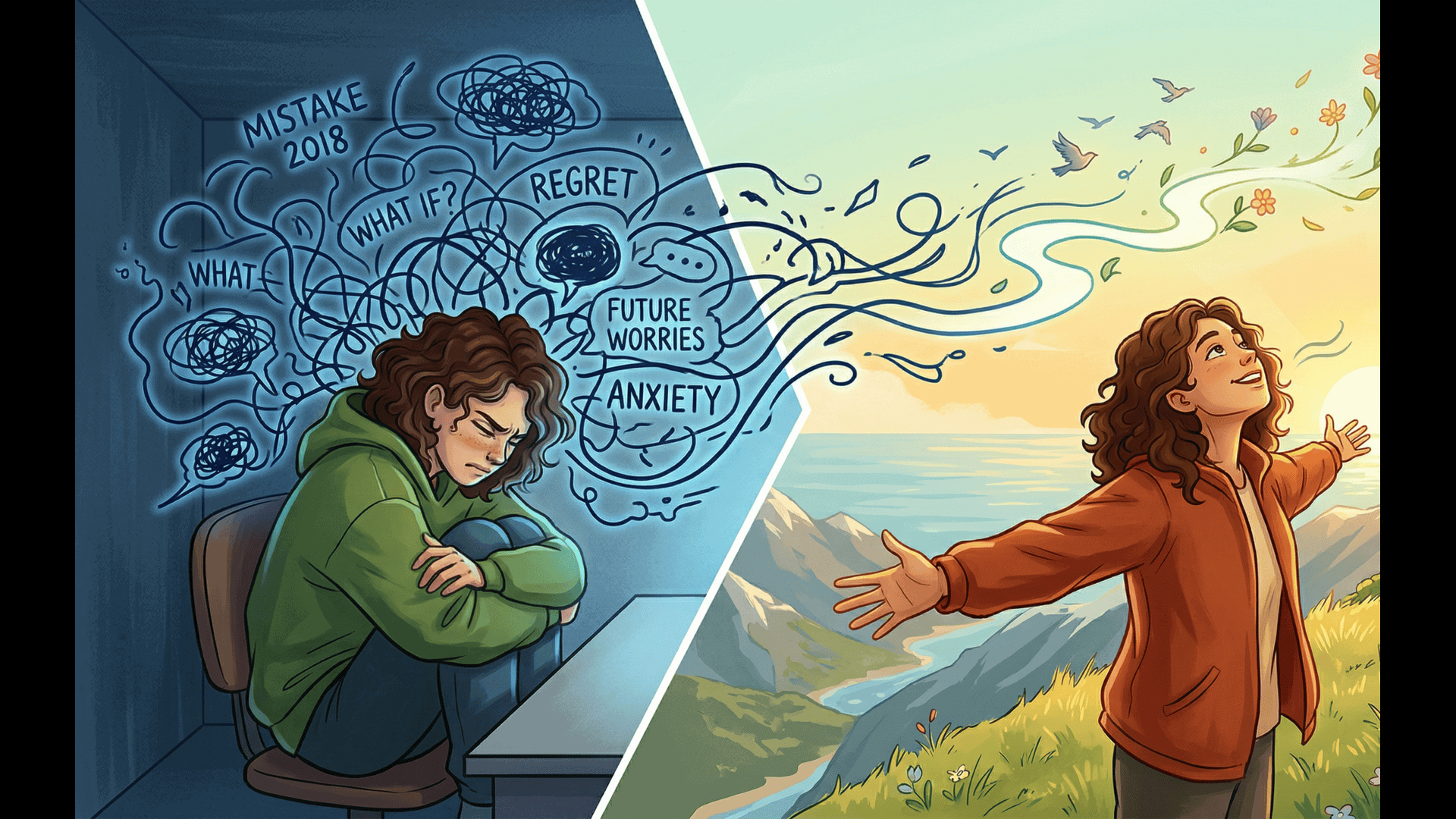
    Let’s be entirely real for a second. Have you ever found yourself staring blankly at the ceiling at 3:00 AM, mentally replaying a slightly awkward conversation you had in 2018? Or perhaps you’ve spent forty-five minutes drafting, deleting, and redrafting a simple two-sentence email to a colleague, terrified that a misplaced exclamation point will somehow ruin your career?

    If you are nodding your head right now, take a deep breath and relax your shoulders. You are in excellent company.

    Overthinking is the ultimate joy-thief. It is a heavy, invisible backpack we lug around every single day. It drains our energy, steals our present moments, and tricks us into believing that if we just analyze a situation from forty-seven different angles, we can somehow control the outcome. But here is the truth: you can’t.

    If you are exhausted from living exclusively inside your own head, you have come to the right place. This guide is all about how to stop overthinking and start living. We are going to break down why our brains do this, how to short-circuit the overthinking loop, and most importantly, how to step back into the real, vibrant, messy world.


    What Actually Is Overthinking?

    Before we can fix the problem, we need to name it. Overthinking isn’t just “thinking a lot.” It’s an exhausting cycle of repetitive, unproductive thoughts. It usually falls into two main camps:

    1. Rumination: This is when your brain gets stuck in the past. It looks like beating yourself up over past mistakes, replaying old conversations, or obsessing over things you “should have” done differently.
    2. Worrying: This is when your brain gets stuck in the future. It involves catastrophizing, predicting worst-case scenarios, and stressing over things that haven’t even happened yet (and likely never will).

    There is a massive difference between problem-solving and overthinking. Problem-solving leads to an action plan. Overthinking leads to analysis paralysis, where you spin your wheels in the mud until the engine burns out.

    Why Do We Overthink? (Spoiler: It’s Not Your Fault)

    If overthinking makes us so miserable, why on earth do we do it?

    First, give yourself some grace. Our brains are biologically wired to keep us safe, not necessarily to keep us happy. From an evolutionary standpoint, the humans who hyper-fixated on the rustling in the bushes (thinking it was a tiger) survived. The ones who didn’t overthink it got eaten. Your brain is just trying to protect you by anticipating danger.

    However, we no longer live in a world where we need to constantly scan the horizon for predators. Instead, our modern “tigers” are performance reviews, social media algorithms, and complex relationships.

    Additionally, we need to recognize that everyone’s brain is wired differently. For folks navigating anxiety, trauma, or neurodivergence (like ADHD or Autism), overthinking isn’t just a bad habit; it can be a deeply ingrained coping mechanism or a symptom of how their brain processes information.

    If you want to dive deeper into the science of anxiety and thought patterns, the National Institute of Mental Health (NIMH) has some incredible, accessible resources that explain the biology behind why our brains get stuck on high alert.


    8 Actionable Strategies to Stop Overthinking

    Okay, enough theory. How do we actually stop the mental spiral? You can’t just tell your brain to “stop thinking.” (If you’ve ever tried to force yourself not to think about a pink elephant, you know exactly how well that works).

    Instead, you have to reroute your brain’s energy. Here are eight practical, inclusive, and proven strategies to quiet the noise.

    1. Name It to Tame It (The Power of Awareness)

    You cannot change a habit you are not aware of. Often, we are twenty minutes deep into an overthinking spiral before we even realize we’ve left the present moment.

    Start by simply noticing when you are doing it. When you catch yourself spiraling, say it out loud (or in your head): “I am overthinking right now.” Or, “I am noticing that I am worrying about tomorrow.” By labeling the behavior, you create a tiny sliver of distance between you and the thought. You are no longer the thought; you are the observer of the thought.

    2. The 5-4-3-2-1 Grounding Technique

    When your mind is racing into the future or the past, the quickest way to pull it back is through your physical body. The 5-4-3-2-1 technique is a sensory mindfulness trick that forces your brain to process your immediate environment.

    Look around you and name:

    • 5 things you can see (the texture of the wall, a coffee cup, a plant).

    • 4 things you can physically feel (the chair beneath you, the fabric of your shirt).

    • 3 things you can hear (the hum of the fridge, birds outside).

    • 2 things you can smell (coffee, fresh air, a candle).

    • 1 thing you can taste (mint, leftover lunch, or just the feeling of your own breath).

    This acts as a gentle reboot button for a panicked nervous system.

    3. Do a “Brain Dump”

    Overthinking often happens because our brains are trying to juggle too many tabs at once. When you hold thoughts in your head, they feel massive and chaotic.

    Grab a physical piece of paper and a pen (typing works, but writing by hand engages different parts of the brain). Write down absolutely everything that is in your head. Do not edit it. Do not worry about spelling, grammar, or logic. Just dump it all out.

    Once it is on paper, it instantly loses half its power. You can literally look at the list and say, “Okay, half of this is out of my control, and the other half I can deal with tomorrow.”

    4. Schedule “Worry Time”

    This sounds counterintuitive, but it is a game-changer recommended by cognitive-behavioral therapists. Instead of letting worry bleed into every hour of your day, give it an itinerary.

    Schedule 15 minutes a day (say, at 4:30 PM) specifically for worrying. When an anxious thought pops up at 10:00 AM, you don’t fight it. You just tell yourself, “I see you, but we aren’t dealing with you until 4:30.” When 4:30 rolls around, sit down and worry your heart out. Write it down, stress about it, analyze it. But when the 15-minute timer goes off? You are done. You get up, physically shake it off, and move on with your evening.

    5. The “Control vs. No Control” Venn Diagram

    A massive chunk of overthinking is dedicated to things we have absolutely zero power over. What other people think of us, how the economy will shift, or whether it will rain on our vacation.

    Draw a circle on a piece of paper. Inside the circle, write down everything regarding your current stressor that you can control (your attitude, your effort, your boundaries, your words). Outside the circle, write down everything you cannot control (other people’s reactions, the past, the future).

    Force your brain to focus exclusively on the inside of that circle. Let the rest go.

    6. Challenge Your Inner Critic

    Overthinking is notorious for lying to us. It tells us that everyone hates us, that we are going to fail, and that disaster is imminent.

    When you catch a negative thought looping, put it on trial. Ask yourself:

    • Is this thought actually 100% true?
    • What is the factual evidence that supports this thought?
    • What is the evidence against it?
    • What would I tell a friend who was having this exact same thought?

    Usually, you will find that your brain is making massive leaps in logic based on fear, not facts.

    7. Move Your Body (Change Your State)

    Emotions and anxious thoughts get trapped in the physical body. When you are stuck in your head, the fastest way out is to get into your body.

    You don’t need to run a marathon. Just change your physiological state. Do 10 jumping jacks. Put on a song you love and dance around your kitchen. Go for a brisk 10-minute walk without your phone. Splash ice-cold water on your face (this actually triggers the mammalian dive reflex, which instantly slows down your heart rate). By moving the stagnant energy, you break the cognitive loop.

    8. Call in the Professionals

    There is a massive stigma around mental health, but let’s clear the air: going to therapy is like going to the gym for your brain. If you have been overthinking for years and it is impacting your sleep, your relationships, or your career, you do not have to fix it alone.

    A licensed therapist can help you identify your specific triggers and give you personalized tools to re-wire your thought patterns. If you don’t know where to start, the Psychology Today Therapist Directory is a fantastic resource to find inclusive, verified professionals in your area.


    The Pivot: How to Actually Start Living

    Stopping the overthinking is only half the battle. If you create a vacuum by removing all those racing thoughts, you have to fill that space with something beautiful, or the anxiety will just creep right back in.

    Here is how you transition from just surviving in your head to actively living in the world.

    Embrace “Good Enough”

    Perfectionism is overthinking’s best friend. We overthink because we want everything to be perfect before we take a step. But life isn’t perfect; it’s messy, chaotic, and beautifully flawed.

    Adopt the mantra: “Done is better than perfect.” Send the email with a typo. Start the hobby even if you are terrible at it. Wear the outfit even if you haven’t lost those 10 pounds. Give yourself permission to be a gloriously imperfect human being.

    Find Your “Flow State”

    When was the last time you were doing something and completely lost track of time? That is called a “flow state.” It happens when you are fully immersed in an activity that challenges you just enough to keep you engaged, but not so much that you get frustrated.

    Flow states are the antidote to overthinking because they demand your full, present attention. Whether it’s gardening, painting, coding, baking bread, playing video games, or writing, make time for activities that anchor you entirely in the now.

    Practice Radical Gratitude

    Our overthinking brains are biased toward negativity. We remember the one critical comment and forget the ten compliments. We focus on what is missing rather than what is present.

    Combat this by rewiring your brain for gratitude. This doesn’t mean toxic positivity—you don’t have to pretend everything is awesome when it’s not. It just means intentionally noticing the good. The warmth of your coffee mug. A text from a friend. The fact that your legs carried you out of bed today. When you focus on what is good right here, right now, the anxiety of the future begins to fade.

    Say ‘Yes’ to the Messy, Scary Things

    Overthinking keeps us in our comfort zones. It tells us it’s safer to stay home, to not apply for the job, to not tell that person how we feel.

    Starting to live means feeling the fear and doing it anyway. Start small. Say yes to a social invitation even if your brain is analyzing all the ways it could be awkward. Try a new restaurant. Take a different route to work. Living is an active verb. It requires participation. You have to step out of the bleachers of your mind and get onto the playing field of your life.


    Frequently Asked Questions (FAQ)

    Is overthinking a mental illness?

    Overthinking itself is not a diagnosable mental illness; it is a symptom or a behavior. However, severe and chronic overthinking can be a key symptom of underlying conditions like Generalized Anxiety Disorder (GAD), Obsessive-Compulsive Disorder (OCD), Depression, or ADHD. If overthinking is severely impacting your daily life, it’s worth speaking to a mental health professional.

    How do I stop overthinking in a relationship?

    Relationship overthinking usually stems from a fear of abandonment or insecurity. The best remedy is clear, open communication. Instead of trying to mind-read your partner (“Why did they text ‘ok’ with a period? Are they mad?”), ask them directly. Focus on building your own self-worth outside of the relationship, so you don’t rely entirely on your partner for validation.

    Can overthinking cause physical symptoms?

    Absolutely. Your brain and body are deeply connected. Chronic overthinking keeps your nervous system in a constant state of “fight or flight,” pumping cortisol and adrenaline into your bloodstream. This can lead to headaches, muscle tension, digestive issues, fatigue, insomnia, and a weakened immune system.

    How long does it take to stop overthinking?

    There is no set timeline, because rewiring your brain takes practice. It is like building a muscle. At first, redirecting your thoughts will feel exhausting and difficult. But with consistent practice (using mindfulness, grounding, and boundary-setting), you can start to notice a significant shift in your mental clarity within a few weeks to a few months. Be patient with yourself.


    Conclusion: Your Life is Waiting For You

    Quitting the habit of overthinking is not about achieving some monk-like state of permanent mental silence. You are a human being; you are always going to have thoughts, worries, and moments of doubt.

    The goal isn’t to never overthink again. The goal is to catch yourself doing it faster, unhook yourself from the spiral quicker, and spend less time living in the imaginary future and more time living in the actual present.

    Your life isn’t happening tomorrow. It’s not happening in the mistakes of five years ago. It is happening right now, in this exact second, as you read these words. Take a deep breath, close this tab, and go do something that makes you feel alive.

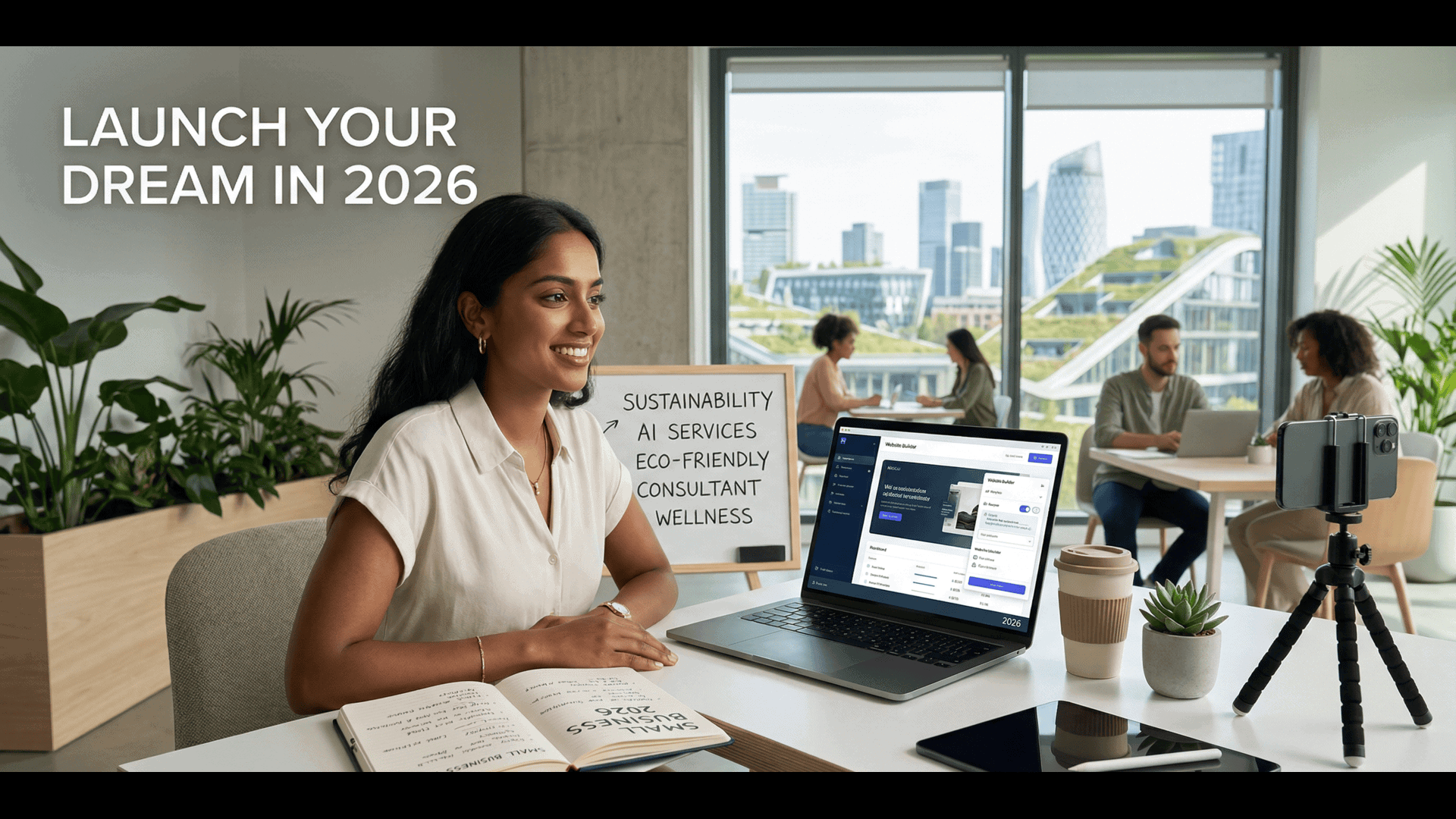
  • The Ultimate Guide to Small Business Ideas for Beginners in 2026

    The Ultimate Guide to Small Business Ideas for Beginners in 2026

    Stepping into the world of entrepreneurship is a thrilling, transformative journey. As we navigate through 2026, the landscape for small businesses is more dynamic, accessible, and exciting than ever before. Whether you are looking for financial independence, a creative outlet, or a flexible schedule that accommodates your unique lifestyle and abilities, starting a small business is a viable path for everyone.

    This comprehensive guide is designed specifically for beginners. We will explore the most promising, low-barrier-to-entry small business ideas tailored to the trends and demands of 2026. From leveraging user-friendly artificial intelligence to championing sustainable practices, there is a niche for your passions and skills.

    Grab a cup of your favorite beverage, get comfortable, and let’s explore how you can turn your entrepreneurial dreams into a tangible reality this year.


    Why 2026 is the Perfect Year to Start a Business

    Before we dive into the specific ideas, it is crucial to understand the current economic and social climate that makes 2026 an ideal launchpad for beginners.

    1. Unprecedented Access to Technology

    Technology is no longer a barrier; it is an equalizer. Tools that previously required thousands of dollars and specialized degrees—such as website building, graphic design, and bookkeeping—are now automated, affordable, and accessible to people of all skill levels.

    2. A Shift Toward Conscious Consumerism

    Consumers in 2026 care deeply about where their money goes. They actively seek out businesses that prioritize sustainability, ethical sourcing, and community impact. This shift gives small, transparent businesses a massive competitive edge over faceless corporations.

    3. The Normalization of Remote and Flexible Work

    The rigid 9-to-5 structure is no longer the only way to operate. Society has embraced flexible working hours, remote services, and asynchronous communication. This allows entrepreneurs from all walks of life—including caregivers, individuals with disabilities, and neurodivergent folks—to build businesses that fit their lives, rather than forcing their lives to fit a business.

    Pro Tip: You do not need to invent something entirely new to be successful. Often, the best small business simply takes an existing service and delivers it with better customer care, more accessibility, or a hyper-local focus.


    Category 1: Digital and AI-Assisted Services

    You do not need to be a software engineer to capitalize on the digital boom. Today’s tech-based businesses are about using existing tools to solve everyday problems for other people.

    1. AI Implementation Consultant for Local Businesses

    Artificial intelligence is everywhere in 2026, but many local business owners—like plumbers, boutique owners, or independent mechanics—feel overwhelmed by it. They know they should be using AI to save time, but they do not know how.

    • How it works: You learn the basics of user-friendly AI tools (like automated email drafters, inventory predictors, or social media caption generators) and set them up for local businesses. You act as the bridge between high-tech solutions and main-street businesses.
    • Initial Investment: Low (Mostly the cost of your own software subscriptions for testing).
    • Required Skills: Basic tech literacy, patience, and good communication skills to explain concepts without jargon.
    • Who this is perfect for: Individuals who love tinkering with new apps and enjoy helping others streamline their daily tasks.

    2. Micro-Niche Newsletter Creator

    The age of the generic lifestyle blog is fading. In 2026, people crave hyper-specific, curated content delivered straight to their inboxes.

    • How it works: You choose a highly specific topic you are passionate about—for example, “Indoor gardening for apartment dwellers in the Pacific Northwest,” or “Gluten-free baking for parents of toddlers.” You curate news, tips, and product recommendations, monetizing through sponsorships, affiliate links, or paid premium subscriptions.
    • Initial Investment: Very Low (Email marketing platforms often have free tiers for beginners).
    • Required Skills: Consistent writing, research abilities, and community building.
    • Who this is perfect for: Passionate hobbyists, introverted creators, and anyone who enjoys researching niche topics.

    3. Digital Decluttering Specialist

    Just as people hire organizers to clean their physical homes, a growing number of people are drowning in digital clutter: thousands of unread emails, disorganized cloud drives, and full phone storage.

    • How it works: You offer a secure, confidential service where you help clients organize their digital lives. This includes setting up folder structures, unsubscribing them from junk mail, backing up precious family photos, and implementing password managers.
    • Initial Investment: Low.
    • Required Skills: Extreme organization, trustworthiness, and knowledge of data privacy best practices.
    • Who this is perfect for: Highly organized individuals who find satisfaction in creating order out of chaos.

    Category 2: Sustainable and Eco-Conscious Ventures

    The green economy is booming. Starting a business that helps the planet is not just good karma; it is brilliant business strategy in 2026.

    4. Upcycled Clothing and Furniture Flipper

    Fast fashion and disposable furniture are losing their appeal. Consumers want unique pieces with history and a lower carbon footprint.

    • How it works: You source overlooked items from thrift stores, estate sales, or online marketplaces. You then repair, paint, or completely reimagine these items and sell them at a premium on platforms like Etsy, Facebook Marketplace, or at local craft fairs.
    • Initial Investment: Low to Medium (Cost of initial inventory, cleaning supplies, tools, and paint).
    • Required Skills: A good eye for design, basic repair skills, and patience.
    • Who this is perfect for: Creative individuals who enjoy hands-on work and have a passion for sustainability.

    5. Local Composting Service

    Many people want to compost their food scraps but lack the outdoor space, time, or knowledge to do it themselves.

    • How it works: You provide clients with a specialized bin. Once a week, you drive a route, collect their organic waste, and leave them a clean bin. You then compost the waste in a larger facility (or partner with a local farm) and optionally return the nutrient-rich soil to your clients in the spring.
    • Initial Investment: Medium (Requires a reliable vehicle, collection bins, and a space to compost).
    • Required Skills: Reliability, willingness to do physical labor, and basic knowledge of the composting process.
    • Who this is perfect for: Outdoorsy individuals who want to make a tangible, immediate impact on their local environment.

    6. Zero-Waste Home Goods Consultant

    Transitioning to a zero-waste lifestyle is intimidating. Many consumers want to reduce their plastic use but do not know which eco-friendly products actually work.

    • How it works: You offer in-home or virtual consultations to help families swap out their disposable items for sustainable alternatives. You can also sell starter kits containing items like reusable paper towels, beeswax wraps, and solid dish soap.
    • Initial Investment: Low.
    • Required Skills: Deep knowledge of sustainable products and empathetic communication.
    • Who this is perfect for: Eco-advocates who love sharing their lifestyle changes with others.

    Category 3: Health, Wellness, and Caregiving

    As life becomes increasingly digital, the demand for human connection, personalized care, and wellness services continues to skyrocket.

    7. Specialized Mobile Pet Care

    The pet industry is virtually recession-proof, but pet owners in 2026 are looking for more than just a standard dog walker. They want specialized care tailored to their pets’ unique needs.

    • How it works: Offer niche services such as mobility assistance for older dogs, anxiety-reducing play sessions for animals from shelters, or specialized care for unique pets (like reptiles or birds). By specializing, you can charge a premium and build a deeply loyal client base.
    • Initial Investment: Low (Marketing materials, basic pet first-aid certification).
    • Required Skills: Comfort and experience with animals, reliability, and empathy for pet parents.
    • Who this is perfect for: Animal lovers looking for an active, rewarding business that gets them out of the house.

    8. Digital Detox Guide

    With screen time at an all-time high, burnout is a modern epidemic. People are actively seeking ways to disconnect, but they struggle to do it alone.

    • How it works: You curate offline experiences. This could range from organizing tech-free weekend retreats in nature to offering one-on-one coaching to help clients establish healthier boundaries with their smartphones and social media.
    • Initial Investment: Low to Medium (Depending on if you host events or just offer coaching).
    • Required Skills: Coaching or counseling background is helpful, excellent active listening, and event planning skills.
    • Who this is perfect for: Wellness advocates, former corporate employees who have conquered burnout, and empathetic listeners.

    9. Virtual Assistant for Neurodivergent Entrepreneurs

    There is a massive rise in small businesses owned by individuals with ADHD, Autism, and other forms of neurodivergence. These brilliant creators often need help managing the executive functioning aspects of their business.

    • How it works: You act as a specialized Virtual Assistant. Instead of just doing standard admin work, you help create visual schedules, manage overwhelming inboxes, gently body-double during work sessions, and keep projects on track in a way that respects their unique working style.
    • Initial Investment: Very Low.
    • Required Skills: Empathy, deep understanding of neurodivergent traits, supreme organization, and non-judgmental communication.
    • Who this is perfect for: Naturally organized individuals who thrive in a supportive, care-oriented role.

    Category 4: The Creator Economy and Freelance Services

    The traditional boundaries between “freelancer” and “business owner” have blurred. If you have a skill, you can package it into a scalable business.

    10. Short-Form Video Editor

    Platforms like TikTok, Instagram Reels, and YouTube Shorts dominate the internet. Every brand, real estate agent, and local bakery knows they need short-form video content, but they lack the time or skill to edit it.

    • How it works: Clients send you their raw, unedited footage recorded on their phones. You trim the fluff, add engaging captions, trending audio, and pacing to make the videos highly watchable.
    • Initial Investment: Low (A reliable computer and video editing software like Premiere Pro or CapCut).
    • Required Skills: Understanding of social media trends, an eye for pacing, and technical editing skills.
    • Who this is perfect for: Visual thinkers, social media natives, and creative introverts.

    11. Accessible Document Creator

    In 2026, web accessibility is not just a moral obligation; it is often a legal requirement. Many businesses have PDF guides, menus, or forms that are completely unreadable by screen readers used by visually impaired individuals.

    • How it works: You learn the standards of document accessibility (like proper heading structures, alt-text for images, and logical reading orders). You then offer a service to businesses to audit and convert their existing documents into accessible formats.
    • Initial Investment: Low.
    • Required Skills: Attention to detail, basic understanding of accessibility guidelines (WCAG), and proficiency in software like Adobe Acrobat or Microsoft Word.
    • Who this is perfect for: Detail-oriented individuals who want to make the digital world more inclusive for everyone.

    12. “Done-for-You” Meal Prep Service for Niche Diets

    While large meal kit companies exist, they often fail to cater to highly specific dietary needs or locally sourced preferences.

    • How it works: You cook and deliver meals tailored to specific demographics in your community. Examples include: anti-inflammatory meals for people managing chronic health conditions, soft-food diets for older adults, or high-protein meals for people focused on strength and fitness.
    • Initial Investment: Medium (Requires commercial kitchen space rental, permits, ingredients, and packaging).
    • Required Skills: Excellent cooking skills, understanding of food safety regulations, and knowledge of nutrition.
    • Who this is perfect for: Culinary enthusiasts who love feeding people and understanding the science of food.

    Step-by-Step: How to Launch Your Small Business in 2026

    Having an idea is only ten percent of the journey. The magic lies in the execution. If you are a beginner, the process can feel intimidating, but breaking it down into manageable steps makes all the difference.

    Step 1: Validate Your Idea

    Do not spend money until you know people want what you are selling. Talk to people in your community. Ask them about their pain points. If you want to start a pet care business, ask local pet owners what they dislike about their current options. Validation saves you from creating a product no one wants to buy.

    Step 2: Create a Minimalist Business Plan

    You do not need a 50-page document. Write down one page covering:

    • The Problem: What are you solving?
    • The Solution: What is your specific service/product?
    • Target Audience: Exactly who is buying this? (Be specific—not “everyone”).
    • Pricing: How much will you charge, and what are your costs?
    • Marketing: How will your first 5 customers find you?

    Step 3: Handle the Legal and Financial Basics

    Keep your personal and business finances strictly separate. Open a dedicated business checking account. Depending on your location and business type, you may need to register an LLC or obtain local licenses.

    External Resource: For trusted, free guidance on legal structures, funding, and local regulations in the US, we highly recommend visiting the Small Business Administration (SBA). They offer incredible, step-by-step roadmaps for beginners.

    Step 4: Build a Simple Online Presence

    In 2026, if you are not online, you do not exist. However, you do not need a massive, expensive website. Start with a simple, clean landing page using tools like Carrd, Squarespace, or a well-optimized Google Business Profile. Ensure your contact information is clear and your pricing is transparent. Make sure your website is accessible to all users, utilizing high-contrast colors and readable fonts.

    Step 5: Leverage Your Immediate Network

    Your first customers are likely going to be people you already know, or people one degree of separation away. Announce your new venture proudly to your friends, family, and social media networks. Ask them to share your business with anyone who might need your services. Word-of-mouth remains the most powerful marketing tool on the planet.


    Overcoming Beginner’s Fear: Mindset Matters

    As you read through these ideas and steps, you might feel a familiar sense of imposter syndrome creeping in. “Am I qualified to do this?” “What if I fail?”

    These feelings are incredibly common and entirely valid. Every successful entrepreneur you admire started exactly where you are today—at the beginning.

    The secret to success in 2026 is not about being flawless; it is about being adaptable. Start small. It is perfectly acceptable to start your business as a “side hustle” working just a few hours a week while maintaining a primary job or caregiving responsibilities. Treat your first year as an experiment. You are simply gathering data on what works, what you enjoy, and what the market is willing to pay for. Give yourself the grace to make mistakes, because every mistake is just a lesson in disguise.


    Frequently Asked Questions (FAQ)

    To wrap up this ultimate guide, let’s address some of the most common questions beginners have when starting a small business in 2026.

    Q1: Do I need a lot of money to start a small business in 2026?

    Absolutely not. The rise of digital tools and service-based business models means you can often start with very little capital. Many of the ideas listed above, like digital decluttering or virtual assistance, require almost zero upfront financial investment—just your time, existing skills, and a reliable internet connection.

    Q2: I am not “tech-savvy.” Can I still run a modern business?

    Yes! While tech is helpful, business is fundamentally about human relationships and solving problems. If you excel at cooking, organizing, or caring for animals, technology is just a tool to help you reach people. Furthermore, the tech tools available in 2026 are designed to be incredibly intuitive and user-friendly, with massive amounts of free tutorials available online.

    Q3: How do I know if my business idea is actually good?

    The best way to know is through market validation. Try to pre-sell your service or product before you fully build it. Talk to your target audience. If people are willing to hand you money to solve their problem, you have a good business idea. If they only offer compliments but no cash, you may need to pivot.

    Q4: Should I quit my day job to start my business?

    For most beginners, the answer is a resounding “no.” Quitting your primary source of income immediately places immense, stressful pressure on your new business to perform right away. It is usually much safer and more sustainable to build your business on the side during evenings or weekends until it generates enough consistent revenue to support you.

    Q5: What is the most important skill for a beginner entrepreneur?

    Resilience. The ability to keep going when things get difficult, the humility to learn from your failures, and the flexibility to adapt to new situations. Skills like marketing and bookkeeping can be learned or outsourced, but a resilient mindset is the foundation of any successful business.


    Conclusion

    Starting a small business in 2026 is a journey of self-discovery, community building, and financial empowerment. Whether you choose to become an AI consultant, a sustainable furniture flipper, or a specialized caregiver, your unique perspective and skills have immense value in the marketplace.

    Remember that there is no single “right” way to build a business. The most successful venture is the one that aligns with your personal values, accommodates your needs, and brings you a sense of purpose. Take that first step, conduct your research, and trust in your ability to learn and grow along the way. The world is waiting for what you have to offer.

  • How to Turn Your Passion into a Profitable Business: A Comprehensive Guide

    How to Turn Your Passion into a Profitable Business: A Comprehensive Guide

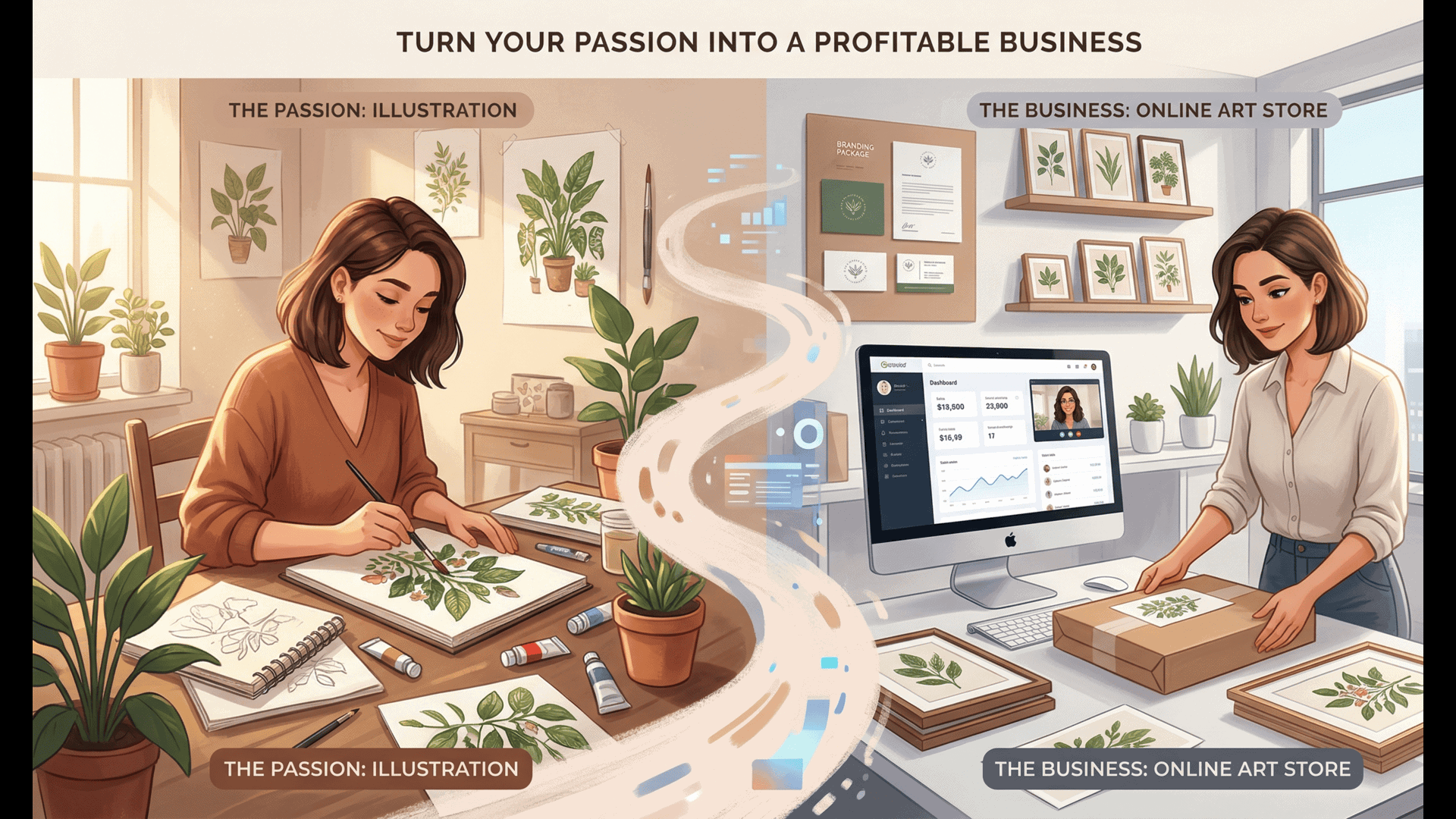
    Have you ever found yourself completely absorbed in a hobby, losing track of time, and thought, “I wish I could do this for a living?” You are not alone. Countless individuals dream of escaping the traditional 9-to-5 grind to build a life centered around what they genuinely love. Learning how to turn your passion into a profitable business is one of the most rewarding journeys an entrepreneur can embark upon.

    However, transitioning from a beloved hobby to a sustainable income stream requires more than just enthusiasm. It demands strategic planning, market awareness, resilience, and a deep understanding of your audience. Whether you are an artist, a tech enthusiast, a baker, or a fitness advocate, this guide will walk you through the essential steps to monetize your passion sustainably and inclusively.


    Phase 1: The Foundation – Discovery and Validation

    Before registering a domain name or designing a logo, you must lay a solid foundation. Passion is the fuel, but strategy is the engine that drives a profitable business.

    1. Evaluate Your Passion: Hobby vs. Business

    Not every passion is meant to be a business, and that is perfectly okay. When a hobby becomes a job, the dynamic changes. You will face deadlines, demanding clients, and administrative tasks.

    Ask yourself these foundational questions:

    • Will doing this under pressure diminish my love for it? If baking brings you peace, will fulfilling an order of 500 cupcakes by Friday morning cause insurmountable stress?
    • Am I willing to do the “un-fun” work? Running a business involves accounting, marketing, customer service, and legal compliance.
    • Is my passion solving a problem or fulfilling a need? A viable business must offer value to others.

    If you answered these questions positively, you are ready to move forward.

    2. Conduct Thorough Market Research

    Passion blinds us to market realities. To turn a passion into a profitable business, you need objective data. You must determine if there is a paying audience for your product or service.

    • Identify the Demand: Use tools like Google Trends, AnswerThePublic, and social media listening to see if people are actively searching for what you want to offer.
    • Analyze the Competition: Who else is doing this? Do not view competitors as enemies; view them as proof of market demand. Analyze their strengths and weaknesses. What are their customers complaining about? That gap is your entry point.
    • Read Industry Reports: Utilize resources like Statista or industry-specific publications to understand market growth and future trends.

    3. Define Your Target Audience Inclusively

    Who are you serving? “Everyone” is not a target audience. You need to create detailed buyer personas, but it is crucial to approach this with an inclusive mindset.

    When defining your audience, look beyond traditional demographic stereotypes. Focus on psychographics: their values, struggles, interests, and aspirations.

    • Accessibility: How can you make your product accessible to people with disabilities?
    • Representation: Does your target audience reflect the diverse world we live in?
    • Empathy: What genuine problems are you solving for your community?

    By building inclusivity into the core of your audience definition, you create a brand that welcomes a broader, more loyal customer base.


    Phase 2: Strategic Planning and Financial Readiness

    With a validated idea and a clear audience, it is time to map out the journey. A goal without a plan is just a wish, especially in entrepreneurship.

    4. Draft a Lean Business Plan

    You do not need a 50-page document to start, but you do need a roadmap. A lean business plan focuses on the core elements of your venture. The U.S. Small Business Administration (SBA) offers excellent templates for creating flexible business plans.

    Your plan should include:

    • Value Proposition: What makes your offering unique? Why should someone choose you over a competitor?
    • Revenue Model: How will you make money? (e.g., direct sales, subscriptions, consulting, affiliate marketing).
    • Marketing Strategy: How will people find out about you?
    • Key Metrics: What numbers will define your success in the first 90 days? (e.g., website traffic, email subscribers, first sale).

    5. Financial Planning: Bootstrapping vs. Funding

    Lack of capital is a primary reason new businesses fail. Before launching, evaluate your financial landscape.

    • Bootstrapping: Funding the business yourself using savings or current income. This approach allows you to retain 100% ownership and grow at your own pace. It is highly recommended for passion-based businesses in their infancy.
    • Keep Your Day Job: Consider starting your business as a side hustle. This reduces financial pressure, allowing you to make strategic decisions rather than desperate ones.
    • Understand Your Costs: Calculate your fixed costs (website hosting, software subscriptions) and variable costs (materials, shipping). Price your products or services to ensure a healthy profit margin. Do not undervalue your time or expertise.

    6. Choose the Right Business Model

    How you deliver your passion to the world matters. Depending on your skills, you might choose:

    • E-commerce/Product-Based: Selling physical goods you create or curate.
    • Service-Based: Offering your skills directly (e.g., freelance writing, photography, consulting).
    • Digital Products: Creating courses, eBooks, or templates. This model offers incredible scalability.
    • Community/Membership: Charging a recurring fee for access to exclusive content or a community.

    Phase 3: Building Your Brand and Online Presence

    Your brand is more than a logo; it is the emotional connection you build with your audience. It is how people feel when they interact with your business.

    7. Cultivate an Inclusive and Authentic Brand Voice

    Your brand voice should reflect your passion while remaining welcoming and accessible. Avoid industry jargon that alienates newcomers. Use language that respects all genders, cultures, and backgrounds.

    For instance, instead of using gendered terms like “hey guys” in your marketing videos, opt for “hi everyone,” “welcome friends,” or “hey folks.” Small shifts in language signal that your business is a safe, welcoming space for all consumers.

    8. Establish Your Digital Storefront

    In today’s digital age, your website is your storefront. Even if you run a local brick-and-mortar shop, an online presence is non-negotiable.

    • Secure a Domain Name: Choose a name that is memorable, easy to spell, and ideally includes a hint of what you do.
    • Build a User-Friendly Website: Platforms like Shopify, WordPress, or Squarespace make it easy to build professional websites without coding knowledge. Ensure your website is mobile-responsive and follows Web Content Accessibility Guidelines (WCAG) so users with visual or motor impairments can navigate it easily.
    • Start an Email List: Do not rely solely on social media algorithms. An email list is an asset you own. Offer a free resource (a lead magnet) in exchange for visitors’ email addresses.

    9. Leverage Social Media Strategically

    You do not need to be on every social media platform. Choose the one or two platforms where your target audience spends their time.

    • Visual Passions: (Art, food, fashion) thrive on Instagram, Pinterest, and TikTok.
    • B2B Services: (Consulting, writing) perform best on LinkedIn and Twitter.
    • Educational Content: YouTube is unparalleled for long-form, tutorial-style content.

    Share your journey, not just your products. People connect with the human behind the brand. Show behind-the-scenes footage, share your failures and triumphs, and engage authentically with your followers.


    Phase 4: Launching, Marketing, and Sales

    The moment of truth has arrived. It is time to introduce your passion project to the world and start generating revenue.

    10. Develop a Minimum Viable Product (MVP)

    Perfectionism is the enemy of progress. Do not wait until your product is flawless to launch. Develop a Minimum Viable Product (MVP)—the simplest version of your offering that still delivers value to the customer.

    By launching an MVP, you can:

    • Test the market without investing massive amounts of time and money.
    • Gather real-world feedback.
    • Generate early revenue to fund further development.

    For example, if your passion is cooking and you want to launch a meal prep service, start by offering three menu options to ten friends and neighbors. Learn from their feedback before renting a commercial kitchen.

    11. Implement Value-Driven Marketing

    Traditional “hard-sell” tactics rarely work for passion-based businesses. Instead, focus on value-driven marketing. Educate, entertain, and inspire your audience.

    • Content Marketing: Write blog posts, record podcasts, or create videos that answer your audience’s common questions. This improves your Search Engine Optimization (SEO) and establishes you as an authority. (Learn more about content marketing basics at the Content Marketing Institute).
    • Collaborations and Partnerships: Partner with other creators or businesses that share your target audience but are not direct competitors. This cross-pollination introduces your brand to a warm, receptive audience.
    • Leverage User-Generated Content: Encourage your early customers to share their experiences. Word-of-mouth remains the most powerful marketing tool.

    12. Master the Art of Selling Ethically

    Many passionate creators struggle with sales, feeling that asking for money taints their art or hobby. Reframing your mindset is crucial.

    If you truly believe that your product or service improves people’s lives, brings them joy, or solves a problem, then selling is simply offering a solution. Be transparent about your pricing, deliver exceptional customer service, and honor your commitments. Ethical selling builds long-term trust and recurring revenue.


    Phase 5: Scaling, Sustaining, and Overcoming Challenges

    Turning a profit is a massive milestone, but sustaining that profitability requires ongoing effort and adaptation.

    13. Listen to Customer Feedback and Iterate

    Your business is a living entity that must evolve. Actively seek feedback from your customers through surveys, direct messages, and reviews.

    • What do they love about your product?
    • What do they wish was different?
    • What new products are they asking for?

    Use this data to iterate and improve. The businesses that survive long-term are the ones that adapt to their customers’ changing needs.

    14. Outsource and Build a Team

    As your business grows, you will become the bottleneck. You cannot be the CEO, the marketer, the creator, and the customer service representative indefinitely.

    To scale, you must delegate. Identify the tasks that drain your energy or fall outside your zone of genius. Hire freelancers, virtual assistants, or part-time employees. By outsourcing administrative tasks, you free up your time to focus on the visionary work that fuels your passion.

    15. Protect Your Mental Health and Avoid Burnout

    When your passion becomes your job, the line between work and life blurs. This makes entrepreneurs highly susceptible to burnout.

    • Set Boundaries: Establish clear work hours. Just because you can work on your business at midnight does not mean you should.
    • Take Time Off: Schedule regular breaks and vacations. Stepping away from the business replenishes your creativity.
    • Find a New Hobby: If your previous hobby is now your job, you need a new outlet for stress relief—something you do purely for joy, with zero intention of monetizing it.

    16. Cultivate a Mindset of Continuous Learning

    The business landscape shifts rapidly. Algorithms change, new competitors emerge, and consumer behaviors evolve. Commit to being a lifelong learner. Read industry books, attend webinars, listen to entrepreneurial podcasts, and network with other business owners. Organizations like SCORE provide free business mentoring and education that can be invaluable for growing businesses.


    Conclusion: The Journey is the Reward

    Turning your passion into a profitable business is rarely a linear path. It is filled with exhilarating highs, frustrating setbacks, and moments of profound self-doubt. However, the reward of waking up every day to build something you deeply care about makes the challenges worthwhile.

    Remember that success does not happen overnight. It is the result of consistent effort, strategic planning, and a genuine desire to serve your audience. Stay true to your inclusive values, remain adaptable, and never lose sight of the joy that sparked your passion in the first place. You have the skills, the vision, and now the roadmap. It is time to take that first step.


    Frequently Asked Questions (FAQ)

    1. How do I know if my passion is profitable?

    You can determine profitability through market research. Look for existing demand by analyzing search trends, identifying competitors, and surveying potential customers. If people are already spending money on similar products or services, and you can offer a unique angle or better quality, your passion has profit potential.

    2. Can I start a business with no money?

    While starting with zero dollars is incredibly difficult, starting with very little money is entirely possible through bootstrapping. Service-based businesses (like freelance writing or consulting) require minimal startup capital. For product-based businesses, consider pre-selling items or utilizing print-on-demand services to avoid holding expensive inventory.

    3. Do I need to quit my job to start my passion business?

    No, and in most cases, you shouldn’t. Starting your business as a side hustle provides financial stability while you test the waters. Once your business revenue consistently matches or exceeds your day job income, you can confidently consider making the leap to full-time entrepreneurship.

    4. How do I price my products or services?

    Pricing is a balance of covering your costs, understanding market rates, and valuing your time. Calculate all materials, software, and overhead costs. Then, factor in an hourly wage for yourself. Research competitors, but do not race to the bottom by underpricing. Compete on value, quality, and customer experience, not just on price.

    5. What is the biggest mistake people make when monetizing a hobby?

    The most common mistake is skipping the market validation phase. Many passionate creators spend months building a product they love, only to discover that nobody else wants to buy it. Always test your idea with a Minimum Viable Product (MVP) before investing heavily in production or marketing.

    6. How do I handle competition in my niche?

    View competition as validation that there is a healthy market for your passion. Instead of copying competitors, find your Unique Value Proposition (UVP). Look for gaps in their offerings or customer complaints in their reviews, and tailor your business to solve those specific issues. Your unique personality and inclusive approach will also serve as a major differentiator.

    7. How do I ensure my business remains inclusive as it grows?

    Inclusivity must be intentional. Regularly audit your marketing materials to ensure diverse representation. Ensure your website and physical products are accessible. Use gender-neutral language in your communications, and actively seek feedback from diverse communities to understand how you can serve them better.

  • Master Your Mind: 10 Proven Study Techniques That Actually Work

    Master Your Mind: 10 Proven Study Techniques That Actually Work

    Whether you are a university student navigating complex lectures, a professional upgrading your certifications, or a lifelong learner picking up a new language, the process of acquiring new information can often feel overwhelming. Many of us were taught what to learn, but very few of us were actually taught how to learn.

    If you have ever spent hours rereading a textbook only to blank out during the exam, you are not alone. The frustration is real, but it is not a reflection of your intelligence. Often, the issue lies entirely in the approach. Traditional studying methods rely heavily on passive learning, which provides a false sense of security. It is time to replace outdated habits with evidence-based strategies.

    This comprehensive guide breaks down 10 proven study techniques backed by cognitive psychology. We will explore how to study smarter, retain information longer, and create an inclusive, accessible learning routine that works for your unique brain.


    The Trap of Passive Learning

    Before diving into what works, we must address what does not. Passive learning techniques are incredibly popular because they feel easy and productive. However, numerous studies, including those published by the American Psychological Association (APA), consistently show that these methods yield the lowest long-term retention rates.

    Common Passive Learning Mistakes:

    • Rereading textbooks or notes multiple times without pausing to reflect.
    • Highlighting or underlining entire paragraphs in neon colors.
    • Listening to a lecture without taking active, synthesized notes.
    • Reviewing summarized study guides created by someone else.

    These activities create “fluency illusions.” Because the material looks familiar when you read it the third time, your brain tricks you into thinking you have mastered it. Real learning requires cognitive friction. It should feel slightly difficult. If your studying feels entirely effortless, you are likely not committing the information to long-term memory.


    1. Active Recall

    Active recall is arguably the most powerful study technique in existence. Instead of putting information into your brain (like reading), active recall forces you to pull information out of your brain.

    Why It Works

    When you actively retrieve an answer from your memory, you strengthen the neural pathways associated with that information. Research shows that the very act of trying to remember something makes you more likely to remember it in the future.

    How to Implement Active Recall

    • Close your book after reading a chapter and write down everything you remember on a blank piece of paper.
    • Convert your notes into a list of questions rather than a list of facts.
    • Teach the material to a friend or simply speak it out loud to an empty room.

    Common Mistake

    Giving up too quickly when you cannot remember the answer. The struggle of trying to remember is precisely what builds the memory. Give yourself a moment to think before checking your notes.


    2. Spaced Repetition

    Cramming the night before a test might help you pass the next morning, but you will forget nearly all of it within a week. Spaced repetition solves this problem by flattening the “Forgetting Curve”—a psychological concept discovered by Hermann Ebbinghaus, which shows how information is lost over time when there is no attempt to retain it.

    Why It Works

    Spaced repetition involves reviewing material at systematically increasing intervals. You review the information just as your brain is about to forget it. This sends a signal to your brain that the information is important and needs to be stored in long-term memory.

    How to Implement Spaced Repetition

    • Review new material within 24 hours of first learning it.
    • Review it again after three days, then a week, then a month.
    • Use spaced repetition software (SRS) like Anki or Quizlet, which use algorithms to calculate the exact optimal time you should review a specific concept.

    Common Mistake

    Reviewing material you already know perfectly just to feel productive. Spaced repetition relies on focusing your energy on the concepts you struggle with the most.


    3. The Feynman Technique

    Named after the Nobel Prize-winning physicist Richard Feynman, this technique is a mental model for understanding complex concepts. Feynman was famous for his ability to explain dense quantum mechanics in plain, accessible language.

    Why It Works

    Jargon and complex vocabulary often mask a lack of true understanding. If you cannot explain a concept simply, you do not understand it well enough. This technique quickly highlights your knowledge gaps.

    How to Implement The Feynman Technique

    • Write the name of the concept at the top of a blank piece of paper.
    • Write an explanation of the concept as if you were teaching it to a sixth-grader.
    • Identify the areas where you get stuck or resort to using complex jargon.
    • Go back to your source material, re-learn the weak areas, and simplify your explanation further.

    Common Mistake

    Using analogies that are too complicated. Keep your language as simple and accessible as possible. If an eleven-year-old would not understand your explanation, simplify it again.


    4. The Pomodoro Technique

    Attention is a finite resource. Expecting yourself to maintain high-level focus for four hours straight is a recipe for burnout. The Pomodoro Technique, developed by Francesco Cirillo in the late 1980s, uses timeboxing to maintain peak cognitive performance.

    Why It Works

    This method breaks work into manageable intervals (usually 25 minutes), followed by short breaks. Frequent breaks keep your mind fresh, prevent cognitive fatigue, and make the psychological barrier of starting a study session much lower.

    How to Implement The Pomodoro Technique

    • Choose a single task to focus on.
    • Set a timer for 25 minutes and work exclusively on that task without distractions.
    • When the timer goes off, take a strict 5-minute break. Stretch, hydrate, or step away from your desk.
    • After completing four cycles (Pomodoros), take a longer 15 to 30-minute break.

    Common Mistake

    Using your 5-minute break to scroll through social media. Screen time does not allow your brain to rest. Instead, look out a window, do a brief physical stretch, or grab a glass of water.


    5. Interleaving Practice

    When studying math, most learners will practice ten addition problems, followed by ten subtraction problems, followed by ten multiplication problems. This is called “blocking.” Interleaving is the exact opposite: mixing different topics or types of problems together in a single study session.

    Why It Works

    Blocking allows you to turn your brain onto autopilot because you know the strategy required for the next question. Interleaving forces your brain to constantly evaluate the problem and choose the correct strategy, which closely mimics the conditions of a real exam.

    How to Implement Interleaving Practice

    • Create practice tests that draw questions from multiple different chapters or subjects.
    • Switch between related topics during a single study block (e.g., studying Spanish vocabulary for 20 minutes, followed by Spanish grammar for 20 minutes).
    • Avoid spending an entire day studying only one subject.

    Common Mistake

    Switching topics too rapidly. Give yourself enough time to deeply engage with one concept before moving on to the next.


    6. Dual Coding

    The idea of rigid “learning styles” (the belief that you are strictly a visual, auditory, or kinesthetic learner) has been largely debunked by modern neuroscience. Instead, researchers advocate for dual coding: combining verbal materials with visual materials.

    Why It Works

    When you represent information in two different ways—visually and textually—you create two distinct neural pathways to that information in your brain. This makes it much easier to retrieve the memory later.

    How to Implement Dual Coding

    • Draw diagrams, charts, or timelines to accompany your written notes.
    • Find infographics or educational videos that explain the text you are reading.
    • When looking at a diagram in a textbook, practice writing out an explanation of what the graphic represents in your own words.

    Common Mistake

    Focusing on making the visuals look “pretty” rather than accurate. Your diagrams do not need to be artistic masterpieces; they just need to represent the core relationships of the data.


    7. The SQ3R Method

    Reading heavy, academic textbooks can feel like a chore, and it is easy to read ten pages only to realize you absorbed nothing. The SQ3R method is a structured reading strategy designed to maximize reading comprehension.

    Why It Works

    It transforms passive reading into an active, goal-oriented process. By establishing a purpose for reading before you even start, your brain becomes primed to look for specific answers.

    How to Implement The SQ3R Method

    • Survey: Skim the chapter. Look at headings, bold words, charts, and the summary.
    • Question: Turn all the headings and subheadings into questions.
    • Read: Read the text actively, specifically searching for the answers to the questions you just generated.
    • Recite: After each section, look away from the book and summarize the answer to your question out loud.
    • Review: Once you finish the chapter, review all your questions and ensure you can still answer them from memory.

    Common Mistake

    Skipping the “Question” and “Recite” steps. These two steps are the active components that actually cement the knowledge.


    8. Mind Mapping

    For big-picture thinkers who need to see how individual facts connect to a larger framework, mind mapping is an invaluable tool. Popularized by author Tony Buzan, it is a highly visual way to organize information.

    Why It Works

    Traditional outlining is linear and rigid. Mind mapping mimics the way our brains actually work: by radiating ideas outward from a central concept and forming associations.

    How to Implement Mind Mapping

    • Write the main topic in the center of a blank page.
    • Draw branches outward for the primary subtopics.
    • Create smaller, secondary branches for the specific facts, dates, or details associated with those subtopics.
    • Use different colors or simple icons to group related ideas across different branches.

    Common Mistake

    Using too many words. A mind map should rely on keywords and short phrases, not full sentences.


    9. The Leitner System

    The Leitner System is a highly efficient, physical application of spaced repetition using flashcards and multiple boxes. It is an excellent alternative for learners who prefer tactile studying over using digital apps.

    Why It Works

    It prioritizes your weaknesses. Instead of studying all your flashcards equally, the system ensures you study the cards you do not know frequently, and the cards you do know less often.

    How to Implement The Leitner System

    • Create three to five boxes (or designated piles). Put all your new flashcards in Box 1.
    • When you review a card in Box 1 and get it right, move it to Box 2. If you get it wrong, it stays in Box 1.
    • When you review Box 2, any correct cards move to Box 3. Any incorrect cards go all the way back to Box 1.
    • Set a schedule: Review Box 1 every day, Box 2 every three days, and Box 3 once a week.

    Common Mistake

    Cheating yourself. If you hesitate for too long or only get the answer partially right, the card must go back to Box 1. Strict honesty is required for this to work.


    10. Pre-testing and Practice Testing

    You do not need to wait until you have mastered a subject to test yourself. In fact, testing yourself before you study (pre-testing) and continuously taking mock exams (practice testing) are phenomenal ways to accelerate learning.

    Why It Works

    Pre-testing highlights your knowledge gaps immediately, which makes your brain highly receptive to the correct answers when you finally encounter them in your reading. Practice testing reduces test anxiety by familiarizing you with the format and pressure of the actual exam.

    How to Implement Practice Testing

    • Take the practice quiz at the end of a textbook chapter before you actually read the chapter.
    • Search for past exams or practice papers online.
    • Simulate real exam conditions: use a timer, put your phone in another room, and clear your desk.

    Common Mistake

    Looking at the answer key as soon as you get stuck on a practice test. Force yourself to complete the entire test before reviewing your mistakes.


    Building a Holistic and Inclusive Study Environment

    Techniques and strategies are only one piece of the puzzle. Cognitive function is deeply tied to your physical and mental well-being. Furthermore, learning should be accessible and adaptable. What works for a neurotypical brain may require adjustments for an individual with ADHD, dyslexia, or chronic fatigue.

    Optimize Your Biological Hardware

    No study technique in the world can overcome severe sleep deprivation. During sleep—specifically REM and deep sleep stages—your brain consolidates the information you learned that day, moving it from short-term to long-term memory. Pulling an all-nighter effectively destroys the neurological work you just put in. Aim for 7 to 9 hours of quality sleep, stay hydrated to prevent brain fog, and fuel your body with nutrient-dense foods rather than relying entirely on caffeine and sugar crashes.

    Design an Accessible Routine

    Flexibility is key. If sitting at a desk for hours causes physical pain or severe restlessness, adapt. Consider using a standing desk, walking on a treadmill while listening to an audio lecture, or using text-to-speech software if visual reading causes strain. Embrace assistive technologies. Apps that block digital distractions, screen readers, and speech-to-text dictation tools are not shortcuts; they are valid instruments for making education accessible to everyone. Allow yourself the grace to adjust these techniques until they fit your specific cognitive and physical needs.


    Quick Reference Summary

    Technique Best Used For Core Concept
    Active Recall Memorization Testing yourself to retrieve information from memory.
    Spaced Repetition Long-term retention Reviewing material at increasing intervals over time.
    Feynman Technique Complex concepts Explaining topics in simple, jargon-free language.
    Pomodoro Technique Focus & Burnout prevention Working in 25-minute intervals with 5-minute breaks.
    Interleaving Problem-solving skills Mixing different subjects or problem types together.
    Dual Coding Deep comprehension Combining visual graphics with written text.
    SQ3R Textbook reading Survey, Question, Read, Recite, Review.
    Mind Mapping Brainstorming & Outlining Visually connecting related ideas and subtopics.
    Leitner System Flashcard mastery Prioritizing difficult flashcards over easy ones.
    Practice Testing Exam preparation Taking mock exams under realistic conditions.

    Frequently Asked Questions (FAQ)

    Is cramming ever effective?

    Cramming can sometimes help you pass a test the very next day by keeping information in your short-term working memory. However, it is highly ineffective for long-term retention. You will likely forget the vast majority of the information within a few days. Furthermore, cramming elevates cortisol levels (stress), which can actually inhibit memory retrieval during the exam. For true mastery, spaced repetition is always superior.

    Should I listen to music while studying?

    This depends entirely on the individual and the type of task. Research suggests that listening to music with lyrics can interfere with tasks that require reading or writing, as your brain tries to process two streams of language simultaneously. However, instrumental music, lo-fi beats, or ambient noise can block out distracting background sounds and help many learners maintain focus. Experiment to see what helps you concentrate without becoming a distraction itself.

    What is the best time of day to study?

    There is no universal “best” time. It relies on your personal circadian rhythm. Some people are “morning larks” who experience peak cognitive alertness early in the day, making it the best time for deep work and heavy reading. Others are “night owls” who find their peak focus in the late evening. Track your energy levels for a week to identify your personal peak hours and schedule your most difficult study sessions during those windows.

    How do I stay motivated when the material is boring?

    Relying on motivation is a trap; motivation is an emotion, and emotions are fleeting. Instead, rely on discipline and systems. Break the boring material down into extremely small, manageable chunks using the Pomodoro Technique. Connect the material to a larger, meaningful goal (e.g., “I need to pass this required accounting class so I can ultimately start my own business”). Reward yourself after completing a difficult study block.

    Do “Learning Styles” really exist?

    The popular concept of strict learning styles (the idea that you are exclusively a visual learner and cannot learn well through text) is largely a neuromyth unsupported by rigorous scientific data. While individuals certainly have preferences, research indicates that everyone benefits from encountering information in multiple formats. Utilizing techniques like Dual Coding (combining words and pictures) is significantly more effective than artificially restricting yourself to one “style” of learning.

    (For more extensive research on the science of learning, you can explore resources provided by institutions like Edutopia or cognitive psychology journals.)

  • The Future of Education: Why Critical Thinking Should Be Taught in Schools

    The Future of Education: Why Critical Thinking Should Be Taught in Schools

    In an era where all the world’s information is accessible from a device that fits in our pockets, the traditional model of education—memorizing facts and regurgitating them on standardized tests—is rapidly becoming obsolete. Today’s learners do not just need to know what to think; they urgently need to know how to think.

    Teaching critical thinking in schools is no longer a luxury or an advanced elective. It is a fundamental necessity for navigating the complexities of the 21st century. From preparing the next generation for an unpredictable job market to empowering them to decipher facts from misinformation, cognitive agility is the most valuable tool we can equip them with.

    In this comprehensive guide, we will explore why critical thinking is the cornerstone of a modern, inclusive education system, how educators can integrate it into their classrooms, and the profound impact it has on student development.


    The Shift from Memorization to Meaning

    Historically, education systems were designed during the Industrial Revolution. The goal was straightforward: produce a compliant workforce capable of following instructions and executing repetitive tasks. Success was measured by rote memorization and the ability to recall specific dates, formulas, and historical events.

    However, we are now firmly entrenched in the Information Age, transitioning rapidly into the Age of Artificial Intelligence. When algorithms can calculate complex equations in milliseconds and search engines can retrieve historical data instantly, the human advantage shifts. The value now lies in analysis, synthesis, and evaluation.

    Students today are overwhelmed with data. Without the mental framework to filter, verify, and understand this information, they are left vulnerable. Education must pivot from transferring information to fostering intellectual independence.

    What Exactly Is Critical Thinking in a Classroom Context?

    Critical thinking is often treated as an educational buzzword, but its definition is precise. It is the objective analysis and evaluation of an issue in order to form a judgment. In a classroom setting, it involves several interconnected skills:

    • Observation: Gathering information through the senses and recognizing patterns.
    • Analysis: Breaking down complex information into its component parts to understand its structure.
    • Inference: Drawing logical conclusions based on evidence rather than assumptions.
    • Evaluation: Assessing the credibility, relevance, and bias of information sources.
    • Problem-Solving: Developing effective, creative solutions to overcome challenges.
    • Metacognition: Thinking about one’s own thinking; recognizing personal biases and blind spots.

    When a student applies these skills, they stop asking, “Is this on the test?” and start asking, “Why does this matter, and how does it connect to what I already know?”


    Top Reasons Why Critical Thinking Belongs in Schools

    Integrating critical thinking into the curriculum offers profound benefits that extend far beyond the classroom walls. Here is why it must be a priority for educational institutions worldwide.

    1. Future-Proofing Careers in an Automated World

    The job market is undergoing a seismic shift. According to the World Economic Forum’s Future of Jobs Report, analytical thinking, creative thinking, and complex problem-solving consistently rank among the top skills desired by employers.

    Routine, manual, and even some cognitive tasks are being automated by AI. The jobs of tomorrow—many of which do not even exist yet—will require human beings to manage ambiguity, connect disparate ideas, and innovate. By teaching critical thinking, schools provide learners with a flexible, universally applicable skill set that cannot be easily replaced by machines.

    2. Navigating the Misinformation Epidemic

    We live in an ecosystem of deepfakes, clickbait, algorithmic echo chambers, and viral misinformation. When students lack media literacy and critical evaluation skills, they are easily manipulated by sensationalism and false narratives.

    Teaching critical thinking equips learners with an internal fact-checker. They learn to ask vital questions:

    • Who is the author of this content?
    • What is their hidden agenda or bias?
    • Is the evidence cited scientifically sound or anecdotal?

    By fostering this healthy skepticism, educators empower individuals to make informed decisions about their health, their finances, and their communities.

    3. Fostering Emotional Intelligence and Inclusive Empathy

    Critical thinking is not entirely a cold, logical process; it is deeply intertwined with emotional intelligence. A core component of critical thinking is the ability to step outside one’s own perspective and consider alternative viewpoints.

    When schools cultivate these skills, they promote a more inclusive environment. Students learn to challenge stereotypes, question systemic biases, and listen to marginalized voices. Instead of reacting defensively to opposing opinions, they learn to analyze them objectively. This reduces polarization and fosters a culture of empathy and mutual respect.

    4. Nurturing Independent and Confident Learners

    A classroom focused solely on the “right answer” breeds anxiety and a fear of failure. Conversely, a classroom that values the process of thinking builds resilience.

    When students are encouraged to hypothesize, test, fail, and iterate, they realize that making mistakes is a natural part of learning. This shifts their mindset from a fixed view of their abilities to a growth mindset. They become confident, independent self-starters who trust their own intellectual capabilities.

    5. Enhancing Civic Engagement and Democratic Participation

    A functioning society relies on an informed and engaged citizenry. Voters are routinely asked to make decisions on complex policies involving economics, healthcare, and the environment. Without critical thinking, voters are easily swayed by emotional rhetoric and demagoguery.

    By teaching students to analyze policy proposals, understand cause-and-effect relationships, and debate civilly, schools act as the training ground for active, responsible citizenship.


    How Educators Can Integrate Critical Thinking (Practical Strategies)

    A common misconception is that critical thinking is a separate subject to be taught in isolation. In reality, it should be woven into the fabric of every subject. Here are inclusive, accessible ways educators can bring this into their daily routines:

    Shift from Lecture to Socratic Dialogue

    Instead of delivering information via one-way lectures, educators can use the Socratic method. This involves asking probing, open-ended questions that force students to examine their assumptions. For example, instead of stating the causes of a historical conflict, a teacher might ask, “What economic factors might have pressured these two nations into war?”

    Implement Project-Based Learning (PBL)

    Project-based learning involves presenting learners with a real-world problem and asking them to design a solution. Whether it is calculating the environmental impact of the school’s cafeteria or writing a business plan for a community need, PBL forces students to synthesize information from multiple disciplines (math, science, language arts) to achieve a tangible goal.

    Encourage Debate and Role-Play

    Structured debates teach students how to construct logical arguments, anticipate counterarguments, and communicate effectively. Role-playing historical figures, scientists, or literary characters forces students to inhabit perspectives completely different from their own, building cognitive flexibility. For resources on structuring debates, organizations like Edutopia offer excellent educator toolkits.

    Teach Information Literacy Directly

    Educators should bring real-world media into the classroom. Analyzing a news article, a political advertisement, or even a popular TikTok trend helps students practice identifying logical fallacies, emotional manipulation, and statistical misrepresentation in real-time.


    Overcoming the Barriers to Critical Thinking in Education

    If the benefits are so clear, why isn’t critical thinking the primary focus of every school? The reality is that educators face significant systemic barriers.

    The Tyranny of Standardized Testing

    In many educational systems, school funding and teacher evaluations are tied to student performance on multiple-choice standardized tests. These tests are highly efficient at measuring factual recall but notoriously poor at measuring nuanced, critical thought. Teachers often feel immense pressure to “teach to the test,” leaving little time for deep exploration. Solution: Advocacy for alternative assessment models, such as portfolio reviews and performance-based assessments, is crucial.

    Time Constraints and Overpacked Curriculums

    Curriculums are often a mile wide and an inch deep. Teachers are expected to cover a massive amount of content within a single school year. Critical thinking requires time—time to pause, discuss, debate, and reflect. Solution: Educational boards must prioritize depth over breadth, allowing teachers to focus on fundamental concepts rather than rushing through an exhaustive list of topics.

    Ensuring Equitable Access

    Historically, critical thinking and advanced problem-solving tracks were reserved for “gifted” programs, which often suffered from systemic biases and excluded students from underrepresented backgrounds or those with neurodivergent learning profiles. True educational reform requires that critical thinking frameworks are applied universally, ensuring that all learners, regardless of background or learning style, are given the opportunity to develop these high-level cognitive skills.


    Conclusion

    The primary goal of education should not be to fill a student’s mind with facts, but to teach them how to use their mind effectively. By prioritizing critical thinking in schools, we are doing more than just improving academic outcomes. We are empowering the next generation to be resilient problem-solvers, empathetic citizens, and adaptable professionals capable of thriving in a complex, ever-changing world.

    It is time to move beyond the rote memorization of the past and embrace an educational model that respects the intellect and potential of every student.


    Frequently Asked Questions (FAQ)

    Q1: At what age should schools start teaching critical thinking?

    Critical thinking should begin in early childhood education. While the complexity of the concepts scales with age, even kindergarteners can be taught foundational skills. Asking young children “why” they think something happens, encouraging them to sort objects by different categories, and teaching them to resolve interpersonal conflicts are all early forms of critical thinking.

    Q2: Does teaching critical thinking mean students will become cynical or argumentative?

    No. There is a distinct difference between being critical and being cynical. Cynicism is a general distrust of motives, while critical thinking is the objective evaluation of information. Furthermore, true critical thinking includes learning how to construct and deconstruct arguments respectfully, which actually reduces hostile argumentation and promotes civil discourse.

    Q3: How can parents support critical thinking at home?

    Parents can support these skills by asking open-ended questions rather than providing immediate answers. If a child asks how something works, reply with, “What do you think?” Encourage them to explain their reasoning. Additionally, discussing news events as a family and encouraging children to read books from diverse perspectives helps build cognitive empathy and analytical skills.

    Q4: Is critical thinking only relevant to STEM (Science, Technology, Engineering, Math) subjects?

    Absolutely not. While it is vital for the scientific method and mathematical logic, critical thinking is equally crucial in the humanities. In literature, it is used to analyze character motivations and thematic elements. In history, it is used to evaluate primary sources and understand the biases of historical narratives. It is a universal skill.

    Q5: Can critical thinking be accurately graded or assessed?

    Yes, but not easily through traditional multiple-choice tests. Assessing critical thinking requires qualitative methods, such as grading essays using rubrics that focus on the strength of the argument and use of evidence. Project presentations, debates, and peer reviews are also excellent ways for educators to evaluate a student’s critical thinking capabilities.

  • The Transformative Impact of Technology on Education: A Comprehensive Guide to the Future of Learning

    The Transformative Impact of Technology on Education: A Comprehensive Guide to the Future of Learning

    The classroom of today looks remarkably different from the classroom of just two decades ago. The chalkboard has been replaced by interactive smartboards, heavy textbooks have given way to lightweight tablets, and the traditional lecture format is increasingly making room for personalized, digital-first learning experiences. The impact of technology on education is profound, far-reaching, and continually evolving. It is reshaping how educators teach, how learners acquire knowledge, and how institutions operate on a global scale.

    However, integrating technology into education is not simply about placing a screen in front of a student. It is about fundamentally rethinking pedagogy to foster engagement, accessibility, and critical thinking. As we navigate this digital renaissance, it is crucial to examine both the incredible opportunities and the persistent challenges that educational technology (EdTech) brings to the table.

    This comprehensive guide explores the evolution of digital classrooms, the tangible benefits of EdTech, the challenges we must overcome to ensure equitable access, and what the future holds for learners worldwide.


    The Evolution of the Modern Classroom

    To understand the current impact of technology on education, it is helpful to look back at how we arrived here. The integration of technology in learning spaces has occurred in distinct phases, moving from basic administrative tools to deeply immersive learning environments.

    1. The Analog Era and Early Digitization

    In the late 20th century, classroom technology was largely limited to overhead projectors, VHS tapes, and the occasional desktop computer reserved for typing class or playing early educational games like The Oregon Trail. Technology was an “event” rather than an integrated part of the daily curriculum.

    2. The Information Age and Internet Access

    With the proliferation of the internet in the late 1990s and early 2000s, the world’s information became accessible from a single terminal. Research shifted from physical encyclopedias to search engines. Schools began building computer labs, but access was still tethered to specific rooms and times.

    3. The 1:1 Device Movement and Cloud Computing

    The true paradigm shift occurred when schools began adopting 1:1 device programs—providing every student with a laptop, Chromebook, or tablet. Coupled with cloud-based platforms like Google Workspace for Education and Microsoft Teams, learning was no longer confined to the four walls of a classroom. Students could collaborate on documents in real-time, submit assignments digitally, and communicate with educators outside of school hours.

    4. The Era of Intelligent and Immersive Learning

    Today, we are entering an era defined by Artificial Intelligence (AI), Virtual Reality (VR), Augmented Reality (AR), and adaptive learning algorithms. Technology is no longer just a delivery mechanism for information; it is an active participant in the learning process, capable of analyzing student performance and tailoring content to individual needs.


    Key Benefits of Technology in Education

    The widespread adoption of educational technology has unlocked a multitude of benefits for students, educators, and administrators alike. When implemented thoughtfully, technology empowers users and creates more inclusive, effective learning environments.

    1. Personalized and Differentiated Learning

    Historically, education has operated on a “one-size-fits-all” model. A teacher delivered a lesson at a set pace, and students were expected to keep up. Technology has shattered this model by enabling personalized learning.

    • Adaptive Learning Software: Platforms can assess a student’s current understanding of a topic in real-time. If a learner struggles with a specific math concept, the software automatically provides additional practice and alternative explanations until mastery is achieved. Conversely, students who grasp the material quickly are challenged with advanced concepts, preventing boredom.
    • Self-Paced Exploration: Digital platforms allow students to learn at their own speed. They can pause, rewind, and re-watch recorded lectures or interactive modules, ensuring they fully comprehend the material before moving forward.

    2. Enhanced Accessibility and Inclusive Education

    One of the most significant impacts of technology on education is its ability to break down barriers for learners with disabilities and those from diverse linguistic backgrounds. EdTech provides vital accommodations that foster true inclusivity.

    • Assistive Technologies: Tools such as text-to-speech (TTS), speech-to-text transcription, and screen readers empower students with visual impairments, dyslexia, or physical disabilities to access curriculum independently.
    • Translation and Captioning: For students learning in a non-native language, real-time translation tools and closed captioning on educational videos provide crucial support, ensuring that language barriers do not impede academic achievement.
    • Diverse Representation: Digital resources allow educators to easily curate content that reflects diverse cultures, perspectives, and histories, moving beyond the limitations of outdated, standardized textbooks.

    3. Fostering Collaboration and Communication

    Technology has redefined what it means to work on a group project. It breaks down geographical barriers and encourages collaboration both within the classroom and across the globe.

    • Real-Time Collaboration Tools: Applications like collaborative word processors and digital whiteboards allow students to brainstorm, edit, and create together simultaneously, even when they are not in the same room.
    • Global Connectivity: Classrooms can now connect via video conferencing with experts, authors, or peer classrooms halfway across the world. This global exchange of ideas fosters cultural competency and broadens students’ worldviews.

    4. Engaging Multimedia and Interactive Content

    Attention spans are evolving, and modern students process information differently than previous generations. Technology caters to various learning styles by providing rich, multimedia experiences.

    • Gamification: Incorporating game design elements—such as points, badges, and leaderboards—into learning activities increases motivation and engagement. Learning becomes an interactive quest rather than a passive chore.
    • Virtual and Augmented Reality: Complex subjects become tangible through immersive tech. Students can virtually dissect a frog, walk through ancient Rome, or explore the human circulatory system from the inside. This experiential learning deeply cements knowledge.

    5. Data-Driven Insights for Educators

    For educators, technology acts as a powerful diagnostic tool. Learning Management Systems (LMS) and educational software generate vast amounts of data on student performance.

    • Early Intervention: Teachers can identify which students are falling behind and exactly where they are struggling before a major exam. This allows for timely, targeted interventions.
    • Curriculum Refinement: By analyzing aggregate data, schools can determine which lesson plans are highly effective and which need to be revised.

    The Role of Artificial Intelligence in the Classroom

    Artificial Intelligence is arguably the most disruptive force in education today. It is important to ground our understanding of AI in reality: AI is not here to replace human educators. Instead, it serves as an incredibly capable assistant, freeing up teachers to do what they do best—mentor, inspire, and connect with students on a human level.

    Intelligent Tutoring Systems

    AI-powered chatbots and tutoring systems are available 24/7 to answer student queries, explain complex concepts, and guide learners through homework problems. These systems use natural language processing to understand the student’s intent and provide conversational, step-by-step assistance.

    Automating Administrative Tasks

    Educators spend a significant portion of their week on administrative duties. AI tools can automate grading for multiple-choice and short-answer tests, organize digital files, and even help draft email communications to parents. This reduction in administrative burden helps combat teacher burnout.

    Lesson Planning and Content Generation

    Generative AI tools can assist teachers in brainstorming lesson plans, creating custom reading passages tailored to specific reading levels, and generating quiz questions. This allows educators to quickly assemble highly customized resources for their classrooms.


    Navigating the Challenges: The Reality of EdTech Integration

    While the benefits are immense, the integration of technology in education is not without significant hurdles. To build an equitable future, we must candidly address these challenges.

    1. The Digital Divide and Educational Equity

    The most pressing issue regarding technology in education is the digital divide. Not all students have reliable access to high-speed internet or modern devices outside of school.

    • The Homework Gap: When assignments require internet access, students from low-income households or rural areas are disproportionately disadvantaged. Schools and policymakers must work together to provide mobile hotspots, subsidized internet programs, and community Wi-Fi initiatives to ensure equitable access to learning resources. For more on digital equity, explore research by the Pew Research Center.

    2. Screen Time and Digital Well-being

    Replacing physical books and active play with prolonged screen time raises valid concerns regarding student physical and mental health.

    • Cognitive Overload: Constant notifications and digital multi-tasking can fragment attention spans and increase stress.
    • Mindful Integration: Educators must balance digital tasks with “unplugged” activities. Technology should be used when it adds pedagogical value, not simply for the sake of using a screen.

    3. Data Privacy and Security

    As schools rely more on digital platforms, they collect massive amounts of sensitive student data—from grades and attendance to behavioral records.

    • Protecting Student Information: Institutions must rigorously vet the privacy policies of the EdTech vendors they use, ensuring compliance with laws like the Family Educational Rights and Privacy Act (FERPA) in the US, or the General Data Protection Regulation (GDPR) in Europe. Safeguarding students against data breaches and unauthorized tracking is paramount.

    4. The Need for Comprehensive Teacher Training

    You can place the most advanced technology in a classroom, but if the educator does not know how to effectively integrate it into their pedagogy, it becomes an expensive paperweight.

    • Professional Development: Schools must invest heavily in ongoing professional development. Teachers need time to explore new tools, collaborate on best practices, and learn how to shift from being the “sage on the stage” to the “guide on the side.”

    The Future of Learning: What Comes Next?

    As we look toward the future, the relationship between technology and education will only deepen. Here are the trends shaping the next decade of learning.

    The Rise of Blended and Hybrid Learning

    The COVID-19 pandemic forced a global experiment in remote education. While purely remote learning has its drawbacks, the future is undeniably blended. Hybrid models—where students combine face-to-face classroom instruction with self-paced digital learning—offer flexibility and cater to a wider variety of learning preferences.

    Micro-credentials and Lifelong Learning

    The rapid pace of technological advancement means that skills become obsolete faster than ever before. Education is shifting from a one-time event (e.g., a four-year degree) to a continuous journey of lifelong learning. We will see a rise in digital micro-credentials, boot camps, and modular courses that allow adult learners to upskill and reskill throughout their careers.

    Deep Immersive Experiences

    As hardware becomes more affordable, VR and AR will become standard classroom tools. Imagine architectural students building and walking through 3D models of their designs, or history students virtually participating in the signing of the Declaration of Independence. The transition from 2D screens to 3D immersive environments will revolutionize experiential learning.


    Conclusion

    The impact of technology on education is a complex, multifaceted phenomenon. It has the power to democratize access to information, personalize the learning journey, and prepare students for a rapidly digitizing workforce. However, technology is simply a tool; its effectiveness depends entirely on how it is utilized.

    To harness the full potential of EdTech, we must prioritize digital equity, protect student privacy, and empower educators with the training they need. By balancing the incredible capabilities of digital tools with the irreplaceable value of human mentorship, we can create an inclusive, engaging, and highly effective educational ecosystem for generations to come.


    Frequently Asked Questions (FAQ)

    1. What is educational technology (EdTech)?

    Educational technology, or EdTech, refers to the hardware, software, and digital platforms designed to enhance teacher-led instruction and improve student learning outcomes. This includes everything from interactive whiteboards and tablets to learning management systems, adaptive software, and AI-powered tutoring tools.

    2. How does technology improve student engagement?

    Technology improves engagement by catering to different learning styles and moving away from passive lecturing. Tools like gamified learning apps, interactive multimedia, video content, and virtual reality make lessons more dynamic, visually stimulating, and hands-on, which helps capture and retain student attention.

    3. What is the “digital divide” in education?

    The digital divide refers to the gap between students who have robust access to the internet and modern digital devices, and those who do not. This disparity creates unequal educational opportunities, as students without home internet access (often referred to as the “homework gap”) struggle to complete assignments, conduct research, or participate in remote learning.

    4. Will AI replace teachers in the future?

    No, AI is highly unlikely to replace teachers. Education is fundamentally a human endeavor that requires empathy, emotional intelligence, moral guidance, and complex behavioral management—traits AI does not possess. AI will, however, automate administrative tasks and provide intelligent tutoring support, allowing teachers to spend more time directly interacting with and mentoring their students.

    5. How can parents help manage screen time for educational purposes?

    Parents can help by distinguishing between active screen time (creating digital art, coding, writing, or interactive learning) and passive screen time (mindlessly scrolling or watching videos). Setting boundaries, encouraging screen-free breaks, and engaging in conversations about what children are learning online can help maintain a healthy digital balance.

    6. Is technology in the classroom safe for student privacy?

    It can be, provided that schools and districts rigorously vet the applications they use. Educational institutions must ensure that the software complies with regional data protection laws (like FERPA or GDPR), uses secure encryption, and explicitly prohibits the selling of student data to third-party advertisers.


    For further reading on best practices for technology integration in the classroom, visit trusted resources for educators such as Edutopia and the International Society for Technology in Education (ISTE).

  • A Comprehensive Comparison of Education Systems Around the World

    A Comprehensive Comparison of Education Systems Around the World

    Education is the cornerstone of societal progress. It shapes the minds of future generations, drives economic innovation, and fosters cultural empathy. However, there is no universal blueprint for how learning should happen. When we look at education systems around the world compared, we see a fascinating tapestry of philosophies, methodologies, and cultural priorities.

    Some nations prioritize rigorous standardized testing to drive academic excellence, while others emphasize play-based learning, emotional well-being, and vocational pathways. As our world becomes increasingly interconnected, understanding how diverse cultures approach schooling can help educators, policymakers, and parents advocate for more inclusive, effective, and holistic learning environments for students of all backgrounds.

    In this comprehensive guide, we will explore the varied educational landscapes across the globe, examining the unique strengths, challenges, and core philosophies of several prominent systems.


    The Core Philosophies of Global Education

    Before diving into specific countries, it is helpful to understand the broad philosophical spectrums that define global education. Most systems lean toward one side of the following concepts:

    • Standardization vs. Individualization: Does the system require all students to meet the exact same benchmarks at the exact same time (standardization), or does it adapt to the unique pace and interests of each learner (individualization)?
    • Academic Rigor vs. Holistic Development: Is the primary goal to achieve high scores in core subjects like math, science, and literacy, or is the focus equally distributed among emotional intelligence, physical health, the arts, and social skills?
    • Centralized vs. Decentralized Control: Are curriculum and funding decisions made at the national level by a single governing body, or are they left to local states, provinces, or municipalities?

    Understanding these spectrums helps us critically analyze why certain countries succeed in specific areas—such as high test scores—while perhaps struggling in others, like student mental health or educational equity.


    Finland: The Champion of Equity and Play-Based Learning

    When education experts discuss the best systems globally, Finland is almost always at the top of the list. The Finnish approach is radically different from many Western and Asian models, focusing heavily on equity, well-being, and trust rather than competition and testing.

    Early Childhood and Play

    In Finland, formal academic schooling does not begin until a child is seven years old. Before that, early childhood education is heavily subsidized and focuses entirely on play, socialization, and emotional development. The belief is that children must first learn how to be children—how to interact with others and explore their environment—before they are subjected to sitting at desks and learning arithmetic.

    Equity Over Excellence

    The Finnish system prioritizes equity. There are no private schools allowed to charge tuition fees, meaning children from affluent families and children from low-income families attend the exact same schools, share the same classrooms, and eat the same free, universally provided school meals. This creates a deeply inclusive environment where resources are distributed evenly.

    Teacher Autonomy and Respect

    Teachers in Finland are highly respected. Teaching is a prestigious, highly competitive profession, requiring a master’s degree funded by the government. Because teachers are so well-trained, the government trusts them to design their own lesson plans and assessments. There is no mandated standardized testing until the very end of high school.

    Read more about the Finnish educational model from the World Economic Forum.


    South Korea: The High-Pressure Powerhouse

    In stark contrast to Finland, South Korea represents a system driven by intense academic rigor, high stakes, and a deep cultural reverence for education as the primary vehicle for social mobility.

    The Pursuit of Academic Excellence

    South Korea consistently ranks at the very top of international assessments, such as the Programme for International Student Assessment (PISA), particularly in mathematics and reading. The system is highly centralized, with a rigorous national curriculum. From a young age, students are conditioned to focus heavily on academics, driven by the belief that hard work and perseverance trump innate talent.

    The Role of “Hagwons” (Shadow Education)

    A defining—and highly controversial—feature of the South Korean system is the reliance on hagwons, or private cram schools. After a full day of regular public school, a vast majority of students attend hagwons late into the evening for tutoring in English, math, science, and test preparation. This “shadow education” system places a significant financial burden on families and creates an exhausting schedule for young learners.

    The Suneung Exam

    The culmination of a South Korean student’s educational journey is the College Scholastic Ability Test (CSAT), known as the Suneung. This singular, nine-hour exam dictates university admissions and, by extension, future career prospects and social standing. The pressure surrounding this exam is so immense that on test day, flights are grounded to prevent noise pollution, and police officers escort late students to testing centers. While the system produces highly capable graduates, there are ongoing national conversations about the urgent need to address student mental health and reduce academic burnout.


    Germany: The Leader in Vocational Pathways

    Germany offers a highly structured education system that is globally renowned for its emphasis on vocational training and its success in keeping youth unemployment remarkably low.

    The Tracking System

    Unlike countries where all students follow a general curriculum through high school, Germany begins tracking students into different educational pathways relatively early—often around age 10 or 12, depending on the state.

    • Gymnasium: Designed for highly academic students, preparing them for the Abitur (the exam required for university entrance).
    • Realschule: Offers a broader general education for students likely to pursue mid-level white-collar careers.
    • Hauptschule: Prepares students for the trades and blue-collar professions.

    While this tracking system is highly efficient, it has faced criticism for potentially locking students into career paths too early, sometimes disproportionately affecting students from immigrant or lower-income backgrounds. However, recent reforms have made it easier for students to move between tracks later in their academic careers.

    The Dual Vocational Education and Training (VET) System

    Germany’s crowning educational achievement is the Dual VET system. Students in this pathway split their time between classroom learning at a vocational school and paid, on-the-job training at a company. This inclusive approach ensures that students who do not wish to pursue a traditional university degree are equipped with highly marketable skills, earning potential, and a direct pipeline into the workforce.

    Explore global vocational trends via the OECD Education Directorate.


    The United States: Decentralization and Diversity

    The education system in the United States is vast, diverse, and fundamentally decentralized, making it difficult to define with a single brushstroke.

    Local Control and Funding Disparities

    Unlike countries with a strict national curriculum, the U.S. federal government has relatively limited control over day-to-day schooling. Decisions regarding curriculum, textbooks, and hiring are largely made at the state and local district levels.

    A critical aspect of the U.S. system is how it is funded. Public schools are heavily reliant on local property taxes. This creates significant disparities: schools in wealthy, high-property-value neighborhoods benefit from state-of-the-art facilities, advanced placement courses, and highly paid teachers, while schools in economically disadvantaged areas often struggle with underfunding and resource shortages. Addressing this funding gap remains one of the most pressing civil rights issues in American education.

    The Holistic Approach to the Student Experience

    Despite its challenges with equity, the U.S. system excels in its holistic approach to student life. American schools place a massive emphasis on extracurricular activities, including athletics, theater, debate clubs, and student government. The philosophy is that education is not just about academics, but about fostering leadership, teamwork, and well-rounded citizens. Furthermore, the U.S. higher education system remains one of the most prestigious in the world, drawing millions of international learners annually.


    Singapore: The Focused Meritocracy

    Singapore, a small island city-state, has rapidly transformed itself into a global educational superpower over the last few decades.

    A Culture of Meritocracy

    Singapore’s system is deeply rooted in meritocracy. The government invests heavily in education, viewing its human capital as its most valuable resource. The curriculum is rigorous, particularly in STEM (Science, Technology, Engineering, and Mathematics) subjects. The “Singapore Math” method—which focuses heavily on conceptual understanding and problem-solving rather than rote memorization—has been so successful that it has been exported to schools worldwide.

    Bilingual Policy

    Inclusivity and global readiness are baked into the curriculum through Singapore’s bilingual policy. All students are taught in English (the primary language of instruction) but are also required to study their “Mother Tongue” (Mandarin, Malay, or Tamil). This ensures that learners remain connected to their cultural heritage while being fully prepared to participate in the global economy.

    Evolving the System: “Teach Less, Learn More”

    Historically, Singapore relied heavily on streaming (tracking students based on ability) and high-stakes exams. Recognizing the immense stress this placed on children, the Ministry of Education has recently shifted toward a “Teach Less, Learn More” initiative. This approach reduces the sheer volume of syllabus content to allow more time for engaged, active learning, critical thinking, and character development, showing a willingness to adapt and prioritize student well-being.


    Canada: High Performance Through Inclusivity

    Canada frequently flies under the radar in global education discussions, yet it consistently ranks among the top-performing nations, particularly in reading and science.

    Provincial Autonomy

    Similar to the United States, Canada has no federal department of education. Each of its 10 provinces and 3 territories administers its own education system. Despite this decentralization, educational outcomes across the country are remarkably consistent and high.

    A Focus on Integration and Equity

    Canada’s true strength lies in its commitment to equity and its inclusive approach to a highly diverse, immigrant-rich population. Canadian schools are highly successful at integrating children of immigrants; within a few years of arrival, these learners typically perform at the same academic level as their native-born peers.

    The system provides robust support for students with diverse learning needs, emphasizing differentiated instruction over rigid standardized testing. Teachers are well-compensated and highly trained, and there is a strong cultural consensus on the value of public education, resulting in very low rates of private school enrollment compared to the U.S. or U.K.


    Japan: Cultivating Character and Community

    Education in Japan is about much more than academic acquisition; it is fundamentally about shaping the moral and social character of the individual to benefit the community.

    The Three Pillars of Learning

    The Japanese curriculum is built on three pillars: chiiku (intellectual education), tokuiku (moral education), and taiiku (physical education). Moral education is an official, graded subject where students learn about empathy, responsibility, justice, and how to function harmoniously within a group.

    O-Soji: Responsibility Through Cleaning

    One of the most unique and inclusive aspects of Japanese schooling is o-soji, or the daily cleaning period. There are very few janitors in Japanese schools. Instead, students—from kindergarten through high school—are responsible for sweeping the classrooms, cleaning the hallways, and even serving lunch to their peers. This practice instills a profound sense of respect for their environment, teaches humility, and reinforces the idea that everyone is equally responsible for the community’s well-being.

    Learn more about global educational statistics and data via the World Bank Education Overview.


    The Future of Global Education: Shared Challenges and Trends

    While the approaches differ wildly, education systems around the world are facing similar challenges and shifting toward common trends as we navigate the 21st century.

    1. The Integration of Artificial Intelligence: From personalized tutoring algorithms to AI-assisted grading, technology is fundamentally changing how instruction is delivered. Systems globally are grappling with how to integrate AI ethically and equitably, ensuring that the digital divide does not widen.
    2. Prioritizing Mental Health: As seen in the reforms in Singapore and South Korea, there is a global awakening to the crisis of student burnout. Schools are increasingly incorporating social-emotional learning (SEL) and mental health resources into their standard offerings.
    3. Lifelong Learning: The traditional model of front-loading education in the first two decades of life is becoming obsolete. With the rapid pace of technological change, systems are looking at how to foster “lifelong learners” who can continuously upskill and adapt to new industries.
    4. Inclusive Education: There is a growing movement worldwide to move away from segregated special education models, instead bringing students with diverse physical, neurological, and cognitive needs into mainstream classrooms with the appropriate support systems in place.

    Conclusion

    When we view education systems around the world compared side-by-side, it becomes clear that there is no perfect model. Finland shows us the power of play and equity; South Korea demonstrates the results of rigorous dedication; Germany highlights the value of respecting all career paths; and Canada proves that diverse, inclusive environments can yield incredible academic results.

    The future of global education relies on our willingness to look beyond our own borders. By sharing best practices, addressing systemic inequalities, and prioritizing the holistic well-being of all learners, we can build educational frameworks that truly prepare the next generation for a complex, beautiful, and interconnected world.


    Frequently Asked Questions (FAQ)

    1. Which country has the “best” education system in the world?

    There is no single “best” system, as success is measured differently depending on cultural values. If the metric is standardized test scores in math and science, Asian nations like Singapore, China, and South Korea usually rank highest. If the metric is student well-being, equity, and lack of systemic stress, Nordic countries like Finland and Estonia are generally considered the global leaders.

    2. What is the PISA test, and why does it matter?

    PISA stands for the Programme for International Student Assessment. It is a worldwide study conducted by the OECD (Organisation for Economic Co-operation and Development) every three years. It measures 15-year-old students’ scholastic performance in mathematics, science, and reading. Policymakers use PISA rankings to compare their nation’s educational effectiveness against global peers and to identify areas for reform.

    3. How does funding affect educational equity globally?

    Funding mechanisms drastically impact educational inclusivity and quality. In countries where schools are funded by a central national government (like Finland or Japan), resources are distributed relatively equally regardless of a neighborhood’s wealth. In systems reliant on local property taxes (like the United States), wealthy areas naturally generate more school funding than impoverished areas, often perpetuating cycles of inequality.

    4. Why is there a growing global focus on Early Childhood Education (ECE)?

    Extensive global research shows that the first five years of a child’s life are critical for brain development. Quality ECE programs improve a child’s cognitive, social, and emotional skills, leading to better outcomes in primary school and beyond. Many forward-thinking systems are investing heavily in universal, subsidized ECE to level the playing field for children from lower-income backgrounds before formal schooling even begins.

    5. What is the difference between “tracking” and “streaming” in education?

    Both terms refer to the practice of separating students based on their perceived academic ability or future career goals. “Tracking” (common in Germany) usually refers to placing students into entirely different types of schools (e.g., vocational vs. academic) based on early assessments. “Streaming” (previously common in Singapore and the UK) often happens within the same school, where students are placed into different difficulty levels for specific subjects based on their test scores. Both practices are highly debated regarding their impact on educational equity.

  • The Ultimate Guide to the Importance of Lifelong Learning: Growth Beyond the Classroom

    The Ultimate Guide to the Importance of Lifelong Learning: Growth Beyond the Classroom

    The world is evolving at an unprecedented pace. Between rapid technological advancements, shifting cultural landscapes, and dynamic global economies, the idea that education ends the moment we receive a diploma is not just outdated—it is actively holding us back. Today, thriving requires a commitment to continuous growth. This is where lifelong learning steps in.

    Lifelong learning is not just a buzzword for corporate seminars; it is a fundamental approach to personal and professional development that empowers everyone, regardless of age, background, or ability. Whether you are aiming to pivot in your career, keep your mind sharp as you age, or simply discover a new passion, adopting a continuous learning mindset is your greatest asset.

    In this comprehensive guide, we will explore why lifelong learning matters, how it benefits your brain, career, and personal life, and how you can seamlessly integrate it into your daily routine. We will also address common barriers and provide actionable solutions to help you become a resilient, self-directed learner.


    What Exactly is Lifelong Learning?

    Lifelong learning is the self-motivated, voluntary, and ongoing pursuit of knowledge for either personal or professional reasons.

    Historically, education was viewed as a linear path: you went to school, learned a trade or earned a degree, and then entered the workforce to apply those specific skills until retirement. That model is no longer sufficient. Today, the “half-life” of a learned skill—the time it takes for a skill to become half as valuable—is shrinking rapidly.

    Lifelong learning breaks the traditional mold by embracing the idea that education is a continuous, lifelong journey. It encompasses several different types of education:

    • Formal Learning: Structured educational programs, such as university degrees, vocational training, or certificated online courses.
    • Informal Learning: Unstructured, spontaneous learning that happens in daily life. This could be watching a tutorial on YouTube, reading an insightful article, or having a deep conversation with a mentor.
    • Non-formal Learning: Organized learning that falls outside the formal educational system, such as community workshops, book clubs, or fitness classes.

    “Intellectual growth should commence at birth and cease only at death.” — Albert Einstein

    At its core, lifelong learning is about curiosity. It is the recognition that there is always something new to discover, understand, and master.


    The Cognitive Benefits: Fuel for the Human Brain

    One of the most compelling reasons to embrace continuous education is the profound impact it has on cognitive health. The human brain is not a static organ; it is highly adaptable, a characteristic scientists refer to as neuroplasticity.

    1. Harnessing Neuroplasticity

    Neuroplasticity is the brain’s ability to reorganize itself by forming new neural connections throughout life. When we learn a new language, pick up a musical instrument, or struggle through a complex puzzle, we are actively strengthening these neural pathways. This continuous “mental gymnastics” builds a cognitive reserve, which helps the brain become more resilient to stress and the natural effects of aging. You can read more about neuroplasticity and brain health from resources like the Harvard Medical School.

    2. Delaying Cognitive Decline

    Numerous studies have shown that engaging in mentally stimulating activities can delay the onset of cognitive decline and conditions such as Alzheimer’s disease and dementia. Learning keeps the mind sharp, improves memory retention, and enhances our ability to focus. It is, quite literally, exercise for your brain.

    3. Enhancing Problem-Solving Skills

    Exposing yourself to new subjects and diverse perspectives forces your brain to think outside its usual patterns. This cross-pollination of ideas enhances creativity and problem-solving abilities. A software engineer who takes a class on psychology, for instance, might suddenly understand user experience in a profoundly new way.


    Career Advancement and Economic Resilience

    In the modern workforce, adaptability is the ultimate currency. Automation, artificial intelligence, and globalization are reshaping industries overnight. According to the World Economic Forum’s Future of Jobs Report, millions of jobs will be displaced by technology, while millions of new roles will be created.

    1. Upskilling and Reskilling

    To remain relevant, professionals must engage in upskilling (improving current skills) and reskilling (learning entirely new skills). Lifelong learners are agile; they do not wait for their employers to mandate training. They proactively seek out certifications, master new software, and study industry trends. This makes them indispensable to their current employers and highly attractive to future ones.

    2. Standing Out in a Competitive Market

    When hiring, modern recruiters look beyond just degrees. They look for a growth mindset. Demonstrating that you are a continuous learner signals to employers that you are adaptable, motivated, and capable of handling future challenges that the company hasn’t even anticipated yet.

    3. Navigating Career Pivots

    The days of working for a single company for forty years are largely behind us. Many people will change careers—not just jobs, but entirely different fields—several times in their lives. Lifelong learning provides the bridge to cross from one industry to another. It allows individuals to reinvent themselves economically, ensuring they are never permanently trapped in a declining industry.


    Personal Fulfillment, Well-being, and Inclusion

    While the cognitive and economic benefits are immense, the personal and emotional rewards of lifelong learning are equally vital. Education should not just be about economic output; it should be about human flourishing.

    1. Boosting Self-Confidence

    There is a unique sense of pride that comes from mastering a difficult concept or completing a challenging project. Every time we learn something new, we prove to ourselves that we are capable of growth. This builds a deep, intrinsic self-confidence that permeates other areas of our lives.

    2. Finding Purpose and Meaning

    Many individuals find that their primary career does not fulfill all their passions. Lifelong learning allows people to explore hobbies and interests—such as painting, creative writing, or urban gardening—that bring joy and meaning to their lives. This is especially crucial for individuals approaching retirement, providing a renewed sense of purpose and structure.

    3. Fostering Connection and Community

    Learning is rarely a solitary endeavor. Joining a coding bootcamp, attending a pottery class, or participating in an online forum connects us with like-minded individuals. This fosters a sense of belonging and helps combat the modern epidemic of loneliness.

    4. Expanding Worldviews and Empathy

    Continuous education exposes us to different cultures, histories, and perspectives. By learning about the experiences of people who are different from us, we cultivate empathy and become more inclusive, socially aware global citizens. Lifelong learning challenges our biases and helps us understand the complex, intersectional world we live in.


    How to Cultivate a Lifelong Learning Mindset

    Knowing the importance of lifelong learning is one thing; making it a habit is another. Here are practical, actionable strategies to weave continuous education into the fabric of your daily life.

    1. Identify Your “Why”

    Before diving into courses and books, figure out your motivation. Are you looking to get a promotion? Do you want to communicate better with family members from another culture? Are you simply curious about astronomy? Having a clear “why” will keep you motivated when the learning process gets difficult.

    2. Embrace Microlearning

    You do not need to dedicate three hours a day to see results. Microlearning involves consuming information in small, manageable chunks.

    • Listen to an educational podcast during your daily commute.
    • Read one chapter of a non-fiction book before bed.
    • Watch a 10-minute TED Talk while drinking your morning coffee.

    3. Utilize Accessible, High-Quality Resources

    We live in the golden age of accessible information. Financial barriers to education are lower than ever before. Take advantage of platforms offering free or low-cost learning:

    • Massive Open Online Courses (MOOCs): Platforms like Coursera and edX partner with top universities to offer courses on everything from data science to philosophy.
    • Public Libraries: Libraries are incredible hubs for free resources, including audiobooks, online language software (like Mango or Rosetta Stone), and community workshops.
    • YouTube and Podcasts: Countless experts share their knowledge for free on digital platforms.

    4. Adopt a Growth Mindset

    Psychologist Carol Dweck popularized the concept of the “growth mindset”—the belief that abilities and intelligence can be developed through dedication and hard work. Embrace mistakes as part of the learning process. If you struggle to learn a new coding language, do not say, “I’m just not good at tech.” Instead, say, “I haven’t mastered this yet.”

    5. Teach What You Learn

    One of the most effective ways to solidify your own understanding of a topic is to teach it to someone else. This is known as the Feynman Technique. Write a blog post about what you just learned, explain it to a friend over lunch, or mentor a junior colleague.


    Overcoming Common Barriers to Learning

    Even with the best intentions, we all face obstacles. Recognizing these barriers is the first step to overcoming them in a way that respects different life circumstances and neurodivergent needs.

    Barrier 1: “I Don’t Have Enough Time”

    The Solution: Audit your time. Many people spend hours scrolling through social media or binge-watching television. Try replacing just 30 minutes of passive consumption with active learning. Schedule learning time on your calendar just as you would a doctor’s appointment. Remember, consistency is more important than volume.

    Barrier 2: “Education is Too Expensive”

    The Solution: While formal degrees can be prohibitively expensive, learning is largely free. As mentioned above, lean into open-source materials, free community classes, library resources, and digital platforms. Many prestigious universities offer their entire course catalogs online for free via OpenCourseWare.

    Barrier 3: “I’m Too Old to Learn Something New”

    The Solution: This is a persistent and harmful myth. While learning speed might change as we age, the capacity to learn never vanishes. In fact, older adults often have better crystallized intelligence (the ability to use learned knowledge and experience) which can make connecting complex ideas easier.

    Barrier 4: Imposter Syndrome and Fear of Failure

    The Solution: Many people stop learning because they are afraid of looking foolish as a beginner. Give yourself permission to be a novice. Everyone starts at zero. Focus on the process of learning rather than comparing your chapter one to someone else’s chapter twenty.


    Conclusion

    The importance of lifelong learning cannot be overstated. It is the engine of personal growth, the armor against economic uncertainty, and the key to a vibrant, engaged, and empathetic life. By shifting our perspective from “learning as a chore” to “learning as a lifelong privilege,” we open doors to opportunities we never knew existed.

    You do not need to go back to university to be a lifelong learner. You simply need to nurture your curiosity, ask questions, and take small, consistent steps toward expanding your horizons. The world is full of fascinating things waiting to be understood. What will you learn today?


    Frequently Asked Questions (FAQ)

    What is an example of lifelong learning?

    An example of lifelong learning could be anything from a graphic designer taking an online course in AI prompt engineering, a retiree learning conversational Spanish to prepare for a trip, or a parent reading books about child psychology to better support their neurodivergent child. It spans formal certifications to casual, self-directed hobbies.

    How does lifelong learning improve mental health?

    Engaging in continuous learning can significantly boost mental health by providing a sense of purpose and achievement, which increases dopamine levels. It helps build confidence, reduces feelings of stagnation, and, when done in a group setting, alleviates social isolation and loneliness.

    Is lifelong learning necessary for everyone?

    While the type of learning will vary wildly from person to person, the act of learning is essential for everyone who wishes to adapt to a changing world. Even if you are completely satisfied with your career, learning new things protects your cognitive health, enhances your personal relationships, and keeps you engaged with the world around you.

    What is the difference between lifelong learning and continuous training?

    Continuous training is usually structured, mandated, and career-specific, often provided by an employer to ensure employees are up to date on specific tools or compliance protocols. Lifelong learning is a broader, self-directed philosophy. It encompasses continuous training but also includes learning for personal fulfillment, hobbies, and general knowledge outside of one’s professional life.

    How can employers support lifelong learning in the workplace?

    Employers can build a culture of learning by offering educational stipends, providing access to online learning platforms (like LinkedIn Learning or Udemy), allowing employees time during the workweek to dedicate to study, and rewarding individuals who proactively upskill. Cultivating psychological safety—where employees feel safe asking questions and admitting they don’t know something—is also a crucial foundation.

    I have ADHD and find self-directed learning incredibly difficult. What can I do?

    Traditional learning methods don’t work for everyone, and that is completely okay. If you have ADHD or other neurodivergent traits, try leaning into “hyperfocus” on topics that genuinely excite you. Use gamified learning apps that offer immediate dopamine rewards, keep sessions very short (10-15 minutes), and try kinesthetic or hands-on learning rather than just reading text. Body doubling—learning alongside someone else, even silently over a video call—can also help maintain focus and accountability.

  • The Blueprint of Tomorrow: How Education Shapes Society

    The Blueprint of Tomorrow: How Education Shapes Society

    Education is often described as the great equalizer, the engine of progress, and the foundation of human development. But how exactly does the transfer of knowledge inside a classroom translate to the complex, sweeping changes we see in the world around us? The relationship between learning and societal growth is deeply intertwined. From driving economic prosperity to fostering empathy and civic duty, the way we educate our populations directly dictates the kind of world we will live in tomorrow.

    In this comprehensive guide, we will explore the profound mechanisms through which education shapes society. Whether you are an educator, a student, a policymaker, or simply a curious mind, understanding this dynamic is crucial for advocating for a better, more inclusive future.


    The Economic Engine: How Learning Drives Prosperity

    The most immediate and measurable impact of education on society is its effect on the economy. A well-educated workforce is the backbone of any thriving nation. As we transition deeper into a globalized, knowledge-based economy, the demand for critical thinking, technical skills, and adaptability has never been higher.

    Preparing the Workforce for the Future

    Education systems are responsible for equipping individuals with the skills necessary to navigate the modern job market. This goes far beyond basic literacy and numeracy. Today’s educational institutions are tasked with fostering digital literacy, complex problem-solving, and emotional intelligence. When individuals are equipped with these tools, they become productive contributors to the economy. They innovate, they build, and they drive industries forward.

    Reducing Poverty and Fostering Upward Mobility

    Education is one of the most effective tools for breaking the generational cycle of poverty. By providing individuals with the knowledge and credentials needed to secure stable, well-paying employment, education empowers marginalized communities to elevate their socio-economic status. When families transition out of poverty, the entire community benefits from increased local spending, higher tax revenues, and a reduced reliance on social safety nets.

    Global Competitiveness and Innovation

    Nations that invest heavily in their educational infrastructure are consistently the ones leading the world in technological advancements, medical breakthroughs, and sustainable practices. Universities and research institutions serve as incubators for innovation. When a society values and funds higher education and research, it attracts global talent and secures its position as a leader on the world stage.


    Social Cohesion: Building Empathy and Civic Engagement

    Beyond economics, education plays a vital role in the social fabric of our communities. It is in the classroom that many individuals first encounter people from different backgrounds, cultures, and belief systems. This exposure is critical for building a cohesive, harmonious society.

    Fostering Democratic Participation

    A functioning democracy relies heavily on an informed electorate. Education provides individuals with the historical context, media literacy, and critical thinking skills required to evaluate political candidates, understand complex policies, and vote responsibly. Furthermore, schools often serve as microcosms of civic life, teaching students how to debate respectfully, advocate for their beliefs, and participate in community governance.

    Cultivating Empathy and Understanding

    When education curriculums intentionally include diverse historical perspectives, literature from various cultures, and inclusive narratives, they actively dismantle prejudice and xenophobia. Learning about the struggles, triumphs, and experiences of others builds a profound sense of empathy. A society rooted in empathy is naturally more equitable, less prone to systemic violence, and more resilient in the face of division.

    Lowering Crime Rates through Opportunity

    There is a well-documented inverse relationship between educational attainment and incarceration rates. By keeping youth engaged, providing them with a sense of purpose, and offering clear pathways to legitimate economic success, education significantly reduces the likelihood of individuals turning to crime out of desperation or lack of options. Communities with highly rated, well-funded schools consistently report safer neighborhoods.


    Bridging the Gap: The Role of Equity and Inclusion

    For education to truly benefit society as a whole, it must be accessible to everyone, regardless of their background, identity, or physical abilities. Inclusive education is not just a moral imperative; it is a societal necessity.

    Redefining the Classroom for All Learners

    Historically, educational systems were designed with a narrow “standard” student in mind, often leaving out those who were neurodivergent, lived with disabilities, or came from underrepresented backgrounds. Today, the push for inclusive education means creating environments where every individual feels valued and supported. This includes implementing universal design for learning (UDL), providing necessary accommodations, and ensuring that educational materials are accessible to everyone.

    Empowering Women and Girls

    One of the most transformative societal shifts occurs when women and girls are given equal access to education. Educated women are more likely to participate in the formal labor market, delay marriage, and have healthier, better-educated children. According to data from the United Nations Educational, Scientific and Cultural Organization (UNESCO), advancing girls’ education is one of the most powerful strategies for tackling global poverty and accelerating sustainable development.


    Health, Well-being, and Quality of Life

    The ripple effects of education extend deeply into public health and personal well-being. A society’s overall health outcomes are inextricably linked to its educational levels.

    Enhancing Health Literacy

    Individuals with higher levels of education generally possess better health literacy. This means they are more capable of understanding medical advice, navigating complex healthcare systems, reading nutritional labels, and making informed decisions about their physical well-being. They are more likely to engage in preventative care, get vaccinated, and avoid high-risk behaviors, leading to a generally healthier population.

    Prioritizing Mental Health Awareness

    Modern education is increasingly recognizing the importance of mental health. Schools and universities are integrating socio-emotional learning (SEL) into their daily practices. By teaching young people how to identify their emotions, manage stress, and seek help when needed, education helps build a society that destigmatizes mental illness and prioritizes holistic well-being.

    Environmental Stewardship

    Education is the frontline defense against environmental degradation and climate change. Through environmental science curriculums and sustainability initiatives, students learn about the delicate balance of our ecosystems. An educated society is more likely to support green policies, innovate renewable energy technologies, and adopt sustainable personal habits that protect the planet for future generations.


    The Role of Technology in Modern Education

    We cannot discuss how education shapes society without addressing the digital revolution. Technology has fundamentally altered how we access information, how we teach, and how we learn.

    Closing the Digital Divide

    As learning becomes increasingly digitized, access to high-speed internet and modern computing devices has become a basic educational right. Society is currently grappling with the “digital divide”—the gap between those who have access to this technology and those who do not. Bridging this divide is essential. When a society ensures that all its citizens have digital access, it democratizes information and levels the playing field for the future workforce.

    Global Connectivity and Collaborative Learning

    Technology allows students in a rural classroom to collaborate with peers across the globe. This unprecedented level of connectivity breaks down geographical and cultural barriers. It creates a generation of global citizens who understand that societal issues—like pandemics, economic crises, and climate change—are interconnected and require cooperative, borderless solutions.

    The Rise of Lifelong Learning

    Historically, education was viewed as a phase of life that ended in early adulthood. Today, the rapid pace of technological advancement means that skills become obsolete quickly. Education now shapes society by promoting the concept of lifelong learning. Online courses, micro-credentials, and adult education programs allow individuals to continuously upskill and adapt, creating a resilient and agile societal workforce.


    Challenges and the Future of Education

    While the power of education is undeniable, the systems that deliver it are far from perfect. If we want education to continue shaping society for the better, we must address several pressing challenges.

    Addressing Funding Disparities

    In many parts of the world, public school funding is tied to local property taxes, meaning wealthy neighborhoods have well-resourced schools while lower-income areas struggle with outdated materials and underpaid staff. This system inherently perpetuates inequality. Societies must move toward more equitable funding models at the state or national level to ensure that a child’s zip code does not determine their educational destiny.

    Evolving the Curriculum

    The world is changing faster than our curriculums are adapting. There is an urgent need to shift away from rote memorization and standardized testing toward project-based learning, critical thinking, and creativity. We must prepare students for jobs that do not yet exist, using technologies that haven’t been invented yet. This requires a flexible, forward-thinking approach to educational policy.

    Supporting and Elevating Educators

    No educational system can outgrow the quality of its teachers. Yet, in many societies, educators are overworked, underpaid, and undervalued. Shaping a better society requires elevating the teaching profession. This means providing competitive compensation, robust mental health support, and continuous professional development for those who are tasked with molding the next generation.


    Conclusion

    Education is not merely the transmission of facts; it is the active construction of society. It is the economic engine that drives prosperity, the social glue that binds diverse communities together in empathy, and the light that dispels the shadows of inequality and prejudice.

    When we invest in education, we are not just paying for textbooks and classrooms; we are investing in lower crime rates, better public health, a stronger democracy, and a more innovative economy. By committing to inclusive, accessible, and forward-thinking educational practices, we can consciously shape a society that is fairer, wiser, and infinitely more capable of navigating the challenges of tomorrow.

    The blueprint for a better world is drawn in our classrooms. It is our collective responsibility to ensure that this blueprint is accessible to all.


    Frequently Asked Questions (FAQ)

    1. Why is education considered the foundation of society?

    Education is considered the foundation of society because it provides individuals with the essential skills, knowledge, and ethical frameworks needed to contribute meaningfully to their communities. It drives economic growth, fosters social harmony, and ensures that critical cultural and historical knowledge is passed down through generations.

    2. How does education impact the economy?

    Education impacts the economy by creating a skilled and adaptable workforce. Higher levels of education correlate directly with higher earning potential, reduced reliance on social welfare, increased tax revenues, and a greater capacity for technological and industrial innovation.

    3. Can education really reduce crime rates?

    Yes. Extensive research shows a strong inverse relationship between educational attainment and crime. Education provides individuals with viable economic opportunities, teaches conflict resolution skills, and fosters a sense of community belonging, all of which significantly reduce the likelihood of criminal behavior.

    4. What does “inclusive education” mean?

    Inclusive education refers to a system where all students, regardless of their physical abilities, neurodiversity, race, gender, or socio-economic background, have equal access to quality learning. It involves adapting teaching methods, removing physical and social barriers, and celebrating diversity within the classroom.

    5. Why is lifelong learning important in modern society?

    Due to the rapid advancement of technology and the shifting nature of the global economy, skills can quickly become outdated. Lifelong learning ensures that individuals remain adaptable, employable, and intellectually engaged throughout their entire lives, creating a more resilient society.