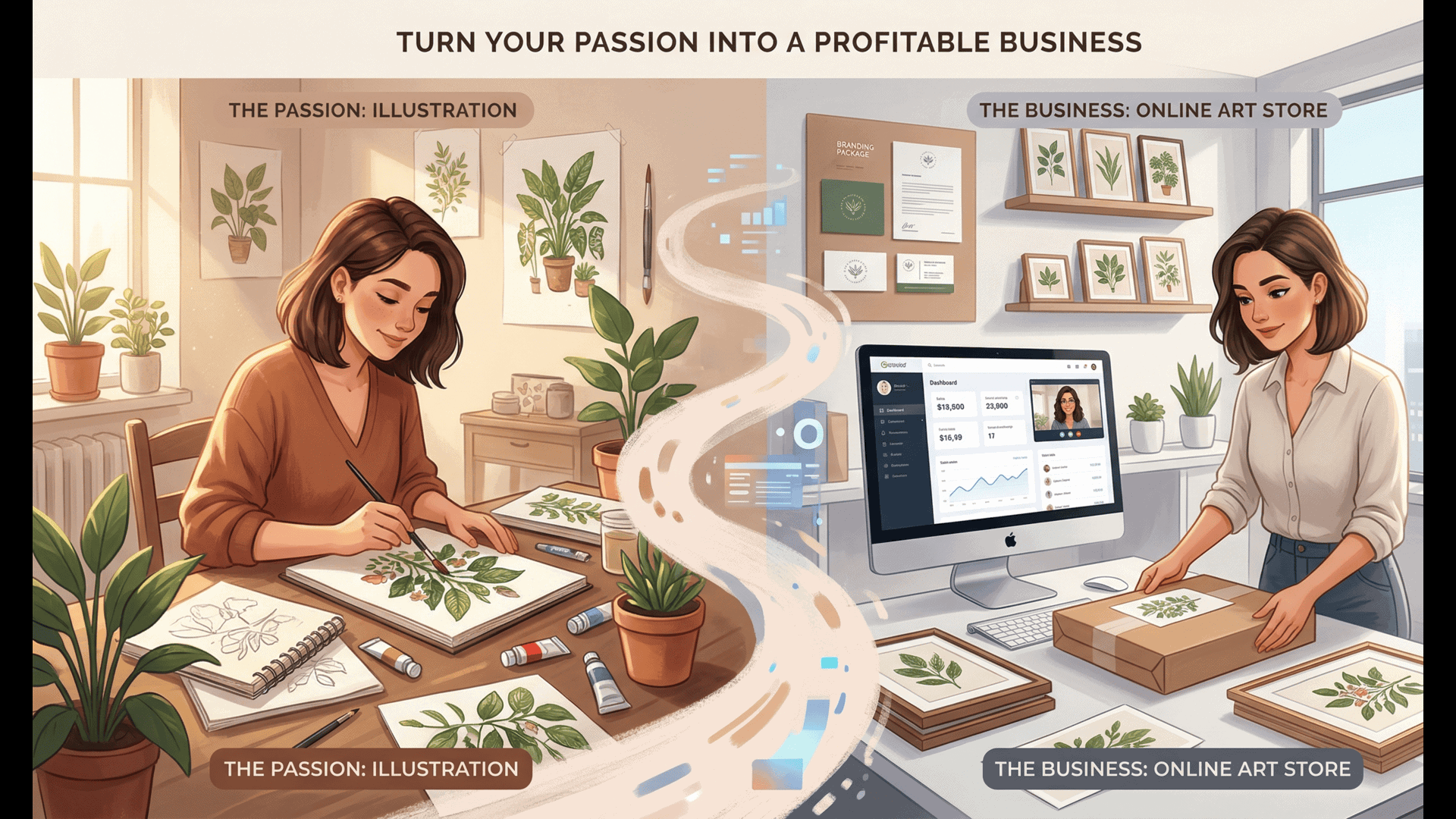
Have you ever found yourself completely absorbed in a hobby, losing track of time, and thought, “I wish I could do this for a living?” You are not alone. Countless individuals dream of escaping the traditional 9-to-5 grind to build a life centered around what they genuinely love. Learning how to turn your passion into a profitable business is one of the most rewarding journeys an entrepreneur can embark upon.
However, transitioning from a beloved hobby to a sustainable income stream requires more than just enthusiasm. It demands strategic planning, market awareness, resilience, and a deep understanding of your audience. Whether you are an artist, a tech enthusiast, a baker, or a fitness advocate, this guide will walk you through the essential steps to monetize your passion sustainably and inclusively.
Phase 1: The Foundation – Discovery and Validation
Before registering a domain name or designing a logo, you must lay a solid foundation. Passion is the fuel, but strategy is the engine that drives a profitable business.
1. Evaluate Your Passion: Hobby vs. Business
Not every passion is meant to be a business, and that is perfectly okay. When a hobby becomes a job, the dynamic changes. You will face deadlines, demanding clients, and administrative tasks.
Ask yourself these foundational questions:
- Will doing this under pressure diminish my love for it? If baking brings you peace, will fulfilling an order of 500 cupcakes by Friday morning cause insurmountable stress?
- Am I willing to do the “un-fun” work? Running a business involves accounting, marketing, customer service, and legal compliance.
- Is my passion solving a problem or fulfilling a need? A viable business must offer value to others.
If you answered these questions positively, you are ready to move forward.
2. Conduct Thorough Market Research
Passion blinds us to market realities. To turn a passion into a profitable business, you need objective data. You must determine if there is a paying audience for your product or service.
- Identify the Demand: Use tools like Google Trends, AnswerThePublic, and social media listening to see if people are actively searching for what you want to offer.
- Analyze the Competition: Who else is doing this? Do not view competitors as enemies; view them as proof of market demand. Analyze their strengths and weaknesses. What are their customers complaining about? That gap is your entry point.
- Read Industry Reports: Utilize resources like Statista or industry-specific publications to understand market growth and future trends.
3. Define Your Target Audience Inclusively
Who are you serving? “Everyone” is not a target audience. You need to create detailed buyer personas, but it is crucial to approach this with an inclusive mindset.
When defining your audience, look beyond traditional demographic stereotypes. Focus on psychographics: their values, struggles, interests, and aspirations.
- Accessibility: How can you make your product accessible to people with disabilities?
- Representation: Does your target audience reflect the diverse world we live in?
- Empathy: What genuine problems are you solving for your community?
By building inclusivity into the core of your audience definition, you create a brand that welcomes a broader, more loyal customer base.
Phase 2: Strategic Planning and Financial Readiness
With a validated idea and a clear audience, it is time to map out the journey. A goal without a plan is just a wish, especially in entrepreneurship.
4. Draft a Lean Business Plan
You do not need a 50-page document to start, but you do need a roadmap. A lean business plan focuses on the core elements of your venture. The U.S. Small Business Administration (SBA) offers excellent templates for creating flexible business plans.
Your plan should include:
- Value Proposition: What makes your offering unique? Why should someone choose you over a competitor?
- Revenue Model: How will you make money? (e.g., direct sales, subscriptions, consulting, affiliate marketing).
- Marketing Strategy: How will people find out about you?
- Key Metrics: What numbers will define your success in the first 90 days? (e.g., website traffic, email subscribers, first sale).
5. Financial Planning: Bootstrapping vs. Funding
Lack of capital is a primary reason new businesses fail. Before launching, evaluate your financial landscape.
- Bootstrapping: Funding the business yourself using savings or current income. This approach allows you to retain 100% ownership and grow at your own pace. It is highly recommended for passion-based businesses in their infancy.
- Keep Your Day Job: Consider starting your business as a side hustle. This reduces financial pressure, allowing you to make strategic decisions rather than desperate ones.
- Understand Your Costs: Calculate your fixed costs (website hosting, software subscriptions) and variable costs (materials, shipping). Price your products or services to ensure a healthy profit margin. Do not undervalue your time or expertise.
6. Choose the Right Business Model
How you deliver your passion to the world matters. Depending on your skills, you might choose:
- E-commerce/Product-Based: Selling physical goods you create or curate.
- Service-Based: Offering your skills directly (e.g., freelance writing, photography, consulting).
- Digital Products: Creating courses, eBooks, or templates. This model offers incredible scalability.
- Community/Membership: Charging a recurring fee for access to exclusive content or a community.
Phase 3: Building Your Brand and Online Presence
Your brand is more than a logo; it is the emotional connection you build with your audience. It is how people feel when they interact with your business.
7. Cultivate an Inclusive and Authentic Brand Voice
Your brand voice should reflect your passion while remaining welcoming and accessible. Avoid industry jargon that alienates newcomers. Use language that respects all genders, cultures, and backgrounds.
For instance, instead of using gendered terms like “hey guys” in your marketing videos, opt for “hi everyone,” “welcome friends,” or “hey folks.” Small shifts in language signal that your business is a safe, welcoming space for all consumers.
8. Establish Your Digital Storefront
In today’s digital age, your website is your storefront. Even if you run a local brick-and-mortar shop, an online presence is non-negotiable.
- Secure a Domain Name: Choose a name that is memorable, easy to spell, and ideally includes a hint of what you do.
- Build a User-Friendly Website: Platforms like Shopify, WordPress, or Squarespace make it easy to build professional websites without coding knowledge. Ensure your website is mobile-responsive and follows Web Content Accessibility Guidelines (WCAG) so users with visual or motor impairments can navigate it easily.
- Start an Email List: Do not rely solely on social media algorithms. An email list is an asset you own. Offer a free resource (a lead magnet) in exchange for visitors’ email addresses.
9. Leverage Social Media Strategically
You do not need to be on every social media platform. Choose the one or two platforms where your target audience spends their time.
- Visual Passions: (Art, food, fashion) thrive on Instagram, Pinterest, and TikTok.
- B2B Services: (Consulting, writing) perform best on LinkedIn and Twitter.
- Educational Content: YouTube is unparalleled for long-form, tutorial-style content.
Share your journey, not just your products. People connect with the human behind the brand. Show behind-the-scenes footage, share your failures and triumphs, and engage authentically with your followers.
Phase 4: Launching, Marketing, and Sales
The moment of truth has arrived. It is time to introduce your passion project to the world and start generating revenue.
10. Develop a Minimum Viable Product (MVP)
Perfectionism is the enemy of progress. Do not wait until your product is flawless to launch. Develop a Minimum Viable Product (MVP)—the simplest version of your offering that still delivers value to the customer.
By launching an MVP, you can:
- Test the market without investing massive amounts of time and money.
- Gather real-world feedback.
- Generate early revenue to fund further development.
For example, if your passion is cooking and you want to launch a meal prep service, start by offering three menu options to ten friends and neighbors. Learn from their feedback before renting a commercial kitchen.
11. Implement Value-Driven Marketing
Traditional “hard-sell” tactics rarely work for passion-based businesses. Instead, focus on value-driven marketing. Educate, entertain, and inspire your audience.
- Content Marketing: Write blog posts, record podcasts, or create videos that answer your audience’s common questions. This improves your Search Engine Optimization (SEO) and establishes you as an authority. (Learn more about content marketing basics at the Content Marketing Institute).
- Collaborations and Partnerships: Partner with other creators or businesses that share your target audience but are not direct competitors. This cross-pollination introduces your brand to a warm, receptive audience.
- Leverage User-Generated Content: Encourage your early customers to share their experiences. Word-of-mouth remains the most powerful marketing tool.
12. Master the Art of Selling Ethically
Many passionate creators struggle with sales, feeling that asking for money taints their art or hobby. Reframing your mindset is crucial.
If you truly believe that your product or service improves people’s lives, brings them joy, or solves a problem, then selling is simply offering a solution. Be transparent about your pricing, deliver exceptional customer service, and honor your commitments. Ethical selling builds long-term trust and recurring revenue.
Phase 5: Scaling, Sustaining, and Overcoming Challenges
Turning a profit is a massive milestone, but sustaining that profitability requires ongoing effort and adaptation.
13. Listen to Customer Feedback and Iterate
Your business is a living entity that must evolve. Actively seek feedback from your customers through surveys, direct messages, and reviews.
- What do they love about your product?
- What do they wish was different?
- What new products are they asking for?
Use this data to iterate and improve. The businesses that survive long-term are the ones that adapt to their customers’ changing needs.
14. Outsource and Build a Team
As your business grows, you will become the bottleneck. You cannot be the CEO, the marketer, the creator, and the customer service representative indefinitely.
To scale, you must delegate. Identify the tasks that drain your energy or fall outside your zone of genius. Hire freelancers, virtual assistants, or part-time employees. By outsourcing administrative tasks, you free up your time to focus on the visionary work that fuels your passion.
15. Protect Your Mental Health and Avoid Burnout
When your passion becomes your job, the line between work and life blurs. This makes entrepreneurs highly susceptible to burnout.
- Set Boundaries: Establish clear work hours. Just because you can work on your business at midnight does not mean you should.
- Take Time Off: Schedule regular breaks and vacations. Stepping away from the business replenishes your creativity.
- Find a New Hobby: If your previous hobby is now your job, you need a new outlet for stress relief—something you do purely for joy, with zero intention of monetizing it.
16. Cultivate a Mindset of Continuous Learning
The business landscape shifts rapidly. Algorithms change, new competitors emerge, and consumer behaviors evolve. Commit to being a lifelong learner. Read industry books, attend webinars, listen to entrepreneurial podcasts, and network with other business owners. Organizations like SCORE provide free business mentoring and education that can be invaluable for growing businesses.
Conclusion: The Journey is the Reward
Turning your passion into a profitable business is rarely a linear path. It is filled with exhilarating highs, frustrating setbacks, and moments of profound self-doubt. However, the reward of waking up every day to build something you deeply care about makes the challenges worthwhile.
Remember that success does not happen overnight. It is the result of consistent effort, strategic planning, and a genuine desire to serve your audience. Stay true to your inclusive values, remain adaptable, and never lose sight of the joy that sparked your passion in the first place. You have the skills, the vision, and now the roadmap. It is time to take that first step.
Frequently Asked Questions (FAQ)
1. How do I know if my passion is profitable?
You can determine profitability through market research. Look for existing demand by analyzing search trends, identifying competitors, and surveying potential customers. If people are already spending money on similar products or services, and you can offer a unique angle or better quality, your passion has profit potential.
2. Can I start a business with no money?
While starting with zero dollars is incredibly difficult, starting with very little money is entirely possible through bootstrapping. Service-based businesses (like freelance writing or consulting) require minimal startup capital. For product-based businesses, consider pre-selling items or utilizing print-on-demand services to avoid holding expensive inventory.
3. Do I need to quit my job to start my passion business?
No, and in most cases, you shouldn’t. Starting your business as a side hustle provides financial stability while you test the waters. Once your business revenue consistently matches or exceeds your day job income, you can confidently consider making the leap to full-time entrepreneurship.
4. How do I price my products or services?
Pricing is a balance of covering your costs, understanding market rates, and valuing your time. Calculate all materials, software, and overhead costs. Then, factor in an hourly wage for yourself. Research competitors, but do not race to the bottom by underpricing. Compete on value, quality, and customer experience, not just on price.
5. What is the biggest mistake people make when monetizing a hobby?
The most common mistake is skipping the market validation phase. Many passionate creators spend months building a product they love, only to discover that nobody else wants to buy it. Always test your idea with a Minimum Viable Product (MVP) before investing heavily in production or marketing.
6. How do I handle competition in my niche?
View competition as validation that there is a healthy market for your passion. Instead of copying competitors, find your Unique Value Proposition (UVP). Look for gaps in their offerings or customer complaints in their reviews, and tailor your business to solve those specific issues. Your unique personality and inclusive approach will also serve as a major differentiator.
7. How do I ensure my business remains inclusive as it grows?
Inclusivity must be intentional. Regularly audit your marketing materials to ensure diverse representation. Ensure your website and physical products are accessible. Use gender-neutral language in your communications, and actively seek feedback from diverse communities to understand how you can serve them better.
Leave a Reply