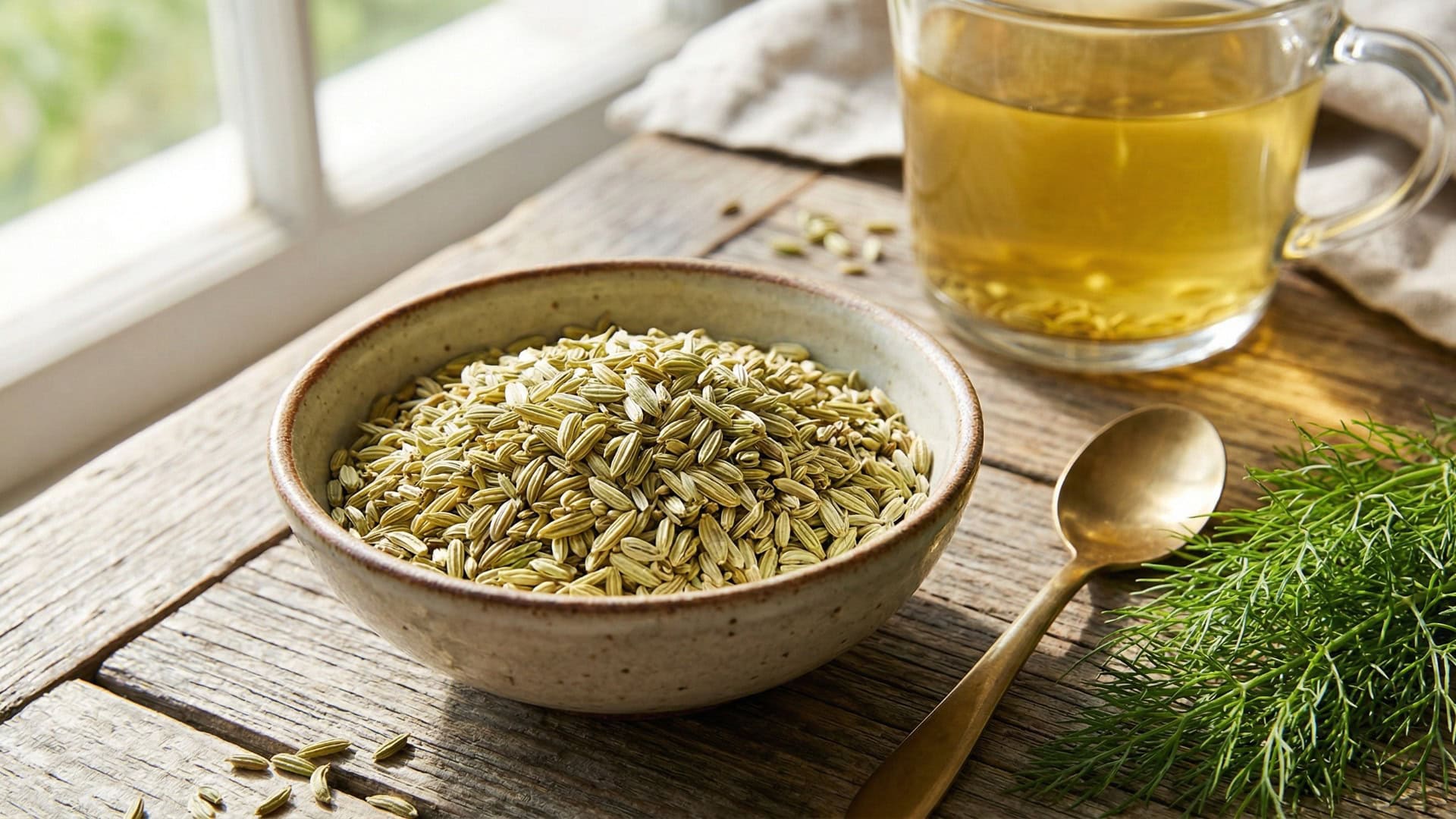
If you have ever dined at an Indian, Pakistani, or Middle Eastern restaurant, you have likely encountered a bowl of tiny, pale green seeds near the exit. These are fennel seeds, widely known as “saunf” in Hindi and Urdu. Traditionally chewed after meals to freshen breath and aid digestion, these tiny seeds pack a massive nutritional punch.
But fennel seeds are much more than just a post-dinner palate cleanser. For thousands of years, they have been a staple in both culinary and traditional medicine practices across the globe. From ancient Roman kitchens to Ayurvedic apothecaries, the fennel plant (Foeniculum vulgare) has been celebrated for its distinct, sweet licorice flavor and its wide array of health-promoting properties.
In this comprehensive guide, we will explore the science-backed health benefits, detailed nutrition facts, versatile everyday uses, and potential precautions associated with fennel seeds. Whether you are looking to soothe an upset stomach, add a new flavor profile to your cooking, or simply understand what makes saunf so special, you are in the right place.
What Are Fennel Seeds?
Fennel is a hardy, perennial herb belonging to the Apiaceae family, which makes it a close relative of carrots, celery, dill, and parsley. The plant itself features feathery leaves and bright yellow flowers, but it is the dried seeds that are most commonly used as a spice.
Fennel seeds are native to the Mediterranean region but are now cultivated globally, thriving in dry soils near sea coasts and riverbanks. They have a ridged, oval shape and a warm, sweet, and slightly woody aroma. The dominant flavor profile is often compared to anise or licorice, thanks to the presence of a powerful essential oil called anethole.
A Brief History
Historically, fennel was highly valued by ancient Greeks and Romans. The Greek name for fennel is marathon, derived from the site of the famous Battle of Marathon, where fennel reportedly grew in abundance. Roman warriors are said to have consumed fennel seeds to build courage and strength before battle. Over centuries, knowledge of the seed’s digestive and medicinal properties spread throughout Asia, Europe, and the Middle East, cementing its place in global wellness traditions.
Nutrition Facts: What is Inside Fennel Seeds?
Despite their small size, fennel seeds are incredibly nutrient-dense. They provide an excellent source of essential minerals and dietary fiber while remaining very low in calories.
Here is a breakdown of the nutritional profile for one tablespoon (approximately 5.8 grams) of dried fennel seeds:
| Nutrient | Amount per 1 Tbsp (5.8g) | Percentage of Daily Value (DV) |
| Calories | 20 kcal | 1% |
| Protein | 0.9 g | 2% |
| Carbohydrates | 3.0 g | 1% |
| Dietary Fiber | 2.3 g | 8% |
| Fat | 0.9 g | 1% |
| Calcium | 69 mg | 5% |
| Iron | 1.1 mg | 6% |
| Magnesium | 22 mg | 5% |
| Potassium | 98 mg | 2% |
| Manganese | 0.4 mg | 17% |
Key Nutritional Highlights:
- Manganese: Fennel seeds are exceptionally rich in manganese, an essential trace mineral required for enzyme activation, metabolism, cellular protection, and bone development.
- Dietary Fiber: Just one tablespoon provides nearly 2.5 grams of dietary fiber, which is vital for maintaining a healthy digestive tract and regulating blood sugar levels.
- Calcium and Iron: These seeds offer plant-based sources of calcium for bone health and iron for healthy red blood cell production.
- Antioxidant Compounds: Beyond standard vitamins and minerals, fennel seeds are loaded with over 87 volatile compounds, including polyphenol antioxidants like rosmarinic acid, chlorogenic acid, quercetin, and apigenin.
Top Health Benefits of Fennel Seeds
The medicinal properties of fennel seeds are largely attributed to their rich concentration of essential oils and antioxidants. Here is what current scientific research says about the health benefits of adding fennel seeds to your diet.
1. Highly Effective for Digestive Health
Perhaps the most famous use for fennel seeds is as a digestive aid. The essential oils present in the seeds, particularly anethole, fenchone, and estragole, possess antispasmodic and anti-inflammatory properties.
When you chew fennel seeds or drink fennel tea, these compounds help to relax the smooth muscles of the gastrointestinal tract. This can significantly reduce symptoms of:
- Bloating and flatulence
- Indigestion and heartburn
- Stomach cramps
- Irritable Bowel Syndrome (IBS)
Furthermore, the dietary fiber in fennel seeds adds bulk to your stool, promoting regular bowel movements and preventing constipation.
2. Rich in Powerful Antioxidants
Antioxidants are compounds that neutralize harmful free radicals in the body, protecting cells from oxidative stress and damage. Chronic oxidative stress is linked to numerous conditions, including heart disease, type 2 diabetes, and certain cancers.
Fennel seeds are abundant in polyphenols. Studies have shown that individuals who consume diets high in polyphenols have a lower risk of chronic diseases. The volatile oils in fennel seeds not only provide their distinct aroma but also act as potent scavengers of free radicals, supporting overall cellular health and longevity.
3. May Suppress Appetite and Aid Weight Management
If you are looking for natural support for your weight management journey, fennel seeds might be a helpful addition. Some research suggests that fennel seeds may act as a mild appetite suppressant.
In a study involving healthy individuals, those who drank a tea made with fennel seeds before a meal reported feeling significantly less hungry and consumed fewer calories during the meal compared to those who drank a placebo tea. This effect is likely due to the presence of anethole, which may influence appetite-regulating hormones.
Note: Fennel seeds are not a magic solution for weight loss. They should be used to complement a balanced diet and regular physical activity.
4. Supports Heart Health
Fennel seeds contribute to cardiovascular health in multiple ways. First, their high fiber content is known to help lower cholesterol levels. Dietary fiber binds to bile salts in the digestive system, which the body then excretes. To replace these bile salts, the body pulls cholesterol from the blood, thereby lowering overall cholesterol levels.
Secondly, fennel seeds are a good source of potassium, a vital mineral that helps regulate blood pressure. Potassium acts as a vasodilator, relaxing the tension in blood vessels and reducing the strain on the cardiovascular system.
5. Exhibits Antibacterial and Antimicrobial Properties
The essential oils extracted from fennel seeds have demonstrated impressive antibacterial and antifungal properties in test-tube studies. They have been shown to inhibit the growth of certain harmful bacteria, including Escherichia coli (E. coli) and Staphylococcus aureus.
This antimicrobial action is one reason why chewing fennel seeds is an effective natural remedy for bad breath; it helps neutralize the bacteria in the mouth that cause oral malodor.
6. May Relieve Menstrual Cramps
For menstruating individuals, dysmenorrhea (painful menstrual cramps) can severely impact daily life. Fennel seeds have been studied as a natural alternative to over-the-counter pain relievers for managing this pain.
Research indicates that the active compounds in fennel help relax the muscles of the uterus and reduce the production of prostaglandins—hormone-like substances that trigger uterine contractions and pain. Several studies have found that taking fennel seed extract during menstruation can be as effective as standard painkillers in reducing the severity of cramps.
7. Support for Breastfeeding People
Fennel has been used for centuries as a galactagogue—a substance that promotes and increases the production of breast milk. The compound anethole, found in fennel seeds, is believed to mimic the properties of estrogen, a hormone that plays a key role in milk production.
While many breastfeeding people swear by fennel tea to boost their milk supply, it is important to consult with a healthcare provider or a lactation consultant before using herbal remedies during lactation, as individual responses can vary.
How to Use Fennel Seeds in Your Daily Routine
Incorporating fennel seeds into your lifestyle is incredibly easy, thanks to their versatile flavor profile. Here are some of the best ways to use them:
1. As a Culinary Spice
Fennel seeds are a cornerstone of many global cuisines. You can use them whole or grind them into a fine powder.
- Indian Cuisine: They are a key ingredient in Panch Phoron (a Bengali five-spice blend) and are often used to temper dals (lentil soups) and curries.
- Italian Cuisine: Fennel seeds are traditionally used to flavor Italian sausages, meatballs, and marinara sauces.
- Baking: Try adding a pinch of ground fennel to bread doughs, biscuits, or crackers for an aromatic, savory twist.
- Roasting: Toasting fennel seeds in a dry skillet for a few minutes before using them in recipes dramatically enhances their flavor and releases their essential oils.
2. Fennel Seed Tea
Brewing fennel tea is one of the most effective ways to extract its digestive benefits.
How to make it:
- Crush 1 teaspoon of whole fennel seeds lightly using a mortar and pestle to release their oils.
- Place the crushed seeds in a mug.
- Pour 1 cup of boiling water over the seeds.
- Cover and steep for 5 to 10 minutes.
- Strain the tea and enjoy it plain or with a touch of honey. Drink this after heavy meals to prevent bloating.
3. As a Natural Mouth Freshener (Mukhwas)
Follow the South Asian tradition and chew a small pinch (about half a teaspoon) of raw or dry-roasted fennel seeds after meals. For a sweeter treat, you can mix them with some desiccated coconut, sesame seeds, and a tiny bit of rock sugar to create your own Mukhwas.
Potential Side Effects and Precautions
While fennel seeds are generally safe for most people when consumed in culinary amounts, there are a few precautions to keep in mind, especially when using them in highly concentrated forms like extracts or essential oils.
- Allergic Reactions: Individuals who are allergic to other plants in the Apiaceae family (such as celery, carrots, dill, or mugwort) may also be allergic to fennel.
- Pregnancy: While culinary amounts are safe, pregnant individuals should avoid consuming medicinal amounts or highly concentrated fennel supplements. High doses of fennel have estrogenic effects and can potentially stimulate uterine contractions.
- Medication Interactions: Fennel may interact with certain medications, including blood thinners and estrogen pills. If you are taking regular medication, consult your doctor before introducing fennel supplements into your routine.
- Endocrine-Sensitive Conditions: Because of its weak estrogen-like properties, people with conditions sensitive to estrogen (like certain types of breast cancer or endometriosis) should speak with their healthcare provider before using medicinal amounts of fennel.
Fennel Seeds vs. Anise Seeds: What is the Difference?
Because they share a similar licorice-like flavor, fennel seeds and anise seeds are often confused. While they belong to the same broader botanical family, they are distinct plants.
| Feature | Fennel Seeds (Foeniculum vulgare) | Anise Seeds (Pimpinella anisum) |
| Size & Shape | Larger, slightly curved, pale green to yellowish-brown. | Smaller, comma-shaped, darker brown. |
| Flavor Profile | Milder, sweeter, more delicate licorice flavor with woody notes. | Much stronger, sharper, and more pungent licorice flavor. |
| Common Uses | Savory dishes, digestive teas, mouth fresheners, sausages. | Sweet baking (biscotti), liqueurs (ouzo, sambuca), candies. |
Conclusion
Fennel seeds, or saunf, are a tiny but mighty addition to any pantry. With their impressive nutritional profile, high concentration of antioxidants, and long history of treating digestive woes, they offer an accessible and natural way to support your overall health.
Whether you are chewing them after a hearty meal, brewing a comforting cup of fennel tea, or experimenting with them in your kitchen, fennel seeds provide a beautiful synergy of culinary delight and wellness benefits. Just remember that while they are a wonderful addition to a healthy lifestyle, they are best enjoyed in moderation.
Frequently Asked Questions (FAQ)
1. Is it safe to eat raw fennel seeds every day?
Yes, it is perfectly safe for most people to consume 1 to 2 teaspoons of raw or roasted fennel seeds daily. Chewing a small amount after meals is a common and healthy practice to aid digestion and freshen breath.
2. Can drinking fennel water reduce belly fat?
There is no specific “belly fat burning” food. However, fennel water can aid in weight management by improving digestion, reducing bloating (which makes the stomach appear flatter), and acting as a mild appetite suppressant to prevent overeating.
3. Does fennel seed tea have caffeine?
No, fennel seed tea is naturally 100% caffeine-free. This makes it an excellent beverage choice for the evening or before bedtime, particularly if you are experiencing late-night indigestion.
4. Can I swallow fennel seeds after chewing them?
Yes! In fact, swallowing them is recommended. Chewing breaks down the seeds and releases the essential oils, while swallowing them provides your body with beneficial dietary fiber that aids in bowel regularity.
5. Are fennel seeds safe for babies with colic?
While traditional remedies often suggest weak fennel tea for colicky infants, modern pediatric guidelines advise against giving herbal teas to infants under 6 months old. Always consult your pediatrician before giving any herbal remedy to a baby.
Reference Links
For further reading and verification of the health benefits discussed in this article, please refer to the following clinical sources:
-
National Center for Biotechnology Information (NCBI): Foeniculum vulgare: A comprehensive review of its traditional use, phytochemistry, pharmacology, and safety
-
U.S. Department of Agriculture (USDA) FoodData Central: Nutritional Profile of Spices, fennel seed
-
Healthline: 10 Science-Based Benefits of Fennel and Fennel Seeds
-
National Institutes of Health (NIH): Efficacy of Fennel for the Treatment of Primary Dysmenorrhea
Leave a Reply