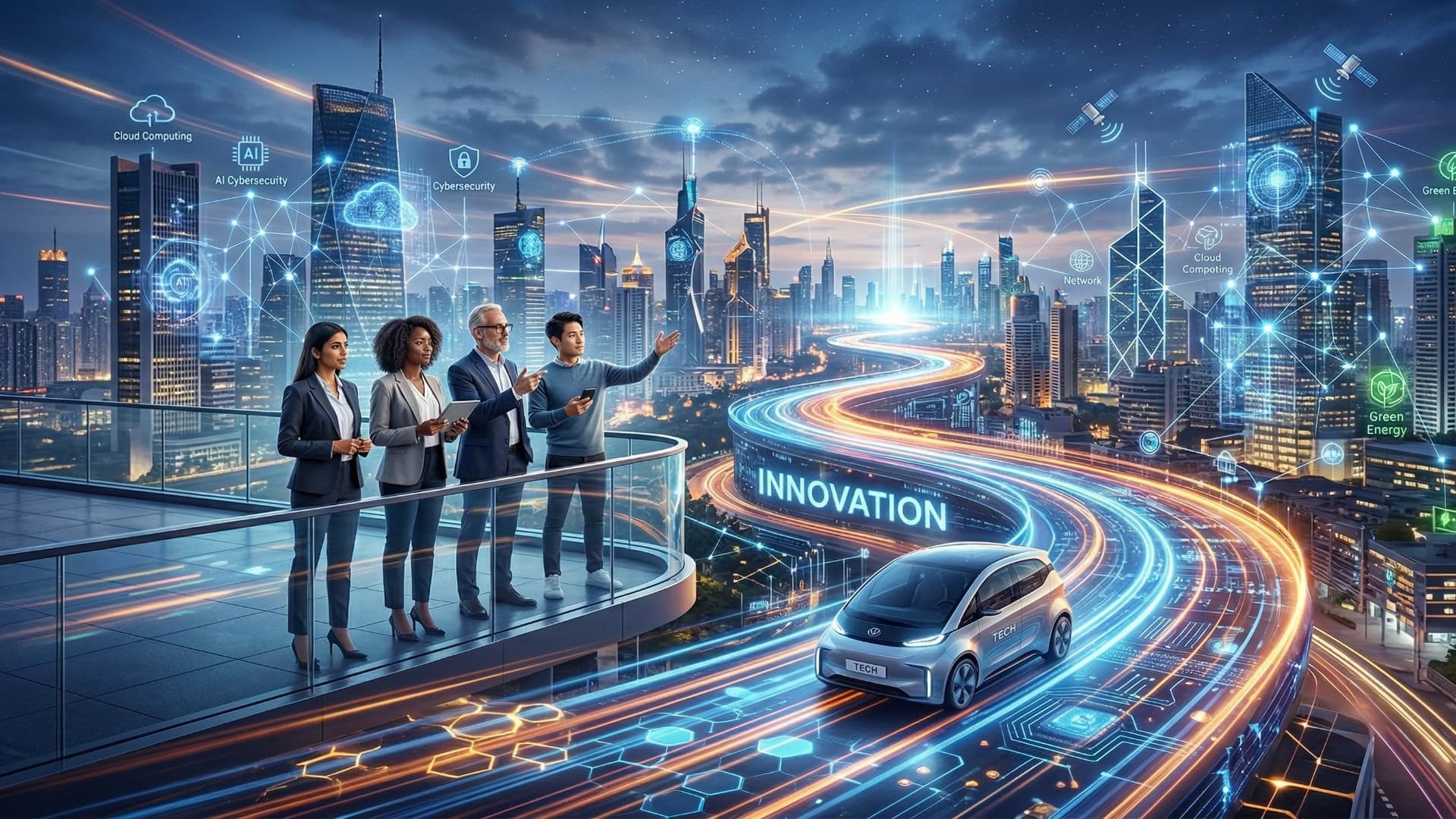
The technology sector is not merely a participant in the global economy; it is the very engine propelling it into the future. From the way we communicate and work to how we address global crises, the pace of change is relentless. But what fuels this perpetual motion? The answer is simple yet profoundly complex: innovation.
In this comprehensive guide, we will explore exactly how innovation is driving the tech industry forward, examining the key trends, inclusive paradigms, and disruptive technologies that are reshaping our world. Whether you are a seasoned IT professional, a business leader looking to undergo a digital transformation, or an everyday consumer navigating the digital age, understanding these shifts is crucial.
The Engine of Digital Transformation
Innovation in the tech industry goes far beyond releasing a new smartphone model every year. It represents a fundamental shift in problem-solving. Digital transformation—the integration of digital technology into all areas of a business or society—relies entirely on a culture of continuous innovation.
Historically, tech evolved in linear steps. Today, we are experiencing exponential growth. Disruptive innovation occurs when a new technology completely uproots an established industry. Think of how streaming services revolutionized entertainment or how ride-sharing apps transformed urban mobility.
Why Innovation Matters Now More Than Ever
- Agility in a Volatile World: Global events have proven that adaptability is survival. Innovative tech infrastructures allow organizations to pivot seamlessly.
- Addressing Complex Global Challenges: From climate change to global health, humanity’s biggest hurdles require technological breakthroughs.
- Enhancing the Human Experience: At its core, inclusive tech innovation aims to make life easier, more accessible, and more connected for people of all abilities and backgrounds.
Artificial Intelligence and Machine Learning: The New Frontier
No conversation about tech industry advancement is complete without discussing Artificial Intelligence (AI) and Machine Learning (ML). These are no longer just buzzwords; they are foundational technologies driving the next generation of software and hardware.
Generative AI and Automation
The explosion of generative AI has democratized creativity and data analysis. Tools capable of generating text, code, and imagery are augmenting the modern workforce, allowing people to focus on high-level strategy rather than repetitive tasks.
Machine learning algorithms are simultaneously processing vast oceans of data to identify patterns invisible to the human eye. This is driving innovation across sectors:
- Healthcare: Predictive models are aiding in early disease detection and personalized medicine.
- Finance: AI systems are detecting fraudulent transactions in milliseconds.
- Retail: ML algorithms optimize supply chains and personalize customer shopping experiences.
Cloud Computing: The Backbone of Modern Tech
If AI is the brain of the modern tech industry, cloud computing is the central nervous system. The migration from on-premise servers to decentralized, cloud-based infrastructures has been a monumental driver of innovation.
Scalability and Accessibility
Cloud platforms (like AWS, Google Cloud, and Microsoft Azure) have leveled the playing field. Startups can now access the same immense computing power as Fortune 500 companies without the prohibitive upfront hardware costs. This democratization of resources fosters a diverse ecosystem of creators and innovators.
Furthermore, cloud technology enabled the global shift to remote and hybrid work environments. By ensuring that teams can collaborate securely from anywhere on the planet, cloud computing has fundamentally altered the modern workforce landscape.
Cybersecurity: Innovating to Protect
As technology advances, so do the threats against it. Cybersecurity is an area where innovation is not just beneficial; it is a critical necessity. The tech industry is locked in a perpetual arms race with malicious actors, driving rapid advancements in digital defense.
Zero-Trust Architecture and AI Defense
The traditional “castle and moat” approach to security—where everything inside the network is trusted—is obsolete. Innovation has brought forth the Zero-Trust Architecture, a security model based on the principle of “never trust, always verify.”
Moreover, cybersecurity professionals are now utilizing AI and ML to predict and neutralize threats before they execute. Automated threat hunting and decentralized blockchain technologies for secure data ledgers are prime examples of how security protocols are innovating to protect sensitive user data.
Sustainable Technology: Innovating for the Planet
As the tech industry’s physical footprint grows—evidenced by massive data centers and e-waste—there is a pressing need for sustainable technology (often referred to as Green Tech). Innovation is steering the industry toward environmentally responsible practices.
The Shift to Green Tech
Tech giants and startups alike are prioritizing sustainability through several innovative avenues:
- Energy-Efficient Data Centers: Utilizing advanced cooling systems and transitioning to 100% renewable energy sources.
- Circular Economy Models: Designing hardware for longevity, repairability, and recycling to drastically reduce electronic waste.
- Smart Grid Technology: Using IoT (Internet of Things) devices to optimize energy consumption in smart cities and commercial buildings.
The drive toward sustainable tech ensures that our digital advancement does not come at the cost of our physical environment.
The Human Element: Inclusive Design and Accessibility
True innovation serves everyone. A massive driver in the tech industry today is the push for inclusive design and accessibility. The industry is recognizing that technology must be built with—and for—diverse populations.
Tech for All
Inclusive innovation means moving away from a “one-size-fits-all” mentality. This involves:
- Developing software compatible with screen readers and voice commands for users with visual or motor impairments.
- Ensuring AI training data is diverse to prevent algorithmic bias that marginalizes specific demographic groups.
- Creating affordable tech solutions to bridge the digital divide in underserved global communities.
By prioritizing inclusive language, accessible UI/UX, and universal design principles, the tech industry is not just innovating for profit; it is innovating for humanity.
Future Trends: What’s Next on the Horizon?
The beautiful (and sometimes daunting) reality of the tech industry is that the goalposts are always moving. What are the disruptive innovations waiting just around the corner?
- Quantum Computing: While still in its infancy, quantum computing promises to solve complex problems—like molecular modeling and advanced cryptography—that would take classical computers millennia to crack.
- Extended Reality (XR): The convergence of Augmented Reality (AR) and Virtual Reality (VR) is set to revolutionize education, training, and remote collaboration, blending the digital and physical worlds.
- Edge Computing: Processing data closer to where it is generated (at the “edge” of the network) rather than in centralized cloud servers. This drastically reduces latency, which is essential for technologies like autonomous vehicles.
Conclusion
Innovation is the lifeblood of the tech industry. It is the force that transforms science fiction into science fact. From the predictive power of Artificial Intelligence and the expansive reach of cloud computing to the critical development of sustainable and inclusive technologies, innovation drives us toward a more connected, efficient, and equitable future.
For businesses, embracing these technological advancements is no longer optional—it is a prerequisite for survival. For consumers, staying informed about these trends empowers us to navigate the digital world safely and effectively. As we look forward, one thing is certain: the tech industry will continue to innovate, and in doing so, it will continue to move the world forward.
Frequently Asked Questions (FAQ)
1. What does “disruptive innovation” mean in the tech industry?
Disruptive innovation refers to a new technology or business model that significantly alters the way an existing industry operates. It often starts by serving a niche market before eventually displacing established market leaders (e.g., digital photography disrupting film, or cloud computing disrupting physical servers).
2. How is Artificial Intelligence driving business forward?
AI drives business forward by automating repetitive tasks, analyzing vast amounts of data to provide actionable insights, and enhancing customer experiences through personalization. This allows human workers to focus on strategic, creative problem-solving while increasing overall operational efficiency.
3. Why is inclusive design considered an innovation?
Historically, technology was often designed for a narrow demographic. Inclusive design is an innovation because it challenges standard development processes, requiring creators to build products that are accessible to people of all abilities, ages, and backgrounds. This expands market reach and ensures equitable access to digital tools.
4. What is the role of sustainable technology in the future of the industry?
Sustainable tech (Green Tech) aims to mitigate the environmental impact of digital advancement. Its role is crucial for reducing carbon footprints, minimizing e-waste through recyclable hardware, and creating energy-efficient software and data centers to combat climate change.
5. How can small businesses keep up with rapid tech innovation?
Small businesses can keep up by adopting scalable cloud-based solutions (SaaS), investing in continuous learning for their workforce, and focusing on incremental digital transformation rather than attempting to overhaul their entire infrastructure overnight.
Reference Links for Further Reading
-
McKinsey & Company: The top trends in tech
-
Gartner: Top Strategic Technology Trends
-
Forbes Technology Council: How To Foster A Culture Of Innovation
-
World Economic Forum: The Future of the Digital Economy
Leave a Reply