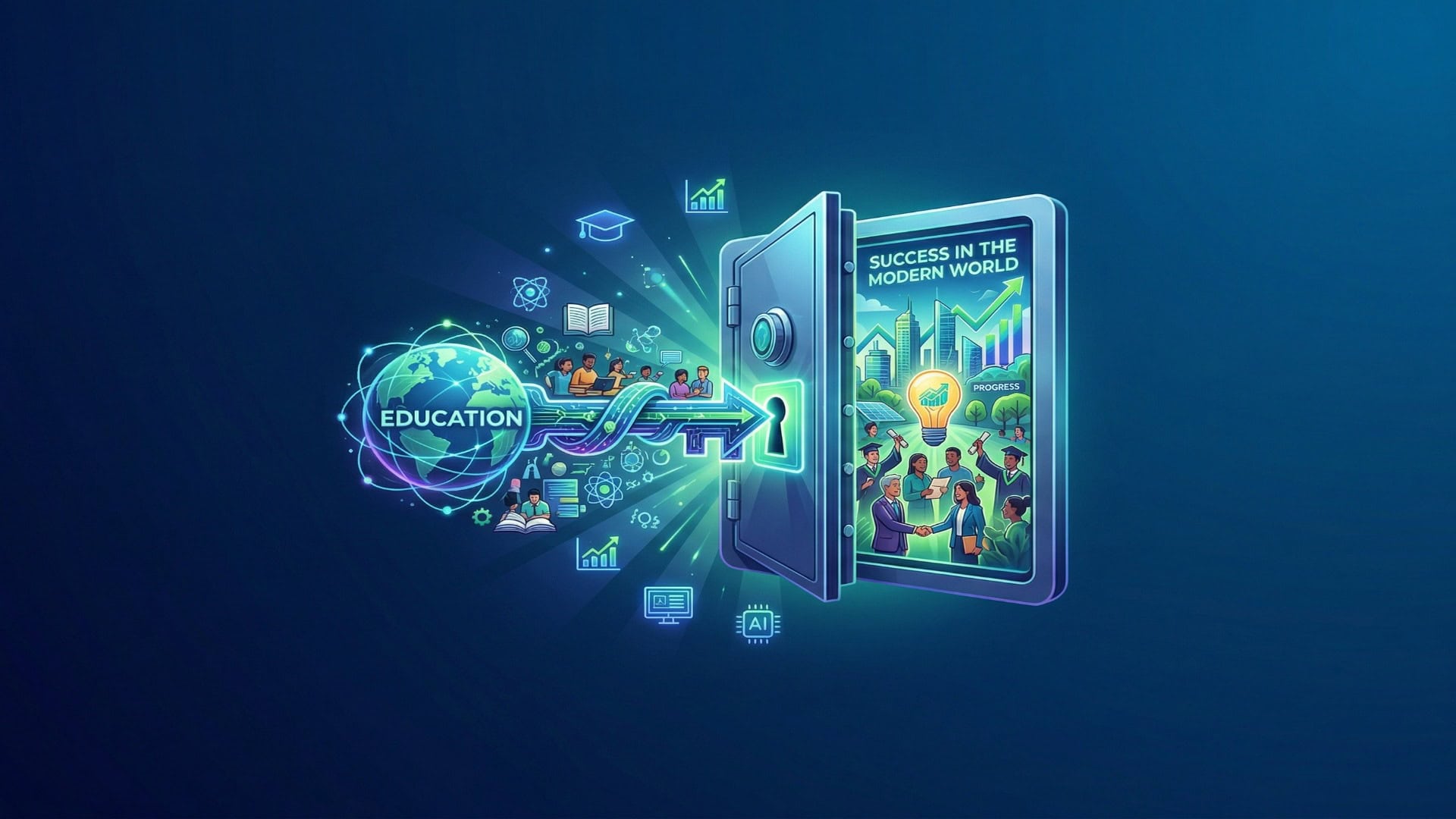
In an era defined by rapid technological advancements, shifting global economies, and profound social transformations, the path to achieving one’s goals can often seem complex. Yet, amid all these changes, one foundational element remains a constant driver of progress: education.
When people ask, “Why is education the key to success?” they often limit their perspective to diplomas and starting salaries. However, the true value of learning extends far beyond a piece of paper. Education is a transformative process that equips individuals with the tools to navigate uncertainty, build meaningful careers, and contribute positively to their communities.
Whether you are a student mapping out your future, a professional considering a career pivot, or a lifelong learner seeking personal growth, understanding the multifaceted benefits of education is vital. This comprehensive guide will explore why continuous learning and formal education remain the ultimate keys to unlocking success in the modern world.
Redefining Success in the 21st Century
Before exploring how education drives success, it is important to understand what “success” actually means today. In the past, success was frequently measured solely by job titles and financial accumulation. While financial stability remains a crucial goal, the modern definition of success is much broader and more inclusive.
Today, success encompasses:
- Professional Adaptability: The ability to pivot and thrive in new industries as the job market evolves.
- Personal Fulfillment: Finding purpose, satisfaction, and balance in one’s daily life and career.
- Global Citizenship: Understanding complex global issues and contributing to the well-being of the wider community.
- Health and Well-being: Making informed decisions that positively impact physical and mental health.
Education is the engine that drives all these outcomes. It provides the framework not just to earn a living, but to build a meaningful, resilient life.
The Economic Engine: Career Growth and Financial Stability
One of the most immediate and tangible benefits of education is its impact on economic prosperity. The correlation between educational attainment and financial stability is backed by decades of robust data.
The World Bank Perspective on Returns on Investment
According to extensive research compiled by the World Bank, education is one of the most powerful investments for sustainable development. Their studies on the “returns to schooling” reveal striking statistics:
- A 10% Earnings Boost: On average, each additional year of education boosts an individual’s future earnings by about 10%.
- High Social Returns: The social returns to schooling—meaning the broader economic benefits to society—remain exceptionally high, particularly at the secondary and higher education levels.
- Bridging the Gap: Human capital, which includes education and health, accounts for roughly half of the difference in income per capita between nations.
These figures illustrate that education is not just a personal achievement; it is an economic imperative. Individuals with post-secondary education consistently secure safer, more fulfilling, and higher-paying jobs. In a competitive global market, specialized knowledge and advanced credentials serve as vital differentiators.
Escaping the Poverty Cycle
For marginalized communities, education acts as the most reliable escalator out of poverty. By providing learners with foundational skills—such as literacy, numeracy, and socio-emotional competencies—education empowers individuals to advocate for themselves, negotiate better wages, and access opportunities that would otherwise remain out of reach.
Navigating the Future of Work: Adaptability and the Skills Crisis
The modern workplace is experiencing a digital disruption unlike anything seen in previous generations. Automation, artificial intelligence, and globalized markets are fundamentally altering the types of jobs available. In this environment, static knowledge quickly becomes obsolete.
The Looming Need for Retraining
The World Bank and UNESCO have sounded the alarm on a growing “skills crisis.” According to UNESCO’s projections, an estimated 60% of all workers globally will require significant retraining by the year 2030 to meet the demands of a shifting job market.
Education provides the ultimate antidote to this disruption through adaptability. Modern education systems increasingly focus on teaching people how to learn, rather than just what to memorize.
- Digital Literacy: Understanding how to use, evaluate, and create technology is no longer optional; it is a fundamental requirement across nearly all sectors.
- Critical Thinking: The capacity to analyze complex data, recognize biases, and solve unprecedented problems is highly prized by modern employers.
- Socio-Emotional Competencies: As machines take over routine tasks, human-centric skills like empathy, collaboration, and communication are becoming the most valuable assets a worker can possess.
By committing to continuous education, professionals can future-proof their careers, transforming potential job market disruptions into opportunities for growth.
Cognitive Development and Personal Empowerment
Beyond the workplace, education profoundly shapes how individuals interact with the world around them. It is a catalyst for cognitive development and personal empowerment.
Enhancing Decision-Making
Education sharpens the mind. It exposes individuals to diverse perspectives, historical contexts, and scientific methodologies. This exposure fosters independent thought and reduces susceptibility to misinformation. When people are educated, they are better equipped to evaluate the long-term consequences of their actions, leading to healthier life choices, better financial planning, and more constructive relationships.
Fostering Emotional Intelligence
Modern educational frameworks place a strong emphasis on group work, peer feedback, and cross-cultural communication. These collaborative environments naturally build emotional intelligence. Learners develop the capacity to listen actively, respect differing viewpoints, and resolve conflicts constructively—skills that are indispensable for achieving personal happiness and professional leadership.
Social Cohesion, Peace, and Global Stability
The benefits of a well-educated population ripple outward, creating safer, more stable, and more equitable societies. Education is quite literally the foundation of a functioning community.
Promoting Civic Engagement
Educated individuals are statistically more likely to vote, volunteer, and participate in civic initiatives. They possess the knowledge required to hold institutions accountable and advocate for policies that benefit the public good.
Peacebuilding and Conflict Resolution
As highlighted by international development organizations, education is a fundamental conduit for global peace and security. It promotes stability by teaching tolerance and dismantling prejudices. Furthermore, equitable access to education—particularly for women and girls—is one of the most effective strategies for promoting peace. According to UNESCO, women with secondary education are more likely to participate in their local economies, delay marriage, and actively contribute to community leadership, all of which stabilize and enrich societies.
Improving Public Health
The link between education and health outcomes is remarkably strong. Educated individuals generally have better access to health information, are more likely to seek timely medical care, and engage in preventative health practices. This not only improves individual life expectancy but also reduces the strain on public healthcare systems, freeing up resources for further community development.
The Spectrum of Education: Beyond the Traditional Classroom
When discussing why education is the key to success, it is crucial to use inclusive language that recognizes all forms of learning. Success is not exclusively reserved for those who follow a traditional four-year university path. The modern world demands a spectrum of educational approaches.
1. Formal Education
This includes primary, secondary, and tertiary schooling. Formal education provides the necessary foundational knowledge, socialization, and accredited credentials required for many specialized professions, such as medicine, law, and engineering.
2. Vocational and Technical Training
Apprenticeships, trade schools, and technical institutes offer highly focused, practical training. In many modern economies, there is a massive shortage of skilled tradespeople. Vocational education often leads directly to lucrative, stable careers without the burden of excessive student debt, proving that success has many different blueprints.
3. Informal and Self-Directed Learning
In the age of the internet, self-directed learning is more accessible than ever. Online courses, bootcamps, podcasts, and open-source libraries allow individuals to upskill rapidly. This democratization of knowledge means that anyone with an internet connection can learn coding, graphic design, or a new language, bypassing traditional gatekeepers to success.
4. Lifelong Learning
The most successful individuals in the modern world share one common trait: they never stop learning. Lifelong learning is the ongoing, voluntary, and self-motivated pursuit of knowledge. It is the understanding that graduation is not the end of an educational journey, but rather the beginning of a self-guided one.
Overcoming Barriers to Educational Access
While the benefits of education are undeniable, it is equally important to acknowledge that access to quality education remains unequal. Disparities in funding, systemic biases, and socioeconomic barriers prevent millions from accessing the tools they need to succeed.
To truly unlock global success, societies must prioritize:
- Equitable Funding: Ensuring that schools in low-income areas receive the same resources, technologies, and quality educators as those in affluent areas.
- Inclusive Environments: Creating classrooms that accommodate neurodivergent learners, individuals with disabilities, and students from diverse cultural backgrounds.
- Early Childhood Investment: Recognizing that the foundation for lifelong learning is built in the first few years of life. Providing universal access to early childhood education is a critical step in leveling the playing field.
By addressing these barriers, we can transition from a world where education is a privilege to one where it is a universal right, maximizing human potential across the globe.
Conclusion
Why is education the key to success in the modern world? Because it is the most versatile tool humanity possesses. It is the catalyst for economic growth, the shield against job market disruption, and the foundation of a peaceful, healthy society.
Education empowers individuals to think critically, adapt quickly, and act compassionately. Whether through a university lecture hall, a vocational workshop, or a late-night online tutorial, the pursuit of knowledge is the single most reliable pathway to achieving a fulfilling and prosperous life. In a world characterized by constant change, the commitment to lifelong learning is not just the key to success—it is the key to survival and progress.
Frequently Asked Questions (FAQ)
1. Does education guarantee success in life?
While education does not provide an absolute guarantee of wealth or happiness—as success also depends on factors like timing, networking, and personal circumstances—it dramatically increases the probability of success. Education equips you with the critical skills, credentials, and adaptability needed to navigate challenges and seize opportunities. It is best viewed as the most reliable foundation upon which to build a successful life.
2. Why is lifelong learning so important in the modern job market?
The modern job market is evolving rapidly due to technological advancements like artificial intelligence and automation. Skills that were highly sought after a decade ago may be obsolete today. Lifelong learning ensures that your skill set remains relevant. By continuously upskilling and adapting to new trends, you protect your career from disruption and position yourself for upward mobility.
3. Are traditional college degrees still necessary for success?
The answer depends entirely on your career goals. For professions like healthcare, law, and academia, traditional degrees remain absolutely essential. However, the modern world has broadened the definition of valuable credentials. Many successful professionals in technology, creative industries, and the trades rely on vocational training, bootcamps, certifications, and robust portfolios rather than four-year degrees.
4. How does education benefit society as a whole, not just the individual?
Education generates massive “social returns.” An educated populace drives economic innovation, pays higher taxes that fund public services, and reduces the burden on social safety nets. Furthermore, education promotes civic engagement, lowers crime rates, and fosters a more tolerant, cohesive society. When individuals succeed through education, their communities thrive alongside them.
5. What are foundational skills, and why do they matter?
Foundational skills refer to basic literacy, numeracy, and socio-emotional competencies. They are the essential building blocks for all subsequent learning. Without these skills, individuals cannot effectively participate in the workforce or engage fully in society. Global organizations emphasize that mastering these early in life is critical for lifting people out of poverty and ensuring long-term economic independence.
6. How does education improve mental and physical health?
Education improves health literacy, meaning educated individuals are better at navigating healthcare systems, understanding medical advice, and making informed lifestyle choices (such as nutrition and exercise). Additionally, the financial stability and improved working conditions often afforded by higher education significantly reduce chronic stress, leading to better long-term physical and mental health outcomes.
Leave a Reply