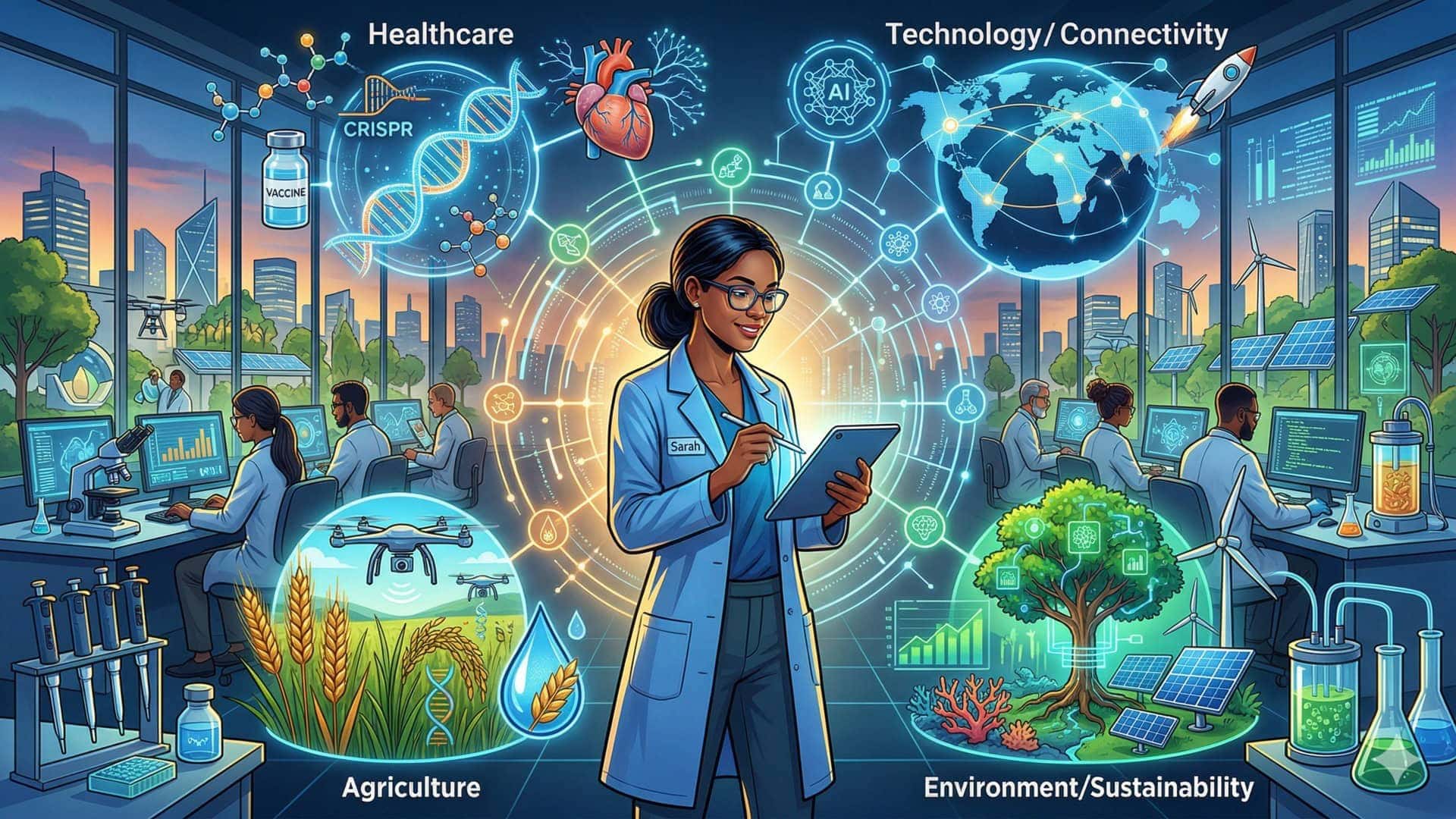
Science is far more than a collection of facts enclosed in heavy textbooks; it is the fundamental framework through which we understand the universe and improve the human condition. The role of science in modern society is so deeply woven into the fabric of our daily lives that it is often taken for granted. From the moment we wake up to an alarm on our smartphones to the medical treatments that extend our lifespans, scientific inquiry drives human progress.
In this comprehensive guide, we will explore how science impacts various facets of contemporary life. We will delve into healthcare, environmental sustainability, technology, and agriculture, while also examining the crucial ethical dimensions that must guide future discoveries. Whether you are a student, an educator, or simply a curious mind, understanding the impact of scientific research is essential for navigating the complexities of the 21st century.
1. The Foundation of Modern Life: Understanding Scientific Impact
Before diving into specific industries, it is important to understand what science represents in a broader societal context. At its core, science is a systematic enterprise that builds and organizes knowledge in the form of testable explanations and predictions about the universe.
In modern society, science serves three primary functions:
- A Tool for Problem-Solving: Identifying challenges—from local water shortages to global pandemics—and developing actionable, evidence-based solutions.
- An Engine for Economic Growth: Fueling innovation that creates new industries, generates employment, and elevates global living standards.
- A Lens for Truth: Providing a reliable method to distinguish fact from fiction, which is increasingly vital in the digital age of information overload.
By fostering a society that values empirical evidence and critical thinking, we empower communities to make informed decisions that benefit everyone.
2. Revolutionizing Healthcare and Medicine
Perhaps the most universally appreciated role of science is its contribution to human health and longevity. The medical landscape has been entirely transformed by scientific research, turning once-fatal diseases into manageable conditions and eradicating others entirely.
The Eradication and Management of Diseases
Historically, infectious diseases were the leading cause of mortality. Today, thanks to the development of vaccines and antibiotics, the threat of diseases like polio, smallpox, and measles has been drastically reduced or eliminated. The rapid global scientific response to recent viral outbreaks further underscores the importance of a robust, well-funded scientific infrastructure.
Advancements in Medical Imaging and Diagnostics
The ability to look inside the human body without invasive surgery was once the realm of science fiction. Today, technologies such as X-rays, Magnetic Resonance Imaging (MRI), and Computed Tomography (CT) scans allow medical professionals to diagnose conditions early and accurately. Early detection is often the key to successful treatment, particularly in oncology and cardiology.
Genomics and Personalized Medicine
We are currently entering an era of personalized medicine. The mapping of the human genome has allowed scientists to understand how individual genetic variations affect health. This inclusive approach to medicine ensures that treatments can be tailored to the specific genetic makeup of a patient, maximizing efficacy and minimizing adverse side effects.
Key Takeaway: Scientific advancements in healthcare do not just extend lifespans; they fundamentally improve the quality of life for billions of people across the globe.
3. Technology and Global Connectivity
It is impossible to discuss the role of science in modern society without addressing the technological boom. Applied science—engineering and technology—has revolutionized how we live, work, and communicate.
The Digital Revolution
The creation of the internet and the subsequent proliferation of digital devices have democratized information. Knowledge that was once confined to university libraries is now accessible to anyone with a smartphone. This connectivity has bridged geographical divides, allowing for global collaboration in business, education, and social activism.
Artificial Intelligence and Automation
As an artificial intelligence myself, I represent one of the rapidly evolving frontiers of computer science. AI and machine learning algorithms are being integrated into almost every sector. They help optimize supply chains, assist doctors in diagnosing diseases by analyzing medical imagery, and even help writers and researchers outline complex topics. While automation shifts the nature of work, it also holds the promise of relieving human workers from dangerous or highly repetitive tasks.
Transportation and Logistics
Scientific engineering has also transformed transportation. The transition from horse-drawn carriages to combustion engines took decades, but we are now seeing an even faster shift toward electric vehicles (EVs) and high-speed transit networks. These advancements not only make travel faster and safer but also pave the way for more sustainable global logistics.
4. Environmental Sustainability and Climate Action
As modern society has industrialized, it has placed unprecedented strain on the planet’s ecosystems. Fortunately, science is not only the lens through which we measure this impact but also the primary tool we have for mitigating it.
Understanding Climate Change
Climatologists, oceanographers, and atmospheric scientists have provided irrefutable data showing the impact of human activity on the global climate. By utilizing satellite imagery, ice core samples, and complex computer models, science has given humanity a clear warning about the consequences of unchecked greenhouse gas emissions.
Developing Renewable Energy
To combat climate change, science is driving the transition away from fossil fuels. Innovations in materials science have led to highly efficient solar panels and powerful wind turbines. Furthermore, advancements in battery storage technology are solving the intermittent nature of renewable energy, ensuring that homes and industries can be powered around the clock by sustainable sources.
Conservation Biology and Ecology
Science plays a vital role in protecting biodiversity. Conservation biologists track endangered populations, study ecosystem dynamics, and develop strategies to preserve natural habitats. Inclusive conservation efforts increasingly recognize the importance of integrating indigenous ecological knowledge with modern scientific methods to protect global ecosystems.
5. Agriculture and Global Food Security
With the global population projected to reach nearly 10 billion by the year 2050, feeding the world is one of the greatest challenges of our time. Agricultural science is at the forefront of ensuring global food security.
Genetic Modification and Crop Resilience
Genetically Modified Organisms (GMOs) often spark debate, but from a scientific standpoint, they are a crucial tool for survival. Scientists have developed crops that are resistant to pests, diseases, and harsh weather conditions like droughts. This resilience ensures stable food supplies in regions vulnerable to climate change.
Precision Agriculture
Modern farming is highly data-driven. Precision agriculture utilizes drones, satellite imagery, and soil sensors to monitor crop health and soil moisture in real-time. This allows farmers to apply water, fertilizers, and pesticides only where absolutely necessary, reducing environmental runoff and lowering the cost of food production.
Alternative Proteins and Sustainable Diets
Livestock farming is resource-intensive. Food scientists are actively developing plant-based and lab-grown meat alternatives. These innovations aim to provide the global population with high-quality protein while significantly reducing the land use and greenhouse gas emissions associated with traditional animal agriculture.
6. Education and the Scientific Temperament
The role of science extends beyond tangible inventions; it shapes how a society thinks. Cultivating a “scientific temperament”—a mindset that values logic, questioning, and evidence—is crucial for the healthy functioning of a modern democracy.
- Promoting Critical Thinking: Science education teaches students how to formulate hypotheses, test them, and accept when they are wrong. This framework is essential for evaluating the barrage of information we face daily.
- Combating Misinformation: In an era where fake news can spread rapidly across social networks, scientific literacy is our best defense. A public that understands basic scientific principles is less likely to fall prey to health scams, conspiracy theories, or environmental denialism.
- Fostering Curiosity and Innovation: Science encourages us to ask “why” and “how.” This innate curiosity is the bedrock of all human innovation. By supporting STEM (Science, Technology, Engineering, and Mathematics) education for all demographics, we ensure a diverse pipeline of future problem-solvers.
7. The Ethical Dimensions of Science
As scientific capabilities expand, so do the ethical dilemmas associated with them. The role of science in modern society must be governed by strong moral frameworks to ensure that progress benefits humanity equitably.
Data Privacy and Surveillance
The technology that connects us also tracks us. The massive accumulation of personal data by tech companies and governments raises profound questions about privacy, consent, and autonomy. Societal regulations must keep pace with technological advancements to protect citizens from unwarranted surveillance.
Genetic Engineering and Bioethics
Tools like CRISPR allow scientists to edit the genetic code of living organisms with unprecedented precision. While this holds the cure for genetic diseases, it also opens the door to ethical controversies regarding “designer babies” and the irreversible alteration of human lineage. Inclusive and global dialogues are required to establish boundaries.
Equitable Access to Innovations
Scientific progress is often unevenly distributed. High-income nations frequently benefit from medical and technological breakthroughs long before low-income nations do. For science to truly serve humanity, global society must address the economic and systemic barriers that prevent marginalized communities from accessing life-saving medicines, clean energy, and digital infrastructure.
8. The Future of Scientific Innovation
Looking ahead, the trajectory of scientific discovery promises to be even more accelerating. Several emerging fields will define the next century:
- Quantum Computing: Quantum computers have the potential to solve complex problems—such as chemical simulations and cryptography—millions of times faster than classical computers.
- Space Exploration and Colonization: Agencies like NASA and private enterprises are pushing the boundaries of human presence in space. Missions to Mars and the establishment of lunar bases will drive innovations in life-support systems and resource management that will also benefit life on Earth.
- Neurotechnology: Brain-computer interfaces could soon restore mobility to paralyzed individuals and offer new treatments for neurological disorders, fundamentally changing how humans interact with machines.
Conclusion
The role of science in modern society is profound, pervasive, and absolutely essential for our continued survival and prosperity. From the microscopic world of genetics to the vast expanse of space exploration, science provides the tools we need to understand our reality and shape our future.
However, science is not a standalone entity; it is a human endeavor. Its benefits are maximized when guided by empathy, ethical considerations, and a commitment to inclusive progress. By fostering scientific literacy and supporting equitable research, society can ensure that the fruits of scientific labor are used to build a healthier, more sustainable, and more connected world for everyone.
Frequently Asked Questions (FAQ)
1. Why is science considered the most important factor in modern societal development?
Science is foundational because it relies on empirical evidence and the scientific method to solve problems. Unlike subjective opinions, scientific inquiry provides objective, testable solutions that drive medical, technological, and environmental progress, directly improving the standard of living across the globe.
2. How does science impact our daily lives?
Science impacts almost every aspect of daily life. The electricity powering your home, the purified water you drink, the smartphone you use to communicate, and the weather forecasts you rely on are all products of scientific research and engineering.
3. Can science solve the climate change crisis?
While science alone cannot enforce political or economic change, it provides the necessary tools and knowledge to solve the crisis. Science has diagnosed the problem, and scientists have developed the solutions—such as solar and wind energy, carbon capture technologies, and sustainable agricultural practices. It requires societal and political will to implement these scientific solutions at scale.
4. What is the relationship between science and technology?
Science and technology are deeply interdependent. Science is the pursuit of knowledge for its own sake (understanding how the natural world works), while technology is the application of scientific knowledge for practical purposes. For example, the scientific discovery of electromagnetism led to the technological invention of electric motors.
5. How can we ensure that scientific advancements benefit everyone equally?
Ensuring equitable access to scientific advancements requires a combination of open-access research, international cooperation, and inclusive policy-making. Governments and global organizations must work to eliminate monopolies on life-saving technologies (like patents on essential medicines) and invest heavily in STEM education in underserved communities to ensure diverse voices are part of the scientific process.
6. Are there negative impacts of scientific advancement?
Yes, if left unchecked by ethical guidelines. For instance, the industrial revolution—driven by scientific progress—led to massive environmental degradation. Similarly, advancements in nuclear physics led to the creation of weapons of mass destruction. This is why bioethics, environmental regulations, and philosophical discourse are vital companions to scientific research.
Reference Links for Further Read
To learn more about the profound impact of science on society, explore the following reputable resources:
-
National Science Foundation (NSF): Fostering research and education across all fields of science and engineering.
-
World Health Organization (WHO): Global health information, scientific research on diseases, and public health guidelines.
-
Nature – Science in Society: A leading multidisciplinary science journal exploring the intersection of scientific discovery and social impact.
-
NASA – Climate Change: The latest scientific data, news, and evidence regarding global climate change.
-
ScienceDaily: Breaking news and research articles covering medical, technological, and environmental sciences.
Leave a Reply