Category: Science

  • The Cosmic Journey: The Life Cycle of Stars Explained

    The Cosmic Journey: The Life Cycle of Stars Explained

    When we look up at the night sky, the shimmering dots of light seem eternal and unchanging. However, the universe is a dynamic, ever-shifting canvas. Just like living beings on Earth, stars are born, they live out their lives, and eventually, they die. This incredible process, known as stellar evolution, is responsible for creating the very elements that make up our planet and our bodies.

    Understanding the life cycle of stars is not just about astronomy; it is about understanding our own origins. Every atom of carbon in our cells and every atom of iron in our blood was forged in the fiery heart of a dying star.

    In this comprehensive guide, we will journey through the cosmos to explore the life cycle of stars, breaking down the complex science into accessible, easy-to-understand stages.


    Stage 1: The Stellar Nursery (Birth of a Star)

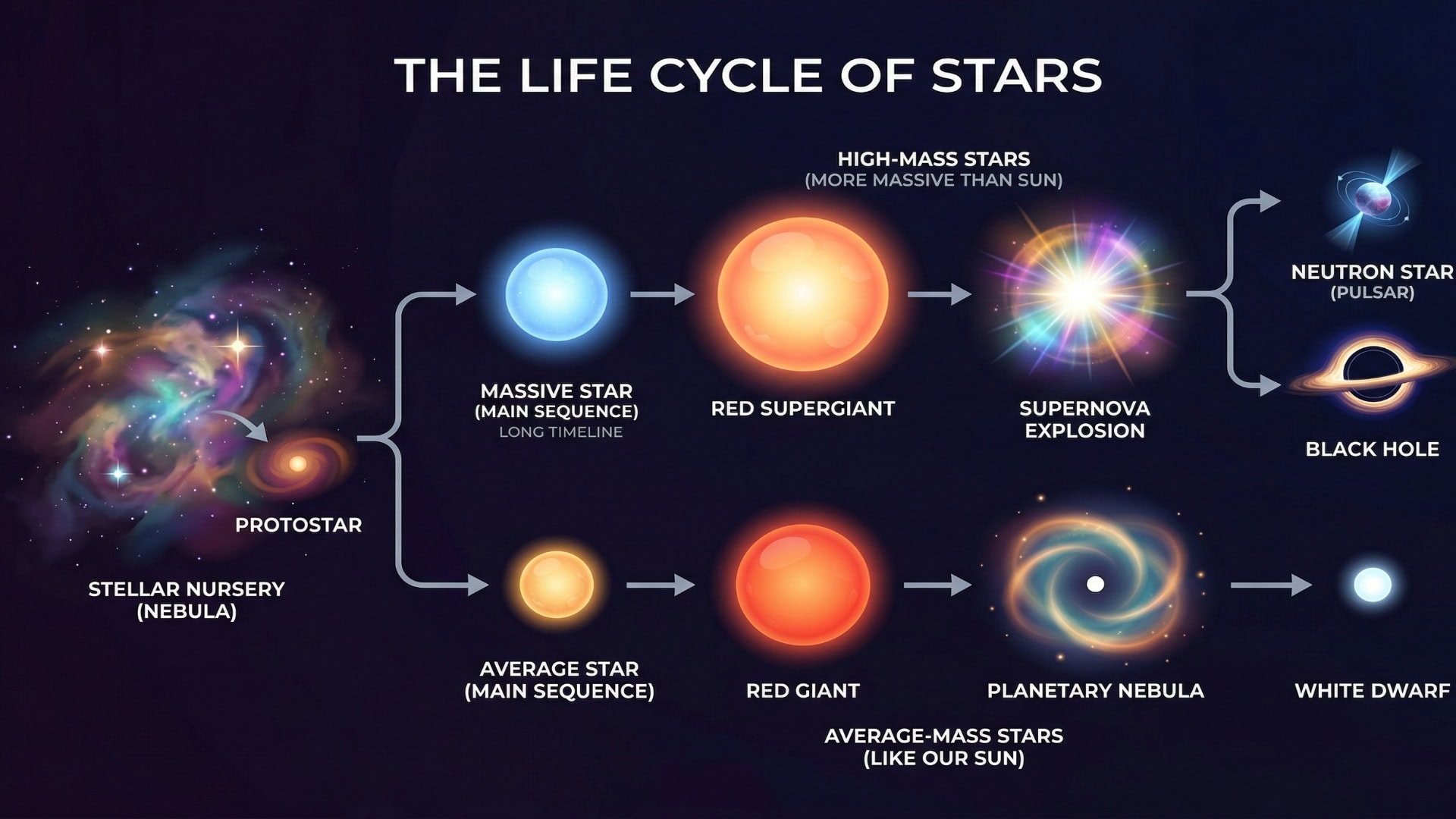
    The story of every star begins in the deep, freezing vacuum of space, within colossal clouds of gas and dust known as nebulae (or stellar nurseries). These clouds are incredibly vast, sometimes stretching across hundreds of light-years, and are primarily composed of hydrogen—the most abundant element in the universe—along with some helium and traces of heavier elements.

    The Spark of Creation: Gravity vs. Pressure

    Within a nebula, gas and dust are not distributed perfectly evenly. Some regions become slightly denser than others. Over millions of years, gravity begins to pull this dense matter together. As more material clumps together, the gravitational pull grows stronger, drawing in even more gas and dust.

    As the matter collapses inward, it begins to spin and heat up due to friction and immense pressure. This swirling, heating core of gas is known as a protostar.

    The Protostar Phase

    A protostar is essentially a star in the making. It is incredibly hot and bright, but it is not yet a true star because nuclear fusion has not yet ignited in its core. The protostar continues to gather mass from its surrounding envelope of dust. This phase can last anywhere from 100,000 to 10 million years, depending on the mass of the gathering material.

    Eventually, if the protostar gathers enough mass, the temperature and pressure at its core reach a critical tipping point—around 15 million degrees Celsius. At this unimaginable temperature, hydrogen atoms are forced together with such immense force that they fuse.


    Stage 2: The Main Sequence (The Prime of Life)

    When nuclear fusion ignites, a true star is born. This marks the beginning of the Main Sequence phase, the longest and most stable period in the life cycle of stars.

    The Grand Tug-of-War: Hydrostatic Equilibrium

    During the main sequence, a star operates as a giant nuclear furnace. It fuses hydrogen atoms into helium atoms in its core. This fusion process releases a tremendous amount of outward energy, which we see as starlight.

    To survive, a star must maintain a delicate, continuous balance known as hydrostatic equilibrium. This is a cosmic tug-of-war between two opposing forces:

    1. Gravity: Constantly trying to pull all the star’s mass inward to crush it.
    2. Nuclear Fusion (Radiation Pressure): Constantly pushing outward from the core.

    As long as the star has enough hydrogen fuel to maintain fusion, these two forces remain balanced, and the star remains stable. Our own Sun is currently in its main sequence phase and has been for about 4.6 billion years. It has enough hydrogen to remain stable for another 5 billion years.

    Size Determines Destiny

    How long a star spends in the main sequence depends entirely on its mass:

    • Low-Mass Stars (Red Dwarfs): These sip their hydrogen fuel very slowly. They can remain in the main sequence for trillions of years—longer than the current age of the universe!
    • Average-Mass Stars (Like our Sun): These burn through their fuel at a moderate pace, lasting roughly 10 billion years.
    • High-Mass Stars (Blue Giants): These are cosmic gluttons. Despite having much more fuel, they burn incredibly hot and fast, exhausting their hydrogen in just a few million years.

    Stage 3: The Aging Star (Diverging Paths)

    Eventually, every star runs out of hydrogen fuel in its core. When this happens, the outward pressure of nuclear fusion drops, and gravity temporarily wins the tug-of-war. The core begins to collapse inward. What happens next depends entirely on the star’s original mass. The stellar life cycle splits into two distinct paths.

    Path A: The Fate of Low and Average-Mass Stars

    For stars roughly the size of our Sun, the core collapse generates intense heat—so much heat that the outer layers of the star expand outward rapidly.

    The Red Giant Phase

    As the outer layers expand, they cool down and take on a reddish hue. The star has now become a Red Giant. It can grow to hundreds of times its original size. When our Sun enters this phase, it will expand so much that it will likely swallow Mercury, Venus, and possibly Earth.

    Meanwhile, back in the collapsing core, the temperature eventually gets high enough to start fusing the newly created helium into heavier elements, like carbon and oxygen. However, this helium fuel is a temporary fix and burns out relatively quickly.

    Planetary Nebula

    Once the helium is exhausted, a star like our Sun does not have enough mass (and therefore not enough gravitational pressure) to heat the core enough to fuse carbon. The core collapses for the final time.

    The outer layers of the star become unstable and are gently puffed away into space, creating a beautiful, glowing shell of gas known as a planetary nebula. (Note: Despite the name, this has nothing to do with planets; early astronomers simply thought they looked like round planets through early telescopes).

    White Dwarf and Black Dwarf

    Once the outer layers dissipate, all that remains is the star’s exposed, glowing core. This is a White Dwarf. It is incredibly dense—packing the mass of a star into a sphere roughly the size of Earth. It no longer undergoes nuclear fusion; it simply radiates its leftover heat into space.

    Over tens of billions of years, the white dwarf will eventually cool down and fade entirely, becoming a theoretical Black Dwarf—a cold, dark, dead ember floating in space. Because the universe is only 13.8 billion years old, we believe no black dwarfs exist yet; the oldest white dwarfs are still cooling.


    Path B: The Fate of Massive Stars

    Stars that are significantly larger than our Sun (at least 8 times more massive) experience a much more dramatic and violent conclusion to their lives.

    The Red Supergiant Phase

    When a massive star exhausts its hydrogen, it expands just like an average star, but on a much grander scale, becoming a Red Supergiant. These are the largest stars in the universe in terms of volume.

    Because massive stars have so much gravity, their cores can reach the temperatures necessary to fuse progressively heavier elements. The core becomes layered like an onion. The outer shell fuses hydrogen, the next shell fuses helium, then carbon, oxygen, neon, silicon, and so on.

    The Iron Barrier and Core Collapse

    This fusion chain continues until the core begins to produce iron. Iron is the ultimate stellar killer. Fusing elements lighter than iron releases energy, which supports the star. However, fusing iron absorbs energy.

    The moment iron is created, the outward radiation pressure plummets to zero. Gravity wins instantly and decisively. The entire immense weight of the star crashes down on the iron core at a significant fraction of the speed of light.

    The Supernova Explosion

    The core collapses until the atoms themselves are crushed. Protons and electrons are smashed together to form neutrons. The core becomes so dense that it physically cannot be compressed any further.

    The infalling outer layers of the star hit this ultra-dense, unyielding core and bounce off, triggering one of the most powerful explosions in the universe: a Supernova. For a brief moment, a single supernova can outshine an entire galaxy of hundreds of billions of stars. This explosion scatters the heavy elements forged in the star out into deep space.

    Neutron Stars and Black Holes

    After the supernova clears, the incredibly dense core is left behind. Its final form depends on how much mass survived the explosion:

    • Neutron Star: If the remaining core is between 1.4 and 3 times the mass of our Sun, it stabilizes as a neutron star. These objects are mind-bogglingly dense; a single teaspoon of neutron star material would weigh billions of tons on Earth. Some neutron stars spin rapidly, emitting beams of radiation, and are known as pulsars.

    • Black Hole: If the remaining core is more than 3 times the mass of our Sun, not even the density of neutrons can stop the gravitational collapse. The core collapses into an infinitely small, infinitely dense point known as a singularity. The gravitational pull is so intense that nothing, not even light, can escape it. A Black Hole is born.


    The Cycle Continues: Stardust and New Beginnings

    The death of a star is not just an end; it is a vital beginning. The violent explosions of supernovae and the gentle shedding of planetary nebulae cast immense clouds of gas and heavy elements back into the interstellar medium.

    These enriched clouds wander through the galaxy until, eventually, gravity takes hold again. The gas and dust—now containing carbon, oxygen, iron, and gold—will clump together to form a new nebula.

    From this recycled “stardust,” a new generation of stars will be born. Surrounding these new stars, the heavier elements will clump together to form rocky planets, moons, asteroids, and perhaps, eventually, the building blocks for life itself.

    To explore more about how the cosmos recycles its materials, you can read NASA’s guide on stellar evolution.


    Frequently Asked Questions (FAQ)

    1. How long do stars live?

    A star’s lifespan is entirely determined by its mass. Extremely massive stars burn hot and fast, living for only a few million years. Average stars like our Sun live for about 10 billion years. Small, low-mass stars known as red dwarfs can live for trillions of years.

    2. Will our Sun eventually become a black hole?

    No, our Sun does not have enough mass to become a black hole. When the Sun reaches the end of its life, it will expand into a red giant, shed its outer layers as a planetary nebula, and leave behind a small, dense core called a white dwarf.

    3. Are all stars in the night sky the same age?

    No. The universe is constantly giving birth to new stars while older ones die. When you look at the night sky, you are seeing a mix of stellar “infants,” middle-aged main sequence stars, and dying giants.

    4. What is a supernova?

    A supernova is the explosive death of a massive star. It occurs when a star exhausts its nuclear fuel and its core collapses under its own immense gravity. The resulting explosion is so powerful that it can briefly outshine an entire galaxy and is responsible for creating heavy elements like gold and uranium.

    5. What does it mean when scientists say “we are made of stardust”?

    Elements lighter than iron (like hydrogen and helium) were mostly created during the Big Bang. However, almost all the heavier elements—including the carbon in our DNA, the calcium in our bones, and the iron in our blood—were forged inside the cores of dying stars and spread across the universe by supernova explosions. Without the life cycle of stars, life as we know it could not exist.
  • Demystifying the Cosmos: What Are Black Holes and How Do They Work?

    Demystifying the Cosmos: What Are Black Holes and How Do They Work?

    When we look up at the night sky, we are witnessing a tapestry of light—stars, galaxies, and nebulae shining across vast distances. Yet, some of the most fascinating objects in our universe are defined not by the light they emit, but by the light they trap. For decades, black holes have captured the collective imagination of humanity. They are the ultimate cosmic enigma, featured in science fiction blockbusters and complex theoretical physics alike.

    But stripped of the Hollywood dramatization, what are black holes, and how do they actually work?

    Whether you are a lifelong astronomy enthusiast or someone simply curious about the universe we all share, this comprehensive guide is designed for you. We will break down the complex physics into readable, accessible concepts, explore how these cosmic titans are born, and answer some of the most frequently asked questions about the dark heart of space.


    1. What Exactly is a Black Hole?

    To understand a black hole, we first have to rethink our everyday understanding of empty space. A black hole is not an empty “hole” or a cosmic tear in the fabric of the universe. In fact, it is the exact opposite. A black hole is a region of space where an incredible amount of mass has been packed into a microscopically small area.

    Because gravity is directly related to mass and distance, packing so much matter into such a tiny space creates a gravitational pull so intense that nothing—not even light, the fastest moving thing in the universe—can escape it.

    To visualize this, we need to understand the anatomy of a black hole, which is primarily made up of two key features:

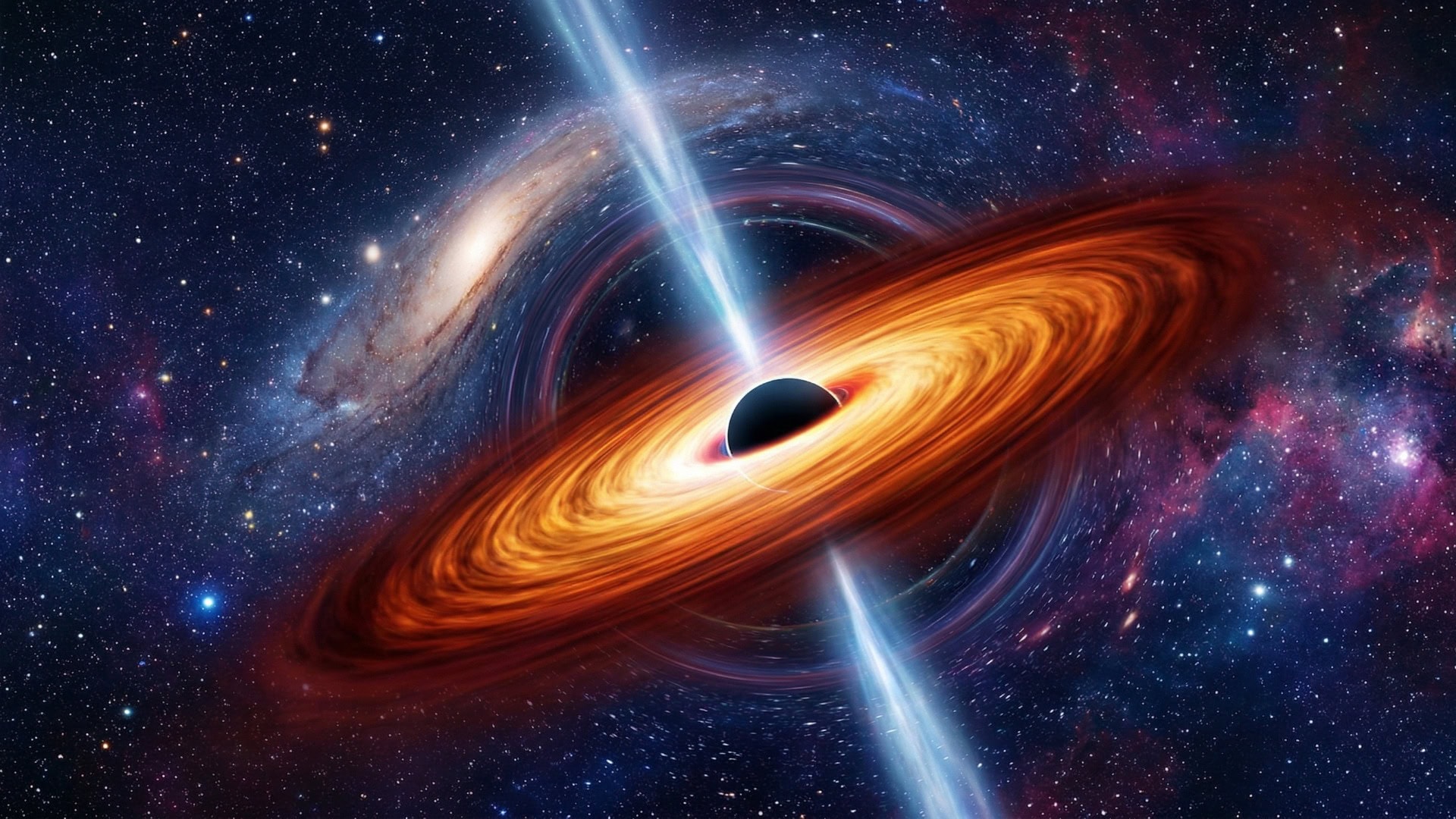
    • The Singularity: At the very center of a black hole lies the singularity. This is a point of infinite density where all the mass of the black hole is concentrated. Current laws of physics break down at the singularity. It is a place where matter is crushed to a point of zero volume, and our traditional understanding of space and time ceases to exist.
    • The Event Horizon: This is the “point of no return.” The event horizon is the invisible boundary surrounding the singularity. If you are outside the event horizon, you could theoretically escape the black hole’s pull if you were moving fast enough. However, the moment anything crosses the event horizon, the escape velocity required to leave exceeds the speed of light. Since nothing can travel faster than light, anything that crosses this boundary is forever trapped.

    2. How Are Black Holes Formed?

    Black holes are not just randomly placed throughout the universe; they are the result of stellar evolution—specifically, the dramatic death of very massive stars. Here is how the process works:

    The Delicate Balance of a Star

    For millions or billions of years, a star is engaged in an epic, continuous tug-of-war. Gravity is constantly pulling all the star’s matter inward toward its core. To counteract this crushing force, the star relies on nuclear fusion. Deep within its core, the star crushes hydrogen atoms together to form helium. This process releases a massive amount of outward-pushing energy. As long as the outward push of nuclear fusion balances the inward pull of gravity, the star remains stable.

    Running Out of Fuel

    Eventually, a star runs out of hydrogen fuel. To keep fighting gravity, it begins fusing heavier and heavier elements: helium into carbon, carbon into oxygen, oxygen into silicon, and eventually, silicon into iron. However, fusing iron does not release energy; it requires energy. Suddenly, the outward pressure stops.

    The Core Collapse and Supernova

    With no outward pressure to fight it, gravity wins the tug-of-war in a fraction of a second. The core of the star collapses in on itself at a significant fraction of the speed of light. This sudden, violent collapse creates a shockwave that blows the outer layers of the star into space in a brilliant explosion known as a supernova.

    The Birth of a Black Hole

    If the original star was massive enough (generally more than 20 times the mass of our Sun), the collapsing core cannot be stopped by any known physical force. It continues to crush inward until it becomes a point of infinite density—a singularity. A stellar-mass black hole is born.


    3. The Different Types of Black Holes

    Just as stars come in different sizes, so do black holes. Astronomers categorize them primarily by their mass.

    Stellar-Mass Black Holes

    These are the most common type of black hole, formed from the collapse of massive stars as described above. They typically contain anywhere from 5 to 100 times the mass of our Sun, yet all that mass is compressed into a sphere perhaps only a few dozen miles across. Our Milky Way galaxy alone is estimated to contain tens of millions of stellar-mass black holes.

    Supermassive Black Holes (SMBHs)

    These are the true titans of the cosmos. Supermassive black holes contain between millions and billions of times the mass of our Sun. Unlike stellar-mass black holes, their origins are still a bit of a mystery. Scientists believe they may have formed from giant clouds of gas collapsing in the early universe, or through the merging of thousands of smaller black holes over billions of years. What we do know is that a supermassive black hole resides at the center of virtually every large galaxy in the universe, including our own Milky Way (an SMBH named Sagittarius A*).

    Intermediate Black Holes

    For a long time, scientists only found evidence of the small stellar-mass black holes and the giant supermassive ones. Intermediate black holes are the “missing link”—ranging from hundreds to tens of thousands of solar masses. Recent observations using advanced telescopes have finally started providing evidence that these medium-sized black holes do exist, likely forming when multiple stellar-mass black holes merge in crowded star clusters.

    Primordial Black Holes

    These are entirely theoretical. Scientists hypothesize that primordial black holes could have formed in the first fraction of a second after the Big Bang. During this time, the universe was incredibly dense and chaotic. Small pockets of ultra-dense matter could have collapsed under their own gravity to form tiny black holes, some no larger than a single atom, yet possessing the mass of a large mountain.


    4. How Do Black Holes “Work”? The Physics Made Simple

    To understand how black holes operate, we have to look through the lens of Albert Einstein’s Theory of General Relativity.

    Before Einstein, gravity was thought of simply as a magnetic-like pull between two objects. Einstein proposed something radically different: gravity is actually the curving of space and time.

    Imagine space as a stretched, flexible trampoline. If you place a heavy bowling ball in the middle, the trampoline sags, creating a deep curve. If you roll a marble across the trampoline, it won’t travel in a straight line; it will spiral down toward the bowling ball. The bowling ball is not “pulling” the marble; it has warped the surface the marble is traveling on.

    A black hole is like placing a bowling ball of near-infinite weight on that trampoline. It creates a well in spacetime so steep and deep that nothing can climb out of it.

    Time Dilation

    One of the most mind-bending ways black holes “work” is their effect on time. Because gravity bends spacetime, it also bends time itself. The stronger the gravitational pull, the slower time moves relative to an outside observer.

    If you were to watch a robotic probe fall toward a black hole from a safe distance, you would see the probe appear to slow down as it approached the event horizon. To the probe itself, time would feel normal. But to you, watching from afar, the probe’s clock would tick slower and slower. This phenomenon, known as gravitational time dilation, means that if a person could safely hang out near a black hole for a few hours and return to Earth, decades or even centuries might have passed for the rest of humanity.


    5. How Do We Find Black Holes If They Are Invisible?

    By definition, black holes do not emit light, making them the ultimate cosmic hide-and-seek champions. So, how do astronomers know they are there? We find them by observing the chaotic environment they create around themselves.

    • Observing Orbits: If astronomers see a star orbiting what appears to be empty space at incredibly high speeds, they can calculate the mass of the invisible object the star is orbiting. If the mass is high enough, a black hole is the only logical explanation.
    • Accretion Disks: When a black hole feeds on nearby gas, dust, or a companion star, that material doesn’t fall straight in. It spirals around the black hole, forming a flat, spinning ring called an accretion disk. The intense gravity and friction heat this material to millions of degrees, causing it to emit brilliant X-rays and other forms of radiation that our telescopes can detect.
    • Gravitational Waves: When two black holes collide and merge, they create such a violent disruption in spacetime that they send out invisible ripples, much like tossing a stone into a pond. Observatories like LIGO (Laser Interferometer Gravitational-Wave Observatory) can detect these microscopic ripples washing over Earth.
    • Direct Imaging: In 2019, humanity achieved the impossible. The Event Horizon Telescope (EHT)—a global network of synchronized radio observatories—captured the first-ever image of a black hole’s silhouette in the galaxy M87. In 2022, they captured an image of Sagittarius A*, the supermassive black hole at the center of our own galaxy.

    For a deeper dive into the ongoing missions mapping the cosmos, you can visit NASA’s official guide to Black Holes, which outlines the latest astronomical discoveries.


    6. Myths vs. Reality: Debunking Black Hole Fiction

    Because black holes are so extreme, they are often misunderstood. Let’s clear up some common misconceptions.

    Myth: Black holes are cosmic vacuum cleaners that will eventually suck up the entire universe.

    Reality: Black holes do not actively “suck” things in. They simply have a gravitational field, just like a star or a planet. If you replaced our Sun with a black hole of the exact same mass, Earth would not get sucked in. It would continue to orbit the black hole exactly as it orbits the Sun now (though Earth would quickly freeze without the Sun’s light). Things only fall into a black hole if they wander too close to the event horizon.

    Myth: Our Sun will eventually become a black hole.

    Reality: Our Sun is simply not massive enough to become a black hole. When it runs out of fuel in about 5 billion years, it will expand into a red giant, shed its outer layers, and leave behind a dense, glowing core known as a white dwarf. It lacks the tremendous weight required to collapse into a singularity.

    Myth: Black holes are portals to other universes or times.

    Reality: While wormholes are mathematically possible in the equations of general relativity, there is absolutely zero observational evidence that they exist, or that black holes act as portals. According to our current understanding of physics, anything that falls into a black hole is crushed into the singularity.


    Frequently Asked Questions (FAQ)

    Q: What would happen if a human fell into a black hole?

    A: The scientific term for this is, incredibly, “spaghettification.” If you fell feet-first toward a stellar-mass black hole, the gravitational pull on your feet would be significantly stronger than the pull on your head. This difference in gravity would stretch your body out into a long, thin noodle of atoms long before you ever crossed the event horizon. Interestingly, if you fell into a supermassive black hole, the tidal forces are much gentler at the event horizon, meaning you might survive the crossing—only to be crushed as you approached the singularity inside.

    Q: Do black holes live forever?

    A: Surprisingly, no. The famed physicist Stephen Hawking theorized that black holes actually leak a tiny amount of thermal radiation, now known as “Hawking Radiation.” Over incredibly long, unimaginable stretches of time (trillions of years), black holes will slowly evaporate and eventually vanish completely.

    Q: What is the closest black hole to Earth?

    A: As of recent discoveries, the closest known black hole is Gaia BH1. It is located about 1,560 light-years away in the constellation Ophiuchus. While that sounds close in astronomical terms, it is safely far away from our solar system and poses absolutely no threat to Earth.

    Q: Can a black hole be destroyed?

    A: We currently have no technology or theoretical physics model that suggests a black hole can be destroyed by an outside force. The only way a black hole “dies” is through the incredibly slow process of Hawking radiation evaporation mentioned above.

    Q: Are black holes made of dark matter?

    A: No. Black holes are made of normal matter (like stars and gas) that has been crushed to an extreme density. Dark matter is a completely different, invisible substance that makes up about 27% of the universe. While black holes do have a gravitational pull, there are not nearly enough of them to account for the missing mass in the universe that dark matter explains.


    The Future of Black Hole Exploration

    Humanity’s quest to understand black holes is far from over. These incredibly dense objects represent the absolute limits of our understanding of physics. By studying them, scientists are trying to bridge the gap between the physics of the very large (General Relativity) and the physics of the very small (Quantum Mechanics).

    With next-generation tools like the James Webb Space Telescope peering deep into the early universe, and advanced gravitational wave observatories listening for cosmic collisions, we are entering a golden age of astronomy. Every new discovery about black holes brings us one step closer to understanding the fundamental nature of reality, space, time, and our place within this vast, beautiful universe.

  • Exploring the Mysteries of the Universe: A Deep Dive into the Cosmos

    Exploring the Mysteries of the Universe: A Deep Dive into the Cosmos

    When you step outside on a clear, moonless night and look up at the star-studded canopy above, what do you feel? For most of humanity, across all cultures and eras, the response is a profound sense of awe. The cosmos is vast, silent, and brimming with secrets. For millennia, we have looked to the stars to navigate our oceans, track our seasons, and understand our place in the grand scheme of existence.

    Today, we are no longer just looking; we are actively exploring. With the advent of groundbreaking technology, crewed space missions, and powerful orbital observatories, we are peeling back the cosmic curtain. Yet, for every question we answer, a dozen more emerge.

    In this comprehensive guide, we will embark on a journey through space and time, exploring the mysteries of the universe—from the invisible forces that shape our galaxies to the mind-bending reality of black holes, and the eternal question: Are we alone?


    1. The Invisible Universe: Dark Matter and Dark Energy

    When we think of the universe, we typically picture planets, glowing stars, sweeping nebulas, and swirling galaxies. However, everything we can see, touch, and interact with—every star, every planet, and every person on Earth—makes up a mere 5% of the universe.

    The rest is shrouded in shadow, composed of two deeply mysterious phenomena: Dark Matter and Dark Energy.

    What is Dark Matter?

    Accounting for roughly 27% of the universe, dark matter is the cosmic glue holding galaxies together.

    In the mid-20th century, astronomer Vera Rubin observed that galaxies were spinning so fast that the gravity generated by their visible matter (stars and gas) wasn’t enough to keep them from flying apart. There had to be an invisible, massive substance exerting a gravitational pull. Because this substance does not emit, reflect, or absorb light, it earned the moniker “dark matter.”

    While scientists have yet to directly observe a dark matter particle, we know it exists because of its gravitational effects on visible light. When light from distant galaxies passes through a cluster of dark matter, the light bends and magnifies—a phenomenon known as gravitational lensing.

    What is Dark Energy?

    If dark matter pulls the universe together, dark energy tears it apart. Making up roughly 68% of the cosmos, dark energy is the driving force behind the accelerating expansion of the universe.

    In the 1990s, astrophysicists studying distant supernovas expected to find that the expansion of the universe was slowing down due to the inward pull of gravity. Instead, they discovered the exact opposite: the expansion was accelerating. Dark energy remains one of the greatest unsolved mysteries in modern physics. We know how it acts, but its true nature remains entirely elusive.

    (To learn more about ongoing research into the dark universe, you can explore the European Space Agency’s Euclid Mission, a telescope designed specifically to map dark geometry).


    2. Black Holes: The Gravity Behemoths

    Few celestial objects capture the human imagination quite like black holes. They are the universe’s ultimate point of no return—regions of spacetime where gravity is so incredibly intense that nothing, not even light, can escape its grasp.

    How Are Black Holes Formed?

    Most stellar-mass black holes are born from the violent deaths of massive stars. When a star at least three times the mass of our Sun runs out of nuclear fuel, its core can no longer support the weight of its outer layers. The star collapses inward, triggering a massive explosion called a supernova, while the core continues to compress into an infinitely dense point known as a singularity.

    The Anatomy of a Black Hole

    • The Singularity: The very center of the black hole, where all its mass is concentrated into a space of zero volume. Here, the laws of physics as we understand them break down entirely.
    • The Event Horizon: This is the boundary around the singularity. It is the “point of no return.” Once anything crosses the event horizon, it requires a velocity greater than the speed of light to escape—which is physically impossible.
    • The Accretion Disk: Many black holes are surrounded by a swirling disk of superheated gas and dust. As this material spirals inward, it accelerates and heats up, emitting brilliant X-rays that telescopes can detect.

    Supermassive Black Holes

    While stellar-mass black holes dot our galaxy, monstrously large black holes lurk at the centers of nearly every large galaxy, including our own Milky Way. Our resident giant, Sagittarius A*, is four million times more massive than our Sun. In 2019, the Event Horizon Telescope collaboration made history by capturing the first-ever image of a black hole in the galaxy M87, providing stunning visual proof of Albert Einstein’s General Theory of Relativity.


    3. The Origins of Everything: The Big Bang and Beyond

    How did we get here? For much of human history, this was a question reserved for philosophy and theology. Today, it is the realm of cosmology.

    The Big Bang Theory

    The prevailing cosmological model suggests that the universe began approximately 13.8 billion years ago. It did not explode into pre-existing space; rather, space itself expanded from an infinitely hot, infinitely dense point.

    In the first fractions of a second following the Big Bang, the universe underwent a period of rapid, exponential expansion known as Cosmic Inflation. As the universe expanded, it cooled. Energy transformed into matter, creating the first subatomic particles, which eventually bound together to form simple atoms like hydrogen and helium.

    The Cosmic Microwave Background

    For the first 380,000 years, the universe was a superhot, opaque fog of plasma. As it cooled enough for electrons to attach to nuclei, light was finally able to travel freely through space. The remnant glow of this first light is still detectable today as the Cosmic Microwave Background (CMB). Discovered accidentally in 1965, the CMB is effectively the “baby picture” of our universe, providing critical evidence for the Big Bang.

    The Fate of the Universe

    If the Big Bang is how it started, how will it end? Cosmologists propose a few scenarios based on the ongoing struggle between gravity and dark energy:

    • The Big Freeze: The most likely scenario based on current data. The universe continues to expand forever, stars burn out, galaxies drift apart, and the cosmos approaches absolute zero.
    • The Big Crunch: If gravity eventually overpowers dark energy, the universe’s expansion could reverse, causing everything to collapse back into a fiery singularity.
    • The Big Rip: If dark energy accelerates aggressively, it could eventually tear apart galaxies, star systems, planets, and ultimately, atoms themselves.

    4. Are We Alone? The Search for Extraterrestrial Life

    Of all the mysteries of the universe, none is more profound than the search for life beyond Earth. If we find evidence of biology elsewhere, it will fundamentally change our understanding of our place in the cosmos.

    The Hunt for Exoplanets

    For a long time, we didn’t know if other stars had planets. That changed in the 1990s. Today, astronomers have confirmed the existence of over 5,000 exoplanets (planets orbiting stars outside our solar system).

    Scientists search for these distant worlds primarily using two methods:

    1. The Transit Method: Observing the tiny dip in a star’s brightness when a planet passes (or transits) in front of it.
    2. The Radial Velocity Method: Detecting the slight “wobble” of a star caused by the gravitational tug of an orbiting planet.

    The Habitable Zone

    A key focus in the search for life is finding planets situated in the Habitable Zone (often called the “Goldilocks Zone”). This is the region around a star where the temperature is “just right”—neither too hot nor too cold—for liquid water to exist on a planet’s surface. Water is the universal solvent and a necessary ingredient for all life as we know it.

    Extremophiles and Ocean Worlds

    We don’t necessarily have to look outside our solar system for life. Astrobiologists are incredibly interested in environments right here in our cosmic backyard.

    • Mars: Rovers like NASA’s Perseverance are currently scouring the Jezero Crater for fossilized signs of ancient microbial life.
    • Europa and Enceladus: These icy moons of Jupiter and Saturn, respectively, hide massive, liquid-water oceans beneath their frozen crusts. Hydrothermal vents at the bottom of these alien oceans could potentially support ecosystems, much like the extremophiles found in the deep oceans of Earth.

    5. The Tools of Discovery: Eyes in the Sky

    Our understanding of the universe is only as good as the tools we use to observe it. Over the last few decades, technological leaps have revolutionized astrophysics.

    The Hubble Space Telescope

    Launched in 1990, Hubble changed the way humanity views the cosmos. Unencumbered by Earth’s blurring atmosphere, Hubble captured crystal-clear images of towering nebulas, ancient galaxies, and stellar nurseries. Its most profound contribution was the Hubble Deep Field, an image that revealed thousands of galaxies in a seemingly empty patch of sky, proving just how densely packed the universe is.

    The James Webb Space Telescope (JWST)

    The successor to Hubble, the JWST is a marvel of modern engineering. Launched in late 2021, Webb is optimized to view the universe in the infrared spectrum. Because the universe is expanding, light from the earliest galaxies is stretched out (redshifted) into infrared wavelengths.

    Webb acts like a cosmic time machine, allowing us to see the first stars and galaxies that formed shortly after the Big Bang. Additionally, Webb’s sensitive instruments can analyze the atmospheres of distant exoplanets, searching for biosignatures—chemical imbalances like methane and oxygen that could indicate the presence of biological life.


    6. The Future of Cosmic Exploration

    We are living in a golden age of space exploration. The transition from government-exclusive agencies to the inclusion of private aerospace companies has rapidly accelerated humanity’s push into the stars.

    The Artemis Generation

    Through the Artemis program, humanity is returning to the Moon—but this time, we intend to stay. The goal is to establish a sustainable human presence on the lunar surface, including building a lunar gateway (a space station orbiting the Moon). This lunar infrastructure will serve as a proving ground for the technologies and biological research necessary for the next giant leap.

    Mars and Beyond

    A crewed mission to Mars is the ultimate goal of contemporary space exploration. Sending humans to the Red Planet will test the absolute limits of our engineering, psychology, and physiology. Unlike the Moon, which is a few days away, a mission to Mars involves a months-long transit and requires extreme self-sufficiency.

    Looking even further ahead, scientists are conceptualizing interstellar travel. Initiatives like Breakthrough Starshot aim to send tiny, light-propelled nanocrafts to Alpha Centauri, our nearest neighboring star system, at 20% the speed of light. While human interstellar travel remains firmly in the realm of science fiction for now, the groundwork for unmanned exploration of neighboring stars is already being laid.


    Conclusion: A Universe Waiting to be Known

    Exploring the mysteries of the universe is not just an academic exercise; it is a fundamental expression of human curiosity. Every time we solve a cosmic puzzle, we gain a deeper appreciation for the delicate, miraculous nature of our own existence on this pale blue dot.

    From the unseen forces of dark energy to the crushing depths of black holes, the cosmos reminds us that there is always more to learn. As our telescopes look further and our spacecraft fly faster, we continue the ancient, noble tradition of looking up and daring to ask: Why?


    Frequently Asked Questions (FAQ)

    1. How old is the universe?

    Based on measurements of the cosmic microwave background and the expansion rate of space, astrophysicists estimate the universe is approximately 13.8 billion years old.

    2. What is a black hole, simply put?

    A black hole is an area in space where gravity pulls so intensely that nothing, not even light, can escape. They are usually formed when a massive star collapses in on itself at the end of its life cycle.

    3. Is there sound in space?

    No, space is a near-perfect vacuum. Sound waves require a medium (like air, water, or metal) to travel through. Because there are no air molecules in the vacuum of space to vibrate and carry sound waves, space is completely silent.

    4. What is the difference between Dark Matter and Dark Energy?

    Dark matter is an invisible mass that pulls matter together, providing the gravity needed to hold galaxies intact. Dark energy is a mysterious repulsive force that pushes space apart, causing the universe’s expansion to accelerate.

    5. What is the James Webb Space Telescope (JWST)?

    The JWST is currently the largest and most powerful space telescope ever built. Unlike Hubble, which sees mostly visible light, JWST observes in the infrared, allowing it to peer through thick cosmic dust clouds and look further back in time than any previous instrument.

    6. Will the sun eventually become a black hole?

    No. Our Sun does not have enough mass to collapse into a black hole. In about 5 billion years, it will expand into a red giant, shed its outer layers, and leave behind a dense, glowing core known as a white dwarf.

  • The Engine of Discovery: Why Critical Thinking is the Heartbeat of Modern Science

    The Engine of Discovery: Why Critical Thinking is the Heartbeat of Modern Science

    When we think of science, our minds often jump straight to the tangible tools of the trade: bubbling flasks, towering telescopes, complex algorithms, and pristine white coats. We envision a vast encyclopedia of facts, a collection of absolute truths about the universe. However, this perspective misses the forest for the trees. Science is not merely a static body of knowledge; it is a dynamic, rigorous, and self-correcting process. At the very core of this process—acting as its engine, its compass, and its most rigorous quality control mechanism—is critical thinking.

    In an era characterized by an overwhelming flood of information, understanding the importance of critical thinking in science is more crucial than ever. Whether you are a dedicated researcher, a student embarking on your educational journey, or simply a curious citizen navigating the complexities of the modern world, mastering this skill is essential.

    This comprehensive guide explores the symbiotic relationship between critical thinking and scientific inquiry, examining how we can cultivate these skills to foster a more informed, inclusive, and progressive society.


    What is Critical Thinking in a Scientific Context?

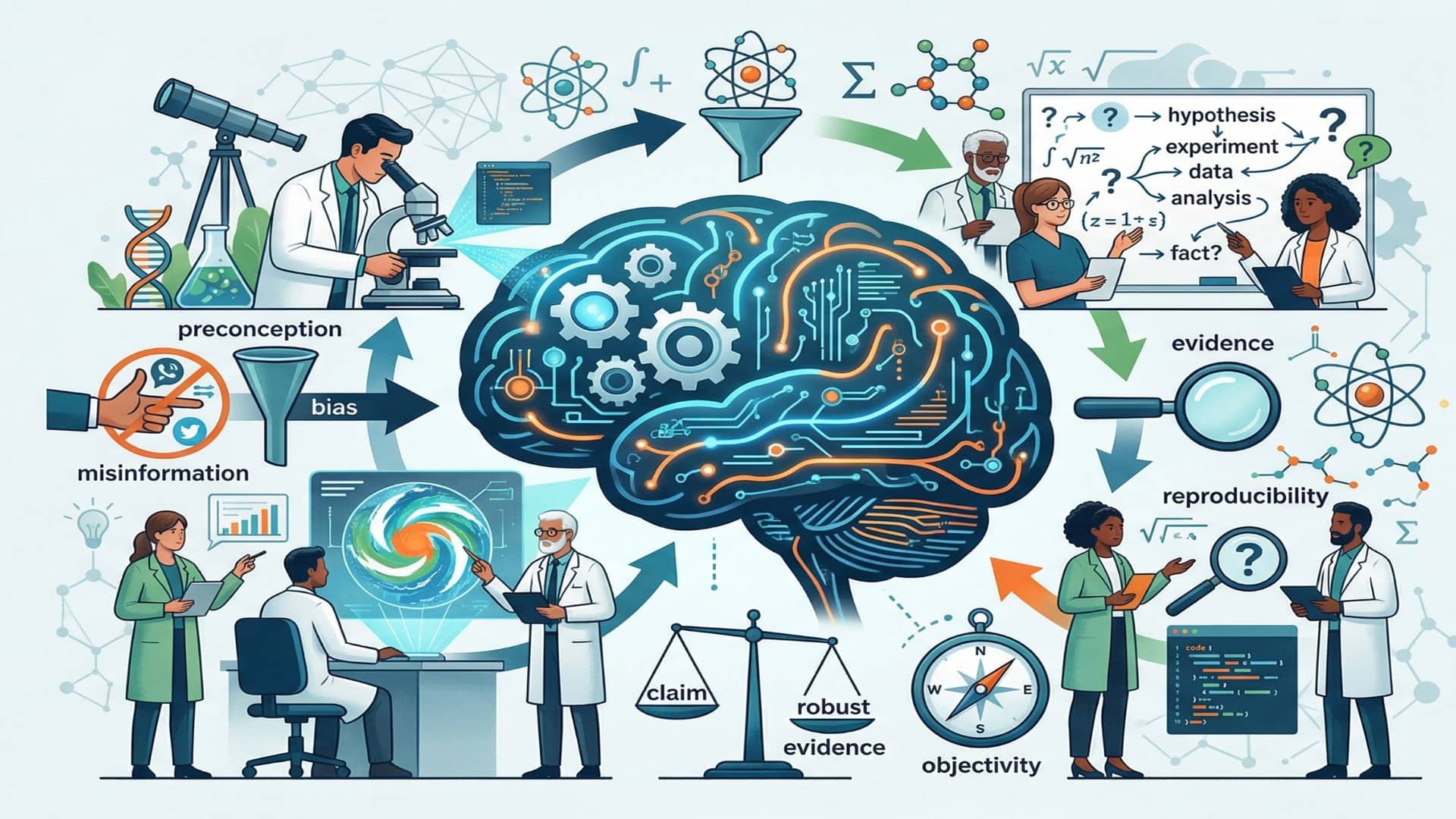
    At its most fundamental level, critical thinking is the objective analysis and evaluation of an issue in order to form a judgment. It requires a deliberate step back from our instinctual reactions and preconceived notions.

    In the realm of science, critical thinking takes on a highly structured form. It is the practice of systematically questioning assumptions, rigorously evaluating evidence, recognizing cognitive biases, and remaining open to altering one’s conclusions when presented with new, robust data.

    A scientific critical thinker does not ask, “How can I prove that my idea is right?” Instead, they ask, “What evidence would it take to prove that my idea is wrong?

    This subtle but profound shift in perspective is what separates dogmatic belief from scientific inquiry. It relies on the principle of falsifiability—the concept that for any hypothesis to have scientific validity, it must be inherently disprovable.

    To dive deeper into the philosophical foundations of this concept, you can explore the comprehensive resources provided by the Stanford Encyclopedia of Philosophy on Critical Thinking.


    The Core Pillars of Scientific Critical Thinking

    To truly understand how critical thinking operates within science, we must break it down into its foundational pillars. These are the daily habits of mind that researchers use to navigate the unknown.

    1. Rigorous Observation and Questioning

    Science begins with observation, but critical thinking elevates everyday observation into scientific inquiry. It involves looking at the world and asking “Why?” and “How?” It requires distinguishing between what is actually happening and what we assume is happening. A critical thinker observes a phenomenon and immediately begins generating a web of questions, ensuring that those questions are specific, measurable, and relevant.

    2. Hypothesis Generation and Falsifiability

    A hypothesis is not a random guess; it is an educated, testable prediction. Critical thinking dictates that a hypothesis must be structured in a way that allows it to be proven false. If a claim is impossible to test or refute under any circumstances, it falls outside the realm of science. This intellectual humility—the willingness to design an experiment that could destroy your own brilliant idea—is the hallmark of a true scientific mindset.

    3. Objective Data Analysis

    Once data is collected, critical thinking serves as a shield against the human tendency to see patterns where none exist. It involves:

    • Understanding Statistical Significance: Recognizing that a small data set might yield a result by pure chance.
    • Distinguishing Correlation from Causation: Just because two events happen simultaneously does not mean one caused the other. (For example, ice cream sales and shark attacks both increase in the summer, but one does not cause the other; the hidden variable is warm weather).
    • Identifying Anomalies: Instead of throwing out data points that don’t fit the expected curve, critical thinkers investigate them. Often, the most groundbreaking discoveries hide within the anomalies.

    4. Recognizing and Mitigating Bias

    Humans are naturally biased creatures. We are evolutionary wired to make quick judgments based on limited information. In science, critical thinking requires the active identification and mitigation of these mental shortcuts:

    • Confirmation Bias: The tendency to search for, interpret, favor, and recall information in a way that confirms or supports one’s prior beliefs or values.
    • Survivorship Bias: Concentrating on the people or things that “survived” some process and inadvertently overlooking those that did not because of their lack of visibility.
    • Publication Bias: The trend where studies with positive or exciting results are more likely to be published than those with negative or inconclusive results, leading to a skewed perception of reality.

    Why Critical Thinking is the Engine of Scientific Progress

    Throughout history, scientific progress has rarely been a straight line. It is a series of fits, starts, errors, and paradigm shifts. Critical thinking is the force that propels these shifts forward.

    Overturning Scientific Dogma

    Consider the shift from the geocentric model of the universe (where the Earth is the center) to the heliocentric model (where the Earth orbits the Sun). For centuries, the geocentric model was accepted as absolute truth, supported by both the scientific establishment and religious institutions of the time.

    It was the critical thinking of astronomers like Copernicus and Galileo—who meticulously analyzed astronomical data and dared to question the deeply ingrained assumptions of their era—that eventually overturned this dogma. They prioritized empirical evidence over established authority, a core tenet of scientific critical thought.

    The Self-Correcting Nature of Science

    One of the most powerful aspects of science is its ability to self-correct. This is largely driven by the peer-review process and the push for replication.

    When a researcher publishes a finding, the broader scientific community uses critical thinking to dissect the methodology, analyze the data, and attempt to replicate the results. If the results cannot be replicated independently, the original claim is questioned, modified, or discarded. This mechanism ensures that, over time, the scientific consensus moves closer to the truth, stripping away errors, biases, and fraudulent claims.


    Navigating Misinformation in the Digital Age

    Today, we do not suffer from a lack of information; we suffer from a lack of filters. The internet democratized the sharing of knowledge, but it also democratized the sharing of pseudoscience, misinformation, and deliberate disinformation.

    In this landscape, critical thinking is no longer just a tool for scientists in a laboratory; it is a fundamental survival skill for modern digital citizens.

    The Pitfalls of “Doing Your Own Research”

    The phrase “do your own research” has been co-opted in recent years, often used to justify ignoring scientific consensus in favor of fringe theories found on social media or obscure websites. True research is not typing a predetermined conclusion into a search engine and clicking the first link that agrees with you.

    Applied critical thinking in the digital age involves:

    • Evaluating the Source: Who is making the claim? What are their credentials? Do they have a financial or ideological conflict of interest?
    • Checking the Consensus: What do the majority of independent experts in the relevant field say? While consensus can occasionally be wrong, it is the most reliable starting point for understanding complex issues.
    • Analyzing the Methodology: Was the claim based on a robust, peer-reviewed study, or an anecdotal YouTube video?

    By applying the scientific method to our daily media consumption, we can build intellectual immunity against the viruses of misinformation.


    The Role of Inclusive Language and Diverse Perspectives in Science

    A critical analysis of the scientific establishment itself reveals a historical flaw: for much of modern history, scientific inquiry was dominated by a homogenous group of people—primarily wealthy, Western men.

    Critical thinking demands that we recognize how this lack of diversity has limited our understanding of the world. True scientific objectivity requires a multitude of subjective perspectives. When we foster diverse and inclusive scientific communities, we bring different life experiences, cultural backgrounds, and problem-solving approaches to the table. This diversity acts as a powerful safeguard against systemic biases. A blind spot for one researcher might be glaringly obvious to another from a different background.

    Furthermore, using inclusive language in scientific communication is not a matter of “political correctness”; it is a matter of accuracy and clarity. Inclusive language avoids generalizations and stereotypes that can inadvertently skew research parameters or alienate communities. By ensuring that research considers humanity in all its diverse forms—across different genders, ethnicities, ages, and socioeconomic backgrounds—we produce science that is more robust, accurate, and beneficial to all.


    How to Cultivate Critical Thinking Skills

    Whether you are a professional researcher or an enthusiastic layperson, critical thinking is a muscle that must be continuously exercised. Here are actionable ways to strengthen it:

    1. Embrace Intellectual Humility

    Accept that you do not know everything, and more importantly, accept that your current beliefs might be wrong. When presented with compelling evidence that contradicts your views, view it not as a personal attack, but as an opportunity to upgrade your understanding.

    2. Practice Active Skepticism

    Do not accept claims at face value, even if they come from perceived authority figures. Ask for the evidence. Ask how that evidence was gathered. Active skepticism is not about being cynical and disbelieving everything; it is about requiring a proportional amount of evidence for the magnitude of the claim. (As the famous saying goes: Extraordinary claims require extraordinary evidence.)

    3. Study Logical Fallacies

    Familiarize yourself with common errors in reasoning. Understand what a “straw man” argument is, learn how to identify an “ad hominem” attack, and recognize the “appeal to nature” fallacy. By knowing the vocabulary of bad logic, you can spot it instantly in articles, debates, and even your own internal monologue.

    4. Read Outside Your Echo Chamber

    Algorithms are designed to feed us information that confirms our existing biases. Actively seek out reputable sources that challenge your worldview. Engaging with opposing viewpoints forces you to critically evaluate the strengths and weaknesses of your own arguments.


    Conclusion

    The importance of critical thinking in science cannot be overstated. It is the invisible scaffolding that supports the entire enterprise of human discovery. Without it, science devolves into dogma, and progress grinds to a halt.

    As we face increasingly complex global challenges—from mitigating the effects of climate change to navigating the ethics of artificial intelligence and developing cures for emerging diseases—our collective ability to think critically will dictate our success as a species. By championing structured skepticism, demanding rigorous evidence, and fostering inclusive, diverse communities of thinkers, we ensure that the engine of discovery continues to propel humanity forward into a brighter, more understood future.


    Frequently Asked Questions (FAQ)

    1. What is the difference between the scientific method and critical thinking?

    The scientific method is a specific, formalized process (observation, hypothesis, experiment, analysis, conclusion) used to investigate natural phenomena. Critical thinking is the broader cognitive skill set—evaluating evidence, identifying biases, and logical reasoning—that makes the scientific method function effectively. You use critical thinking to execute the scientific method.

    2. Can someone be a successful scientist without being a good critical thinker?

    It is highly unlikely. While someone might be technically skilled at running lab equipment or running algorithms, true scientific advancement requires interpreting what those results mean, recognizing when an experiment is flawed, and conceptualizing new hypotheses. All of these require high-level critical thinking.

    3. How can I apply scientific critical thinking to my everyday life?

    You can apply it by becoming a more discerning consumer of information. Before buying a product that makes bold health claims, check for peer-reviewed evidence. Before sharing a sensational news headline on social media, verify the source and read beyond the title. Always ask yourself: “What is the evidence supporting this, and is there an alternative explanation?”

    4. What is ‘confirmation bias’ and why is it dangerous in science?

    Confirmation bias is the human tendency to subconsciously seek out, favor, and remember information that confirms our pre-existing beliefs, while ignoring or dismissing information that contradicts them. In science, it is dangerous because a researcher might inadvertently design an experiment to produce the result they want, or they might ignore anomalous data that disproves their favorite theory, leading to false conclusions.

    5. Why is peer review considered a critical thinking tool?

    Peer review acts as a collective critical thinking filter. When a scientist submits research, it is evaluated by other anonymous experts in the same field. These peers actively look for methodological flaws, statistical errors, and leaps in logic. It is an institutionalized form of skepticism designed to ensure that only rigorous, well-supported science enters the established body of knowledge.

    6. Does the use of inclusive language really impact the quality of science

    Yes. Science relies on precision. Historically, using non-inclusive frameworks led to significant blind spots—such as early medical research being conducted almost exclusively on young, white men, leading to a dangerous lack of understanding of how certain drugs affected women or different ethnic groups. Inclusive language and frameworks ensure that research questions, data collection, and conclusions accurately reflect the diverse reality of the world, leading to more robust and applicable scientific outcomes.

  • The Future of Science: What Lies Ahead for Our World?

    The Future of Science: What Lies Ahead for Our World?

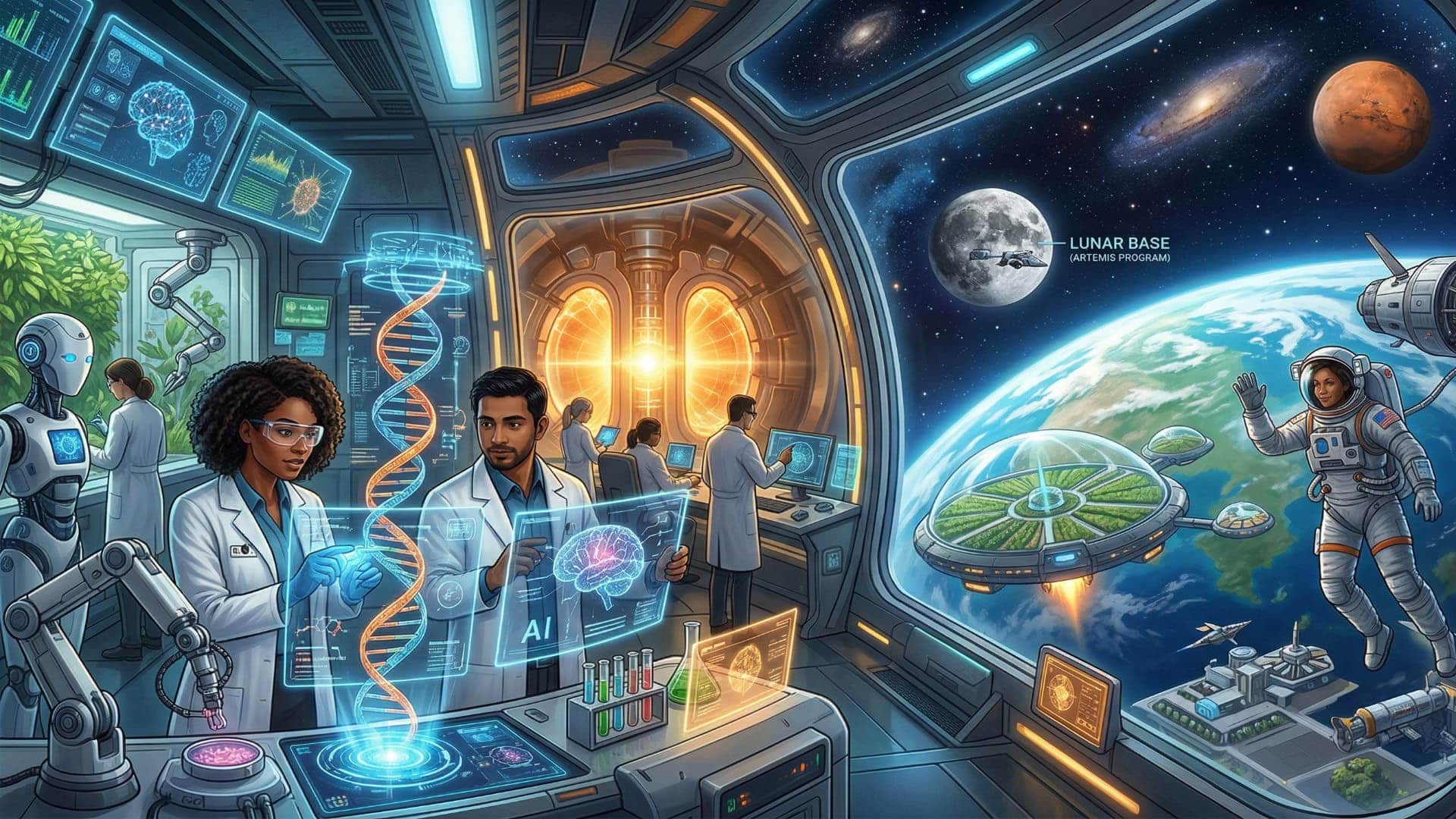
    Human discovery moves incredibly fast today. We map genomes and peer into the early universe. This pursuit reshapes how we live and work. What does the future of science hold? What lies ahead for humanity? This guide explores exciting scientific frontiers. We cover AI, biotechnology, and quantum mechanics. These tools help build a thriving, equitable world.


    1. Artificial Intelligence: The Best Research Partner

    AI is now a powerful tool for scientists. It collaborates with humans to speed up discovery.

    Revolutionizing Drug Discovery

    Making new drugs used to take decades. Machine learning now predicts molecular interactions quickly. Google DeepMind’s AlphaFold mapped many protein structures. This lets scientists design life-saving, tailored medications.

    Automating the Laboratory

    Self-driving labs are rising fast. Robots run thousands of experiments at once. They adjust parameters without human help. This democratizes data for researchers everywhere.

    Navigating Big Data

    Scientists are drowning in massive datasets. Advanced AI sifts through this informational flood. It finds new physics signals and genetic markers.


    2. The Genomic Revolution and Biotechnology

    Biology and genes define the 21st century. Our ability to edit life’s code is advancing. This solves health and environmental challenges.

    Precision Medicine for All

    Future healthcare will be deeply personal. Treatments will match your unique genetic makeup. Cheaper sequencing makes this accessible to everyone. This helps historically marginalized groups get better care.

    CRISPR and Synthetic Biology

    CRISPR-Cas9 has changed biology forever. We might cure genetic disorders at their source. Conditions like cystic fibrosis could be eradicated. Synthetic biology lets us engineer helpful microbes. They can eat plastic or make clean fuels. Read WHO guidelines on ethical genetic technologies.


    3. Climate Science and Sustainable Energy

    Addressing the climate crisis is incredibly urgent. Our future relies on a carbon-neutral civilization.

    The Promise of Nuclear Fusion

    Nuclear fusion is the holy grail of energy. It produces no long-lived radioactive waste. Projects like ITER are making huge strides. Fusion could provide limitless, clean energy for all.

    Next-Generation Energy Storage

    Renewable energy requires advanced battery technology. Solid-state batteries promise faster charging times. They also rely less on unethical mining practices.

    Carbon Dioxide Removal

    We must remove historical carbon from the air. Direct Air Capture facilities vacuum CO2 safely. Ethical oversight is crucial for these global interventions.


    4. Quantum Computing and New Physics

    Classical computers use normal bits. Quantum computers use qubits for complex calculations. They calculate exponentially faster than supercomputers.

    Breaking Computational Barriers

    Quantum computers will simulate atomic interactions perfectly. This leads to better solar cells and materials. They will also require new, quantum-safe security protocols.

    Unraveling Universe Mysteries

    Dark matter and dark energy remain huge mysteries. Future particle accelerators will test the Standard Model. They might reveal new cosmic forces.


    5. Space Exploration: A Multi-Planetary Future

    Humanity is looking upward with huge ambition. Agencies and commercial companies are working together.

    The Artemis Era

    NASA’s Artemis program will return humans to the Moon. This time, we are building permanent lunar habitats. The astronaut generation is the most diverse ever.

    The Journey to Mars

    The Moon prepares us for exploring Mars. We must overcome immense engineering challenges first. Humans might reach Mars by the 2040s.

    Finding Extraterrestrial Life

    Telescopes are searching exoplanets for signs of life. Missions will explore subsurface oceans on Jupiter’s moons.


    6. Neurotechnology and the Human Brain

    The brain is incredibly complex. Neurotechnology helps untangle its neural networks.

    Restoring Agency

    Brain-Computer Interfaces connect brains to machines. Paralyzed individuals can control robotic limbs with thoughts. This greatly improves their quality of life.

    Understanding Mental Health

    Neuroscience is changing mental health treatments. We use targeted neural interventions for depression. We might soon unlock the biological basis of consciousness.


    7. Ethics and Inclusive Science

    Science is a very human endeavor. We must guide our growing capabilities ethically.

    Mitigating AI Bias

    We must eliminate algorithmic bias in AI. AI must use diverse, representative training data.

    Open Science Access

    Science must be open and collaborative. Developing nations need access to new technologies. Science must benefit humankind as a whole.


    Conclusion

    The future holds immense promise and responsibility. We must actively build a better world. Let us embrace ethical, inclusive scientific discovery. Science can uplift, heal, and unite us all.


    Frequently Asked Questions (FAQ)

    What is the next big breakthrough?

    Quantum computing and CRISPR therapies are highly anticipated. They will revolutionize computing and medicine soon.

    Will AI replace human scientists?

    No, AI is a helpful collaborative tool. It speeds up work but lacks human creativity.

    How does science fight climate change?

    Science develops better batteries and carbon capture methods. It also pursues clean energy like nuclear fusion.

    Why is diversity important in science?

    Diversity ensures research addresses everyone’s unique needs. It leads to safer, more equitable innovations.

    Will everyday people travel to space?

    Spaceflight is currently very expensive. Reusable rockets will lower costs in the future.

    Where can I find reliable science news?

    Read Nature or Science for updates. Visit NASA or IPCC for official data.

  • The Spark of Discovery: How Curiosity Drives Scientific Innovation

    The Spark of Discovery: How Curiosity Drives Scientific Innovation

    Have you ever looked up at the night sky and wondered what makes the stars shine? Or watched a leaf fall and questioned why it drifted downward instead of floating up? If so, you have tapped into the exact same cognitive mechanism that has propelled human progress for millennia. Before there were laboratories, supercomputers, or electron microscopes, there was simply the human mind, armed with an insatiable desire to understand.

    Curiosity is the unsung engine of scientific innovation. While we often celebrate the final product—the life-saving vaccine, the smartphone in our pockets, or the rover on Mars—we frequently overlook the seemingly ordinary “what if” or “why” that started it all.

    In this comprehensive guide, we will explore how curiosity acts as the catalyst for scientific breakthroughs, examine the delicate balance between basic and applied research, and discuss why fostering an inclusive, questioning environment is essential for the future of global innovation.


    The Anatomy of Scientific Curiosity

    To understand how curiosity drives innovation, we must first understand what curiosity actually is. Psychologists often categorize this drive into different types, but the one most relevant to science is epistemic curiosity.

    Epistemic curiosity is the intrinsic desire for knowledge. It is the psychological itch that arises when we perceive a gap in our understanding—a gap we feel compelled to close. Unlike perceptual curiosity, which is a fleeting reaction to something novel or surprising (like a loud noise or a bright flash), epistemic curiosity is sustained, deliberate, and deeply cognitive.

    The “Information Gap” Theory

    In the 1990s, behavioral economist George Loewenstein proposed the “Information Gap Theory” of curiosity. He suggested that when people become aware of a discrepancy between what they know and what they want to know, they experience a state of mild psychological discomfort. The only way to alleviate this discomfort is to seek out the missing information.

    For a scientist, this “discomfort” is the starting point of the scientific method. It is the observation that does not quite fit the established paradigm. It is the unexpected variable in an experiment. When a researcher encounters this gap, curiosity compels them to formulate hypotheses, design experiments, and analyze data. Without this initial intrinsic drive, the rigorous and often tedious processes of scientific inquiry would be nearly impossible to sustain.


    Historical Milestones Fueled by “What If?”

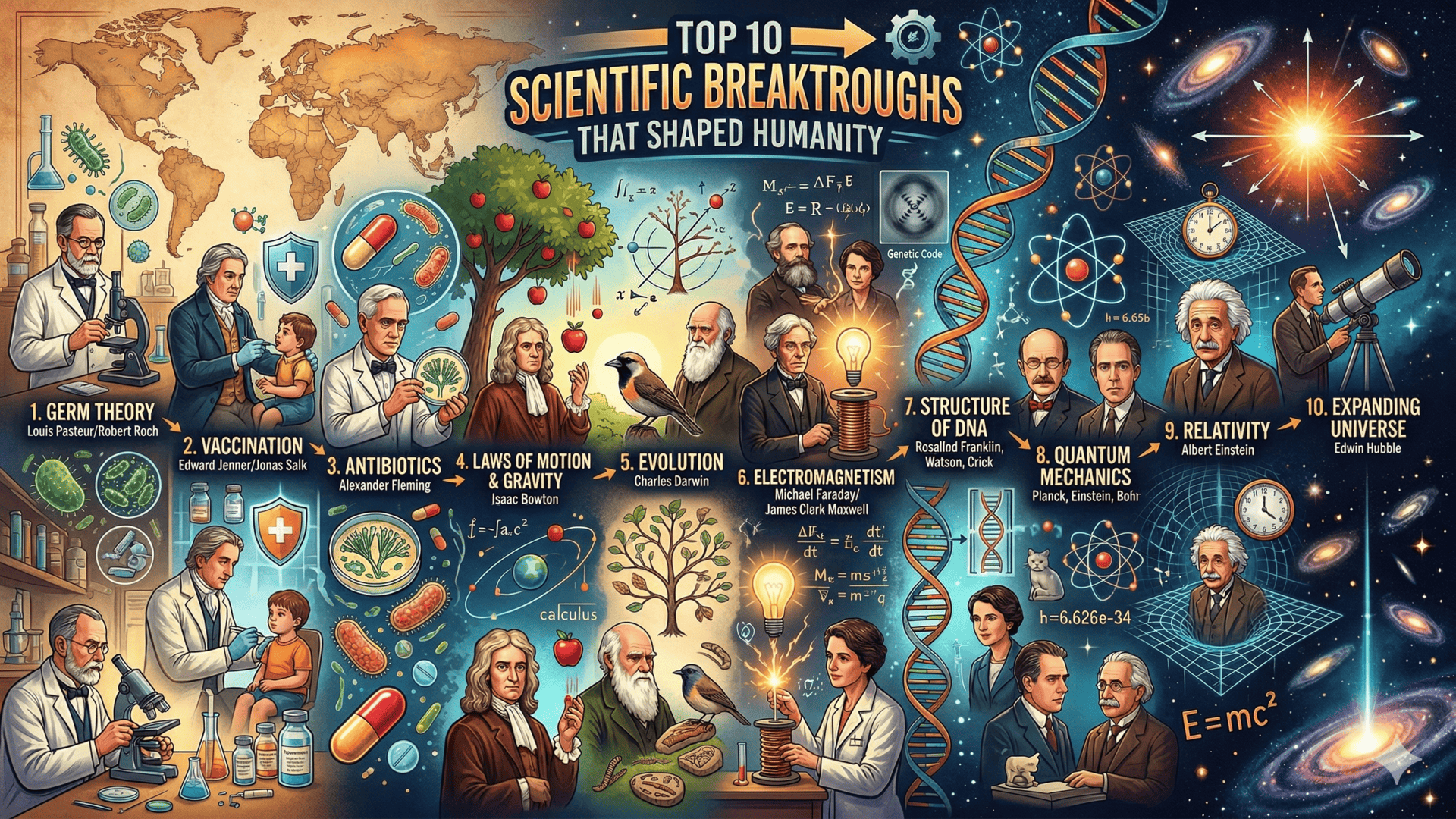
    History is replete with examples of world-changing innovations born not out of a mandate to invent a specific product, but from a researcher pulling on a thread of pure curiosity.

    1. Alexander Fleming and the Accidental Mold

    The discovery of penicillin is perhaps the most famous example of serendipity meeting a prepared, curious mind. In 1928, bacteriologist Alexander Fleming returned from a vacation to find that one of his Petri dishes containing Staphylococcus bacteria had been contaminated by a mold (Penicillium notatum).

    Many people might have simply thrown the ruined dish away. But Fleming’s curiosity was piqued. He noticed that the bacteria immediately surrounding the mold had been destroyed. He asked himself, “What is this mold producing that is killing the bacteria?” That singular question led to the development of the world’s first widely used antibiotic, saving countless lives and revolutionizing modern medicine.

    2. Tu Youyou and the Secrets of the Past

    Scientific innovation does not only look forward; sometimes, curiosity requires looking back. In the 1960s and 70s, during a global effort to find a cure for chloroquine-resistant malaria, pharmaceutical chemist Tu Youyou turned her curiosity toward traditional herbal medicine.

    Rather than relying solely on modern synthetic chemicals, she exhaustively researched ancient texts. Her inquisitive approach led her to a 1,600-year-old recipe mentioning sweet wormwood (Artemisia annua). By combining this historical curiosity with rigorous modern extraction techniques, she discovered artemisinin. This breakthrough therapy has since saved millions of lives across the globe and earned her the Nobel Prize in Physiology or Medicine in 2015.

    3. Albert Einstein and the Light Beam

    Theoretical physics is perhaps the ultimate playground for epistemic curiosity. Albert Einstein famously relied on Gedankenexperimente (thought experiments) to formulate his theories. As a teenager, he simply wondered what it would be like to chase after a beam of light and travel alongside it.

    This purely imaginative, curiosity-driven question about the nature of the universe eventually led to the Special Theory of Relativity. There was no immediate commercial application for this theory in 1905. Yet, decades later, the principles of relativity are essential for the functioning of GPS technology, which guides everything from commercial airplanes to the mapping applications on our smartphones.


    The Mechanics of Discovery: Basic vs. Applied Research

    To fully appreciate the role of curiosity, it is crucial to understand the symbiotic relationship between basic research (also known as fundamental or pure research) and applied research.

    Basic Research: The Realm of Pure Curiosity

    Basic research is driven entirely by curiosity and the desire to expand human knowledge. Researchers in this field are not looking to invent a specific widget or cure a specific disease. They are asking fundamental questions about how the universe, biology, or chemistry works.

    Historically, basic research has been difficult to fund because it rarely offers an immediate return on investment. Critics often ask, “Why are we spending millions of dollars studying the mating habits of fruit flies or the behavior of subatomic particles?” The answer lies in the unpredictable nature of innovation.

    Applied Research: Solving the Puzzle

    Applied research, on the other hand, is designed to solve practical, specific problems. It takes the foundational knowledge generated by basic research and uses it to develop new technologies, medicines, or methodologies.

    The Innovation Pipeline

    The reality is that applied science cannot exist without the foundation of basic science. You cannot build a house without bricks, and you cannot engineer a solution without understanding the underlying mechanisms of the problem.

    A prime modern example is the development of mRNA vaccines during the COVID-19 pandemic. The rapid deployment of these vaccines was hailed as an unprecedented medical miracle. However, this miracle was built on decades of basic research. Scientists like Katalin Karikó spent years studying messenger RNA simply because they were curious about its biological potential, often struggling to secure funding because the research had no immediate commercial application. When a global crisis emerged, the foundational knowledge driven by their curiosity was waiting to be applied, ultimately altering the course of the pandemic.


    Fostering Inclusive Innovation Through Diverse Curiosity

    If curiosity is the engine of innovation, then diversity is the fuel that allows it to run at maximum efficiency. Science is not a monolithic enterprise; it is a collective human endeavor. The questions we ask are inherently shaped by our backgrounds, our environments, and our lived experiences.

    Why Diversity Matters in STEM

    When the scientific community is homogeneous, the scope of curiosity is inherently limited. People from similar backgrounds tend to notice the same “information gaps” and ask the same types of questions. By actively fostering inclusion and equity in STEM (Science, Technology, Engineering, and Mathematics), we exponentially expand the types of questions being asked.

    • Diverse perspectives lead to better problem-solving: Research consistently shows that diverse teams outperform homogeneous ones. People with different cognitive approaches bring unique problem-solving frameworks to the table.
    • Addressing overlooked issues: Historically, many medical and technological advancements were designed with only a narrow demographic in mind (often able-bodied men). When women, people of color, and individuals with disabilities are empowered to lead scientific inquiries, their curiosity drives innovations that benefit a much broader swath of humanity—from more accurate medical diagnostics to accessible technology design.

    Language and Accessibility

    Creating an inclusive environment also means using accessible, welcoming language in scientific discourse. Moving away from unnecessarily dense jargon and utilizing inclusive phrasing ensures that scientific spaces are welcoming to all inquisitive minds, regardless of their background. True innovation requires dismantling the barriers that have historically kept marginalized groups out of the laboratory.


    The Role of Failure in the Curious Mind

    In the pursuit of innovation, failure is not the opposite of success; it is a stepping stone. Curiosity completely reframes how scientists interact with failure.

    When an experiment yields negative results or a prototype collapses, a researcher driven solely by external metrics (like publishing a paper or securing a patent) might feel defeated. However, a researcher driven by curiosity views that failure as a vital piece of data.

    Reframing the Hypothesis

    Thomas Edison famously noted regarding his thousands of failed attempts to create a viable lightbulb, “I have not failed. I’ve just found 10,000 ways that won’t work.” This is the epitome of a curious mindset. When a hypothesis is disproven, the epistemic gap remains, and the desire to close it grows stronger. Curiosity prompts the critical questions: Why did this fail? Was the methodology flawed? Is the underlying assumption incorrect?

    This resilience is vital. The path to groundbreaking innovation is rarely a straight line; it is a labyrinth of dead ends, pivots, and unexpected detours. Curiosity provides the psychological stamina required to navigate that labyrinth.


    Nurturing the Next Generation of Inquisitive Minds

    If human progress relies on curiosity-driven innovation, how do we ensure that the next generation is prepared to take up the mantle? The answer lies in how we approach education and mentorship.

    Moving Beyond Rote Memorization

    For decades, many educational systems have prioritized rote memorization and standardized testing. While foundational knowledge is necessary, a system that only rewards the “correct” answer actively suppresses curiosity. It teaches students that the goal of learning is to pass a test, rather than to understand the world.

    To foster innovation, educational paradigms must shift toward:

    • Inquiry-Based Learning: Encouraging students to ask questions and design their own experiments to find the answers.
    • Embracing the “I Don’t Know”: Educators must model comfort with uncertainty. When a student asks a difficult question, “I don’t know, let’s find out together” is a far more powerful response than an overly simplified answer.
    • Interdisciplinary Exploration: The most exciting innovations often happen at the intersection of different fields. Encouraging students to mix art with science, or history with technology, breeds a more holistic type of curiosity.

    The Importance of Unstructured Play

    We must also recognize the value of unstructured play and exploration, both for children and adult researchers. Providing spaces where individuals can tinker, experiment, and follow their interests without the pressure of a looming deadline or a graded rubric is essential for cultivating the “what ifs” that lead to tomorrow’s breakthroughs.


    Conclusion

    Curiosity is far more than a fleeting emotion; it is the fundamental architecture of human progress. From the accidental discovery of life-saving antibiotics to the theoretical physics that guide our satellites, the relentless desire to understand the unknown has consistently driven scientific innovation.

    By championing basic research, embracing diverse perspectives, reframing failure as feedback, and restructuring our educational systems to prioritize inquiry, we can ensure that the spark of discovery continues to burn bright. The greatest innovations of the 21st century will not come from people who simply followed instructions—they will come from those who looked at the world as it is, and bravely asked, why?


    Frequently Asked Questions (FAQ)

    What is the difference between basic research and applied research?

    Basic research (or pure research) is driven by a curiosity to expand knowledge without a specific immediate use in mind (e.g., studying how cells divide). Applied research uses the foundational knowledge gained from basic research to solve practical, real-world problems (e.g., developing a cancer drug to stop abnormal cell division).

    How does curiosity improve problem-solving?

    Curiosity encourages open-mindedness and cognitive flexibility. When faced with a problem, a curious mind explores multiple angles, questions underlying assumptions, and views setbacks as learning opportunities rather than outright failures, leading to more creative and robust solutions.

    Can scientific curiosity be taught, or is it an innate trait?

    While all humans are born with a baseline level of perceptual curiosity, sustained scientific (epistemic) curiosity is a skill that can be cultivated. Environments that encourage questioning, reward exploration, and provide the freedom to fail safely actively nurture and develop this trait.

    Why is diversity and inclusive language important in scientific innovation?

    Diversity brings a wider range of lived experiences and perspectives to the table. This means a broader variety of questions are asked and different “information gaps” are identified. Inclusive language ensures that STEM environments are welcoming and accessible, allowing the brightest minds from all backgrounds to contribute to global innovation.

    How do researchers get funding for curiosity-driven (basic) research if it has no immediate profit?

    Funding for basic research primarily comes from government agencies (like the National Science Foundation or the National Institutes of Health in the US), academic institutions, and philanthropic organizations. These entities recognize that funding foundational, curiosity-driven science is essential for the long-term pipeline of applied technologies and medical breakthroughs.


    Reference Links for Further Reading

    To explore the concepts of scientific curiosity, basic research, and inclusive innovation further, please consult the following authoritative resources:

    1. National Science Foundation (NSF) – The Broader Impacts of Basic Research: Explore how government-funded, curiosity-driven science impacts society.

      https://www.nsf.gov/od/oia/special/broaderimpacts/

    2. Nature: The Importance of Curiosity-Driven Research: Peer-reviewed perspectives on the necessity of pure science.

      https://www.nature.com/ (Search: “Curiosity Driven Research”)

    3. American Psychological Association (APA) – The Psychology of Curiosity: An overview of the cognitive mechanics behind why humans seek out the unknown.

      https://www.apa.org/topics/curiosity

    4. Scientific American – Diversity in STEM: Articles and studies detailing how diverse teams drive better scientific outcomes.

      https://www.scientificamerican.com/diversity-in-science/

  • Science vs. Myth: Debunking 10 Common Misconceptions You Probably Believe

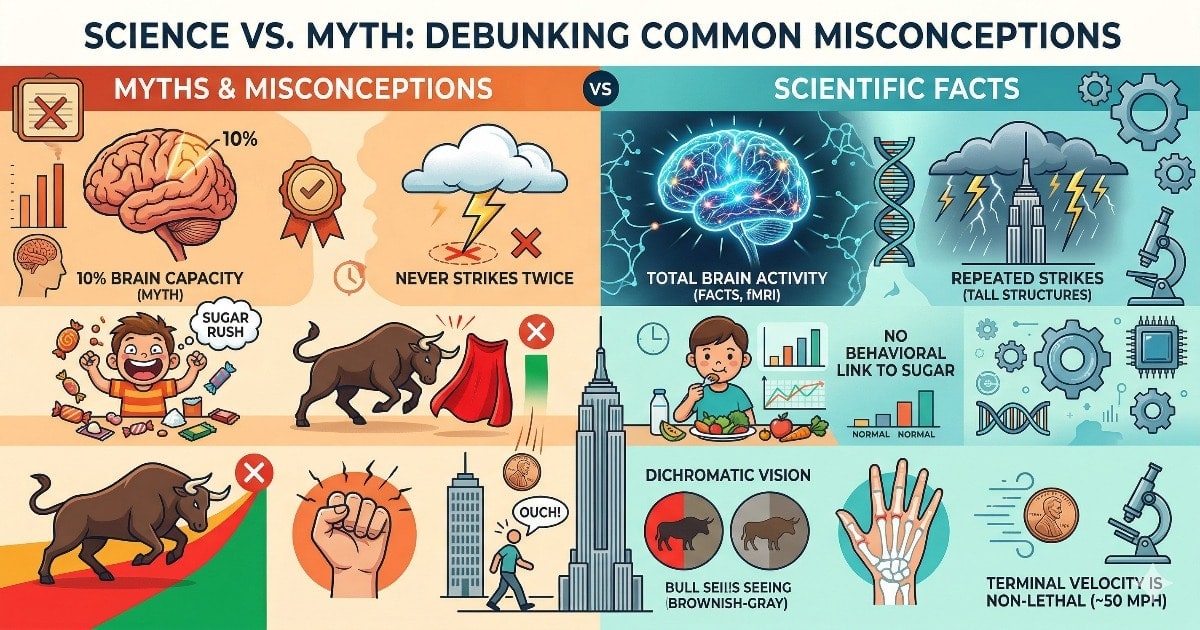
    Science vs. Myth: Debunking 10 Common Misconceptions You Probably Believe

    Human beings are natural storytellers. For millennia, we have used myths, legends, and folklore to make sense of a complex and sometimes frightening world. However, as our understanding of the universe has evolved, the scientific method has provided us with a rigorous toolkit for separating fact from fiction.

    Despite the incredible advancements in modern science, certain myths and misconceptions remain deeply embedded in our collective consciousness. They are repeated by well-meaning friends, passed down by family members, and even taught in schools.

    In this comprehensive guide, we will explore the fascinating divide between science and myth. We will dismantle ten of the most prevalent scientific misconceptions, explore the actual facts, and examine exactly why these myths continue to persist in modern society.


    Why Do Scientific Myths Persist?

    Before diving into the specific misconceptions, it is helpful to understand why our brains hold onto incorrect information. Cognitive science tells us that a few key psychological phenomena are at play:

    • Confirmation Bias: We tend to seek out and remember information that confirms our pre-existing beliefs while ignoring data that contradicts them.
    • The Illusory Truth Effect: When we hear a statement repeated enough times, our brains begin to process it as true, simply because it is familiar.
    • Simplicity Over Complexity: Myths often provide simple, neat explanations for complex phenomena. The actual science is usually much more nuanced and requires more cognitive effort to understand.

    By recognizing these cognitive biases, we can approach information with a more critical, analytical mindset. Let us look at the facts behind some of the world’s most famous myths.


    Myth 1: We Only Use 10% of Our Brains

    The Misconception

    Perhaps one of the most widely circulated myths is the idea that human beings only utilize 10% of their brain capacity. The implication is that if we could somehow “unlock” the remaining 90%, we would possess superhuman intelligence, telekinesis, or perfect memory.

    The Scientific Reality

    Neurologists and neuroscientists have thoroughly debunked this claim. Through advanced imaging technologies like Functional Magnetic Resonance Imaging (fMRI) and Positron Emission Tomography (PET) scans, doctors can observe the brain in real-time. These scans consistently show that virtually every part of the brain is active at some point during the day, even while we are sleeping.

    The brain is an incredibly energy-hungry organ. While it accounts for only about 2% of the average human’s body weight, it consumes roughly 20% of the body’s daily energy expenditure. From an evolutionary standpoint, it would be highly inefficient for the human body to dedicate so many resources to an organ if 90% of it were useless tissue.

    Different regions of the brain are specialized for different tasks—from processing visual stimuli in the occipital lobe to executive decision-making in the frontal lobe. Even a minor brain injury can cause catastrophic, cascading failures in cognitive or motor function, which further proves that all areas of the brain are necessary and actively utilized.


    Myth 2: Sugar Causes Hyperactivity in Children

    The Misconception

    Ask almost any parent, and they will tell you that giving a child a sugary treat—like a cupcake, candy, or soda—will result in them bouncing off the walls with boundless energy.

    The Scientific Reality

    Despite widespread anecdotal claims, numerous double-blind, placebo-controlled studies have found absolutely no link between sugar consumption and hyperactive behavior in children.

    In a landmark 1994 study published in the New England Journal of Medicine, researchers gave children diets containing high amounts of sugar, artificial sweeteners, or placebos. The parents, who did not know which diet their child was on, were asked to rate their child’s behavior. The results showed no behavioral differences regardless of what the children consumed.

    So why does the myth persist? It largely comes down to context and confirmation bias. Children typically consume large amounts of sugar at highly stimulating events—birthday parties, holidays, and celebrations. The environment is already chaotic and exciting. When a parent expects their child to become hyperactive after eating cake at a party, they attribute the inevitable high energy to the sugar, rather than the exciting environment itself.


    Myth 3: The Seasons Are Caused by Earth’s Distance from the Sun

    The Misconception

    Because heat comes from the sun, it seems like common sense that summer occurs when the Earth is closest to the sun, and winter occurs when the Earth is furthest away.

    The Scientific Reality

    Earth’s orbit around the sun is elliptical, meaning our distance from the sun does vary slightly throughout the year. However, this distance has very little to do with the changing of the seasons. In fact, for people living in the Northern Hemisphere, the Earth is actually at its closest point to the sun (perihelion) in early January—right in the dead of winter!

    The seasons are entirely driven by the tilt of the Earth’s axis, which sits at an angle of roughly 23.5 degrees.

    As the Earth orbits the sun, this tilt causes different parts of the planet to receive varying angles of direct sunlight. During the Northern Hemisphere’s summer, the North Pole is tilted toward the sun. This results in the sun’s rays hitting the Northern Hemisphere more directly and for a longer duration each day, causing warmer temperatures. Six months later, the North Pole tilts away from the sun, resulting in shorter days, indirect sunlight, and the cold temperatures of winter.


    Myth 4: Lightning Never Strikes the Same Place Twice

    The Misconception

    This myth is often used as a comforting idiom to reassure someone that a rare, unfortunate event is unlikely to happen to them again. It implies that lightning has some sort of memory or avoids areas it has already hit.

    The Scientific Reality

    Lightning is a massive electrostatic discharge caused by unbalanced electrical charges in the atmosphere. It does not possess a memory, and it is simply seeking the path of least resistance to the ground.

    Not only can lightning strike the same place twice, but it often does. Tall, isolated structures are natural targets for lightning because they significantly reduce the distance the electrical charge must travel to reach the ground. For example, the Empire State Building in New York City is struck by lightning an average of 25 times per year. Similarly, tall trees, radio towers, and mountain peaks are routinely struck multiple times during a single intense thunderstorm.


    Myth 5: Swallowed Chewing Gum Takes Seven Years to Digest

    The Misconception

    Many of us were warned as children that if we swallowed our chewing gum, it would sit in our stomachs, undigested, for seven agonizing years, potentially causing blockages or health issues.

    The Scientific Reality

    The human digestive system is remarkably efficient, but it is true that your stomach cannot fully break down the synthetic rubber base used in modern chewing gum. The enzymes and stomach acids that easily dissolve proteins, carbohydrates, and fats are not equipped to break down the polymers in gum.

    However, just because it cannot be dissolved does not mean it stays in your body for seven years. The human digestive tract is essentially a continuous tube. Like other indigestible items (such as certain types of dietary fiber, seeds, or corn), the gum is simply pushed along by the muscular contractions of your intestines—a process called peristalsis.

    Within a matter of days, the swallowed gum will pass safely through your digestive system and be excreted. While making a habit of swallowing large wads of gum is not recommended (as it could theoretically cause a blockage in rare cases), a single swallowed piece is harmless and temporary.


    Myth 6: Cracking Your Knuckles Causes Arthritis

    The Misconception

    The sharp popping sound of someone cracking their knuckles is often met with the warning, “Stop doing that, you’ll give yourself arthritis!”

    The Scientific Reality

    There is no scientific evidence linking the cracking of knuckles to osteoarthritis.

    To understand why, we must look at the anatomy of our joints. Your knuckles are surrounded by a capsule filled with synovial fluid, which acts as a lubricant to help your joints move smoothly. This fluid contains dissolved gases, including oxygen, nitrogen, and carbon dioxide.

    When you stretch or bend your fingers to crack your knuckles, you are expanding the joint capsule. This sudden expansion decreases the pressure inside the capsule, causing the dissolved gases to rapidly form a bubble and burst. That bursting bubble is the “pop” you hear. It takes about 20 minutes for the gases to dissolve back into the fluid, which is why you cannot immediately crack the same knuckle twice.

    Medical studies, including a famous self-experiment by Dr. Donald Unger—who cracked the knuckles on his left hand but not his right hand every day for over 60 years—have shown no difference in arthritis development between knuckle-crackers and non-crackers.


    Myth 7: Bats Are Blind

    The Misconception

    The phrase “blind as a bat” suggests that these flying mammals navigate the world without any visual capabilities, relying entirely on sound.

    The Scientific Reality

    Bats are not blind. In fact, all of the over 1,400 species of bats have eyes and are capable of seeing.

    There are generally two types of bats: megabats (like fruit bats) and microbats. Megabats have excellent vision, which they use to spot fruit and flowers in the dark. They do not use echolocation at all.

    Microbats, which hunt insects at night, do rely heavily on echolocation—emitting high-frequency sound waves that bounce off objects to help them navigate and hunt in total darkness. However, even microbats have functional eyes. Their vision is tuned to low-light conditions, and they use their eyesight to navigate over long distances, spot landmarks, and detect the setting sun to synchronize their internal biological clocks.


    Myth 8: Bulls Get Angry at the Color Red

    The Misconception

    In traditional bullfighting, a matador waves a bright red cape (the muleta) to taunt the bull, causing the animal to charge aggressively. This has led to the widespread belief that bulls are enraged by the color red.

    The Scientific Reality

    Bulls, like all cattle, are dichromatic. This means their eyes only have two types of color-receptive cones, as opposed to the three types found in most humans. Because of this, cattle are essentially red-green colorblind. They cannot distinguish the color red from green, brown, or gray.

    What actually triggers the bull to charge is the rapid movement of the cape. In the highly stressful, noisy, and chaotic environment of a bullfighting ring, the bull perceives the snapping, swirling motion of the fabric as a threat and reacts defensively. If a matador were to wave a blue, green, or white cape with the same aggressive motion, the bull would react in exactly the same way. The color red is traditionally used simply because it masks the sight of blood and is highly visible and dramatic for the human audience.


    Myth 9: Eating Carrots Gives You Night Vision

    The Misconception

    Eating large quantities of carrots will significantly improve your eyesight, potentially allowing you to see flawlessly in the dark.

    The Scientific Reality

    Carrots are incredibly healthy and are an excellent source of beta-carotene, which the human body converts into Vitamin A. Vitamin A is crucial for maintaining good eye health and is a key component of rhodopsin, a protein in our eyes that allows us to see in low-light conditions.

    If a person has a severe Vitamin A deficiency, eating carrots will help restore their vision to a normal baseline. However, if you already have a healthy, balanced diet, eating extra carrots will not give you superhuman night vision or eliminate your need for prescription glasses. Your body will simply flush out the excess vitamins.

    The Origin of the Myth:

    This myth was popularized by brilliant World War II propaganda. When the British Royal Air Force developed a new, secret airborne radar system to intercept German bombers during night raids, they needed a cover story to explain their sudden, unnatural success. The British Ministry of Information spread the rumor that their pilots were consuming massive amounts of carrots, which gave them extraordinary night vision. The public, and even some enemy forces, bought into the lie, and the myth has endured ever since.


    Myth 10: A Penny Dropped from the Empire State Building Can Kill a Person

    The Misconception

    Because gravity accelerates falling objects, a penny dropped from the top of the 1,454-foot Empire State Building will gain so much speed that it will pierce a pedestrian’s skull like a bullet upon impact.

    The Scientific Reality

    While being struck by a falling penny would certainly be annoying, it is mathematically and physically impossible for it to be lethal.

    This is due to two factors: mass and air resistance (drag). A standard penny is incredibly light, weighing only about 2.5 grams. Its flat, circular shape also makes it highly un-aerodynamic. As the penny falls, it collides with air molecules. Eventually, the upward force of air resistance equals the downward pull of gravity. When this happens, the penny stops accelerating and reaches what is called its terminal velocity.

    For a penny, terminal velocity is roughly 25 to 50 miles per hour, depending on whether it falls flat or tumbling. While a piece of metal hitting you at 50 mph might sting and leave a small welt or bruise, it does not possess anywhere near the kinetic energy required to penetrate human skin or fracture a skull.


    Summary Table: Science vs. Myth

    The Common Myth The Scientific Reality
    We use 10% of our brains. We use 100% of our brains; brain scans show constant global activity.
    Sugar makes kids hyper. Studies show no link; hyperactivity is tied to the exciting environment.
    Summer means Earth is closer to the sun. Seasons are dictated by the 23.5-degree tilt of the Earth’s axis.
    Lightning never strikes twice. Lightning seeks the path of least resistance and often strikes tall objects repeatedly.
    Gum takes 7 years to digest. Gum cannot be broken down, but it passes through the body safely in a few days.
    Cracking knuckles causes arthritis. The pop is just gas bubbles bursting in synovial fluid; it does not harm joints.
    Bats are blind. All bats have functional eyes; many use vision in tandem with echolocation.
    Bulls hate red. Bulls are red-green colorblind; they charge at the aggressive movement of the cape.
    Carrots grant night vision. Carrots support baseline eye health, but extra carrots will not improve normal vision.
    A falling penny is lethal. Air resistance limits a penny’s terminal velocity to a non-lethal ~50 mph.

    Frequently Asked Questions (FAQ)

    1. How do scientific myths start in the first place?

    Myths often begin as genuine misunderstandings of early scientific observations, deliberate propaganda (like the carrot myth from WWII), or traditional folklore designed to enforce safety (like the gum-swallowing myth). Once a compelling story takes root in the culture, cognitive biases and repetition keep it alive.

    2. Are there any health myths that are actually true?

    Yes! Sometimes old wives’ tales are backed by science. For example, the idea that chicken soup helps you recover from a cold has scientific merit. Studies have shown that hot chicken soup can help clear nasal congestion and possesses mild anti-inflammatory properties that ease cold symptoms.

    3. How can I verify if a scientific claim is a myth or a fact?

    Look for consensus among reputable, peer-reviewed scientific journals or official institutional bodies (like the CDC, NASA, or the World Health Organization). Be skeptical of sensationalist headlines, anecdotal evidence (“it happened to a friend of a friend”), and claims that offer simple, miraculous solutions to complex problems.

    4. Why do intelligent people still believe in myths?

    Intelligence does not grant immunity to cognitive biases. Highly educated individuals can still fall victim to the Illusory Truth Effect or confirmation bias, especially regarding topics outside their specific field of expertise. Belief in myths is more about human psychology and the way our brains process information than raw intelligence.

    5. What is the difference between a theory and a myth?

    In science, a “theory” is a well-substantiated, rigorously tested explanation of an aspect of the natural world, supported by a vast body of evidence (e.g., the Theory of Gravity or the Theory of Evolution). A myth is a traditional story or widely held but false belief that lacks empirical evidence or scientific backing.


    References & Further Reading

    For those who wish to dive deeper into the actual science behind these concepts, the following resources provide excellent, peer-reviewed, and institutional information:

    • Brain Imaging and Usage: National Institutes of Health (NIH) – Brain Basics: Know Your Brain (www.ninds.nih.gov)

    • Diet and Child Behavior: The New England Journal of Medicine – Effects of Diets High in Sucrose or Aspartame on The Behavior and Cognitive Performance of Children (www.nejm.org)

    • Earth’s Axial Tilt: NASA Science – What Causes the Seasons? (spaceplace.nasa.gov)

    • Weather Phenomenon: National Weather Service (NWS) – Lightning Safety Myths and Facts (www.weather.gov)

    • Digestive Anatomy: Mayo Clinic – What happens to swallowed gum? (www.mayoclinic.org)

    • Joint Mechanics: Johns Hopkins Medicine – Understanding Arthritis and Joint Health (www.hopkinsmedicine.org)

    • Animal Vision (Bats and Bovines): The National Wildlife Federation – Debunking Animal Myths (www.nwf.org)

    • Physics of Falling Objects: Scientific American – Could a Penny Dropped From a Skyscraper Kill a Person? (www.scientificamerican.com)

  • The Indispensable Role of Science in Modern Society: Progress, Challenges, and the Future

    The Indispensable Role of Science in Modern Society: Progress, Challenges, and the Future

    Science is far more than a collection of facts enclosed in heavy textbooks; it is the fundamental framework through which we understand the universe and improve the human condition. The role of science in modern society is so deeply woven into the fabric of our daily lives that it is often taken for granted. From the moment we wake up to an alarm on our smartphones to the medical treatments that extend our lifespans, scientific inquiry drives human progress.

    In this comprehensive guide, we will explore how science impacts various facets of contemporary life. We will delve into healthcare, environmental sustainability, technology, and agriculture, while also examining the crucial ethical dimensions that must guide future discoveries. Whether you are a student, an educator, or simply a curious mind, understanding the impact of scientific research is essential for navigating the complexities of the 21st century.


    1. The Foundation of Modern Life: Understanding Scientific Impact

    Before diving into specific industries, it is important to understand what science represents in a broader societal context. At its core, science is a systematic enterprise that builds and organizes knowledge in the form of testable explanations and predictions about the universe.

    In modern society, science serves three primary functions:

    • A Tool for Problem-Solving: Identifying challenges—from local water shortages to global pandemics—and developing actionable, evidence-based solutions.
    • An Engine for Economic Growth: Fueling innovation that creates new industries, generates employment, and elevates global living standards.
    • A Lens for Truth: Providing a reliable method to distinguish fact from fiction, which is increasingly vital in the digital age of information overload.

    By fostering a society that values empirical evidence and critical thinking, we empower communities to make informed decisions that benefit everyone.


    2. Revolutionizing Healthcare and Medicine

    Perhaps the most universally appreciated role of science is its contribution to human health and longevity. The medical landscape has been entirely transformed by scientific research, turning once-fatal diseases into manageable conditions and eradicating others entirely.

    The Eradication and Management of Diseases

    Historically, infectious diseases were the leading cause of mortality. Today, thanks to the development of vaccines and antibiotics, the threat of diseases like polio, smallpox, and measles has been drastically reduced or eliminated. The rapid global scientific response to recent viral outbreaks further underscores the importance of a robust, well-funded scientific infrastructure.

    Advancements in Medical Imaging and Diagnostics

    The ability to look inside the human body without invasive surgery was once the realm of science fiction. Today, technologies such as X-rays, Magnetic Resonance Imaging (MRI), and Computed Tomography (CT) scans allow medical professionals to diagnose conditions early and accurately. Early detection is often the key to successful treatment, particularly in oncology and cardiology.

    Genomics and Personalized Medicine

    We are currently entering an era of personalized medicine. The mapping of the human genome has allowed scientists to understand how individual genetic variations affect health. This inclusive approach to medicine ensures that treatments can be tailored to the specific genetic makeup of a patient, maximizing efficacy and minimizing adverse side effects.

    Key Takeaway: Scientific advancements in healthcare do not just extend lifespans; they fundamentally improve the quality of life for billions of people across the globe.


    3. Technology and Global Connectivity

    It is impossible to discuss the role of science in modern society without addressing the technological boom. Applied science—engineering and technology—has revolutionized how we live, work, and communicate.

    The Digital Revolution

    The creation of the internet and the subsequent proliferation of digital devices have democratized information. Knowledge that was once confined to university libraries is now accessible to anyone with a smartphone. This connectivity has bridged geographical divides, allowing for global collaboration in business, education, and social activism.

    Artificial Intelligence and Automation

    As an artificial intelligence myself, I represent one of the rapidly evolving frontiers of computer science. AI and machine learning algorithms are being integrated into almost every sector. They help optimize supply chains, assist doctors in diagnosing diseases by analyzing medical imagery, and even help writers and researchers outline complex topics. While automation shifts the nature of work, it also holds the promise of relieving human workers from dangerous or highly repetitive tasks.

    Transportation and Logistics

    Scientific engineering has also transformed transportation. The transition from horse-drawn carriages to combustion engines took decades, but we are now seeing an even faster shift toward electric vehicles (EVs) and high-speed transit networks. These advancements not only make travel faster and safer but also pave the way for more sustainable global logistics.


    4. Environmental Sustainability and Climate Action

    As modern society has industrialized, it has placed unprecedented strain on the planet’s ecosystems. Fortunately, science is not only the lens through which we measure this impact but also the primary tool we have for mitigating it.

    Understanding Climate Change

    Climatologists, oceanographers, and atmospheric scientists have provided irrefutable data showing the impact of human activity on the global climate. By utilizing satellite imagery, ice core samples, and complex computer models, science has given humanity a clear warning about the consequences of unchecked greenhouse gas emissions.

    Developing Renewable Energy

    To combat climate change, science is driving the transition away from fossil fuels. Innovations in materials science have led to highly efficient solar panels and powerful wind turbines. Furthermore, advancements in battery storage technology are solving the intermittent nature of renewable energy, ensuring that homes and industries can be powered around the clock by sustainable sources.

    Conservation Biology and Ecology

    Science plays a vital role in protecting biodiversity. Conservation biologists track endangered populations, study ecosystem dynamics, and develop strategies to preserve natural habitats. Inclusive conservation efforts increasingly recognize the importance of integrating indigenous ecological knowledge with modern scientific methods to protect global ecosystems.


    5. Agriculture and Global Food Security

    With the global population projected to reach nearly 10 billion by the year 2050, feeding the world is one of the greatest challenges of our time. Agricultural science is at the forefront of ensuring global food security.

    Genetic Modification and Crop Resilience

    Genetically Modified Organisms (GMOs) often spark debate, but from a scientific standpoint, they are a crucial tool for survival. Scientists have developed crops that are resistant to pests, diseases, and harsh weather conditions like droughts. This resilience ensures stable food supplies in regions vulnerable to climate change.

    Precision Agriculture

    Modern farming is highly data-driven. Precision agriculture utilizes drones, satellite imagery, and soil sensors to monitor crop health and soil moisture in real-time. This allows farmers to apply water, fertilizers, and pesticides only where absolutely necessary, reducing environmental runoff and lowering the cost of food production.

    Alternative Proteins and Sustainable Diets

    Livestock farming is resource-intensive. Food scientists are actively developing plant-based and lab-grown meat alternatives. These innovations aim to provide the global population with high-quality protein while significantly reducing the land use and greenhouse gas emissions associated with traditional animal agriculture.


    6. Education and the Scientific Temperament

    The role of science extends beyond tangible inventions; it shapes how a society thinks. Cultivating a “scientific temperament”—a mindset that values logic, questioning, and evidence—is crucial for the healthy functioning of a modern democracy.

    • Promoting Critical Thinking: Science education teaches students how to formulate hypotheses, test them, and accept when they are wrong. This framework is essential for evaluating the barrage of information we face daily.
    • Combating Misinformation: In an era where fake news can spread rapidly across social networks, scientific literacy is our best defense. A public that understands basic scientific principles is less likely to fall prey to health scams, conspiracy theories, or environmental denialism.
    • Fostering Curiosity and Innovation: Science encourages us to ask “why” and “how.” This innate curiosity is the bedrock of all human innovation. By supporting STEM (Science, Technology, Engineering, and Mathematics) education for all demographics, we ensure a diverse pipeline of future problem-solvers.

    7. The Ethical Dimensions of Science

    As scientific capabilities expand, so do the ethical dilemmas associated with them. The role of science in modern society must be governed by strong moral frameworks to ensure that progress benefits humanity equitably.

    Data Privacy and Surveillance

    The technology that connects us also tracks us. The massive accumulation of personal data by tech companies and governments raises profound questions about privacy, consent, and autonomy. Societal regulations must keep pace with technological advancements to protect citizens from unwarranted surveillance.

    Genetic Engineering and Bioethics

    Tools like CRISPR allow scientists to edit the genetic code of living organisms with unprecedented precision. While this holds the cure for genetic diseases, it also opens the door to ethical controversies regarding “designer babies” and the irreversible alteration of human lineage. Inclusive and global dialogues are required to establish boundaries.

    Equitable Access to Innovations

    Scientific progress is often unevenly distributed. High-income nations frequently benefit from medical and technological breakthroughs long before low-income nations do. For science to truly serve humanity, global society must address the economic and systemic barriers that prevent marginalized communities from accessing life-saving medicines, clean energy, and digital infrastructure.


    8. The Future of Scientific Innovation

    Looking ahead, the trajectory of scientific discovery promises to be even more accelerating. Several emerging fields will define the next century:

    • Quantum Computing: Quantum computers have the potential to solve complex problems—such as chemical simulations and cryptography—millions of times faster than classical computers.
    • Space Exploration and Colonization: Agencies like NASA and private enterprises are pushing the boundaries of human presence in space. Missions to Mars and the establishment of lunar bases will drive innovations in life-support systems and resource management that will also benefit life on Earth.
    • Neurotechnology: Brain-computer interfaces could soon restore mobility to paralyzed individuals and offer new treatments for neurological disorders, fundamentally changing how humans interact with machines.

    Conclusion

    The role of science in modern society is profound, pervasive, and absolutely essential for our continued survival and prosperity. From the microscopic world of genetics to the vast expanse of space exploration, science provides the tools we need to understand our reality and shape our future.

    However, science is not a standalone entity; it is a human endeavor. Its benefits are maximized when guided by empathy, ethical considerations, and a commitment to inclusive progress. By fostering scientific literacy and supporting equitable research, society can ensure that the fruits of scientific labor are used to build a healthier, more sustainable, and more connected world for everyone.


    Frequently Asked Questions (FAQ)

    1. Why is science considered the most important factor in modern societal development?

    Science is foundational because it relies on empirical evidence and the scientific method to solve problems. Unlike subjective opinions, scientific inquiry provides objective, testable solutions that drive medical, technological, and environmental progress, directly improving the standard of living across the globe.

    2. How does science impact our daily lives?

    Science impacts almost every aspect of daily life. The electricity powering your home, the purified water you drink, the smartphone you use to communicate, and the weather forecasts you rely on are all products of scientific research and engineering.

    3. Can science solve the climate change crisis?

    While science alone cannot enforce political or economic change, it provides the necessary tools and knowledge to solve the crisis. Science has diagnosed the problem, and scientists have developed the solutions—such as solar and wind energy, carbon capture technologies, and sustainable agricultural practices. It requires societal and political will to implement these scientific solutions at scale.

    4. What is the relationship between science and technology?

    Science and technology are deeply interdependent. Science is the pursuit of knowledge for its own sake (understanding how the natural world works), while technology is the application of scientific knowledge for practical purposes. For example, the scientific discovery of electromagnetism led to the technological invention of electric motors.

    5. How can we ensure that scientific advancements benefit everyone equally?

    Ensuring equitable access to scientific advancements requires a combination of open-access research, international cooperation, and inclusive policy-making. Governments and global organizations must work to eliminate monopolies on life-saving technologies (like patents on essential medicines) and invest heavily in STEM education in underserved communities to ensure diverse voices are part of the scientific process.

    6. Are there negative impacts of scientific advancement?

    Yes, if left unchecked by ethical guidelines. For instance, the industrial revolution—driven by scientific progress—led to massive environmental degradation. Similarly, advancements in nuclear physics led to the creation of weapons of mass destruction. This is why bioethics, environmental regulations, and philosophical discourse are vital companions to scientific research.


    Reference Links for Further Read

    To learn more about the profound impact of science on society, explore the following reputable resources:

    1. National Science Foundation (NSF): Fostering research and education across all fields of science and engineering.

      https://www.nsf.gov/

    2. World Health Organization (WHO): Global health information, scientific research on diseases, and public health guidelines.

      https://www.who.int/

    3. Nature – Science in Society: A leading multidisciplinary science journal exploring the intersection of scientific discovery and social impact.

      https://www.nature.com/

    4. NASA – Climate Change: The latest scientific data, news, and evidence regarding global climate change.

      https://climate.nasa.gov/

    5. ScienceDaily: Breaking news and research articles covering medical, technological, and environmental sciences.

      https://www.sciencedaily.com/

  • Top 10 Scientific Breakthroughs That Shaped Humanity

    Top 10 Scientific Breakthroughs That Shaped Humanity

    Introduction: The Unending Quest for Knowledge

    Curiosity drives our species throughout human history. We look at stars, soil, and our bodies. We constantly ask why and how things work. This pursuit of understanding brings profound clarity. These paradigm shifts redefine what is possible. We call these moments scientific breakthroughs. They mark milestones of our collective progress.

    A true breakthrough is rarely a lone eureka moment. It involves decades of observation and global collaboration. It requires challenging established dogmas. Science is a deeply human, shared endeavor. It transcends borders, cultures, and generations. It is a heritage belonging to everyone.

    These discoveries did more than fill textbooks. They doubled human life expectancy. .They connected distant continents and cured ancient plagues. They allowed us to see the dawn of time. Breakthroughs reshaped our societies and economies. They changed our understanding of the cosmos.

    This guide explores ten fundamental scientific breakthroughs. We will look at the visionaries behind them. We will examine their ongoing impact today.


    1. The Germ Theory of Disease

    Before the 19th century, illness causes were unknown. People believed “bad air” caused diseases like cholera. This misunderstanding left populations vulnerable to severe pandemics.

    The Breakthrough

    Louis Pasteur and Robert Koch pioneered the Germ Theory. Pasteur proved microorganisms cause fermentation and disease. He debunked the idea of spontaneous generation. Robert Koch developed criteria to identify specific microbes. He found the culprits behind tuberculosis and cholera.

    How It Shaped Humanity

    Microscopic pathogens cause many infectious diseases. This realization revolutionized public health and modern medicine. Sanitation improved with clean water and proper sewage disposal. Handwashing protocols drastically reduced mortality rates. Joseph Lister introduced antiseptic surgery techniques. Hospitals transformed into places of true healing. Infant mortality dropped significantly worldwide. The germ theory drastically increased global life expectancy.


    2. Vaccination and Immunization

    The germ theory identified the microscopic enemy. Vaccination provided humanity with a definitive shield. Diseases like smallpox and polio were universal terrors. They indiscriminately killed millions of people every year.

    The Breakthrough

    Edward Jenner pioneered basic immunology in 1796. He saw that cowpox protected milkmaids from smallpox. He inoculated a boy, proving early vaccination works. Jonas Salk and Albert Sabin later developed polio vaccines. Recently, scientists pioneered mRNA technology for COVID-19.

    How It Shaped Humanity

    Vaccines are incredibly impactful public health interventions. The World Health Organization eradicated smallpox in 1980. This remains one of our greatest collective achievements. Immunization programs protect vulnerable populations worldwide. They ensure children can survive and thrive. Vaccines maintain the economic stability of global healthcare systems. Preventive medicine is vital for societal flourishing.


    3. The Discovery of Penicillin and Antibiotics

    Bacterial infections remained highly lethal for centuries. A simple scratch could result in fatal blood poisoning. Strep throat was often a deadly diagnosis.

    The Breakthrough

    Alexander Fleming found mold contaminating his Petri dishes. This mold destroyed the surrounding Staphylococcus bacteria. Later, a diverse team isolated and mass-produced penicillin. Howard Florey and Ernst Chain led this crucial effort. Norman Heatley also provided vital contributions to this work.

    How It Shaped Humanity

    Antibiotics heralded a completely new era of medicine. Conditions like pneumonia and tuberculosis became highly treatable. Antibiotics made complex medical interventions possible today. Open-heart surgery and organ transplants rely on them. Cancer chemotherapy requires antibiotics to manage infection risks. We must use these vital drugs responsibly. Overuse leads to dangerous antimicrobial resistance. This resistance threatens our medical progress.


    4. The Laws of Motion and Universal Gravitation

    For centuries, Earth and sky seemed governed differently. Scientists lacked a unified physical theory.

    The Breakthrough

    Isaac Newton published his Principia Mathematica in 1687. He formulated three laws of motion and gravitation. He proved the exact same force pulls an apple. That same physical force keeps the Moon in orbit.

    How It Shaped Humanity

    Newton laid the mathematical foundation for classical mechanics. His physical principles fueled the massive Industrial Revolution. Engineers could calculate forces to build steam engines. Space exploration relies heavily on Newtonian physics. Satellite launches and moon landings use these precise calculations. Newton unified the cosmos philosophically for humankind. The universe operates by comprehensible, rational, and universal laws.


    5. The Theory of Evolution by Natural Selection

    Life’s incredible diversity was once considered an inexplicable mystery. It was generally attributed to separate divine creation. The relationships between species were entirely unknown.

    The Breakthrough

    Charles Darwin published On the Origin of Species. Alfred Russel Wallace independently developed the exact same theory. Populations evolve over generations through natural selection. Individuals with advantageous traits survive and reproduce successfully. They pass these specific traits to their offspring.

    How It Shaped Humanity

    Evolution is the unifying principle of all biological sciences. It fundamentally altered how humans view themselves entirely. We exist firmly within an interconnected tree of life. It provides a logical framework for genetics and ecology. It helps epidemiologists track how deadly viruses mutate. Understanding evolution is critical for active biodiversity conservation. It helps us protect vulnerable species from climate change.


    6. Electromagnetism

    We take electricity and instant communication for granted today. This reality stems entirely from understanding basic electromagnetism.

    The Breakthrough

    Scientists unraveled electricity and magnetism in the 19th century. Michael Faraday discovered crucial electromagnetic induction. A changing magnetic field actively creates an electric current. James Clerk Maxwell unified these observations mathematically. Electricity, magnetism, and light are the exact same phenomenon. They are manifestations of the electromagnetic field.

    How It Shaped Humanity

    Mastering electromagnetism literally built our modern world. Faraday’s principles created the modern electrical power grid. This power illuminates our homes and runs our industries. Maxwell paved the way for instant global communication. This includes the telegraph, radio, and mobile phones. The entire digital age depends on manipulating electrons. Computers and the internet require this fundamental knowledge.


    7. The Structure of DNA

    Physical traits reliably pass down through family generations. The actual physical mechanism remained unknown for nearly a century.

    The Breakthrough

    James Watson and Francis Crick proposed the double-helix structure. They relied heavily on Rosalind Franklin’s vital X-ray data. Maurice Wilkins also shared crucial structural information. They showed how DNA beautifully copies itself. DNA carries our highly complex genetic instructions.

    How It Shaped Humanity

    Decoding DNA birthed the new era of molecular biology. It paved the way for the massive Human Genome Project. This enables personalized medicine and vital genetic screening. DNA profiling completely revolutionized the modern criminal justice system. It precisely identifies perpetrators and exonerates innocent people. Understanding DNA allows for much better agricultural crops. This helps secure food for our growing global population.


    8. Quantum Mechanics

    Classical physics explained the large macroscopic world very well. However, tiny atoms and subatomic particles behaved bizarrely. Newton’s reliable laws completely fell apart here.

    The Breakthrough

    Brilliant physicists developed Quantum Mechanics in the early 1900s. This international group included Max Planck and Albert Einstein. Niels Bohr and Werner Heisenberg also contributed significantly. Energy comes in discrete, tiny packets called quanta. Particles can exist in multiple different states simultaneously. Particles can also link across vast cosmic distances.

    How It Shaped Humanity

    Quantum mechanics is deeply and surprisingly practical today. The entire global electronics industry relies on it completely. Microchips in modern smartphones use quantum electron behavior. Medical imaging like MRI relies on specific quantum properties. We are currently entering a second massive quantum revolution. Quantum computers promise to solve incredibly complex problems.


    9. General and Special Relativity

    Space and time were once thought to be absolutely rigid. A mile was always exactly a mile everywhere. A second was always exactly a second.

    The Breakthrough

    Albert Einstein published Special Relativity in 1905. The speed of light is completely constant everywhere. Space and time are relative to the specific observer. General Relativity later showed that massive gravity warps spacetime. Gravity is not a pull, but a curved surface.

    How It Shaped Humanity

    Einstein drastically reshaped our core understanding of reality. Global Positioning Systems (GPS) in our phones rely on relativity. Without necessary relativistic corrections, GPS would quickly fail completely. Relativity expertly explains black holes and massive gravitational waves. His famous equation demonstrated mass and energy are interchangeable. This foundational concept laid the groundwork for nuclear power.


    10. The Expanding Universe

    Humanity long assumed the universe was static and eternal. The Milky Way galaxy seemed to be absolutely everything.

    The Breakthrough

    Edwin Hubble made two monumental discoveries in the 1920s. Other massive galaxies exist far beyond our Milky Way. Distant galaxies are moving rapidly away from us. Georges Lemaître also theoretically proposed this universal expansion simultaneously. The universe was clearly not static at all.

    How It Shaped Humanity

    This vital observation led directly to the Big Bang Theory. The physical universe had a definitive beginning point. It originated from an incredibly dense, tiny singularity. This shifted our philosophical cosmic perspective fundamentally. We live in a highly dynamic, evolving universe. The atoms in our bodies forged in dying stars. We are truly and literally made of star stuff.


    Conclusion: The Journey Continues

    These ten scientific breakthroughs built our modern reality entirely. They represent humanity’s intense curiosity and incredible persistence. Science consistently expands our horizons and empowers us all.

    The scientific endeavor is far from complete today. We face unprecedented global challenges right now. Climate change severely threatens our delicate, interconnected biosphere. Emerging infectious diseases continually test our global resilience. We desperately need clean, truly sustainable energy sources.

    Solving these requires the next generation of scientific breakthroughs. We deeply need education, cooperation, and true global inclusivity. Diverse minds must have fair opportunities to contribute actively. We must fiercely support ongoing, robust scientific inquiry. Science will inevitably and profoundly shape our collective future.


    Frequently Asked Questions (FAQ)

    What is the greatest scientific breakthrough ever?

    Many historians point directly to Newton’s laws of motion. It launched the modern, mathematically driven scientific era entirely. The Germ Theory definitely saved the most human lives.

    How do scientific breakthroughs usually happen?

    Breakthroughs occur through decades of slow, cumulative research. Scientists constantly synthesize data and collaborate globally. They always build upon the vital work of others.

    Are major scientific breakthroughs still happening today?

    Yes, we are living through multiple scientific revolutions now. Recent examples include CRISPR gene editing and mRNA vaccines. Artificial intelligence is also advancing at a staggering pace.

    Who decides what counts as a breakthrough?

    The global scientific community constantly validates breakthroughs over time. They use strict peer review and safely reproduce experiments. Organizations like the Nobel Committee formally recognize impactful discoveries.

    Why is inclusive language important in science?

    Historically, contributions of marginalized groups were frequently ignored. Rosalind Franklin’s vital work on DNA is a prime example. Diversity absolutely leads to much better, creative problem-solving. It ensures scientific benefits are distributed equitably to everyone.


    References & Further Reading

  • The Scientific Method Explained Step-by-Step: A Complete Guide for Inquisitive Minds

    The Scientific Method Explained Step-by-Step: A Complete Guide for Inquisitive Minds

    Whether you are a student preparing for a biology exam, a professional looking to improve your problem-solving skills, or simply a curious mind wondering how we know what we know about the universe, understanding the scientific method is essential.

    The scientific method is the backbone of all modern human discovery. It is not just a rigid set of rules used by researchers in white coats; it is a profound, logical, and universally accessible way of thinking. It empowers us to strip away bias, challenge assumptions, and uncover the truth about how our world operates.

    In this comprehensive guide, we will explore the scientific method explained step-by-step. We will break down its history, delve deep into each phase of the process, provide real-world examples, and answer the most frequently asked questions. By the end of this article, you will have a thorough understanding of how to apply this powerful framework to everything from complex research to everyday dilemmas.


    What is the Scientific Method?

    At its core, the scientific method is a systematic, empirical approach to answering questions and solving problems. It is a cyclical process of making observations, formulating explanations, testing those explanations through experiments, and refining our understanding based on the results.

    The beauty of the scientific method lies in its objectivity. Human beings are naturally prone to cognitive biases. We often see what we want to see or believe what is most comfortable. The scientific method acts as a safeguard against these biases. It demands evidence. It requires that results be reproducible. .It insists that if the data does not support a cherished idea, the idea must be discarded or revised.

    The Global Origins of Scientific Thinking

    While often associated with figures from the European Renaissance, the scientific method is the culmination of global human inquiry.

    • Ancient Roots: Ancient Egyptian and Babylonian astronomers recorded meticulous observational data. Greek philosophers like Aristotle emphasized empiricism (knowledge gained through observation), though they often relied more on deductive reasoning than rigorous experimentation.
    • The Islamic Golden Age: The true foundation for the modern experimental method was laid by scholars in the Middle East. Notably, the polymath Ibn al-Haytham (Alhazen) in the 11th century insisted that hypotheses must be tested through verifiable experiments, particularly in his groundbreaking work on optics.
    • The Scientific Revolution: In the 16th and 17th centuries, figures like Francis Bacon, Galileo Galilei, and René Descartes formalized these concepts. Bacon championed inductive reasoning, Galileo pioneered the use of mathematics to describe experimental results, and Descartes emphasized rigorous skepticism.

    Together, these diverse historical contributions forged the robust, globally recognized tool we use today.


    The Scientific Method Explained Step-by-Step

    While the scientific method is often taught as a linear path, it is actually a highly dynamic and iterative loop. Researchers frequently jump back and forth between steps as new information comes to light. However, to understand the framework, it is best to examine its standard six steps.

    Step 1: Make an Observation and Ask a Question

    Every journey of discovery begins with a sense of wonder. The scientific method kicks off when someone notices something intriguing about the natural world and asks, “Why?” or “How?”

    Observations can be spontaneous or the result of long-term monitoring. They can be:

    • Qualitative: Describing the quality or characteristics of something (e.g., “The leaves on this plant are turning yellow”).
    • Quantitative: Involving numbers and measurements (e.g., “The local river’s water level dropped by 4 inches this month”).

    Once an observation is made, it is channeled into a specific, measurable Question. A good scientific question is not based on opinion, morals, or the supernatural. It must be testable.

    • Poor Question: “Are roses the best flowers?” (Subjective)
    • Strong Question: “Does the amount of sunlight affect the growth rate of rose bushes?” (Testable and measurable)

    Step 2: Do Background Research

    Before attempting to answer the question, a responsible investigator looks at what is already known. Science is a collaborative, cumulative endeavor. Isaac Newton famously said, “If I have seen further, it is by standing on the shoulders of giants.”

    Background research involves reviewing existing literature, academic journals, books, and credible databases. This step is crucial for several reasons:

    1. Avoiding Duplication: Someone may have already answered your question.
    2. Refining the Question: Existing research might show that your initial question is too broad and needs to be narrowed down.
    3. Informing the Experiment: Learning how others have tested similar phenomena helps you design a better, safer, and more accurate experiment.

    Step 3: Construct a Hypothesis

    A hypothesis is often described as an “educated guess,” but it is much more than that. A hypothesis is a proposed explanation for an observation, grounded in background research, that can be tested.

    A robust hypothesis usually establishes a relationship between variables and is often written as an “If / Then” statement.

    • Example: “If I increase the amount of water given to the tomato plants, then they will produce more tomatoes.”

    In modern science, researchers also utilize the Null Hypothesis ($H_0$). The null hypothesis posits that there is no relationship or difference between the variables being tested. Scientists generally set out to reject the null hypothesis, thereby providing support for their alternative hypothesis.

    The Golden Rule of a Hypothesis: It must be falsifiable. There must be a possible outcome that proves the hypothesis wrong. If a statement cannot be proven false, it is not scientific.

    Step 4: Test with an Experiment

    This is where the rubber meets the road. An experiment is a procedure carefully designed to test the validity of the hypothesis. A well-designed experiment must be fair, unbiased, and capable of isolating the specific cause-and-effect relationship in question.

    To achieve this, researchers must carefully define and control their Variables:

    • Independent Variable: This is the factor that you (the experimenter) deliberately change or manipulate. It is the presumed cause. (e.g., The amount of water given to the plants).
    • Dependent Variable: This is the factor that you measure. It changes in response to the independent variable. It is the presumed effect. (e.g., The height of the plants or the number of tomatoes produced).
    • Controlled Variables (Constants): These are all the other factors that could possibly affect the outcome, which must be kept exactly the same across all tests to ensure fairness. (e.g., The type of soil, the amount of sunlight, the temperature, the size of the pots).

    The Importance of Control Groups

    A rigorous experiment divides subjects into at least two groups.

    • The Experimental Group receives the treatment (the manipulation of the independent variable).
    • The Control Group does not receive the treatment. It serves as a baseline to ensure that any changes observed in the experimental group are actually due to the independent variable, and not some outside factor.

    Step 5: Analyze Data and Draw Conclusions

    As the experiment runs, you collect data. This data must then be organized, often using tables, charts, and graphs, to make it easier to interpret.

    Data Analysis involves looking for patterns, trends, and correlations. In modern scientific research, this step heavily relies on statistics. Statistical analysis helps determine if the results are significant or if they could have simply occurred by random chance.

    Once the data is analyzed, you Draw a Conclusion by comparing your findings against your original hypothesis.

    • Scenario A: The data supports the hypothesis. You have found evidence that your proposed explanation is likely correct.
    • Scenario B: The data does NOT support the hypothesis. This is completely normal and highly valuable! A rejected hypothesis is not a “failed” experiment. It is new knowledge that eliminates a false explanation, guiding you closer to the truth.

    If the hypothesis is rejected, the scientific method loops back. You use the new data to form a new, revised hypothesis, and the cycle begins again.

    Step 6: Communicate Results

    Science does not exist in a vacuum. For a discovery to be meaningful, it must be shared with the broader community. This allows other researchers to evaluate the findings, attempt to replicate the experiment, and build upon the knowledge.

    Scientists communicate their results by publishing detailed reports in peer-reviewed journals. Peer review is a rigorous process where independent experts in the same field critically evaluate the methodology, data, and conclusions of a study before it is published. This acts as a quality control filter, catching errors, biases, or unsupported claims.

    When writing a report, a scientist must be completely transparent about their methods so that anyone else can perform the exact same experiment. If an experiment cannot be replicated by others with the same results, the original findings are heavily scrutinized.


    The Scientific Method in Everyday Life

    While it sounds highly academic, we all use a scaled-down version of the scientific method in our daily lives without even realizing it. The process of logical deduction is a universal human trait.

    Everyday Example: The Broken Wi-Fi

    1. Observation: You sit down to watch a movie, but Netflix won’t load.
    2. Question: Why is the internet not working on my TV?
    3. Research: You check your phone; it’s also disconnected. You look at the router; the “Internet” light is flashing red instead of solid green.
    4. Hypothesis: If I restart the router, then the internet connection will be restored because a simple reboot clears temporary software glitches.
    5. Experiment: You unplug the router, wait 30 seconds, and plug it back in.
    6. Analysis: You watch the lights on the router. The “Internet” light turns solid green. You check your TV, and Netflix loads.
    7. Conclusion: The data supports the hypothesis. Restarting the router fixed the issue.

    By structuring our problem-solving logically, we avoid wasting time (like buying a whole new TV when the router was the issue) and find solutions efficiently.


    Overcoming Common Misconceptions

    To truly master the scientific method, it is vital to unlearn some common misunderstandings about how science works.

    Misconception 1: “It’s just a theory.”

    In everyday language, people use the word “theory” to mean a guess or a hunch (e.g., “I have a theory about who stole my lunch”). In science, the word has a completely different meaning.

    A Scientific Theory is an explanation of an aspect of the natural world that has been repeatedly tested, verified, and corroborated through widespread observation and experimentation. Theories are the pinnacle of scientific understanding. Examples include the Theory of Gravity, the Theory of Evolution, and Germ Theory. They are not guesses; they are robust frameworks backed by mountains of evidence.

    Misconception 2: Science provides absolute “Proof.”

    Science rarely uses the word “proof,” which is a term better suited for mathematics and alcohol. Science provides evidence. Scientific knowledge is always provisional. This means that all scientific explanations are accepted as the best current understanding based on available evidence, but they are always open to revision if new, conflicting data emerges. This flexibility is science’s greatest strength, not a weakness.

    Misconception 3: The process is purely objective and emotionless.

    While the method strives for objectivity, the people conducting science are passionate humans. Intuition, creativity, and imagination play massive roles in the scientific method—specifically during the observation phase and when designing innovative experiments. Logic dictates the test, but creativity sparks the hypothesis.


    Why Inclusive and Ethical Science Matters

    As we apply the scientific method moving forward, the global community increasingly recognizes the need for inclusive and ethical practices.

    Historically, scientific studies often lacked diversity, both in the researchers conducting the work and the subjects being studied. For example, early medical trials frequently used only male subjects, leading to dangerous gaps in how certain medications affected women.

    Today, rigorous application of the scientific method requires inclusive design. This means ensuring that control and experimental groups in human studies accurately reflect diverse populations—spanning different ages, genders, ethnicities, and socioeconomic backgrounds. By ensuring the inputs of our experiments represent all of humanity, we ensure the conclusions are valid and beneficial for everyone.

    Furthermore, ethical oversight (such as Institutional Review Boards) ensures that the pursuit of knowledge never comes at the cost of human rights, animal welfare, or environmental degradation. The scientific method is a tool, and like all tools, it must be wielded responsibly.


    Frequently Asked Questions (FAQ)

    What is the most important step in the scientific method?

    While all steps are interconnected, many scientists argue that asking a testable question and forming a falsifiable hypothesis is the most crucial step. Without a clear, measurable foundation, an experiment will yield confusing or useless data.

    Can the scientific method be applied to the social sciences?

    Yes. Disciplines like psychology, sociology, and economics rely heavily on the scientific method. While human behavior is more difficult to isolate in controlled laboratory settings than chemical reactions, social scientists use rigorous statistical analysis, large sample sizes, and carefully designed surveys to test hypotheses and draw valid conclusions about human systems.

    What is the difference between a Hypothesis, a Theory, and a Law?

    • Hypothesis: A testable prediction or proposed explanation for a specific, narrow phenomenon before it has been thoroughly tested.
    • Theory: A broad, heavily substantiated explanation for how or why a natural phenomenon occurs, backed by extensive evidence.
    • Law: A statement based on repeated experimental observations that describes what happens in nature under certain conditions, often expressed as a mathematical formula (e.g., Newton’s Law of Universal Gravitation). Laws describe what, theories explain why.

    What happens if an experiment fails?

    In the scientific method, there are no “failed” experiments, only unpredicted results. If an experiment is conducted flawlessly but the hypothesis is proven wrong, that is a success. Eliminating an incorrect explanation is vital progress. The only true failure in science is a poorly designed experiment or falsified data.

    Is the scientific method a rigid, straight line?

    No. It is often a messy, looping web. An observation might lead to research, which leads to a new observation. Analyzing data might reveal a flaw in the experiment, forcing the researcher to go back and redesign the test. It is a flexible, cyclical process of constant refinement.


    Reference Links for Further Reading

    To continue expanding your knowledge on the philosophy and application of the scientific method, explore these authoritative resources:

    • Understanding Science (University of California, Berkeley): An incredibly detailed, accessible resource mapping out the real-world complexities of the scientific process. https://undsci.berkeley.edu/

    • The American Association for the Advancement of Science (AAAS): Insights into scientific integrity, peer review, and the communication of scientific discoveries. https://www.aaas.org/

    • National Center for Biotechnology Information (NCBI) – Research Methods: A deep dive into experimental design, clinical trials, and statistical analysis for those interested in the medical sciences. https://www.ncbi.nlm.nih.gov/

    • Stanford Encyclopedia of Philosophy – Scientific Method: For those who wish to explore the rich philosophical and historical debates surrounding empiricism and scientific reasoning. https://plato.stanford.edu/entries/scientific-method/