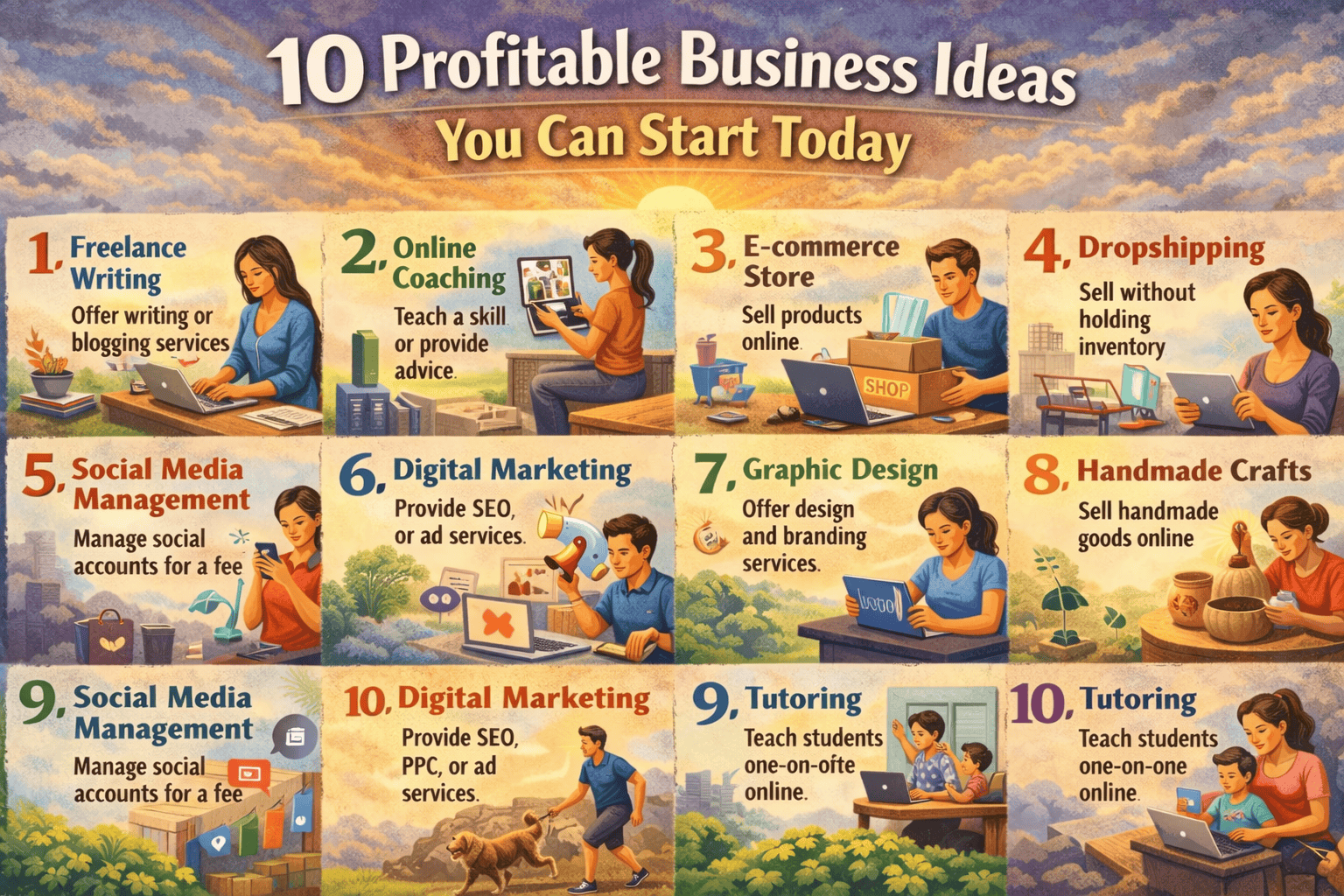
Starting a business can feel daunting. You might be overwhelmed by the sheer volume of options, the fear of failure, or the misconception that you need a massive amount of startup capital. It is entirely valid to feel a mix of excitement and anxiety when taking this leap. However, the modern digital economy has significantly lowered the barriers to entry.
In 2026, the most successful businesses are those that focus on solving specific problems, leveraging new technology, and creating authentic connections with their communities. You don’t need a million-dollar venture capital investment to start; you need a strategic approach, a willingness to learn, and a commitment to delivering value.
This guide breaks down 10 profitable business ideas you can start today. It is designed to be highly readable, actionable, and grounded in the reality of today’s market trends. We will cover why each model works, who it is best for, and how you can take your first steps.
At a Glance: 10 High-Margin Business Ideas for 2026
For quick reference, here is a summary of the business models we will explore.
| Business Idea | Primary Skill Required | Startup Cost | Income Model |
| 1. AI Automation Consulting | Tech-savviness, Problem Solving | Low | Service / Retainer |
| 2. UGC Content Studio | Video Editing, Creativity | Low | Project / Retainer |
| 3. Niche Print-on-Demand | Design, Trend Forecasting | Low | Product Sales |
| 4. No-Code Micro-SaaS | Logic, UI/UX Basics | Low-Medium | Recurring Subscription |
| 5. Health & Wellness Coaching | Empathy, Subject Expertise | Low | Service / Membership |
| 6. Local Lead Generation | SEO, Digital Marketing | Low | Service / Retainer |
| 7. Subscription Box Services | Curation, Logistics Planning | Medium | Recurring Subscription |
| 8. Online Educational Hubs | Teaching, Community Building | Low | One-time / Subscription |
| 9. Premium Pet Care | Reliability, Animal Handling | Low-Medium | Service / Product |
| 10. Sustainable E-Commerce | Sourcing, Brand Building | Medium | Product Sales |
1. AI Automation Consulting for Small Businesses
The Concept
While global corporations are investing billions into Artificial Intelligence, everyday small businesses—like local dental offices, plumbing companies, and boutique retail shops—are often left behind, still doing manual data entry and customer service. As an AI Automation Consultant, your job is to bridge this gap by implementing straightforward, existing AI tools into their daily workflows.
Why It’s Profitable Today
Global AI spending is soaring, but the “boots on the ground” implementation is lagging. You do not need to be a software engineer to do this; you simply need to understand how to connect tools like ChatGPT, Zapier, and AI-driven CRM platforms to save a business owner 10 to 20 hours a week. By selling time and efficiency, you can easily charge premium retainer fees.
Who It’s For
People who are naturally curious, love tinkering with new software, and possess excellent communication skills to explain technical concepts simply to non-technical business owners.
Step-by-Step Launch Plan
- Learn the Tools: Master platforms like Zapier, Make, and basic AI chatbots.
- Build a Prototype: Create an automated customer intake system for a hypothetical local business.
- Outreach: Contact 10 to 15 local businesses and offer a free workflow audit.
- The Offer: Pitch a setup fee plus a small monthly retainer for maintenance.
Estimated Startup Cost: Under $100 (mostly for your own software subscriptions to practice).
2. UGC (User-Generated Content) & Short-Form Studio
The Concept
Brands are rapidly shifting their advertising budgets away from traditional polished commercials and toward “authentic,” creator-style vertical videos for TikTok, Instagram Reels, and YouTube Shorts. A UGC studio creates these short, engaging, native-looking videos for e-commerce brands to use in their paid advertising.
Why It’s Profitable Today
Consumers trust other consumers more than they trust faceless brands. The demand for relatable video content is astronomical. Because this is a business-to-business (B2B) service, brands are willing to pay handsomely for a steady stream of content that actively drives sales and engagement.
Who It’s For
Creative individuals who understand social media trends, have basic video editing skills (using tools like CapCut or Premiere), and feel comfortable either being on camera or directing others.
Step-by-Step Launch Plan
- Build a Portfolio: Film 3 to 5 high-quality, engaging videos reviewing products you already own.
- Package Your Services: Create a pricing tier (e.g., 5 videos for a set price, or a monthly retainer of 15 videos).
- Pitch Brands: Reach out to small-to-medium e-commerce brands on Instagram or via email with your portfolio.
- Estimated Startup Cost: $0 to $200 (using your smartphone and affordable lighting/audio gear).
3. Niche Print-on-Demand Microbrands
The Concept
Print-on-Demand (POD) allows you to sell custom-designed products (t-shirts, mugs, tote bags, home decor) without holding any inventory. When a customer buys an item from your online store, a third-party supplier prints and ships it directly to them.
Why It’s Profitable Today
The secret to POD in 2026 is hyper-niching. Generic t-shirt stores no longer work. However, creating a brand specifically for “introverted software engineers who love indoor gardening” or “vintage-style astrology decor” taps into passionate communities willing to buy personalized goods. With zero upfront inventory risk, profit margins are solid.
Who It’s For
Graphic designers, artists, and trend-spotters who want to run an e-commerce business without the logistical headache of packing and shipping boxes.
Step-by-Step Launch Plan
- Identify a Hungry Niche: Use tools like Google Trends or Pinterest to find passionate subcultures.
- Create Designs: Use design software (or AI image generators if applicable to your workflow) to create compelling graphics.
- Set Up Shop: Connect a free Printify or Printful account to a Shopify or Etsy storefront.
- Market Sensibly: Use Pinterest and Instagram to drive organic traffic to your listings.
Estimated Startup Cost: $50 to $100 (platform hosting fees and sample products).
4. No-Code Micro-SaaS (Software as a Service)
The Concept
A Micro-SaaS is a software tool designed to solve one very specific problem for a very specific target audience. Thanks to “no-code” builders like Bubble, FlutterFlow, or Softr, you no longer need to know how to write complex code to build functional software applications.
Why It’s Profitable Today
Instead of trying to build the next massive social network, you can build a highly profitable tool like a “shift scheduler for independent coffee shops” or a “compliance tracker for freelance truck drivers.” Because it’s subscription-based (recurring revenue) and maintenance is low once built, the profit margins are incredibly high.
Who It’s For
Logical thinkers and problem-solvers who can identify pain points in specific industries and map out straightforward solutions.
Step-by-Step Launch Plan
- Find a Problem: Talk to professionals in a specific industry to find tedious, manual tasks they hate doing.
- Wireframe a Solution: Sketch out how an app could automate this process.
- Build the MVP (Minimum Viable Product): Use a no-code tool to build a basic, functional version.
- Onboard Beta Testers: Offer the tool for free to 5 businesses in exchange for feedback, then transition to a paid model.
Estimated Startup Cost: $100 to $300 (no-code platform subscriptions and domain names).
5. Health & Wellness Coaching / Virtual Communities
The Concept
More people than ever are prioritizing their mental, physical, and holistic well-being. Health and wellness coaching involves guiding clients through lifestyle changes, stress management, fitness routines, or nutritional habits via remote consultations or private online communities.
Why It’s Profitable Today
The industry has shifted from one-off appointments to subscription-based models. By offering monthly memberships that include weekly group calls, personalized plans, and community support (via platforms like Skool or Mighty Networks), you build a stable, recurring income stream.
Who It’s For
Certified health professionals, fitness enthusiasts, nutritionists, and empathetic listeners who have a proven track record of helping people improve their lifestyles.
Step-by-Step Launch Plan
- Define Your Specialty: Choose a specific focus (e.g., postpartum fitness, digital detox coaching, stress management for entrepreneurs).
- Build a Framework: Create a signature 90-day transformation program.
- Launch a Community: Use platforms like Teachable or Skool to host your content and group discussions.
- Content Marketing: Share valuable, actionable wellness tips on platforms like YouTube or LinkedIn to attract clients.
Estimated Startup Cost: $100 to $400 (certification costs, website hosting, and community platform fees).
6. Local Lead Generation & SEO Agency
The Concept
Every local business (roofers, landscapers, dentists) needs one thing to survive: new customers. A local lead generation agency helps these businesses rank higher on Google Maps and search engines, capturing the attention of local people actively searching for those services.
Why It’s Profitable Today
While digital marketing is competitive globally, it is still surprisingly easy to rank for local search terms (e.g., “best emergency plumber in Austin”). Local business owners are happy to pay a monthly retainer of $1,000+ if you can consistently bring them 10 to 20 new high-paying jobs each month.
Who It’s For
Analytical minds, marketers, and individuals willing to learn Search Engine Optimization (SEO) and digital advertising.
Step-by-Step Launch Plan
- Learn Local SEO: Understand how Google Business Profiles and local directory citations work.
- Pick a Niche: Focus on one high-ticket industry (e.g., roofing or cosmetic dentistry).
- Offer a Trial: Optimize a business’s Google profile for free or at a massive discount in exchange for a case study.
- Scale with Retainers: Once you prove you can bring in leads, charge a flat monthly fee for ongoing SEO and ad management.
Estimated Startup Cost: $150 to $500 (website hosting, SEO software tools).
7. Niche Subscription Box Services
The Concept
A subscription box business curates a selection of physical products and ships them to customers on a recurring basis (usually monthly).
Why It’s Profitable Today
Consumers love the “unboxing” experience and the joy of discovering new products. By focusing on highly passionate niches—such as organic gardening seeds, global hot sauces, or sensory toys for neurodivergent children—you foster immense brand loyalty and predictable, recurring revenue.
Who It’s For
Detail-oriented organizers, curators, and individuals with a great eye for branding and packaging.
Step-by-Step Launch Plan
- Choose a Hyper-Specific Niche: The more specific, the better the customer retention.
- Source Products: Reach out to small brands and wholesalers to negotiate bulk rates for sample items.
- Set Up the Tech: Use platforms like Cratejoy or Shopify to handle recurring billing.
- Pre-Sell Your First Box: Market the concept and secure 50 to 100 subscribers before ordering inventory to avoid upfront losses.
Estimated Startup Cost: $500 to $2,000 (inventory for the first box, custom packaging, and marketing).
8. Subscription-Based Educational Hubs
The Concept
Gone are the days of selling a single online course for $2,000. The modern online education model revolves around accessible, subscription-based learning hubs where members pay a smaller monthly fee ($20 to $100) for access to a library of courses, live Q&A sessions, and a supportive community.
Why It’s Profitable Today
People value continuous learning and community over static information. If you have specialized knowledge—whether it’s advanced Excel modeling, watercolor painting, or real estate investing—you can monetize it globally. The overhead is virtually zero once the initial content is recorded.
Who It’s For
Subject matter experts, former teachers, and anyone with a passion for helping others learn a specific skill.
Step-by-Step Launch Plan
- Outline Your Curriculum: Break down your expertise into digestible, actionable modules.
- Record the Content: Use simple screen recording software or a smartphone to create the lessons.
- Host the Hub: Set up a community on platforms like Patreon, Kajabi, or Discord.
- Drive Traffic: Build an audience by giving away 10% of your best advice for free on social media.
Estimated Startup Cost: $100 to $300 (microphone, hosting platform).
9. Premium Pet Care & Services
The Concept
The pet care industry is highly resilient. Premium pet care extends beyond standard dog walking to include specialized services such as mobile pet grooming, small-batch organic pet treats, pet photography, and high-end pet sitting for a wide range of animals.
Why It’s Profitable Today
Pet owners increasingly view their animals as family members and are willing to spend premium prices for their care and comfort. By positioning yourself as a luxury or highly specialized service provider, you can command higher rates than generic competitors.
Who It’s For
Animal lovers, patient individuals, and those who enjoy being active and outdoors (for service-based businesses).
Step-by-Step Launch Plan
- Identify the Premium Gap: Look at what is missing in your local area (e.g., a lack of holistic pet food delivery).
- Get Certified/Insured: Ensure you have the proper licensing and liability insurance.
- Create a Brand: Build a trustworthy, high-quality brand image that appeals to affluent pet owners.
- Local Networking: Partner with local veterinarians and pet boutiques for referrals.
Estimated Startup Cost: $200 to $1,000 (insurance, branding, and equipment depending on the service).
10. Sustainable & Eco-Friendly E-Commerce
The Concept
Consumers are more environmentally conscious than ever. Starting a business that offers sustainable alternatives to everyday items—such as bamboo toothbrushes, biodegradable phone cases, or zero-waste laundry detergent strips—caters directly to this growing market.
Why It’s Profitable Today
Governments and consumers are actively pushing away from single-use plastics. Building a brand with a strong ethical foundation not only helps the planet but also creates fierce brand advocates who will choose your products over cheaper, less sustainable alternatives.
Who It’s For
Eco-conscious entrepreneurs, strong brand builders, and those passionate about environmental advocacy.
Step-by-Step Launch Plan
- Source Responsibly: Find manufacturers that offer genuinely sustainable and ethically sourced products.
- Build the Brand Narrative: Transparency is key. Tell your audience exactly how and where the products are made.
- Set Up E-commerce: Build a clean, user-friendly Shopify store.
- Leverage PR & Influencers: Send products to eco-conscious influencers in exchange for honest reviews.
Estimated Startup Cost: $500 to $2,500 (inventory, sustainable packaging, and website setup).
Frequently Asked Questions (FAQ)
What is the most profitable business to start with little money?
Service-based businesses generally offer the highest profit margins with the lowest startup costs. AI Automation Consulting, Freelance Digital Marketing, and UGC Content Creation require little to no financial capital—only your time, skills, and internet access.
How do I know if my business idea will work?
The best way to validate an idea is to pre-sell it. Before spending months building a product or website, try to get a commitment from a paying customer. Offer your service to a local business or launch a simple landing page for a physical product to gauge genuine interest and collect pre-orders.
Do I need to quit my full-time job to start?
Absolutely not. In fact, it is safer to start these businesses as a “side hustle.” Dedicate your evenings and weekends to building the foundation. Once the business generates enough consistent income to replace your primary salary, you can make a calculated transition.
How important is a business plan?
While a traditional 50-page business plan is rarely necessary for small online businesses, a clear strategic outline is vital. You should clearly define your target audience, your core offer, your pricing structure, and your initial marketing strategy.
Can I start an online business from anywhere in the world?
Yes. Most of the digital ideas listed above (like No-Code Micro-SaaS, Print-on-Demand, and Online Educational Hubs) are location-independent. You simply need a reliable internet connection and a payment gateway that operates in your country.
Conclusion
Starting a profitable business in 2026 is less about inventing something entirely new and more about observing the market, finding friction points, and offering elegant, accessible solutions. Whether you lean toward the highly technical world of software or the empathetic world of wellness coaching, the opportunity is there.
Remember to start small, validate your ideas quickly, and prioritize profitability and customer satisfaction over perfection. The most important step you can take is the first one. Choose the idea that aligns best with your natural skills and interests, and begin building today.
Reference Links & Tools
To help you get started, here are several widely recognized tools and platforms relevant to the business ideas discussed above:
Leave a Reply