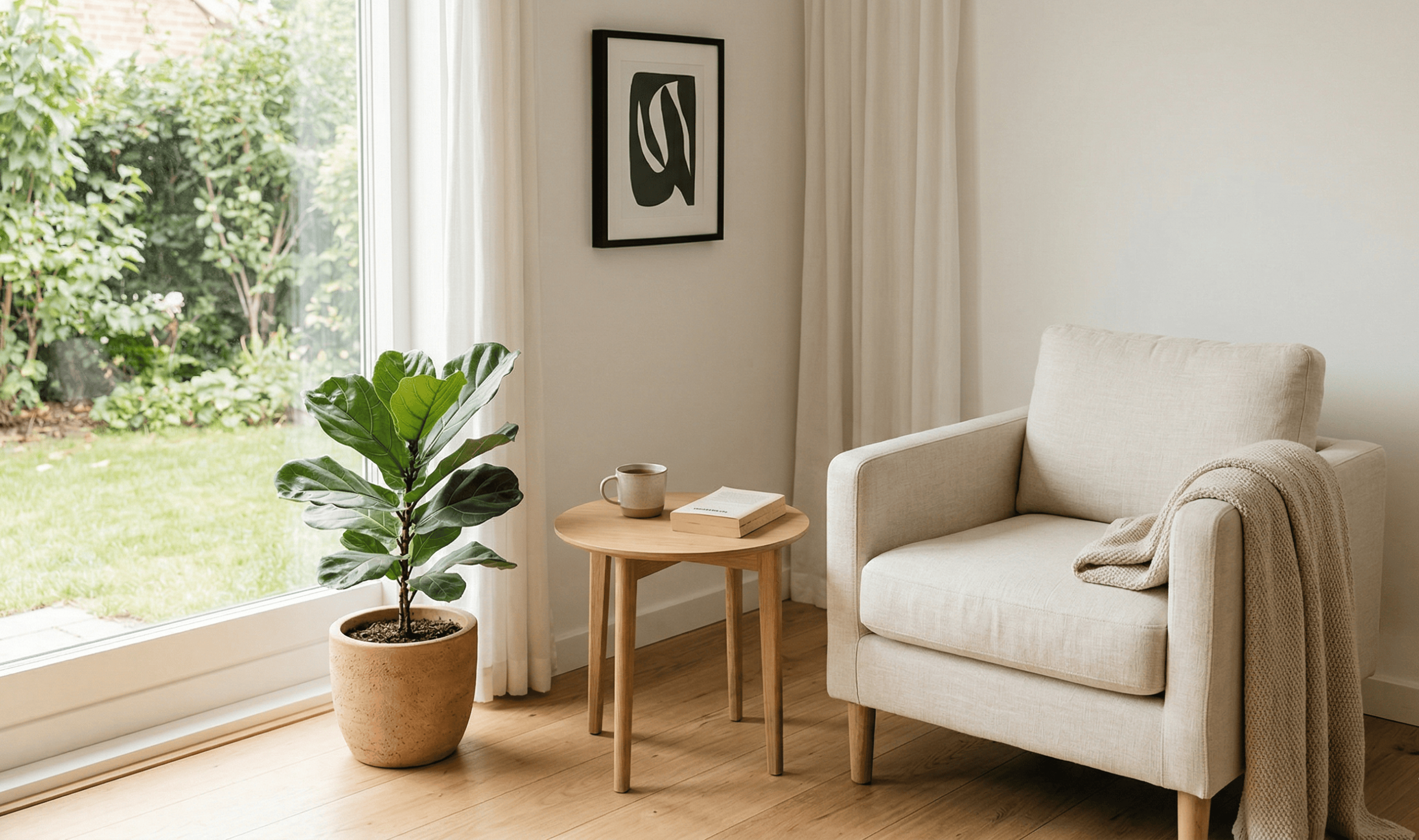
In a world that constantly tells us we need more—more money, more gadgets, more clothes, more success—the idea of purposely choosing less can feel like a radical act. We are bombarded daily by thousands of advertisements, all promising that the next purchase will be the one that finally brings us happiness, convenience, or peace. Yet, many of us find ourselves feeling overwhelmed, stressed, and buried under the physical and mental clutter of modern life.
Enter the minimalist lifestyle.
Minimalism is not just a design aesthetic featuring stark white walls and a single piece of furniture. It is a deeply intentional way of living. It is the practice of stripping away the unnecessary so you can focus on what truly adds value and meaning to your life.
Whether you are looking to reduce anxiety, save money, decrease your environmental footprint, or simply find more time to spend with loved ones, this comprehensive guide will walk you through everything you need to know about adopting a minimalist lifestyle. We will explore what it means, the profound benefits it offers, practical steps to get started, and how to apply these principles to every area of your life.
What Exactly is a Minimalist Lifestyle?
At its core, a minimalist lifestyle is about intentionality. It is the conscious decision to clear the clutter from your life—physical, mental, emotional, and digital—to make room for the things that matter most.
Author and minimalist Joshua Becker defines it perfectly: “Minimalism is the intentional promotion of the things we most value and the removal of anything that distracts us from it.”
Many people mistake minimalism for asceticism or self-deprivation. They imagine that becoming a minimalist means you must throw away all your possessions, live out of a single backpack, and never buy anything fun again. This is a myth.
Minimalism looks different for everyone because everyone’s values are different. For a passionate musician, a minimalist living room might still contain three guitars and a piano, but it will be free of the knick-knacks and unread magazines that distract from the music. For an avid reader, minimalism might mean keeping a curated, beloved library but heavily pairing down an overflowing, chaotic wardrobe.
It is not about having an arbitrary number of items; it is about ensuring that the items you do have serve a purpose or bring you genuine joy.
The Evolution of the Movement
While minimalism has surged in popularity over the last decade, largely popularized by figures like Marie Kondo and The Minimalists (Joshua Fields Millburn and Ryan Nicodemus), the underlying philosophy is ancient. Roots of minimalism can be found in various spiritual and philosophical traditions, from Stoicism in ancient Greece to Zen Buddhism in Japan, all of which emphasize finding peace through simplicity and detachment from material goods.
Today’s minimalist movement is often a direct reaction to the hyper-consumerism of the late 20th and early 21st centuries. It is a realization that the endless pursuit of material accumulation is not a reliable pathway to well-being.
The Transformative Benefits of Living With Less
Choosing to adopt a minimalist lifestyle requires effort, especially at the beginning when you are confronting years of accumulated clutter. However, the rewards are profound and far-reaching. Here is how living with less can help you live more.
1. Enhanced Mental Clarity and Reduced Stress
Physical clutter directly translates to mental clutter. Studies have shown that visual clutter competes for our attention, overloading our senses and increasing levels of cortisol (the stress hormone). When you walk into a clean, organized, and simplified space, your brain can finally relax. You spend less time looking for lost items, less time cleaning around piles of stuff, and less energy feeling guilty about the mess. This newfound mental space allows for better focus, increased creativity, and a deeper sense of peace.
2. Financial Freedom and Stability
One of the most immediate benefits of minimalism is the positive impact on your finances. When you stop buying things you do not need to impress people you do not know, you suddenly find yourself with more disposable income.
- Reduced debt: Buying less means you rely less on credit cards.
- Increased savings: The money you previously spent on impulse purchases can go toward an emergency fund, investments, or experiences.
- Freedom of choice: Financial stability gives you the power to make life choices based on what you want to do, not just what you have to do to pay the bills.
3. More Time for What Truly Matters
Everything you own requires a piece of your time. You have to clean it, organize it, maintain it, fix it when it breaks, and eventually dispose of it. By reducing the number of possessions you own, you drastically reduce the time spent managing them. This frees up countless hours each week. Imagine what you could do with that extra time—learn a new language, spend uninterrupted time with your children, cook healthier meals, or simply rest.
4. A Lighter Environmental Footprint
The creation, transportation, and disposal of consumer goods take a massive toll on our planet. By consuming less, you are directly contributing to a more sustainable future. Minimalists tend to prioritize quality over quantity, investing in well-made, durable items that will last for years rather than cheap, fast-fashion or disposable products that end up in landfills. This conscious consumerism is a powerful way to practice environmental stewardship.
5. Deeper Relationships
When you stop focusing on acquiring things, you can redirect your energy toward cultivating relationships. Minimalism encourages you to seek fulfillment in shared experiences, deep conversations, and community connections rather than in shopping malls. Furthermore, setting boundaries—a form of mental minimalism—allows you to protect your energy and show up more fully for the people who truly matter to you.
How to Transition to a Minimalist Lifestyle: A Step-by-Step Guide
Transitioning to a minimalist lifestyle is a marathon, not a sprint. Attempting to declutter your entire life in a single weekend is a recipe for burnout. Instead, approach the process methodically, with grace and patience.
Step 1: Define Your “Why”
Before you touch a single item in your home, you must understand your motivation. Why do you want to become a minimalist?
- Are you trying to pay off debt?
- Do you want to travel more?
- Are you seeking relief from anxiety?
- Do you want to downsize to a smaller, more manageable home?
Write your “why” down on a piece of paper and put it somewhere visible. When you are elbow-deep in a dusty closet and feeling overwhelmed, this reminder will give you the motivation to keep going.
Step 2: Start Small and Build Momentum
Do not start with the hardest room in the house (usually the garage, the attic, or a room full of sentimental items). Start with a small, manageable area that you use daily.
- The Bathroom Counter: Clear everything off. Only put back the items you use every single day (toothbrush, daily moisturizer, etc.). Put the rest in drawers or discard expired products.
- Your Car: Take ten minutes to remove all the trash, old receipts, and items that belong in the house.
- A Single Drawer: Tackle the junk drawer in your kitchen.
Completing these small tasks will give you a quick hit of dopamine and the confidence to tackle larger areas.
Step 3: Utilize Proven Decluttering Methods
If you are unsure how to approach the physical act of decluttering, try one of these popular methods:
- The KonMari Method: Created by Marie Kondo, this method involves gathering all items of a certain category (e.g., all your clothes) in one pile, holding each item, and asking, “Does this spark joy?” If it does, keep it. If not, thank it for its service and let it go.
- The 90/90 Rule: Popularized by The Minimalists. Look at an item and ask yourself: Have I used this in the last 90 days? Will I use it in the next 90 days? If the answer to both is no, it is likely time to let it go.
- The Packing Party: If you are feeling extreme, pack up all your belongings as if you were moving. Over the next month, only unpack the items as you need them. At the end of the month, whatever is still in the boxes is likely unnecessary.
- The 12-12-12 Challenge: Find 12 items to throw away, 12 items to donate, and 12 items to return to their proper place. This is a great, quick exercise for the whole household.
Step 4: Adopt the “One-In, One-Out” Rule
Decluttering is only half the battle; maintaining your newly simplified space is the other. To prevent the clutter from creeping back in, implement the “one-in, one-out” rule. For every new item you bring into your home (a new sweater, a new book, a new coffee mug), an older item of a similar category must be donated, sold, or recycled. This forces you to be highly intentional about new purchases.
Step 5: Embrace the “Pause” Before Purchasing
Impulse buying is the enemy of minimalism. To combat this, institute a mandatory waiting period before making non-essential purchases. If you see something you want, wait 24 to 48 hours (or even 30 days for more expensive items) before buying it. Often, you will find that the urge to buy fades, and you realize you never really needed the item in the first place.
Minimalism Beyond Your Physical Belongings
While clearing out physical clutter is the most visible aspect of minimalism, true intentional living extends far beyond your closet. To experience the full benefits of this lifestyle, you must apply the principles to other areas of your life.
Digital Minimalism
Our digital spaces are often more cluttered than our physical ones. Thousands of unread emails, endless scrolling on social media, and a phone screen crowded with unused apps can cause immense psychological distress.
- Audit your digital life: Unsubscribe from promotional emails and newsletters you no longer read.
- Curate your feeds: Unfollow social media accounts that make you feel inadequate, anxious, or compelled to buy things. Follow accounts that inspire and educate you.
- Set boundaries: Establish screen-free zones in your home, such as the bedroom or the dining table. Try a “digital detox” for one day a week.
Financial Minimalism
Financial minimalism is about simplifying your money management and aligning your spending with your core values.
- Automate your finances: Set up automatic transfers for your savings and bill payments to reduce the mental load of managing money.
- Consolidate accounts: If you have multiple bank accounts or credit cards that you do not need, close them. Simplify your financial portfolio.
- Track your spending: Review your bank statements and identify recurring subscriptions or habits that do not align with your goals. Cancel what you do not use.
Calendar and Schedule Minimalism
Are you constantly rushing from one commitment to the next, feeling perpetually exhausted? It is time to declutter your schedule.
- Learn to say “No”: You cannot do everything. Protect your time fiercely. If an opportunity or invitation is not a “hell yes,” it should be a “no.”
- Schedule downtime: Just as you would schedule a doctor’s appointment or a work meeting, block out time in your calendar for rest, hobbies, and doing absolutely nothing.
- Prioritize daily tasks: Instead of a massive to-do list, identify the top three most important tasks for the day and focus solely on those.
Relational Minimalism
This is perhaps the most delicate area of minimalism, but it is vital for emotional well-being. It involves taking an honest look at the relationships in your life.
- Evaluate your circle: Surround yourself with people who uplift you, support your growth, and share your values.
- Set boundaries with toxic individuals: You are allowed to distance yourself from relationships that are consistently draining, manipulative, or harmful.
- Focus on quality, not quantity: You do not need hundreds of acquaintances. A few deep, meaningful friendships are far more valuable.
Navigating Roadblocks and Common Challenges
The path to a minimalist lifestyle is rarely a straight line. You will inevitably face challenges along the way. Here is how to navigate some of the most common hurdles.
Dealing with Sentimental Items
Sentimental items are the hardest things to part with because they are tied to our memories and emotions.
- The Memory is not the Item: Remember that letting go of your grandmother’s old china does not mean you are letting go of your memory of her. The memory lives inside you, not in the object.
- Keep the Best, Discard the Rest: If you have a massive box of childhood artwork, keep two or three of the most meaningful pieces and recycle the rest.
- Take Photos: If an item is too large or impractical to keep, take a high-quality photograph of it. You can even create a digital photobook of sentimental items.
What if My Partner or Family Isn’t on Board?
You cannot force someone else to become a minimalist. If your partner or children do not share your enthusiasm, attempting to throw away their things will only cause resentment and conflict.
- Lead by example: Focus exclusively on your own belongings and shared spaces that you are primarily responsible for. As your family sees the peace and benefits you are experiencing, they may naturally become curious.
- Create personal zones: Agree on areas of the house that are “yours” to keep minimal, and respect their right to keep their own spaces as they wish.
- Communicate openly: Explain why you are doing this. Focus on the benefits for the whole family, such as “I want to spend less time cleaning on the weekends so we can go to the park.”
The “Privilege” Critique
It is important to acknowledge that the modern minimalist aesthetic is sometimes criticized as a lifestyle only accessible to the wealthy—people who can afford to throw things away knowing they can easily buy them again if needed.
However, inclusive minimalism recognizes that living with less is not about perfection or a specific aesthetic. It is an adaptable tool. For those living paycheck to paycheck, minimalism might look like fiercely protecting one’s time, learning to repair rather than replace, and avoiding the trap of high-interest consumer debt. It is about maximizing the resources you do have by not squandering them on the unnecessary.
Conclusion
Embracing a minimalist lifestyle is not a one-time event; it is a lifelong journey of intentional living. It requires you to continuously evaluate what you allow into your home, your schedule, and your mind.
By choosing to live with less, you are not depriving yourself. Rather, you are making a bold, empowering choice to free yourself from the heavy burden of excess. You are clearing the path to discover what truly matters to you—whether that is pursuing a passion, nurturing relationships, achieving financial independence, or simply finding a quiet moment of peace in a noisy world.
Start small, be patient with yourself, and remember that the goal of minimalism is not to have an empty house, but to have a full life.
Frequently Asked Questions (FAQ)
1. Do I have to count my items to be a minimalist?
Absolutely not. While some extreme minimalists enjoy challenges like “living with only 100 things,” this is not a requirement. Minimalism is about intentionality and usefulness, not a strict numerical quota. Keep as many things as you need to live a joyful, functional life.
2. Is minimalism only for single people or people without kids?
No. While families with children will naturally have more items in their homes than a single person, minimalism is incredibly beneficial for families. It reduces the time spent managing toy clutter, saves money for family experiences, and teaches children valuable lessons about conscious consumerism and valuing experiences over material goods.
3. Will my home look cold and empty?
Only if you want it to! A minimalist home should reflect your personal style. It can be warm, cozy, and full of color. The defining characteristic is that the space is free of unintentional clutter, allowing your favorite pieces of art, comfortable furniture, and personal style to shine without distraction.
4. What do I do with the things I declutter?
To be environmentally responsible, avoid throwing usable items in the trash. You can:
- Donate: Give clothes and household goods to local shelters, thrift stores, or community organizations.
- Sell: Use platforms like Facebook Marketplace, eBay, or Poshmark to make some extra cash.
- Recycle: Research local recycling programs for electronics, textiles, and plastics.
- Gift: Pass items on to friends or family members who truly need or want them (but do not force your clutter onto them!).
5. How do I handle gifts from friends and family?
This is a common struggle. First, express genuine gratitude for the thought and effort behind the gift. You can gently let close friends and family know about your lifestyle shift and suggest alternatives for the future, such as consumables (coffee, wine, food), experiences (tickets to a show, a restaurant gift card), or donations to a charity in your name. If you receive a physical gift you do not need, remember that once a gift is given, it belongs to you to do with as you please; it is okay to donate it.
Reference Links for Further Reading
- The Minimalists (Joshua Fields Millburn & Ryan Nicodemus): A wealth of essays, podcasts, and books on living a meaningful life with less. theminimalists.com
- Becoming Minimalist (Joshua Becker): Practical advice and inspiration for families looking to simplify their homes and lives. becomingminimalist.com
- Marie Kondo (KonMari): The official site for the author of The Life-Changing Magic of Tidying Up, focusing on keeping only what sparks joy. konmari.com
- Digital Minimalism by Cal Newport: An essential resource for understanding how to declutter your digital life and reclaim your focus. calnewport.com
- Project 333 (Courtney Carver): A minimalist fashion challenge that invites you to dress with 33 items or less for 3 months. bemorewithless.com/project-333/
Leave a Reply