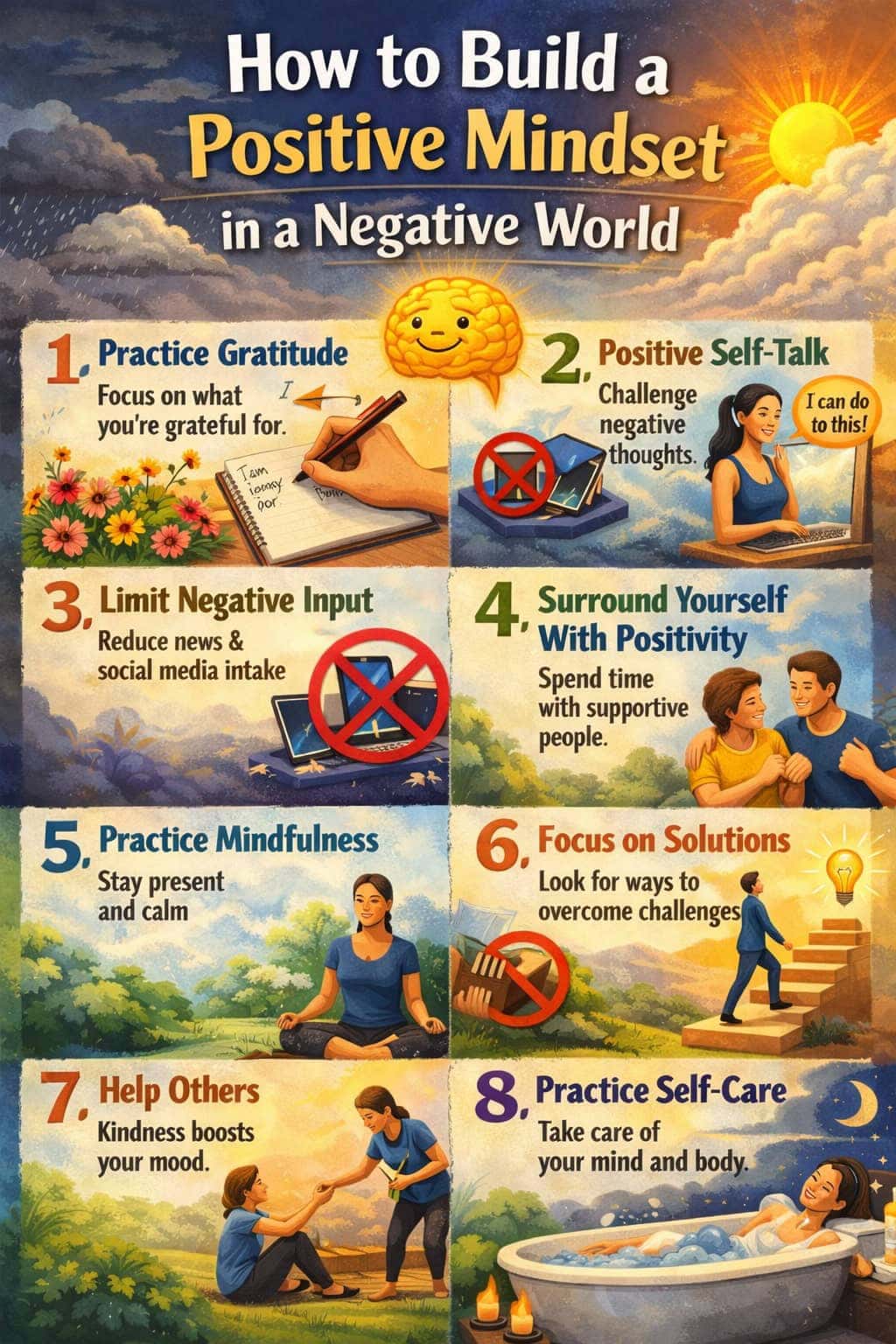
If you have recently opened a news app, scrolled through social media, or even just eavesdropped on a conversation at the grocery store, you might feel like the world is running on a steady diet of pessimism. From global crises to economic uncertainties and the daily grind of modern life, it is incredibly easy to feel overwhelmed.
Your feelings are entirely valid. We are currently navigating a highly complex, hyper-connected era where bad news travels at the speed of light. However, while we cannot always control the state of the world around us, we can control how we respond to it. Building a positive mindset is not about ignoring reality; it is about cultivating the psychological resilience needed to face reality without losing your sense of hope and well-being.
This comprehensive guide will explore the science of optimism, the dangers of toxic positivity, and actionable, evidence-based strategies to help you build a durable, positive mindset in an increasingly negative world.
1. Understanding the Landscape: Why Does the World Feel So Negative?
Before we can build a positive mindset, we need to understand why negativity feels so magnetic. It is not a personal failing; it is a biological imperative.
The Negativity Bias
Human beings are evolutionary wired to pay more attention to negative information than positive information. This phenomenon, known in psychology as the negativity bias, kept our ancestors alive. Paying attention to a rustling bush (a potential predator) was far more critical for survival than stopping to admire a beautiful sunset.
Today, human brains still operate on deeply rooted biological systems. The amygdala—the brain’s threat-detection center—is constantly scanning for danger. When people are bombarded with alarming news alerts, the brain can interpret them as immediate threats, keeping the nervous system in a heightened state of alert.
The Attention Economy
Compounding our biology is the modern digital landscape. The “attention economy” profits off our engagement, and data shows that outrage, fear, and negativity drive the highest levels of engagement.
Key Insight: You are not naturally a pessimistic person; you are a human being operating a prehistoric brain in a modern world designed to capture your attention through stress and alarm. Recognizing this is the first step toward reclaiming your mindset.
2. Realistic Optimism vs. Toxic Positivity
A crucial step in building a positive mindset is defining what positivity actually means. A common misconception is that positivity requires you to be happy all the time, forcing a smile through pain and hardship. This is not only unhelpful; it is psychologically damaging.
What is Toxic Positivity?
Toxic positivity is the belief that no matter how dire or difficult a situation is, people should maintain a positive mindset. It relies on phrases like “Good vibes only,” “Everything happens for a reason,” or “Just look on the bright side.” This approach invalidates genuine human emotions, leading to shame, suppressed feelings, and emotional exhaustion.
What is Realistic Optimism?
Realistic optimism, on the other hand, acknowledges that life can be deeply difficult, unfair, and painful. However, it maintains the belief that you have the agency to navigate those difficulties and that better days are possible. It is about resilience, not delusion.
| Feature | Toxic Positivity | Realistic Optimism |
| View of Negative Emotions | Suppresses, ignores, or shames them. | Validates, processes, and accepts them. |
| Response to Hardship | “It could be worse! Smile!” | “This is really hard, but I will get through it.” |
| Focus | Maintaining an illusion of perfection. | Finding meaning, learning, and taking action. |
| Mental Health Impact | Increases anxiety, depression, and isolation. | Builds resilience, coping skills, and connection. |
3. Actionable Strategies to Cultivate a Positive Mindset
Building a positive mindset is a practice, much like building a muscle. It requires consistent, intentional effort. Here are evidence-based strategies to help you rewire your brain for resilience.
Step 1: Curate Your Information Diet
Just as you are mindful of the food you put into your body, you must be mindful of the information you put into your mind. “Doomscrolling”—obsessively scrolling through negative news—directly impacts your mental health, increasing cortisol levels and anxiety.
- Audit Your Feeds: Unfollow or mute accounts that consistently make you feel angry, hopeless, or inadequate. Fill your feed with educators, artists, comedians, and thought leaders who inspire you.
- Set Boundaries with the News: You can be an informed citizen without consuming news 24/7. Designate a specific time of day (e.g., 20 minutes in the morning) to catch up on current events, and then close the apps.
-
Consume Long-Form Content: Swap bite-sized, sensationalist headlines for long-form articles, books, or podcasts. Nuance and context often dial down the panic associated with breaking news.
Step 2: Practice “Active” Gratitude
Gratitude is one of the most thoroughly researched interventions in positive psychology. Regularly practicing gratitude physically changes the neural pathways in your brain, teaching it to actively scan the environment for the good rather than just the bad.
However, vague gratitude (“I’m thankful for my family”) is less effective than specific, active gratitude.
- The “Three Good Things” Exercise: Every night before bed, write down three specific things that went well that day and why they happened. For example: “I had a great cup of coffee this morning because I took the time to brew it slowly.”
- Express Gratitude to Others: Write a quick message to a colleague who helped you, or tell a friend why you appreciate them. This boosts your mood and strengthens your social bonds.
Step 3: Master Cognitive Reframing
Cognitive Behavioral Therapy (CBT) teaches us that our thoughts influence our feelings, which influence our behaviors. Often, in a negative world, we fall into “cognitive distortions”—irrational thought patterns like catastrophizing (assuming the worst) or all-or-nothing thinking.
Cognitive reframing involves catching these thoughts, challenging them, and replacing them with more balanced perspectives.
How to Reframe:
- Catch the thought: “The world is falling apart; there is no point in trying.”
- Check the thought: “Is this a 100% accurate fact? Is everything falling apart, or are there still systems functioning and people doing good work?”
- Change the thought: “There are serious global challenges right now, but there are also millions of people working toward solutions. I will focus on what I can contribute today.”
Step 4: Focus on Your Locus of Control
A major source of negativity is a feeling of helplessness. When we fixate on global economies, international conflicts, or the opinions of strangers, we burn out because we have no direct control over these things.
Psychologists refer to this as your Locus of Control. To build a positive mindset, you must shift your focus inward.
- Circle of Concern vs. Circle of Influence: Draw two circles. In the outer circle (Concern), write things you care about but cannot control (the weather, the economy, how others behave). In the inner circle (Influence), write what you can control (your daily routine, how you treat others, your effort at work). Spend 90% of your energy in your Circle of Influence.
Step 5: Prioritize Meaningful Connections
Humans are deeply social creatures. Isolation breeds pessimism and anxiety. One of the strongest buffers against a negative world is a supportive, inclusive community.
- Seek Out “Radiators” Over “Drains”: Spend time with people who radiate energy, support, and realistic optimism. Set boundaries with “drains”—people who constantly complain, gossip, or bring you down.
- Volunteer and Give Back: Acts of altruism are proven to boost your own mental health. Helping others shifts your focus away from your own anxieties and connects you to a broader sense of purpose.
4. The Mind-Body Connection: Physical Foundations of Positivity
It is incredibly difficult to maintain a positive mindset if your physical body is depleted. Your psychological resilience rests entirely on your biological foundation.
- Sleep Hygiene: Sleep deprivation mimics the symptoms of anxiety and depression. Aim for 7-9 hours of quality sleep. During sleep, your brain flushes out toxins and processes emotional experiences.
- Movement: Exercise releases endorphins and dopamine, the brain’s natural mood elevators. You do not need to run a marathon; a 20-minute daily walk can significantly reduce depressive symptoms.
- Nutrition: The gut-brain axis is a real, physiological connection. A diet rich in whole foods, fiber, and omega-3 fatty acids supports a healthy gut microbiome, which is responsible for producing an estimated 90% of your body’s serotonin (a key neurotransmitter for mood regulation).
5. Embracing Self-Compassion
Finally, building a positive mindset requires grace. You will have bad days. You will get frustrated, angry, and overwhelmed. When this happens, do not punish yourself for “failing” to be positive.
Pioneering researcher Dr. Kristin Neff defines self-compassion as treating yourself with the same kindness, understanding, and forgiveness that you would offer a good friend.
Self-Compassion Practice: When you feel overwhelmed by the state of the world or your personal life, pause. Acknowledge the pain: “This is a moment of suffering.” Acknowledge our shared humanity: “Suffering is a part of life; I am not alone in feeling this way.” Offer yourself kindness: “May I give myself the compassion I need right now.”
Conclusion
Building a positive mindset in a negative world is a radical act of self-preservation. It is not about ignoring the world’s problems, but about ensuring you have the emotional bandwidth and resilience to face them head-on. By understanding the negativity bias, setting boundaries with your information intake, practicing active gratitude, reframing your thoughts, and taking care of your physical body, you can create a sanctuary of realistic optimism within your own mind.
Remember, you do not have to be positive all the time. You just need to equip yourself with the tools to find your way back to hope when the world pulls you into the dark.
Frequently Asked Questions (FAQ)
1. How do I stay positive around inherently toxic or negative people?
Set clear boundaries. You cannot control their behavior, but you can control your exposure. If you must interact with them (e.g., family or coworkers), practice “emotional distancing.” Do not engage in their complaints or try to fix their mindset. Steer conversations to neutral topics and excuse yourself when the negativity becomes overwhelming.
2. Is it possible to be too positive?
Yes, this is known as toxic positivity (discussed in Section 2). If your positivity forces you to suppress genuine emotions like grief, anger, or sadness, or if you use positivity to invalidate other people’s struggles, it has become harmful. Healthy positivity leaves room for the full spectrum of human emotion.
3. How long does it take to change my mindset?
Neuroplasticity—the brain’s ability to rewire itself—takes time and repetition. Studies suggest it takes anywhere from 21 to 66 days to form a new habit. If you consistently practice gratitude and cognitive reframing, you will likely start noticing a subtle shift in your baseline mood within a few weeks.
4. How does social media affect my mindset?
Social media algorithms are designed to prioritize highly emotional, often negative or controversial content to keep you engaged. Prolonged use is heavily linked to increased rates of anxiety, depression, and poor body image. Curating your feed and setting strict time limits are essential for protecting your mindset.
5. What if I am dealing with clinical depression or anxiety?
A positive mindset is a tool, not a cure for clinical mental health conditions. If you are experiencing persistent feelings of hopelessness, severe anxiety, or an inability to function in your daily life, please seek the help of a licensed mental health professional. Therapy and medication are vital, evidence-based treatments that provide the foundation upon which a positive mindset can eventually be built.
Reference Links
For further reading and evidence-based research on the topics discussed in this article, please explore the following trusted resources:
-
American Psychological Association (APA) – Resilience: Information on building psychological resilience and cognitive reframing. https://www.apa.org/topics/resilience
-
Greater Good Science Center at UC Berkeley: The premier research institute on the science of gratitude, mindfulness, and happiness. https://greatergood.berkeley.edu/
-
Self-Compassion by Dr. Kristin Neff: Research, exercises, and guided meditations on self-compassion. https://self-compassion.org/
-
Mayo Clinic – Positive Thinking: Exploring the health benefits of a positive mindset and stress management. https://www.mayoclinic.org/healthy-lifestyle/stress-management/in-depth/positive-thinking/art-20043950
-
Harvard Health Publishing – Giving Thanks Can Make You Happier: An overview of the medical research behind gratitude practices. https://www.health.harvard.edu/healthbeat/giving-thanks-can-make-you-happier
Leave a Reply