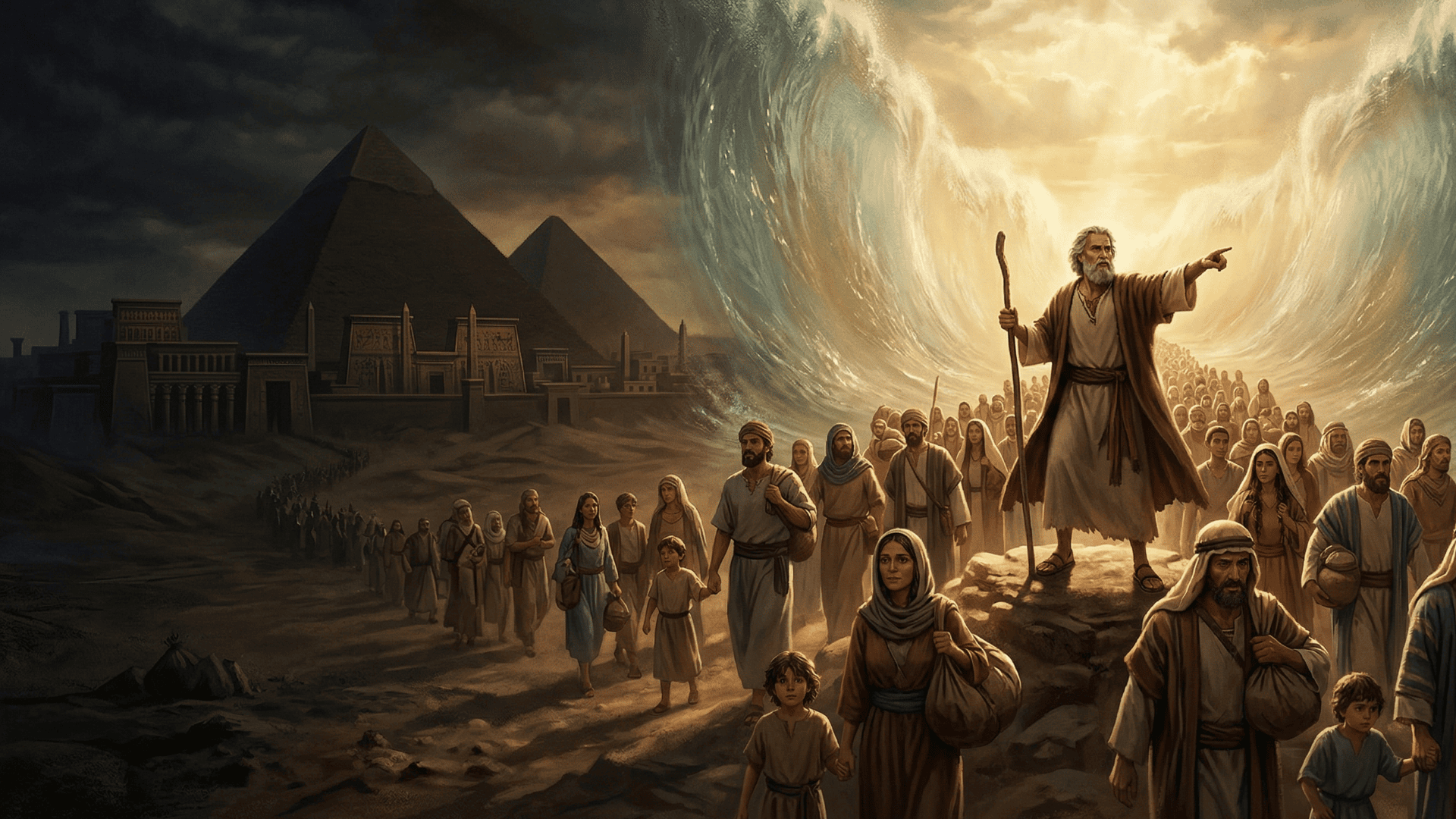
Category: Religions

  • The Patriarch of Three Worlds: Jacob Across Judaism, Christianity, and Islam

    The Patriarch of Three Worlds: Jacob Across Judaism, Christianity, and Islam

    When we speak of the Abrahamic faiths, the focus inevitably falls on Abraham, the foundational monotheist. Yet, to understand the deeply intertwined, historically complex, and often divergent theologies of Judaism, Christianity, and Islam, one must look to his grandson: Jacob.

    Known as Yaakov in Hebrew and Ya’qub in Arabic, Jacob is the crucible through which the promises made to Abraham are refined, tested, and ultimately realized. He is not merely a link in a genealogical chain; he is a defining archetype. However, the Jacob we meet in the Torah is not identical to the Jacob debated in the Epistles of the New Testament, nor is he exactly the same figure revered as a steadfast prophet in the Quran.

    To explore Jacob across these three traditions is to hold up a mirror to the religions themselves. In Judaism, he is the wrestler, the imperfect man who struggles with God and humanity to forge a nation. Christianity, he is the vessel of divine grace, an instrument of God’s sovereign election and a prophetic shadow of Christ. In Islam, he is the epitome of Sabr (beautiful patience), an infallible prophet whose unwavering faith in God sustains him through unimaginable grief.

    This article delves deep into the scriptures, traditions, and theologies of Judaism, Christianity, and Islam to explore how one ancient patriarch came to mean so many different things to billions of people.


    Part 1: Jacob in Judaism (Yaakov) – The Wrestler and the Archetype

    In the Jewish tradition, Jacob is arguably the most central of the three Patriarchs (Avot). While Abraham discovered God and Isaac was willing to be sacrificed to Him, it is Jacob who actually sires the Twelve Tribes. The Jewish people do not call themselves the “Children of Abraham”; they are Bnei Yisrael—the Children of Israel, the name bestowed upon Jacob.

    In Judaism, Jacob’s narrative is found in the Book of Genesis (Bereshit), and it is a story of profound human struggle, moral ambiguity, exile, and ultimate redemption.

    The Struggle from the Womb

    Jacob’s life is defined by conflict from its very inception. Genesis records that he and his twin brother, Esau, “struggled together within” the womb of their mother, Rebekah. Jacob is born second, grasping Esau’s heel. His name, Yaakov, is derived from the Hebrew word for heel (akev), carrying connotations of one who supplants, overreaches, or deceives.

    Rabbinic literature (Midrash) deeply enriches this rivalry. The sages often depict Esau as the archetype of the physical, aggressive world (later associated with Rome and the oppression of the Jews), while Jacob is characterized as an ish tam, yoshev ohalim—a “mild man, dwelling in tents,” which the Talmud interprets as the tents of Torah study. Jacob represents the intellectual and spiritual pursuit of God.

    The Stolen Blessing and Exile

    The defining controversy of Jacob’s early life is his acquisition of the birthright (bekhorah) for a bowl of lentil stew, and later, his deception of his blind father, Isaac, to steal the firstborn’s blessing (berakhah).

    Unlike later theological interpretations that might seek to sanitize this event, Jewish exegesis wrestles openly with Jacob’s deceit. While some commentators argue that Jacob was reclaiming what was rightfully his (as Esau despised the birthright), others point out that Jacob paid a heavy price for his deception. He is forced to flee his home, entering a long, grueling exile in Haran under the thumb of his manipulative uncle, Laban.

    This exile is viewed in Judaism as a prototype for the Jewish diaspora. Jacob’s struggle to survive, maintain his identity, and build a family in a hostile foreign land mirrors the historical experience of the Jewish people. As the famous Passover Haggadah declares, “A wandering Aramean was my father.”

    The Ladder and the Covenant

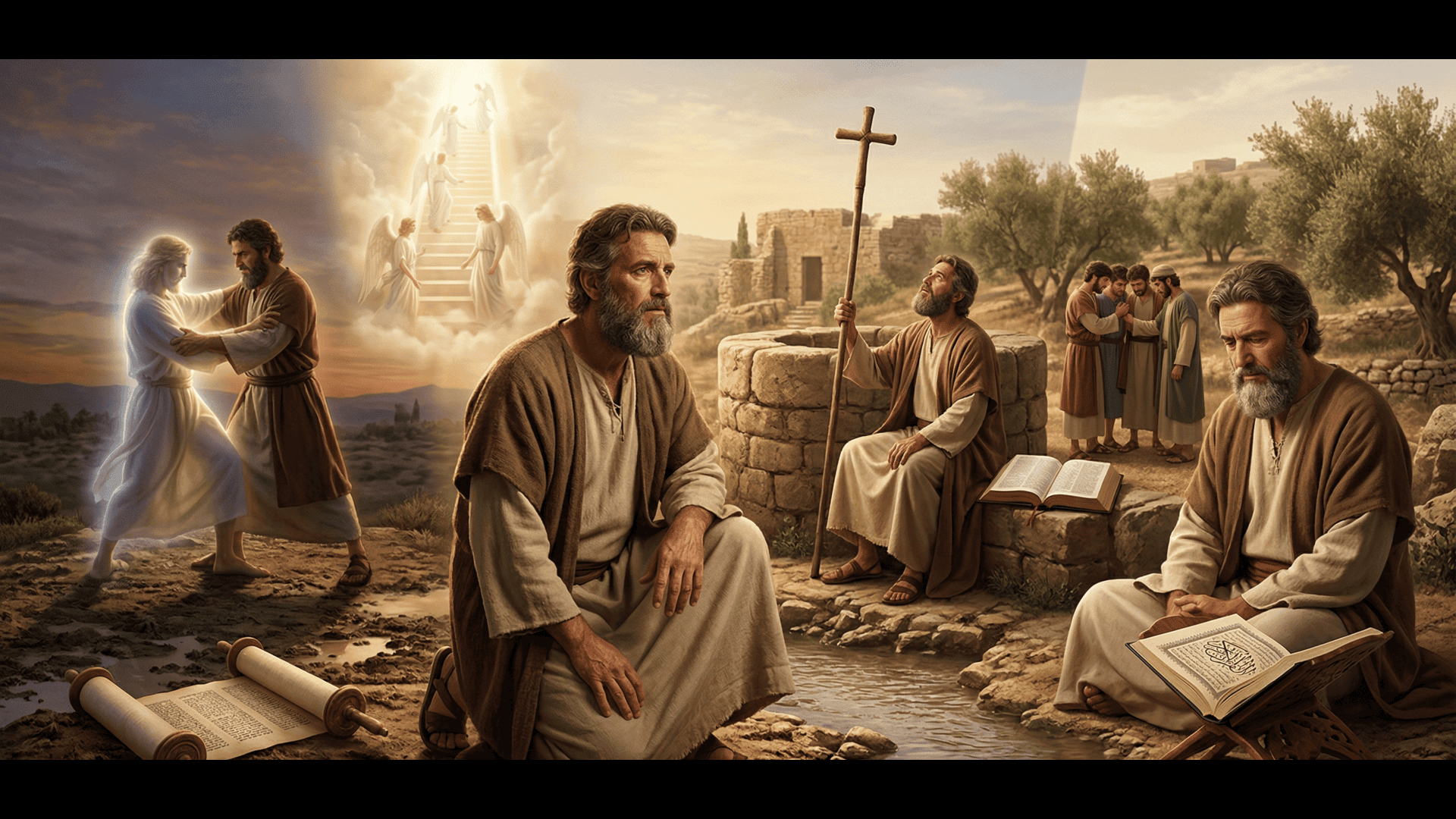
    Fleeing from Esau, Jacob stops at Luz (later Bethel) and has his famous dream of a ladder reaching to heaven, with angels ascending and descending. Here, God renews the Abrahamic covenant with him, promising him the land and innumerable descendants. In Jewish thought, this dream signifies the connection between the earthly and the divine. The angels ascending are often interpreted as the guardian angels of the nations that will oppress Israel, rising to power and eventually falling, while God remains eternally beside Jacob.

    Peniel: From Jacob to Israel

    The absolute climax of Jacob’s spiritual journey occurs on his way back to Canaan, on the eve of his terrifying reunion with the heavily armed Esau. Alone at the ford of the Jabbok River, Jacob wrestles with a mysterious “man” (traditionally understood as an angel, specifically the guardian angel of Esau, or a manifestation of the Divine) until daybreak.

    Jacob is wounded in the hip, but he refuses to let go until he receives a blessing. The being declares: “Your name shall no longer be Jacob, but Israel, for you have striven with God and with humans, and have prevailed” (Genesis 32:28).

    This is the theological bedrock of Judaism. The word Israel (Yisra-el) literally means “wrestles with God.” To be a Jew is not to possess a blind, unquestioning faith; it is to inherit Jacob’s struggle. It is to argue with God, to demand justice, to study fiercely, and to emerge limping but blessed. Jacob does not become perfect; he becomes deeply authentic. The prophet Micah later associates Jacob with the attribute of Emet (Truth), a truth earned through the arduous integration of his flaws and his divine purpose.


    Part 2: Jacob in Christianity – The Heir of Promise and Typological Shadow

    Christianity inherits the Hebrew Bible as its Old Testament, meaning Christians accept the historical and scriptural narrative of Jacob as presented in Genesis. However, the Christian lens fundamentally shifts the theological emphasis. In Christian theology, Jacob is less an archetype of a struggling nation and more a profound demonstration of God’s grace, sovereign election, and a “type” (a prophetic foreshadowing) of Jesus Christ.

    Sovereign Election: “Jacob I Loved, But Esau I Hated”

    The most significant theological deployment of Jacob in the New Testament is found in the Apostle Paul’s Epistle to the Romans. In Romans 9, Paul addresses a complex question: If the Jews are God’s chosen people, why have many rejected Jesus?

    Paul uses the story of Jacob and Esau to explain the concept of Election—that God’s promises are fulfilled not by biological descent or human merit, but by God’s sovereign choice. Paul points out that before the twins were even born, before they had done anything good or bad, God chose Jacob over Esau. Paul quotes the prophet Malachi: “Jacob I loved, but Esau I hated.”

    For Christians, particularly within the Reformed and Calvinist traditions, Jacob is the ultimate proof that salvation is a product of unmerited grace. Jacob was a deceiver and a supplanter, yet God chose him. He did not earn the blessing; God orchestrated it. Therefore, Christians view themselves as spiritual heirs to Jacob—chosen by grace, despite their sins.

    Typology: Jacob as a Shadow of Christ

    Early Church Fathers (Patristics) loved to read the Old Testament allegorically, looking for “types” of Christ. Jacob provided rich material for this endeavor:

    • The Shepherd: Jacob was a shepherd who cared for his flock, foreshadowing Jesus, the “Good Shepherd.”
    • The Bridegroom: Jacob’s journey to a foreign land to win a bride (and working for her) was seen as a parallel to Christ leaving heaven to win His bride, the Church.
    • The Two Wives: In early Christian allegory, Leah (the older, weak-eyed sister) represented the Synagogue or the Old Covenant, while Rachel (the younger, beautiful sister) represented the Church or the New Covenant.

    Jacob’s Ladder and Christ the Bridge

    Perhaps the most famous Christian reinterpretation of Jacob’s life comes from the lips of Jesus Himself. In the Gospel of John, Jesus meets Nathanael and tells him, “Very truly I tell you, you will see ‘heaven open, and the angels of God ascending and descending on’ the Son of Man” (John 1:51).

    Jesus takes the imagery of Jacob’s Ladder at Bethel and applies it directly to Himself. In Christian theology, the ladder is no longer a physical stairway or a metaphor for prayer; the ladder is Jesus. Christ, through the Incarnation, becomes the sole mediator—the bridge that connects heaven and earth.

    Jacob’s Well and Supersession

    In John chapter 4, Jesus rests at “Jacob’s Well” in Samaria and meets a Samaritan woman. The well, dug by the patriarch, represents the sustenance of the Old Covenant. Jesus offers her “living water,” stating that whoever drinks from Jacob’s well will thirst again, but whoever drinks the water Jesus gives will never thirst.

    Here, Jacob is deeply respected as the patriarch, but Christianity establishes a clear hierarchy: Jesus is greater than Jacob. The physical heritage of Jacob is superseded by the spiritual reality of Christ. The New Testament honors Jacob’s faith—he is featured prominently in the “Hall of Faith” in Hebrews 11 for blessing Joseph’s sons while leaning on his staff—but views his entire life as a preamble to the Gospel.


    Part 3: Jacob in Islam (Ya’qub) – The Infallible Prophet of Beautiful Patience

    When we turn to the Quran and Islamic tradition, the portrait of Jacob undergoes a dramatic transformation. In Islam, Jacob is known as Ya’qub (and occasionally as Israil). He is universally revered as a Nabi (Prophet), a righteous man, and an essential link in the chain of prophetic revelation from Ibrahim (Abraham) to Ishaq (Isaac) to himself, and down to his son Yusuf (Joseph) and the Tribes (Al-Asbat).

    The most striking difference between the Judeo-Christian Jacob and the Islamic Ya’qub is the concept of prophetic character.

    The Concept of Ismah (Infallibility)

    In mainstream Islamic theology, Prophets are protected by Allah from committing major sins or exhibiting flaws that would undermine their moral authority. This concept is known as Ismah (infallibility or impeccability).

    Because of Ismah, the Islamic narrative entirely rejects or radically reinterprets the Genesis stories of Jacob’s deception. A Prophet of God would not steal a birthright, nor would he deceive his blind father. In Islam, Ya’qub is chosen by Allah from the beginning because of his inherent righteousness, not through a process of moral stumbling and eventual redemption. The wrestling match at the Jabbok River is completely absent from the Quran. The idea that a human could physically wrestle with God (or even an angel of God) and “prevail” is fundamentally incompatible with Islamic theology, which emphasizes the absolute majesty, transcendence, and un-anthropomorphic nature of Allah (Tawhid).

    The Exemplar of Sabr (Patience)

    If Judaism’s Jacob is defined by his wrestling, Islam’s Ya’qub is defined by his grief and his patience. Ya’qub’s story in the Quran is primarily told in Surah Yusuf (Chapter 12), which details the life of his beloved son Joseph.

    When Ya’qub’s older sons throw Yusuf into a well and bring back his shirt stained with false blood, claiming a wolf ate him, Ya’qub knows they are lying. Yet, he does not wage war against his sons or curse God. Instead, he utters one of the most famous phrases in the Quran:

    “Rather, your souls have enticed you to something, so patience is most fitting (Sabrun Jameel). And Allah is the one sought for help against that which you describe.” (Quran 12:18)

    Sabrun Jameel (beautiful patience) is a patience devoid of panic, complaining to people, or losing faith in God. Ya’qub weeps for Yusuf for decades. His grief is so profound and prolonged that he literally cries himself blind. Yet, his mourning is private, directed only to Allah: “I only complain of my suffering and my grief to Allah, and I know from Allah that which you do not know” (Quran 12:86).

    In Islam, Ya’qub is the ultimate role model for anyone facing devastating loss. He demonstrates that profound human sorrow is not mutually exclusive with perfect faith. He never loses hope in Allah’s mercy, continually instructing his sons to go back and search for Yusuf and his brother, warning them never to despair of the spirit of Allah.

    The Father of Monotheism

    While the Quran acknowledges that Ya’qub is the father of the Children of Israel (Bani Israil), his primary role is not ethno-national, but theological. He is a transmitter of Tawhid (pure monotheism).

    This is beautifully encapsulated in his deathbed scene, recorded in Surah Al-Baqarah. Unlike the Genesis account where Jacob gathers his sons to prophesy over their tribal futures, the Quranic Ya’qub gathers his sons for a singular theological purpose:

    “Or were you witnesses when death approached Ya’qub, when he said to his sons, ‘What will you worship after me?’ They said, ‘We will worship your God and the God of your fathers, Ibrahim and Isma’il and Ishaq – one God. And we are Muslims [in submission] to Him.’” (Quran 2:133)

    In Islam, Ya’qub’s ultimate success is not securing a physical land, but ensuring that his descendants remain steadfastly submitted to the One God.


    Part 4: A Comparative Analysis – Divergences and Convergences

    When we place the three traditions side-by-side, the figure of Jacob acts as a theological prism, refracting a single ancient history into distinct worldview colors.

    1. The Nature of the Hero: Humanity vs. Infallibility

    • Judaism embraces Jacob’s flaws. His humanity, his fear, his cunning, and his physical limitations make his spiritual victories profound. He is relatable precisely because he is imperfect.
    • Christianity acknowledges his flaws but uses them to highlight God’s grace. Jacob’s imperfections are necessary to prove that human merit cannot earn divine favor.
    • Islam elevates Jacob above human frailty. To be a messenger of God requires an unblemished moral character. His struggles are external (the loss of his son) rather than internal moral failings.

    2. The Meaning of “Israel”

    • For Jews, “Israel” is a badge of honor earned through struggle. It is an active verb: to wrestle with the divine. It forms the identity of a nation that survives through tenacity.
    • For Christians, “Israel” becomes spiritualized. The Church views itself as the “New Israel,” inheriting the promises of Jacob not through bloodline, but through faith in Christ.
    • For Muslims, “Israil” is simply another name for Ya’qub. While the Bani Israil (Children of Israel) are addressed frequently in the Quran, Islam asserts that the covenant of God is tied to faith and submission (Islam), not to the specific lineage of Jacob.

    3. The Divine Interaction

    • Judaism’s God gets His “hands dirty” with humanity. God (or His messenger) literally descends to the dust of the Jabbok River to physically grapple with Jacob. It is an intimate, visceral relationship.
    • Christianity’s God also descends, but perfectly and finally in the person of Jesus Christ, whom Jacob’s life merely shadowed and prophesied.
    • Islam’s God is majestically transcendent. Allah communicates with Ya’qub through revelation (Wahy) and dreams, maintaining absolute sovereignty. The intimacy is found not in physical wrestling, but in Ya’qub’s tearful, internal reliance on Allah’s mercy.

    Conclusion

    Jacob, Yaakov, Ya’qub. He is a man of many names and many lives. He lived as a shepherd in the ancient Near East, but he survives today in the synagogues of Jerusalem, the cathedrals of Rome, and the mosques of Mecca.

    To the Jew, he says: Do not be afraid to wrestle with God, for through struggle comes truth. To the Christian, he says: Look at me, a flawed man, and see the unmerited grace of a choosing God. To the Muslim, he says: When the world breaks your heart, hold fast to beautiful patience, for God’s mercy is near.

    Ultimately, exploring Jacob across religions does not require us to flatten these theological differences into a homogenous, politically correct narrative. The differences are stark, deep, and deeply meaningful to the adherents of each faith. Yet, by understanding how each tradition views this shared patriarch, we gain profound insight into the spiritual DNA of our neighbors. In studying the diverse interpretations of his life, we are doing exactly what his name implies: we are wrestling with the divine text.


    Frequently Asked Questions: Jacob Across Religions

    Q: What does the name “Israel” actually mean, and why was it given to Jacob?

    A: In the Hebrew Bible, the name Yisrael (Israel) is given to Jacob after he wrestles with a mysterious divine being until daybreak. It is traditionally translated from Hebrew as “he who wrestles/strives with God” or “God prevails.” In Jewish tradition, this name defines the identity of the Jewish people (Bnei Yisrael or Children of Israel) as a nation that actively engages, struggles, and questions the divine. In Islam, Israil is recognized as a title or alternate name for the Prophet Ya’qub, though the Quran does not tie the name to a wrestling match.

    Q: Who was Jacob wrestling with at the Jabbok River?

    A: Genesis intentionally leaves the identity of the figure ambiguous, referring to him simply as a “man.”

    • Judaism: Rabbinic tradition often interprets the figure as an angel, frequently identifying him as the guardian angel of Jacob’s hostile brother, Esau.
    • Christianity: Many early church fathers and Christian theologians interpret the figure as a “Christophany”—a pre-incarnate appearance of Jesus Christ.
    • Islam: This event is not recognized in Islamic tradition. The concept of a human physically grappling with God or His angels contradicts the core Islamic tenet of Tawhid (the absolute majesty and un-anthropomorphic nature of God).


    Q: If Jacob deceived his father in the Bible, how does Islam view him as a flawless prophet?

    A: This comes down to the Islamic theological concept of Ismah (prophetic infallibility). Islamic tradition holds that God protects all His prophets from committing major sins or exhibiting profound moral flaws, ensuring their message and character remain entirely trustworthy. Therefore, Muslims believe the biblical accounts of Jacob stealing the birthright or deceiving his blind father, Isaac, are later human alterations to the text. In the Quran, Ya’qub is fundamentally righteous from the start.

    Q: Why are Jacob’s twelve sons so important across all three religions?

    A: Jacob’s sons are the foundation of the Twelve Tribes of Israel.

    • Judaism, they are the literal and spiritual ancestors of the nation, each tribe carrying a specific blessing and role within the land of Canaan.
    • Christianity, the twelve tribes are seen as the foundational structure of God’s people, later mirrored by Jesus choosing Twelve Apostles to build the “New Israel” (the Church).
    • Islam, the tribes (Al-Asbat) are recognized as the descendants of Ya’qub. More specifically, his son Yusuf (Joseph) is elevated as a major prophet, and Surah Yusuf is one of the most detailed and revered chapters in the Quran.

    Q: What is the significance of “Jacob’s Ladder”?

    A: In Genesis, Jacob dreams of a ladder (or stairway) resting on the earth and reaching into heaven, with angels ascending and descending.

    • Judaism views this as a powerful symbol of the constant interaction between the physical and spiritual realms, often interpreting the angels as representing the rise and fall of the nations that interact with Israel.
    • Christianity reinterprets this dream through the Gospel of John, where Jesus identifies Himself as the ladder—He is the ultimate bridge and mediator between heaven and earth.
     

  • The Shepherd, The King, The Prophet: How David is Described Across the World’s Religions

    The Shepherd, The King, The Prophet: How David is Described Across the World’s Religions

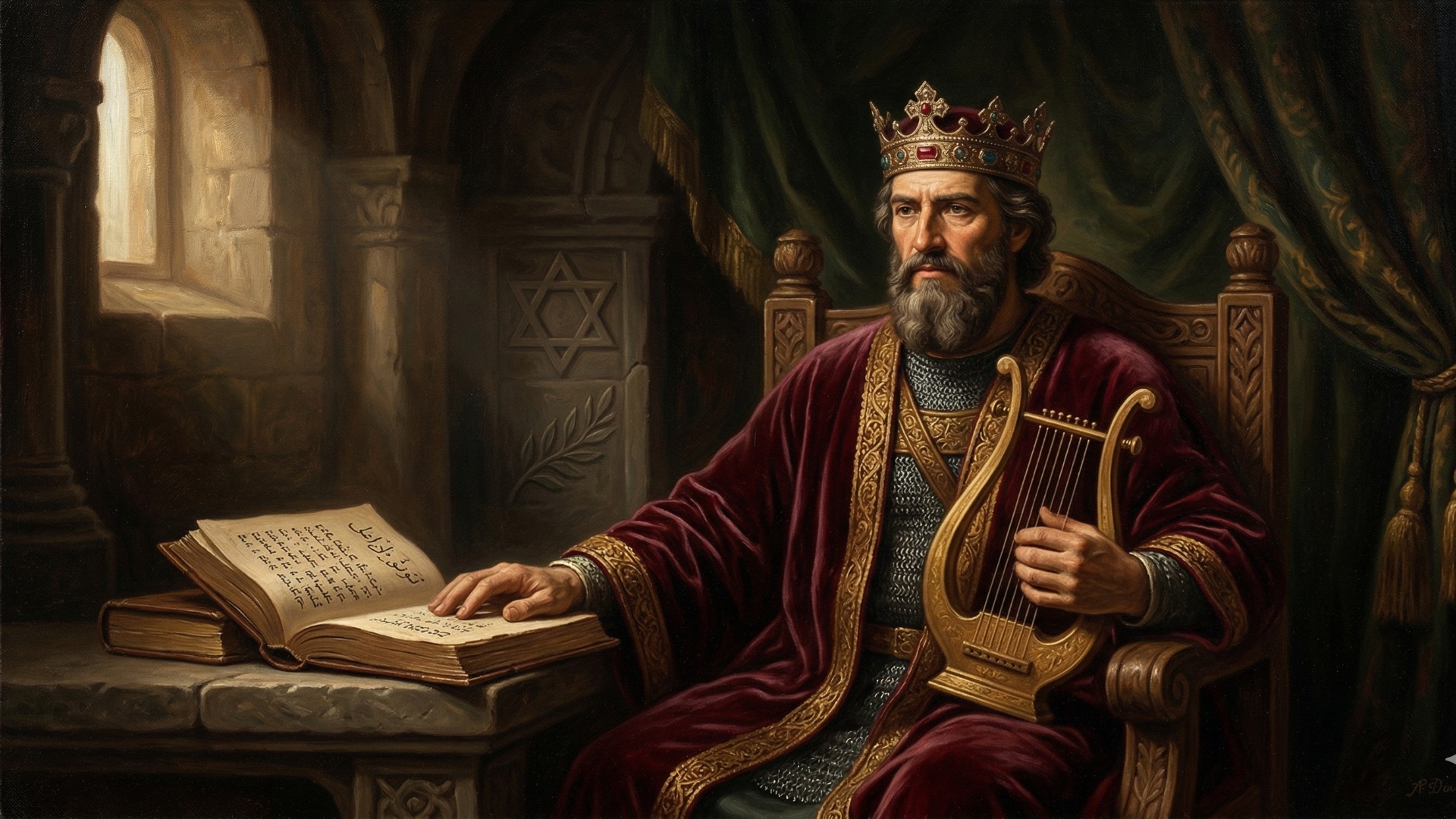
    Of all the figures that populate the shared sacred geography of the Abrahamic faiths, few stand as tall—or as human—as David. He is the shepherd boy who became a warrior-king, the sweet psalmist whose words continue to comfort billions, and the flawed leader who became a model of repentance. Known as David in Judaism and Christianity, and Dawud in Islam, his story is etched into the foundational texts of these religions. Yet, a close examination reveals that the description of this monumental figure is not uniform. Each faith has shaped his image through the lens of its own theology, prioritizing different aspects of his complex character.

    In Judaism, he is the foundational monarch of a united Israel and the forefather of the Messiah. In Christianity, he is the ancestral key to Jesus’s messianic identity and a model of devotion. In Islam, he is revered not just as a king, but as a righteous prophet and messenger, protected from the grave sins attributed to him in other traditions. Beyond these three, smaller faiths like Rastafari and Baháʼí have also woven David’s legacy into their unique spiritual tapestries. To understand the different faces of David across world religions is to understand the diverse ways in which humans have interpreted leadership, piety, and the divine-human relationship.


    Part I: The Hebrew Context – David in Judaism

    In Judaism, the description of David begins with a fundamental paradox: he is at once the “sweet singer of Israel” and its “man of blood.” No other figure, save perhaps Moses, has a larger impact on the religious consciousness of the Jewish people. His life, chronicled in exhaustive detail in the Books of Samuel and Chronicles, is a tapestry of extraordinary highs and crushing lows, a narrative of political astuteness, deep faith, and moral failure. To Judaism, he is the architect of the ultimate political and spiritual reality—the House of David.

    The Shepherd and the Anointing

    Judaism describes David’s early years as a humble shepherd, the youngest and most overlooked of Jesse of Bethlehem’s eight sons. The description emphasizes that he was not the natural choice for kingship, lacking the physical stature and status of his older brothers. This narrative serves to illustrate a key theological point: “God sees not as man sees; for man looks on the outward appearance, but the Lord looks on the heart” (1 Samuel 16:7).

    The Talmud, the vast compendium of Jewish oral law, adds details about his mother, Nitzevet, further humanizing his origin story. His selection and secret anointing by the prophet Samuel are seen as divine interventions, bypassing human conventions to raise a leader whose primary qualification was his perceived “heart,” a metaphor for his capacity for devotion and relationship with God. This early description establishes David as an outsider, chosen and exalted by grace, a theme that resonates throughout the Jewish historical narrative.

    The Warrior-Harpist

    David’s entry into the public arena is twofold, blending the arts of peace and war. In one description, he is brought to King Saul’s court as a skilled musician whose lyre-playing has the power to soothe the king’s “evil spirit.” This musical talent establishes a connection between his kingship and the divine. The Talmud also credits him with inventing musical instruments and organizing the first temple choirs.

    In another description, and his most iconic moment, he steps forward as the only Israelite brave enough to face the Philistine giant, Goliath. In Judaism, this battle is not interpreted as a triumph of physical prowess, but as a victory of faith. David explicitly rejects Saul’s heavy armor, proclaiming: “You come to me with sword, and spear, and javelin; but I come to you in the name of the Lord of Hosts, the God of the armies of Israel” (1 Samuel 17:45). This duel establishes the Davidic paradigm of leadership: power that derives not from military might alone, but from unwavering trust in the divine promise.

    The King of a United Israel

    Judaism depicts David’s reign (c. 1010-970 BCE) as the “Golden Age” of Israel. Following the death of Saul, he unified the fragmented tribes, transforming a loose confederation into a cohesive and formidable nation. His political and military astuteness is highly praised, with descriptions focusing on his conquest of the strategically located Jebusite city of Jerusalem, making it the capital of his united kingdom. He is celebrated for expanding Israel’s borders, securing its sovereignty, and ensuring peace for his people.

    Crucially, David understood that for the political union to be complete, it had to have a spiritual heart. To this end, his most significant achievement was to bring the Ark of the Covenant, the supreme symbol of Israelite religion, to Jerusalem. Judaism describes David’s ecstatic dance before the Ark as it entered the city, an image of uninhibited devotion that exemplifies his passionate relationship with God. In Judaism, his legacy is not just the City of David but the Holy Temple which, though built by his son Solomon, was David’s vision, with detailed plans he prepared.

    The Problem of Sins: Rabbinic Interpretation

    The Jewish narrative does not flinch from David’s moral failures. His adultery with Bathsheba and the subsequent orchestrated death of her husband, Uriah the Hittite, are recounted in the Bible with devastating clarity. However, in later Jewish thought, particularly in the Talmud, the description of these acts is carefully nuanced to preserve David’s status as a righteous king and a man with a “perfect heart.”

    The Talmud provides several interpretations to mitigate the severity of his sin:

    • The Conditional Divorce: It explains that it was customary for Jewish soldiers, before going to war, to give their wives a conditional writ of divorce. This was to prevent the wife from being trapped in legal limbo if the husband went missing but his body wasn’t found (making her an agunah). Thus, Uriah would have given Bathsheba such a divorce, and, because he died, the divorce was retroactively valid from the time he left. Therefore, they argue, David technically did not commit adultery, but took a woman who was legally unmarried, albeit with sinful intent.
    • The Unripe Fruit: Another Talmudic passage states that Bathsheba was destined for David “from the Six Days of Creation,” but he took her as “an unripe fruit,” meaning he enjoyed a permissible pleasure before the proper, ordained time.
    • The Divine Test: The most remarkable interpretation, found in the Babylonian Talmud (Sanhedrin 107a), suggests that the entire test was a divine trap. David, eager to show his devotion like the Patriarchs (Abraham, Isaac, Jacob), asked God: “Master of the Universe! Why do people say, ‘The God of Abraham, the God of Isaac, and the God of Jacob,’ but not ‘The God of David’?” God answered: “I did not try them, but I will try you with a sexual matter.” Thus, David’s failure is framed as part of a divine plan to create the ultimate model of Teshuva, or repentance. The description focuses less on the sin itself and more on his total, crushing admission of guilt when confronted by the prophet Nathan. His legacy in Judaism, therefore, is not a perfect hero, but a broken and restored one, whose profound repentance became a path for all sinners.

    The Davidic Covenant and Messianic Hope

    David’s ultimate description in Judaism is as the bearer of the Davidic Covenant. God promised him, through the prophet Nathan, that his house and his kingdom would establish “a throne that would be established forever” (2 Samuel 7:16). This promise is the foundation of Jewish messianic hope. The description of the Mashiach (Messiah) in Judaism is not a divine-human entity, but a righteous, human descendant of David’s line, who will one day gather the Jewish people, rebuild the Temple, and usher in a time of universal peace. In every prayer, David is invoked, and in every expectation of the future, the House of David is central. In Judaism, David is not just a king of the past; his name is synonymous with the hope of the future.


    Part II: The Gospel Context – David in Christianity

    In Christianity, the description of David is built entirely upon the foundation of the Hebrew Bible, but with a radical new interpretation. For Christians, the promise of the Davidic Covenant is fulfilled not in a future king, but in the person of Jesus of Nazareth. David’s role, therefore, is one of typology and genealogy. He is the ancestor, forerunner, and foreshadower of Jesus Christ.

    Typology: Prefiguring Christ

    Christian theology often uses David as a “type” or figure who prefigures and points to Jesus. This description is based on several parallels in their lives:

    • The Shepherd-King: Like David, Jesus is described as the “Good Shepherd” (John 10:11) who lays down his life for his flock, but also as the “King of Kings” (Revelation 19:16) who will rule over all nations. The description of David’s rejection by his brothers is seen to prefigure Jesus’s rejection by “his own” (John 1:11).
    • The Innocent Sufferer: Many of the Psalms, traditionally attributed to David, contain rich language of suffering, persecution, and eventual exaltation. In Christian tradition, these Psalms (e.g., Psalm 22, “My God, my God, why have you forsaken me?”) are read not just as David’s personal laments, but as profound prophecies of the crucifixion of Jesus, who explicitly quoted these words on the cross.
    • The Beloved Son: God’s description of the Davidic king as “My Son” (Psalm 2:7) is seen in Christian thought as the first articulation of the divine sonship that finds its ultimate expression in Jesus.

    Ancestor of the Messiah: The “Son of David”

    The most crucial description of David in Christianity is genealogical. The Gospels of Matthew and Luke make a determined, if divergent, effort to trace Jesus’s lineage back to King David. Matthew begins with the words: “A record of the genealogy of Jesus Christ, the son of David, the son of Abraham” (Matthew 1:1). Luke 3 similarly includes David in his line of begats.

    The designation of Jesus as the “Son of David” is a potent title throughout the New Testament, signifying that he is the rightful heir to the Davidic throne and the promised Messiah. The public addresses to Jesus (e.g., by the blind beggars and the Syrophoenician woman) as “Lord, Son of David” are not just polite greetings but confessions of faith in his messianic identity. When Jesus enters Jerusalem on a donkey, the crowds shout: “Hosanna to the Son of David!” (Matthew 21:9), an action that directly connects him with David’s established royal identity in Judaism. The entire Christian narrative requires David to provide the legal and historical framework for Jesus’s claim.

    “A Man After God’s Own Heart”

    In Christianity, David’s character is frequently summed up by a powerful phrase attributed to God in the Book of Acts: “A man after God’s own heart” (Acts 13:22). This description points to David’s inner disposition, a deep and unyielding desire to align his will with the divine will, regardless of his flaws.

    For Christians, the description emphasizes:

    • Heartfelt Worship: David is seen as the prototypical worshiper, not a rigid ritualist. His legacy as the primary author of the Psalms is highly revered, and these poems form the core of Christian liturgies and personal devotion, providing a language for the soul to communicate with God in its deepest moments.
    • The Path of Repentance: Unlike Judaism, which provides legal arguments to mitigate David’s sin, Christianity tends to accept the full description of his guilt with Bathsheba and Uriah. The focus in Christian thought is less on the legal technicality and more on the moral depravity of the act. David becomes the supreme example of God’s limitless grace. His fall is description as deep, but his rise is seen as higher, with Psalm 51 (“Have mercy on me, O God…”) serving as the ultimate model of heartfelt, shattering confession and restoration for the Christian. In Christianity, David proves that no one is beyond redemption if they turn back to God with a sincere heart.

    The Limitations of Kingship

    Christianity also describes David as a powerful, but imperfect, foreshadowing. The description of his “shed much blood” is given by God as the reason he was not allowed to build the Temple, a task reserved for his son Solomon, a figure of peace. For Christians, this points to the fundamental limitation of David’s earthly kingship. His kingdom was temporary, his life was mortal, and his rule was of this world. Christianity describes Jesus as a “greater than David” (cf. Matthew 12:42), whose kingdom is “not of this world” (John 18:36), and whose ultimate rule is over the hearts of humanity, bringing a eternal peace that Davidic military power could never achieve.


    Part III: The Prophetic Context – David in Islam

    In Islam, the description of David is known by his Arabic name, Dawud (AS). He is a monumental figure in the Quran, appearing 16 times across 9 chapters. The description of Dawud in Islam is distinct and highly revered. He is not primarily a king whose life is filled with political intrigue, but a prophet (Nabi) and messenger (Rasul) of Allah, righteous, divinely guided, and protected from the grave sins attributed to him in other traditions. To Islam, Dawud represents the perfect model of a khalifa (vicegerent), a ruler who administers justice in the world in accordance with divine law.

    More Than a King: Prophet and Khalifa

    Islam is emphatic that the descriptions of Dawud (AS) as a king must never overshadow his station as a prophet. His life, from the Islamic perspective, is not about the establishment of a political dynasty, but about the delivery of a divine message. He is included in lists of those who received wihy (revelation) from God, placed alongside seminal figures like Abraham, Moses, and Noah.

    His description includes:

    • Righteous King: Islam does not reject the idea that Dawud was a king, but it frames his rule as a divine gift, not a human achievement. The Quran states: “We made his kingdom strong and gave him wisdom and sound judgment” (Quran 38:20). His entire life as a monarch is described as a model of just, compassionate, and wise rule.
    • Khalifa (Vicegerent): The Quran explicitly calls Dawud a khalifa on earth, a title also given to Adam. God commands him: “O David, indeed We have made you a vicegerent upon the earth, so judge between the people in truth and do not follow [your own] desire, for it would lead you astray from the way of Allah” (Quran 38:26). In Islam, this is the foundational description of David’s leadership: he is a representative of God, with a mandate to establish justice on earth.

    Softening Iron: A Unique Attribute

    One of the most striking and unique elements in the Islamic description of Dawud (AS) is his divinely granted ability to soften and shape iron without heat. The Quran states: “We made iron soft for him, commanding: ‘Make full coats of mail and measure the links well; and do good deeds. Indeed, I am All-Seeing of what you do’” (Quran 34:10-11).

    This description has several meanings in Islam:

    • Divine Intervention: It demonstrates Allah’s absolute power to override physical laws and highlights his special favor toward Dawud.
    • Technological Stewardship: It is not description as a tool for conquest, but as a technological gift that allowed Dawud to provide his people with protective armor, ensuring their safety and stability, thus reinforcing his role as a just ruler.
    • Practical Piety: It is combined with the command to “do good deeds.” In Islam, Dawud’s skill in metalwork is not an end in itself, but is linked to his piety and the maintenance of a just society.

    The Recipient of the Zabur (Psalms)

    Like Judaism and Christianity, Islam honors Dawud (AS) as the recipient of the Zabur, or the holy book of Psalms. The Quran explicitly says: “We gave David the Psalms” (Quran 17:55). The Zabur is considered one of the previous revealed scriptures of Islam.

    Islamic tradition describes Dawud’s beautiful and melodious voice when reciting the Psalms. So powerful was his recitation that not only did humans weep, but even the mountains and the birds would join him in glorifying Allah. The Quran mentions: “We made the mountains glorify Us, along with David, evening and morning; and the birds also, assembled. Each to Him was turning in repentance” (Quran 38:18-19). In Islam, David is described not just as a king but as a spiritual cantor, whose voice was in perfect harmony with the rest of creation in the worship of God.

    Preserving Prophetic Dignity: The Interpretation of “Sins”

    The most significant and defining difference in the Islamic description of Dawud (AS) relates to the narrative of his sins. The majority of Islamic scholars, based on the principle of Ismah (prophetic sinlessness or protection from grave sins), do not accept the biblical stories of adultery with Bathsheba and the murder of Uriah. They believe such actions are fundamentally incompatible with the station of a prophet and messenger of Allah. To Islam, to accuse a prophet of such grave moral failures is to degrade the message they came to deliver.

    The Quranic “test” that Islamic tradition focuses on is not about lust, but about the administration of justice. In Quran 38:21-25, two adversaries suddenly appear before Dawud (AS) in his private quarters, scaling the walls. Terrified, Dawud listens as one describes a parable: “This man is my brother. He has 99 ewes, and I have only one. Yet he says, ‘Entrust her to me,’ and has overcome me in speech.” Dawud (AS) immediately judges the brother with 99 ewes as having done wrong, without hearing his side.

    Upon making this decision, Dawud (AS) immediately realizes that this was a test from Allah. The Islamic description emphasizes his swift, profound repentance for his failure to apply proper due process. He fell down in prostration and asked for forgiveness. God forgave him, and the description concludes with his station being exalted: “We forgave him for that, and indeed for him with Us is nearness and a beautiful place of return” (Quran 38:25).

    In Islam, David proves not that a prophet can commit a grave sin, but that a just ruler can make an understandable human error in judgment, and that the true mark of divine guidance is the humility to recognize that error and turn back to God immediately. His entire narrative is a lesson in the fragility of power and the necessity of self-correction and divine mercy.


    Part IV: Additional Perspectives – David in Other Faiths

    David’s descriptions are not confined to the largest traditions. Other, smaller faiths have integrated his legacy into their unique spiritual frameworks.

    Baháʼí Faith: A Unique Differentiation

    The Baháʼí Faith, a 19th-century monotheistic religion that teaches the unity of religions and humanity, provides a fascinating, nuanced description of David. The Central Figure of the Baháʼí Faith, Bahá’u’lláh, in his seminal work, the Kitáb-i-Íqán (Book of Certitude), clarifies a complex theological point that dates back to the Báb, the forerunner of the Baháʼí movement.

    The Baháʼí Faith makes a clear differentiation:

    • The Second David: It states that the “David” referred to by the Báb, who allegedly preceded Moses, is not the same as King David, the father of Solomon and author of the Psalms. It confirms that King David lived centuries after Moses.
    • Follower and Promoter: While the Baháʼí Faith views figures like Abraham, Moses, Jesus, and Muhammad as “Universal Manifestations of God” (messengers who bring new divine law), King David is not placed in this station. Instead, he is described as a follower and promoter of the law established by Moses, not a revealer of new law. He is honored as a great king, poet, and spiritual figure, but his primary description is one of a divinely supported servant and follower.

    Rastafari: The African Connection and Royal Lineage

    In the Rastafari movement, an Afrocentric religious and social movement that emerged in Jamaica in the 1930s, David’s description is profoundly woven into the core of their spiritual and political identity. The entire movement is based on the expectation of a crowned black king who would be a redeemer for the African people, a figure they identify as Emperor Haile Selassie I of Ethiopia.

    Rastafari description of David emphasizes:

    • The Solomonic Line: According to the Kebra Nagast (The Glory of the Kings), the ancient sacred text of Ethiopian Orthodox Christianity, King Solomon, the son of David, fathered a son, Menelik I, with the Queen of Sheba (associated with modern-day Ethiopia and Yemen). Ethiopian tradition has, for centuries, traced the royal lineage of its emperors back to Menelik, making them the direct descendants of the House of David.
    • The Black King: For Rastafarians, this description of David and Solomon as part of a continuous black royal line is revolutionary. It rejects the stereotypical “white savior” image of Christianity and places the divine royal covenant directly in the heart of Africa. David’s legacy, therefore, provides the crucial genealogical proof that Haile Selassie is the “Root of David” and the fulfillment of the biblical messianic prophecies.
    • Symbols and Rituals: Rastafari culture is infused with Davidic imagery. The downwards pointing triangle formed by the hand gesture, known as the “diamond hand gesture” or “Seal of Solomon”, is a direct connection to David’s lineage. There is also a legendary Rastafari belief that the first cannabis (ganja) plant, which they use as a spiritual sacrament to draw closer to Jah (God), grew on King David’s tomb, further hallowing his memory.

    Part V: Comparative Analysis – Themes Across Traditions

    While the descriptions of David across Judaism, Christianity, Islam, and other faiths are diverse, a remarkable synthesis reveals several enduring themes that unite them.

    Humility and Repentance

    Across every tradition, David is description as a human of profound humility. In Judaism, he is the broken repenter whose failure is the door to Teshuva. In Christianity, he is the model of an individual whose shattered self becomes a vessel for divine grace. In Islam, he is the just ruler whose errors lead to swift, prostrate submission to divine will. In the Rastafari “I and I” concept (meaning me and the God-within-me), Davidic lineage emphasizes that the individual connection to the divine is paramount. Humility, not power, is the common thread that makes David’s description universally compelling.

    Just Rule and Vicegerency

    In Judaism and Islam, in particular, the description of David as a king is central. But it is never power for its own sake. In Judaism, his rule is described as being description by alignment with the covenant. In Islam, he is the explicit model of vicegerency (Khalifa), a representative of God. The constant description is that of a ruler who administers justice and sound judgment, with the Quranic warning against following “vain desire” serving as a central tenet of Islamic description of leadership.

    Music and Spiritual Intimacy

    The descriptions of David in Judaism, Christianity, and Islam all revere him as a creator of sacred music and the primary author of the Psalms. In Judaism, his words are description as the language of the soul’s relationship with God. In Christianity, they become prophetic foreshadowing. In Islam, his melodious voice is so resonant that all of nature is described as joining in his glorification of Allah. David proved that music is a universal language, capable of transcending theological divisions and creating a direct, ecstatic pathway to spiritual intimacy with the divine.

    The Problem of Contradiction: A Theological Difference

    It is essential to acknowledge that the handling of David’s moral failures in the Bathsheba and Uriah incident represents a deep theological fracture. In Judaism and Christianity, the biblical description is, in essence, accepted, but interpreted in a way that emphasizes grace or provides a model for repentance. In contrast, in Islam, the narrative is rejected as incompatible with prophetic dignity. This represents a core descriptive difference:

    • Judaism/Christianity: Description a flawed human who becomes great through repentance and grace.
    • Islam: Description a preternaturally righteous prophet whose entire life is a model of piety, and whose errors are description as small and self-corrected.
     

    Both descriptions serve a distinct and powerful theological purpose, and they highlight the different ways these faiths interpret human nature and the nature of prophetic revelation.


    Conclusion: The Multifaceted Legacy of David

    David’s life is a multifaceted prism, reflecting different hues depending on the religious light in which it is viewed. To describe him only as a king is to miss his prophetic and spiritual description. To describe him only as a sinner is to ignore his monumental acts of faith and repenter. To describe him only as a prophet is to overlook his profoundly human struggles for power and love.

    Each religion has crafted a description of David that serves its own descriptive requirements. Yet, the overall effect is not one of contradiction, but of complement. He remains, for all, a universally human figure. He is the weak outsider who became strong; the artist who became a statesman; the broken repenter who was restored. David’s enduring description proves that leadership without heart is tyranny, that piety without humility is hypocrisy, and that there is always, regardless of the depth of the fall, a path back to the divine. His legacy is the hopeful reminder that the human story, though filled with error, can be, with a turned heart, an extraordinary narrative of restoration and relationship with God.

     
  • Abraham: The Unifying Patriarch of Judaism, Christianity, and Islam

    Abraham: The Unifying Patriarch of Judaism, Christianity, and Islam

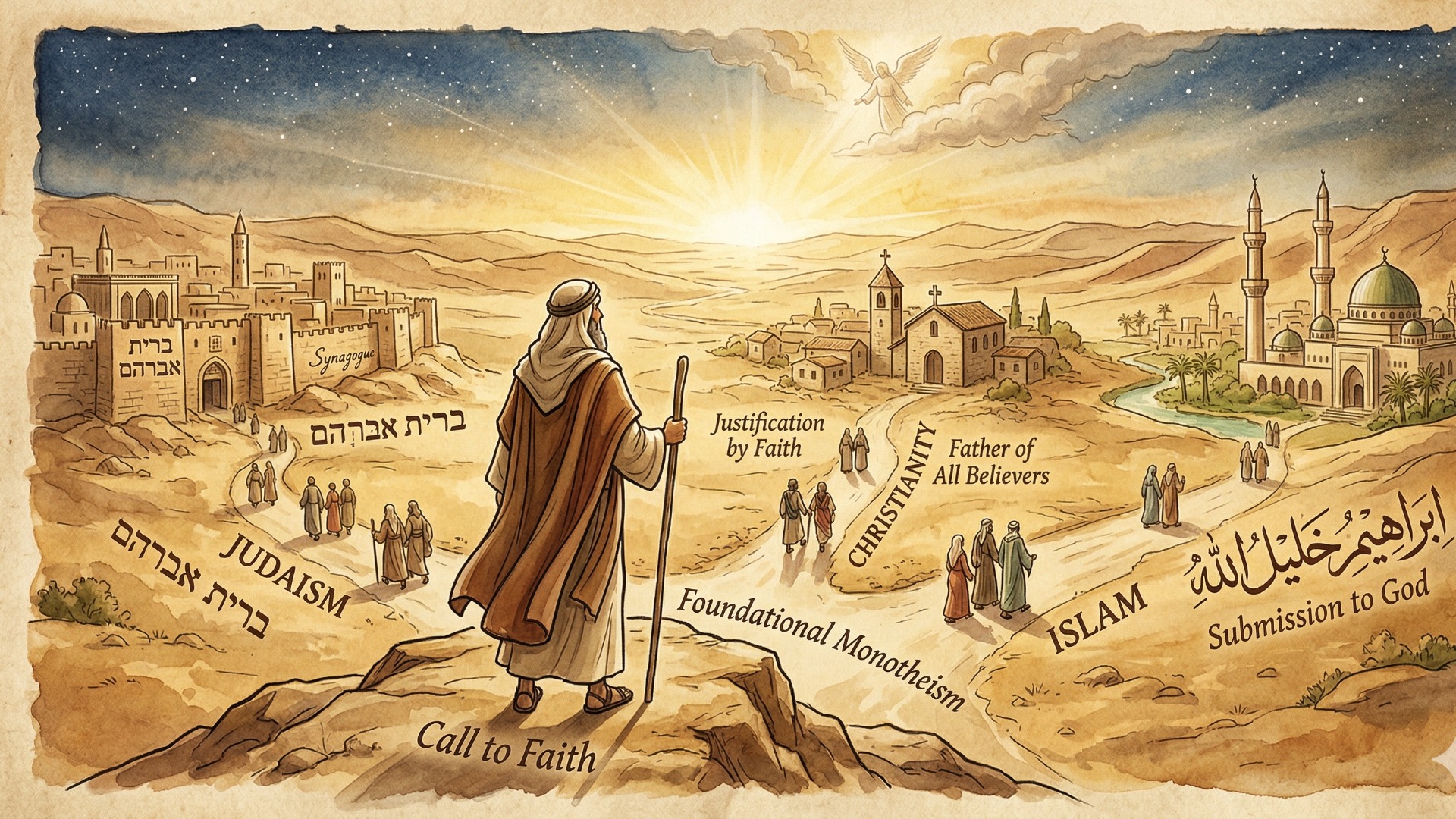
    The figure of Abraham stands as a monumental pillar in the religious landscape of the world, serving as the foundational patriarch for Judaism, Christianity, and Islam—collectively known as the Abrahamic faiths. While each tradition interprets his life, covenant, and significance through its own unique theological lens, the shared reverence for this ancient figure is undeniable. This exhaustive exploration will delve into the narrative of Abraham as portrayed across scriptures and traditions, dissecting his pivotal role in each of the three major monotheistic religions and examining both the profound commonalities and distinctive interpretations that shape believers’ understanding of him.


    Section 1: The Historical and Biblical Narrative: Roots of a Shared Heritage

    To comprehend Abraham’s multifaceted significance, one must first explore the core narrative primarily rooted in the Hebrew Bible (Genesis 11-25) and interwoven into Christian and Islamic texts and traditions. This section will recount key aspects of his journey and covenantal relationship with God.

    Origins and the Divine Call

    According to Genesis, Abraham (originally Abram) was born in Ur of the Chaldeans, a city steeped in idolatry. The narrative describes a divine call where God commands him, “Go from your country, your people and your father’s household to the land I will show you.” This summons is not merely a geographic relocation but a spiritual departure—a profound act of faith that forms the bedrock of Abraham’s character across all traditions. Abram, along with his wife Sarai (later Sarah) and nephew Lot, travels to Haran and eventually into the land of Canaan (modern-day Israel and Palestine).

    The Everlasting Covenant

    Central to the entire Abrahamic narrative is the covenant (Brit in Hebrew) established between God and Abraham. God makes several promises:

    1. Numerous Descendants: Abraham is promised a progeny as numerous as the stars, through whom he will become the “father of many nations.”
    2. Land Promise: The land of Canaan is promised to Abraham and his descendants as an everlasting possession.
    3. Universal Blessing: Through Abraham and his seed, all the families of the earth will be blessed.

    This covenant is sealed through a symbolic and dramatic ritual described in Genesis 15, and later, the physical sign of circumcision (Genesis 17) is commanded for Abraham and all male descendants, signifying a perpetual relationship with God.

    Narrative Nuances: Hagar and Ishmael, Sarah and Isaac

    The story of Abraham is intertwined with complex family dynamics. Sarah, unable to conceive for many years, offers her Egyptian handmaid Hagar to Abraham so he might father children through her. Hagar gives birth to Ishmael. This narrative element introduces themes of human agency attempting to fulfill divine promises and the subsequent domestic friction.

    Later, as promised by God, the seemingly impossible occurs: Sarah, well past childbearing age, becomes pregnant and gives birth to Isaac, the child of the promise through Sarah. This birth highlights God’s power and faithfulness. Subsequent events, however, lead to the emotional expulsion of Hagar and Ishmael into the wilderness, where God, demonstrating universal care, promises to bless Ishmael as well and make him a great nation. This narrative of two sons, Isaac and Ishmael, lays the groundwork for different theological and genealogical interpretations in later Abrahamic traditions.

    The Ultimate Test: The Akedah (Binding)

    Undoubtedly the most powerful and challenging episode in Abraham’s life is the command from God to sacrifice his “only son,” Isaac (Genesis 22). This event, known in Judaism as the Akedah (the Binding of Isaac), is the supreme test of Abraham’s faith and obedience. Abraham’s unquestioning willingness to comply, up to the very moment God provides a ram as a substitute, cements his status as the exemplar of faith. [Mental check: This narrative detail – Isaac as the intended sacrifice – is explicit in Genesis, forming the standard Jewish and Christian view, but is a significant point of divergence in Islamic tradition, though the Quran itself is less explicit about which son. I must acknowledge this nuance carefully here and elaborate on the Islamic interpretation later.] [Refinement: In this shared narrative section, I will describe the Genesis account focusing on Isaac, and implicitly state that this is one perspective, explicitly preparing for the different Islamic tradition later.]

    Death and Legacy

    Abraham dies at a ripe old age, and, in a significant concluding detail, both his sons, Isaac and Ishmael, come together to bury him in the Cave of Machpelah in Hebron, alongside Sarah. This cave remains a profoundly sacred and contested site for all three faiths.

    This rich and foundational narrative provides the raw material from which Judaism, Christianity, and Islam construct their unique theological frameworks around Abraham. The subsequent sections will examine how each tradition interprets and elevates this shared patriarch.


    Section 2: Abraham in Judaism: Avraham Avinu, the National Father and Monotheistic Pioneer

    In Jewish thought, Abraham is not just a figure; he is the figure—Avraham Avinu (Abraham our Father). He is the literal biological ancestor of the Jewish people and the unparalleled archetype of faith and righteousness.

    The First National Jew and Monotheist

    Judaism views Abraham as the person who, amidst widespread idolatry, discovered and embraced the existence of the one true God through reason and intuition (as embellished in rabbinic literature with stories like Abraham smashing his father’s idols). While monotheism’s full expression comes later with Moses and the Torah, Abraham is seen as its crucial pioneer on a national scale. He is not just an individual believer; he establishes a people dedicated to God’s service. [Potential image suggestion: [Diagram illustrating Abraham’s rejection of idolatry as the beginning of national monotheism] – NO, NO VISUALS]

    The Covenant of Circumcision (Brit Milah) and the Land

    The Brit (covenant) between God and Abraham is fundamental. The specific sign of Brit Milah (circumcision) is observed to this day by Jewish males, a physical mark identifying them as descendants of Abraham and participants in the everlasting covenant. The land promise—Eretz Yisrael (the Land of Israel)—is seen as part of this covenant, inextricably linking the Jewish people’s identity and history to a specific place promised to their patriarch. Jewish prayers and liturgy consistently invoke the “God of Abraham, God of Isaac, and God of Jacob,” emphasizing the genealogical and spiritual connection.

    A Model of Faith, Obedience, and Chesed (Loving-kindness)

    Abraham’s faith, as exemplified by his immediate obedience to God’s calls and tests, is a cornerstone of Jewish theology. Jewish tradition emphasizes his proactive approach to divine service, suggesting he observed the principles of the Torah even before they were given at Mount Sinai, driven by intrinsic righteousness.

    Furthermore, Abraham is revered for his Chesed (loving-kindness) and hospitality, famously described in Genesis 18 where he rushes to welcome and feed strangers (who reveal themselves as divine messengers). This character trait is deeply ingrained in Jewish ethics.

    The Akedah and Isaac: The Covenant Through Isaac

    Judaism unequivocally identifies Isaac as the promised son of Sarah and the sole ancestor through whom the specific national covenant with the Jewish people is continued (Genesis 21:12: “for it is through Isaac that your offspring will be reckoned“). Consequently, the Akedah is viewed overwhelmingly as the binding and near-sacrifice of Isaac.

    The Akedah is a central theme in Jewish thought, serving as:

    • A powerful demonstration of ultimate devotion to God.
    • A meritorious act for which God remembers Abraham and his descendants with mercy.
    • A core element of the Rosh Hashanah (New Year) liturgy, where the shofar (ram’s horn) blast is said to evoke the ram substituted for Isaac.
    • A theological point emphasizing God’s prohibition of human sacrifice and ultimate desire for life.

    While acknowledging Ishmael’s existence and potential greatness, Jewish tradition firmly establishes Isaac and Jacob as the primary conduits of the covenantal promise, particularly concerning the land and the distinct spiritual mission of the Jewish people. [Mental check: This firmly contrasts with Islam’s emphasis on Ishmael. I’m building this difference up.]


    Section 3: Abraham in Christianity: The Model of Faith, Spiritual Fatherhood, and Messianic Precursor

    For Christians, Abraham remains a highly revered and influential figure, although their understanding of his significance shifts from a primarily national and genealogical focus to one that is profoundly theological, faith-centered, and messianic.

    Abraham: The Apostle of Faith and Justification

    The primary Christian lens through which Abraham is viewed is crafted by Saint Paul, particularly in his letters to the Romans and Galatians. Paul uses Abraham as the paramount example of justification by faith apart from works of the law or circumcision. [Mental check: [Diagram of Paul’s argument: Faith -> Righteousness -> Circumcision (Genesis timeline)] – NO, NO VISUALS]

    Paul points to Genesis 15:6: “Abram believed the LORD, and he credited it to him as righteousness.” Crucially, this event occurs before Abraham receives the command for circumcision or the explicit promises about land and nation. For Paul, this demonstrates that right relationship with God comes through faith—specifically, faith in God’s promises—and that Abraham is righteous in God’s eyes while still in uncircumcision. This concept is revolutionary, arguing that all people who believe, not just circumcised Jews, can share in Abraham’s righteousness and the promises made to him.

    Father of All Believers (Spiritual Lineage)

    Building on this, Christianity emphasizes Abraham as the spiritual father of all who believe in God, regardless of ethnicity or adherence to Jewish law. The true children of Abraham are not necessarily those born of his physical lineage (though the distinction isn’t always sharp) but those who follow in his footsteps of faith. This interpretation universalizes Abraham’s legacy, opening up the covenantal relationship to the entire world through Christ, thus directly fulfilling the promise that “all the families of the earth will be blessed” through him.

    Promises Fulfilled in Christ

    Christian theology connects Abraham directly to Jesus Christ. Jesus is seen as the specific seed through whom the universal blessing to all nations is ultimately and perfectly fulfilled (Galatians 3:16). Christians interpret the promises to Abraham through a messianic perspective, understanding the historical lineage (often traced through Isaac in Christian thought as well) as leading to Christ. The ultimate “great nation” and “inheritance” are seen in spiritual terms—the body of Christ, the Church, and the kingdom of God—accessible to everyone through faith in Jesus, the descendant and fulfillment of Abraham’s promise.

    Isaac as Typology and prefigurement of Christ

    While Christianity generally identifies Isaac as the promised son in the historical narrative, the Akedah (sacrifice of Isaac) often receives a christological interpretation known as typography. Christian thinkers have seen parallels between Abraham offering his beloved son and God the Father offering His only-begotten Son, Jesus, on the cross. In this view:

    • Abraham prefigures God the Father.
    • Isaac prefigures Jesus (both submissive sons, both seemingly destined for sacrifice, though Isaac is spared and Jesus is resurrected).
    • The ram provided by God is seen as prefiguring Christ’s ultimate substitutionary sacrifice.

    Thus, Abraham for Christians is the unparalleled model of faith, the father of a universal spiritual community, and a pivotal figure whose lineage and narrative are illuminated by the life, death, and resurrection of Jesus Christ.


    Section 4: Abraham in Islam: Ibrahim, Khalil Allah, and the Model Muslim

    In Islam, Abraham—known as Ibrahim—is one of the most prominent, revered, and foundational prophets, mentioned explicitly and with great honor numerous times throughout the Quran. His significance is multifaceted, depicting him as the ideal monotheist, the Friend of God, and a crucial figure in Islamic history and practice.

    Ibrahim: The Pure Monotheist and Khalil Allah (Friend of God)

    The Quran presents Ibrahim as the quintessential Hanif—a pure monotheist who submitted himself entirely to God, rejecting all idolatry even before the revelations of Judaism or Christianity. [Mental check: [Calligraphy image: Ibrahim Khalil Allah] – NO, NO VISUALS] One Quranic passage dramatically describes a youthful Ibrahim reasoning his way to monotheism by observation of celestial bodies, sequentially rejecting star-worship, moon-worship, and sun-worship in favor of the Creator of them all (Quran 6:74-79).

    Ibrahim is distinguished by the unique title Khalil Allah (the Friend of God), reflecting an intensely close, intimate, and loving relationship with the Divine, established through his unwavering devotion, trust, and submission.

    Submission (Islam) and Martyrdom

    The Arabic word “Islam” literally means “submission” or “surrender” to the will of God, and Ibrahim is depicted as the supreme example of this state long before it became the name of a specific religion. He is described as a Muslim (one who submits) throughout the Quran (e.g., Quran 3:67: “Abraham was not a Jew, nor a Christian, but he was one who turns away from all that is false to the truth and submits (to God alone)…“). [Mental check: [Calligraphy image: Ibrahim Muslim Hanif] – NO, NO VISUALS]

    The Quran recounts numerous instances of Ibrahim’s submission and courageous stand against idolatry, including an incident where he is thrown into a blazing fire by his people but is miraculously saved by God, who commands the fire to be “cool and a means of safety” (Quran 21:68-69). This narrative, while not detailed in the shared section, showcases Ibrahim’s willingness to face martyrdom for his monotheistic beliefs.

    Establishing the Center: The Kaaba and Hajj

    One of the most significant and distinctively Islamic contributions to the Abrahamic legacy is the connection of Ibrahim and his son Ishmael to the founding of the sacred sanctuary in Mecca. Islamic tradition holds that Ibrahim and Ishmael were commanded by God to build (or rebuild) the Kaaba, the cube-shaped house of worship, and to call humanity to pilgrimage (Hajj). [Mental check: [Map showing Mecca and surrounding regions] – NO, NO VISUALS] [Diagram showing Hajj rituals and their connection to Abrahamic story] – NO, NO VISUALS]

    This narrative emphasizes:

    1. Monotheism’s Center: The Kaaba, built by two great monotheistic prophets, becomes the central focal point (Qibla) toward which all Muslims pray daily, symbolising the unity of monotheistic faith and worship across generations.
    2. Hajj Rituals: Virtually all the core rituals of the Hajj pilgrimage (performed annually by millions of Muslims) are explicitly or implicitly linked to the narratives of Ibrahim, Hajar, and Ishmael:
    • Sa’i (running between Safa and Marwa hills): Remembers Hajar’s desperate search for water for infant Ishmael.
    • Zamzam Well: The miraculous well that appeared, seen as God’s mercy to Hajar and Ishmael.
    • Ramy al-Jamarat (stoning the devil): Symbolises Ibrahim’s rejection of Satan’s temptations during the sacrifice test.
    • Eid al-Adha (Festival of Sacrifice): Commemorates Ibrahim’s willingness to sacrifice his son (as detailed below) and involves the sacrifice of an animal as a reflection of his substitute ram.

    This deep integration into the pillar of Hajj profoundly embeds the memory and example of Ibrahim and his Meccan family into the lived experience and spiritual practice of all Muslims.

    The Sacrifice Test: Ishmael as the Intended Son

    The Quran narrates the sacrifice story but crucially without explicitly naming which son. Quran 37:99-111 describes Ibrahim’s vision of sacrificing his son, the son’s submissive response (“O my father! Do as you are commanded. You will find me, God willing, one of the steadfast“), and God’s intervention, substituting a “great sacrifice” and praising Ibrahim for fulfilling his vision. [Mental check: – NO, NO VISUALS]

    Despite the Quranic silence on the specific son, overwhelming Islamic tradition and majority scholarly opinion strongly identify the intended sacrifice with Ishmael. This identification has profound theological and symbolic significance in Islam:

    • Genealogical Fulfillment: It connects the crucial sacrifice test and blessing specifically to the lineage through Ishmael, the firstborn, reinforcing God’s universal care and the importance of this non-Israelite branch of Abraham’s family.
    • Link to Prophet Muhammad: Since Islamic tradition firmly traces Prophet Muhammad’s lineage back to Ishmael, this interpretation reinforces Muhammad’s connection to Abraham through the specific line associated with the sacrifice test, submission, and the establishment of the Meccan sanctuary.
    • Eid al-Adha Focus: The Festival of Sacrifice is universally understood by Muslims as commemorating the test concerning Ishmael, further reinforcing this identification within the core of Islamic practice.

    While respecting Isaac as a prophet in his own right, Islamic tradition thus shifts the narrative focus significantly towards Ishmael, elevating his role within the foundational story and embedding him deeply within the theology and practices surrounding Ibrahim and monotheism. [Mental check: I have clearly highlighted the differences: Judaism/Christianity focus on Isaac and identify him as the Akedah sacrifice. Islam acknowledges Isaac but intensely focuses on Ishmael, the Meccan connection, and identifying him with the Quranic sacrifice narrative. This is the crucial point.]


    Section 5: Comparison, Interconnectedness, and the “Abrahamic Faiths”

    Having explored Abraham within each distinct tradition, it is essential to step back and examine the profound commonalities and subtle yet significant differences that define this complex shared heritage.

    The Unifying Thread: Common Reverence

    Despite theological variations, Abraham remains an indisputably powerful and unifying figure. All three monotheistic religions share:

    1. Foundational respect: He is the indispensable patriarch/prophet in all three faiths.
    2. Monotheistic core: He is universally seen as the great champion of belief in one God, whether as the first national Jew, the apostle of faith pre-law, or the pure Hanif.
    3. Model of faith and obedience: His life, characterized by total trust in God, immediate obedience to divine commands, and willingness to undergo intense trials, serves as a timeless example of spiritual devotion for believers across all three traditions.
    4. Covenantal significance: The concept of a special relationship (covenant) between Abraham and God is foundational, though interpreted differently (national/land, spiritual, submission/pure monotheism).
    5. Universal blessing (potentially): While interpretations vary on how it’s fulfilled, the promise that Abraham will be a blessing to all nations is acknowledged and seen to have universal implications across all three faiths.

    The Divergent Perspectives: Interpretations that Distinctly Shape Each Faith

    The nuances and specific interpretations, however, create significant differences in how each religion perceives Abraham and its own relationship to him:

    Feature Judaism Christianity Islam
    Primary Identity Avraham Avinu (National Father), first Jew, monotheistic pioneer. Model of Faith, Spiritual Father of all believers, prefigurement/ancestor of Christ. Ibrahim, Khalil Allah (Friend of God), ideal Muslim (Hanif), model submitted to God.
    Key Narrative Focus Genesis account (Isaac, Akedah as Isaac), rejection of idolatry stories, Chesed. Pauline argument for faith vs. law, Akedah as Christological type, universal spiritual lineage. Quranic accounts (rejection of idolatry, fire trial, submission), establishment of Kaaba with Ishmael, sacrifice strongly associated with Ishmael.
    Covenant Sign & Land Brit Milah (circumcision), central land promise (Eretz Yisrael). Primarily spiritual lineage through faith; land and national focus less central, universalized in Christ/Church/Kingdom. Circumcision less central conceptually as a unique covenant sign in Quran (though practiced widely). Covenant is with all submitters (Muslims). Land focus is on Mecca/Kaaba.
    Sacrifice Son Identity Isaac (explicitly in Genesis and tradition, core of Akedah & Rosh Hashanah liturgy). Isaac (predominantly held historically/traditionally as in Genesis, though Akedah can be interpreted generally; Isaac as Christ type). Ishmael (strongly held in majority tradition/scholarship despite Quranic silence on name; sacrifice linked to Eid al-Adha & Ishmael’s Meccan narrative).
    Relationship to Other Faiths Often seen as ancestors, sometimes with genealogical connection acknowledged respectfully but distinctions maintained, focusing on shared God. [Mental check: [Venn diagram comparing the three views] – NO, NO VISUALS] Emphasizes shared spiritual fatherhood with potentially all believers, while messianically differentiating from Judaism (fulfilled in Christ) and Islam (acknowledging some shared heritage but differing on Christ’s role). [Mental check: [Venn diagram comparing the three views] – NO, NO VISUALS] Recognizes “People of the Book” (Jews and Christians) as having shared prophetic heritage, but emphasizes Islam (submission) as the pure, universal extension and culmination of the faith demonstrated by Ibrahim. [Mental check: [Venn diagram comparing the three views] – NO, NO VISUALS]

    The Term “Abrahamic Faiths”

    The collective designation “Abrahamic faiths” reflects this shared patriarch and the common thread of monotheistic belief traced back to him. This concept has:

    • Positive dimensions: It can foster interfaith dialogue, promote understanding of shared values (e.g., hospitality, obedience, trust in God), and emphasize common origins, potentially mitigating conflict and fostering respect.
    • Limitations: The term, if used naively, can obscure the significant theological and scriptural differences, downplay distinct interpretations, and sometimes be perceived as minimizing the unique identities and claims of each individual tradition.

    It is crucial to embrace the concept with nuance, appreciating the genuine connectedness while respectfully acknowledging the distinctiveness that makes each faith unique.


    Conclusion: The Enduring Legacy of a Universal Patriarch

    Abraham, through the myriad interpretations of Judaism, Christianity, and Islam, remains one of the most remarkable and influential figures in human history. He is at once the national father, the ultimate exemplar of faith, and the consummate submitter to the Divine. Whether seen through the lens of genealogy, theology, prophecy, or spiritual fatherhood, his name resonates across millennia and continents.

    Understanding Abraham requires navigating a complex tapestry of shared scripture, distinct traditions, and theological nuances. It demands recognizing both the unifying thread of devotion to one God and the specific interpretations that differentiate and sometimes separate these great religions. The differences, particularly concerning the identity of the sacrificial son and the genealogical continuities of the covenant, are not merely minor details but reflections of each faith’s core understanding of itself, its relationship to God, and its unique historical narrative.

    Ultimately, the figure of Abraham, in all his multifaceted interpretations, offers a compelling study of the power of a shared heritage. While theological convergence may be unattainable and unnecessary, the shared reverence for this ancient patriarch can be a source of mutual understanding, respect, and dialogue. In a world often fractured by religious difference, reflecting on the commonalities and respectful differences surrounding this “Friend of God” serves as a poignant reminder of our interconnectedness and the potential for shared values to bridge divides, encouraging all to explore the richness and complexity of a legacy that belongs, in diverse ways, to billions across the globe.

    Suggestions for Further Exploration:

    • Scriptural Study: Deeply engage with Genesis (chapters 11-25) and relevant sections of Christian scripture (especially Romans 4, Galatians 3, Hebrews 11) and the Quran (e.g., Surahs 2, 3, 4, 6, 11, 14, 19, 21, 37, 87) to read the foundational texts directly.
    • Theological Research: Explore commentaries, historical analyses, and comparative religion studies that dissect the interpretations of Abraham within and across the three faiths.
    • Interfaith Dialogue: Seek opportunities to learn directly from adherents of Judaism, Christianity, and Islam about their personal understanding and reverence for Abraham.
    • Historical Geography: Learn more about the ancient Near East, the regions mentioned in the narratives (Ur, Canaan, Mecca, Hebron), and the historical context surrounding the formation of each tradition.
    • Art and Literature: Discover how Abraham has been depicted in art, literature, and culture throughout the centuries across all three Abrahamic worlds, exploring different artistic styles and symbolic representations. (Mentally considering visualizations, but not including any text links or placemakers).
    • Specific Sub-topics: Delve into deeper explorations of sub-topics like “Abrahamic Ethics in Practice,” “The Sacrifice Story Across Traditions (Comparative Akedah),” “Hagar and Ishmael in Islamic and Jewish thought,” or “Saint Paul’s View of Abraham and Justification.”
  • Who Is Adam? Exploring His Role in Major Religion

    Who Is Adam? Exploring His Role in Major Religion

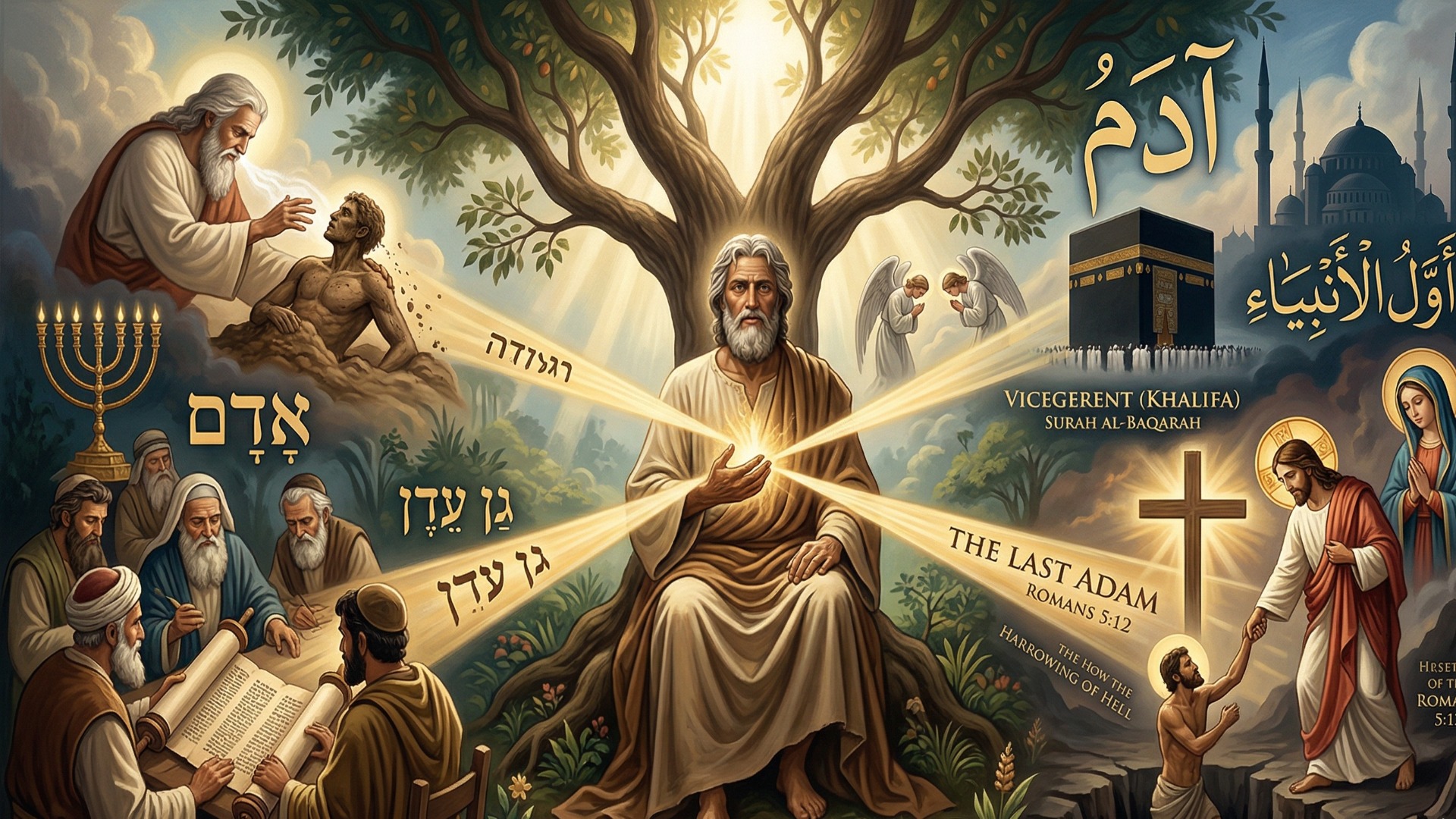
    The name “Adam” resonates through the corridors of human history, echoing across millennia, across continents, and across the boundaries of disparate faith traditions. More than just a character in an ancient text, Adam is the ultimate archetype of humanity. To speak of Adam is to speak of ourselves—our origins, our inherent flaws, our capacity for profound divine connection, and our ultimate destiny.

    Whether viewed as a literal historical figure, a profound theological metaphor, or a prophetic pioneer, Adam serves as the foundation stone for the Abrahamic faiths—Judaism, Christianity, and Islam—as well as occupying crucial roles in several other religious traditions. Exploring how different religions understand Adam reveals not only how these faiths differ in their theology but also how they uniquely define the human condition, the nature of sin, the concept of free will, and the mechanics of divine redemption.

    In this comprehensive exploration, we will dissect the figure of Adam through the lenses of the world’s major religions, tracing his evolution from the clay of the earth to a symbol of cosmic significance.


    1. The Linguistic and Cultural Origins of “Adam”

    To truly understand Adam, we must first look at the linguistic roots of his name and the cultural milieu from which his story emerged in the ancient Near East.

    The Hebrew Etymology

    In the Hebrew Bible, the word ‘adam (אָדָם) is fascinatingly multifaceted. It is used in several distinct ways:

    1. As a generic term for humanity: It often translates simply as “mankind” or “human being.” When the text says God created ‘adam, it is initially speaking of humanity as a collective species.
    2. As a proper noun: It eventually transitions into the specific name of the first individual man, Adam.
    3. Its connection to the earth: The word ‘adam is inextricably linked to the Hebrew word ‘adamah (אֲדָמָה), which means “ground,” “soil,” or “earth.” Furthermore, both words share a root with ‘adom (אָדֹם), meaning “red.”

    This linguistic triad—humanity, earth, and red—paints a vivid theological picture. Adam is the “earthling,” the one pulled from the red dirt. This etymology immediately establishes the dual nature of the human being in Abrahamic thought: we are profoundly physical, tethered to the dirt from which we were formed, yet we are animated by the divine breath (ruach) of the Creator. This tension between the mud and the divine breath is the crucible of the human experience.

    Ancient Near Eastern Parallels

    The biblical narrative of Adam did not emerge in a cultural vacuum. Ancient Mesopotamian cultures possessed their own creation myths that share intriguing thematic similarities with the Genesis account, though their theological conclusions are vastly different.

    The most famous parallel is the myth of Adapa, a sage from the ancient Sumerian city of Eridu. According to the myth, Adapa was endowed with immense wisdom by the god Enki but was denied immortality. In a pivotal scene, Adapa is offered the “food of life” and the “water of life” by the high god Anu. However, having been tricked by Enki into believing the food was poisoned, Adapa refuses to eat it, thereby losing the chance for immortality for himself and all of humanity.

    While the stories of Adam and Adapa are distinct—Adam disobeys by eating forbidden food, while Adapa obeys (a deceptive command) by refusing divine food—both narratives grapple with the same existential questions: Why do humans possess god-like wisdom yet suffer mortal deaths? Why are we barred from the realm of the eternal? The story of Adam, therefore, serves as the distinctively monotheistic answer to the ancient world’s most pressing existential anxieties.


    2. Adam in Judaism: The Progenitor and the Prototype

    In Judaism, Adam is the foundational patriarch, but the theological emphasis placed upon him differs significantly from the later Christian interpretations. To Jewish sages, rabbis, and mystics, Adam is the prototype of moral responsibility.

    The Genesis Narrative

    The Hebrew Bible (Tanakh) contains two distinct creation accounts in the book of Genesis.

    • Genesis 1: The first account is cosmic and poetic. God creates humanity in His own image (Tzelem Elohim), both male and female simultaneously, giving them dominion over the earth.
    • Genesis 2-3: The second account is intimate and narrative-driven. God forms Adam from the dust, breathes the breath of life into his nostrils, and places him in the Garden of Eden to cultivate and keep it. Finding that it is “not good for man to be alone,” God creates Eve from Adam’s side (often translated as “rib”).

    The central drama occurs when Adam and Eve violate God’s single prohibition: eating from the Tree of the Knowledge of Good and Evil. They are subsequently expelled from the Garden. In Judaism, this event is profoundly tragic, as it introduces death, painful labor, and separation from the immediate presence of God into the human experience. However, Judaism does not view this event as the creation of an inescapable “Original Sin” that taints the souls of all future generations.

    The Rejection of “Original Sin”

    In Jewish theology, while Adam’s disobedience altered the conditions of human existence (bringing about mortality and hardship), it did not corrupt human nature itself. Every human being is born with a clean slate, possessing two inclinations:

    • Yetzer HaTov: The good inclination, the desire to follow God’s laws and act altruistically.
    • Yetzer Hara: The “evil” or selfish inclination, the base drives for survival, reproduction, and acquisition (which are not inherently evil but can lead to sin if left unchecked).

    Adam’s story is a cautionary tale about the misuse of free will. He is the first to sin, but his guilt is his own. The prophet Ezekiel explicitly counters the idea of inherited guilt: “The child will not share the guilt of the parent, nor will the parent share the guilt of the child” (Ezekiel 18:20).

    Rabbinic Literature: The Cosmic Adam

    The Talmud and the Midrash (rabbinic commentaries) expand upon the brief Genesis narrative, elevating Adam to a figure of staggering cosmic proportions before the Fall.

    • Physical Stature: Midrashic traditions suggest that before the sin, Adam’s physical body stretched from the earth to the firmament of heaven, and from one end of the earth to the other. His beauty outshone the sun. When he sinned, God “placed His hand upon him” and diminished his stature, reflecting the spiritual diminution of humanity.
    • The First Repentance: Rabbinic tradition heavily emphasizes Adam’s repentance. Unlike later Christian narratives that often focus solely on the Fall, Jewish Midrash portrays Adam as the first penitent. He is said to have fasted, sat in the freezing waters of the Gihon river, and wept for 130 years in deep remorse for his transgression. Adam thus becomes the model not just for sin, but for Teshuvah (repentance and return to God).

    Kabbalah: Adam Kadmon

    In Jewish mysticism (Kabbalah), the concept of Adam takes on a purely metaphysical dimension through the idea of Adam Kadmon (the Primordial Man).

    Adam Kadmon is not the physical Adam of Genesis. Rather, Adam Kadmon is the first spiritual emanation of the infinite God (Ein Sof) into the finite universe. This Primordial Man represents the divine blueprint of creation, embodying the ten Sefirot (divine attributes or emanations) through which God interacts with the world. The physical Adam created in the Garden of Eden is viewed as a microcosm, a physical reflection of this massive spiritual blueprint. The mystic’s ultimate goal is to repair the brokenness of the physical world (Tikkun Olam) and restore the spiritual alignment of the universe, bringing it back to the perfection of Adam Kadmon.


    3. Adam in Christianity: The Fall and the Need for a Savior

    While Judaism views Adam as a cautionary archetype of free will, mainstream Christianity places Adam at the very center of its soteriology (the theology of salvation). In Christian thought, understanding Adam is the absolute prerequisite for understanding Jesus Christ.

    The Doctrine of Original Sin

    The concept of Original Sin, primarily formulated by St. Augustine of Hippo in the 4th and 5th centuries, is the cornerstone of Western Christian theology regarding Adam.

    According to this doctrine, Adam was created in a state of grace and original righteousness. However, his decision to rebel against God by eating the forbidden fruit was an act of cosmic treason. Because Adam was the federal head and biological progenitor of all humanity, his sin had catastrophic, inherited consequences.

    1. Inherited Guilt: Augustine argued that all humanity was “seminally present” in Adam’s loins. Therefore, when Adam sinned, humanity sinned. We are all born guilty of Adam’s transgression.
    2. Corrupted Nature: Adam’s sin fundamentally broke human nature. Humans lost their original righteousness and became totally depraved, naturally inclined toward sin and incapable of saving themselves. This inherent spiritual sickness is passed down from generation to generation like a genetic disease.

    Because of Adam’s Fall, humanity is alienated from God, subject to physical and spiritual death, and deserving of damnation. It is this desperate, inescapable predicament that necessitates a divine Savior.

    The Pauline Typology: The First and Second Adam

    The Christian understanding of Adam was largely codified by the Apostle Paul in the New Testament, specifically in his epistles to the Romans and the Corinthians. Paul establishes a profound theological contrast between Adam and Jesus Christ, creating a framework known as typology (where a figure in the Old Testament foreshadows a greater reality in the New Testament).

    Paul writes in Romans 5:12, “Therefore, just as sin entered the world through one man, and death through sin, and in this way death came to all people, because all sinned.”

    He then establishes Christ as the “Second Adam” or the “Last Adam”:

    • 1 Corinthians 15:22: “For as in Adam all die, so in Christ all will be made alive.”
    • 1 Corinthians 15:45: “So it is written: ‘The first man Adam became a living being’; the last Adam, a life-giving spirit.”

    In Pauline theology, Adam and Christ act as the two great representatives of humanity.

    • The First Adam brought disobedience, condemnation, sin, and death. He failed the test in the paradise of Eden.
    • The Second Adam (Christ) brought perfect obedience, justification, righteousness, and eternal life. He passed the test in the wilderness and the agony of the Garden of Gethsemane.

    Christ’s sacrificial death on the cross and subsequent resurrection are viewed as the mechanism that undoes the curse brought about by the First Adam. Where Adam severed the bridge between God and humanity, Christ rebuilds it.

    Eastern Orthodox Perspectives: Ancestral Sin

    It is vital to note that not all of Christianity adopted Augustine’s strict view of inherited guilt. The Eastern Orthodox Church holds to a concept known as Ancestral Sin rather than Original Sin.

    Orthodox theology agrees that Adam’s sin brought corruption, sickness, and death into the world. Humanity inherits this fallen, mortal condition—the disease of death and a propensity to sin—but they do not inherit Adam’s personal guilt. We are guilty only of our own actual sins, not the sin of our ancestor.

    In Eastern Orthodoxy, the Fall is often viewed less as a legal crime requiring a penal sacrifice, and more as a spiritual illness requiring a Great Physician. Furthermore, early church fathers like St. Irenaeus viewed Adam and Eve not as perfect beings who fell from a great height, but as spiritual children who were immature and made a mistake, requiring Christ to bring humanity to its ultimate, intended maturity.

    The Harrowing of Hell

    One of the most powerful Christian traditions involving Adam is the “Harrowing of Hell.” According to ancient Christian tradition (prominent in both Orthodox iconography and the Catholic Apostles’ Creed), between His crucifixion and resurrection, Jesus descended into Hades (the realm of the dead). There, Christ broke down the gates of hell and rescued the righteous souls of the Old Testament who had been waiting for redemption—chief among them, Adam and Eve.

    In traditional Orthodox resurrection icons, the central image is not Christ walking out of an empty tomb, but rather Christ standing on the shattered gates of hell, reaching down and pulling a frail Adam by one wrist and Eve by the other, pulling humanity out of the grave.


    4. Adam in Islam: The First Prophet and the Vicegerent

    In Islam, the figure of Adam (آدم) is treated with immense reverence. The Islamic narrative of Adam corrects and refines the prior biblical narratives from a strict monotheistic (Tawhid) perspective. In Islam, Adam is not the catalyst for a fallen human nature; rather, he is the first human, the first Muslim (one who submits to God), and crucially, the First Prophet (Nabi).

    Creation and the Vicegerent (Khalifa)

    The Quranic narrative of Adam is scattered across several chapters (Surahs), most notably in Surah Al-Baqarah (The Cow), Surah Al-A’raf (The Heights), and Surah Ta-Ha.

    The story begins in the heavenly realms before Adam’s creation. Allah (God) announces to the angels His intention to create a human being: “Indeed, I will make upon the earth a successive authority (Khalifa)” (Quran 2:30). The term Khalifa means vicegerent, steward, or deputy. Adam was not created as an afterthought; he was explicitly designed to be God’s representative on Earth, tasked with ruling and maintaining it according to divine will.

    The angels, perhaps foreseeing the capacity of human free will, question God: “Will You place upon it one who causes corruption therein and sheds blood, while we declare Your praise and sanctify You?” God simply replies, “Indeed, I know that which you do not know.”

    God then forms Adam from a handful of clay gathered from all the different soils of the earth (explaining the different colors and natures of mankind) and breathes His spirit (Ruh) into him.

    The Superiority of Knowledge

    To prove Adam’s worth to the angels, God teaches Adam “the names of all things” (Quran 2:31). God then asks the angels to name these things, but they cannot. Adam steps forward and names them all.

    This is a profound theological statement in Islam: humanity’s distinct superiority over the angels does not lie in our inherent purity (angels are perfectly obedient), but in our intellect, our capacity for knowledge, language, conceptual thought, and free will.

    The Refusal of Iblis (Satan)

    Following this demonstration, God commands all the angels to prostrate themselves before Adam out of respect for God’s creation. All the angels obey, except one entity: Iblis (who becomes Shaitan, or Satan).

    Iblis, who in Islamic theology is a Jinn (a creature made of smokeless fire) rather than a fallen angel, refuses out of sheer arrogance. He declares, “I am better than him. You created me from fire and created him from clay” (Quran 7:12).

    This introduces the concept of racism, arrogance, and prejudice as the original sins of the cosmos—committed not by man, but by Satan. Iblis is cast out of God’s presence, but he begs for respite until the Day of Judgment to prove that humanity is ungrateful and easily led astray.

    The Slip (Zallah) and the Forgiveness of God

    Adam and his wife, Hawa (Eve), are placed in Jannah (the Garden/Paradise). As in the biblical account, they are told they may eat of anything except one specific tree. Shaitan whispers to them, deceiving them by swearing that eating from the tree will turn them into angels or grant them immortality.

    They eat, their nakedness becomes apparent to them, and they are sent down to Earth. However, the Islamic interpretation of this event diverges drastically from Christianity:

    1. No Original Sin: Islam vehemently rejects the concept of Original Sin. The Quran states explicitly that no bearer of burdens can bear the burden of another (Quran 53:38). Adam’s mistake was a “slip” (zallah). It does not taint the souls of his descendants.
    2. Immediate Repentance and Forgiveness: Unlike the prolonged separation in Christian theology, the Quran emphasizes Adam’s immediate and perfect repentance. God actually teaches Adam the words with which to ask for forgiveness: “Our Lord, we have wronged ourselves, and if You do not forgive us and have mercy upon us, we will surely be among the losers” (Quran 7:23).
    3. God Forgives Him: God accepts Adam’s repentance entirely. “Then his Lord chose him and turned to him in forgiveness and guided him” (Quran 20:122).
    4. Descent was Destined: The expulsion to Earth is not seen merely as a punishment. Remember, God told the angels He was making a deputy for the Earth before Adam was even created. The experience in the Garden, the deception of Satan, and the subsequent repentance were a divine training program. Adam arrived on Earth not as a fallen, condemned creature, but as a forgiven prophet, ready to fulfill his role as Khalifa.

    Sufi Interpretations

    In Islamic mysticism (Sufism), Adam is viewed as the perfect mirror of the Divine Names. The great Sufi philosopher Ibn Arabi wrote that while every part of the universe reflects a specific attribute of God, only the “Perfect Man” (Insan al-Kamil), of which Adam was the first, reflects all the divine names and attributes in their totality. Adam is the pupil of the eye through which God looks at His creation.


    5. Adam in Other Faith Traditions

    While the Abrahamic faiths provide the most extensive theologies surrounding Adam, he also plays a significant role in several other world religions, often taking on unique metaphysical characteristics.

    The Latter-day Saints (Mormonism)

    The Church of Jesus Christ of Latter-day Saints (LDS) possesses one of the most unique theological frameworks regarding Adam. In LDS theology, Adam is not merely the first mortal man; he is also the Archangel Michael in his pre-mortal existence. As Michael, he led the armies of heaven against Satan in the pre-mortal war.

    Furthermore, Mormonism views the Fall of Adam not as a tragic disaster, but as a necessary and glorious step in the eternal progression of humanity. The Book of Mormon states: “Adam fell that men might be; and men are, that they might have joy” (2 Nephi 2:25).

    In this view, if Adam and Eve had remained in the Garden of Eden, they would have remained in a state of innocent stasis. They could not have had children, nor could they have experienced true joy because they knew no sorrow. The Fall was a conscious choice by Adam and Eve to step into mortality, allowing billions of spirit children to gain physical bodies, experience opposition, learn to choose good over evil, and ultimately progress toward exaltation (becoming like God).

    The Baha’i Faith

    The Baha’i Faith, a monotheistic religion founded in the 19th century that emphasizes the spiritual unity of all mankind, interprets the story of Adam allegorically rather than literally.

    Baha’u’llah, the founder of the Baha’i Faith, taught that religious truth is revealed by God progressively through a series of divine messengers (Manifestations of God). In Baha’i belief, Adam is recognized as the first of these Manifestations of God recorded in known history.

    However, Baha’is do not believe Adam was the first human being to exist on planet Earth. Science and evolution are respected in Baha’i theology. Instead, Adam represents the beginning of the “Adamic Cycle,” a 6,000-year prophetic cycle that began with his revelation and culminated in the mid-19th century with the coming of the Báb and Baha’u’llah. The story of the Garden of Eden, the tree, and the serpent are entirely symbolic, representing the spiritual awakening of humanity and the detachment from the “animal” nature.

    Mandaeism and the Druze Faith

    • Mandaeism: In this ancient, gnostic, John the Baptist-venerating religion, Adam is the founder of the faith. He is humanity’s first ancestor and the first to receive the divine revelation and the saving knowledge (gnosis) from the World of Light.
    • The Druze Faith: An esoteric religion rooted in the Levant, the Druze believe in a cyclical history of the world. They view Adam as a figure who initiated a new cycle of human consciousness. Interestingly, some Druze texts differentiate between an “Adam of Safa” (the spiritual Adam) and an “Adam of the bodies” (the physical progenitor).

    6. Adam in Modern Thought: Beyond Theology

    As humanity has transitioned into the modern era, the figure of Adam has transcended strict religious dogma to become a focal point in science, psychology, and literature.

    The Biological “Adam”

    With the advent of evolutionary biology and genetics, the literal interpretation of Adam as a singular man created 6,000 years ago from whom all humans descend biologically has been abandoned by mainstream science and many progressive religious denominations.

    However, science has borrowed his name. In human genetics, Y-chromosomal Adam is the name given to the most recent common ancestor from whom all currently living human males are descended patrilineally. It is important to note that Y-chromosomal Adam was not the only man alive at his time, nor did he live at the same time as “Mitochondrial Eve.” He simply represents a genetic convergence point hundreds of thousands of years ago. Yet, the use of the name “Adam” demonstrates the inescapable cultural power of the biblical narrative.

    The Psychological Archetype

    Pioneering psychoanalyst Carl Jung viewed figures like Adam and Eve as expressions of the “collective unconscious.” In Jungian psychology, Adam is the archetype of the Primal Man (Anthropos).

    The story of the Garden of Eden is viewed psychologically as the story of human maturation. The Garden represents the unconscious innocence of childhood (or the animal state). Eating the fruit represents the dawn of self-consciousness, the painful realization of mortality, and the awakening of the ego. Expulsion from the garden is the necessary pain of growing up—leaving behind the safety of ignorance to face the harsh realities of independent, conscious existence.

    Literary Masterpieces

    Adam has been the subject of countless works of art and literature, most notably John Milton’s 17th-century epic poem, Paradise Lost. Milton expands the Genesis narrative into a sweeping psychological drama. His Adam is intelligent, deeply philosophical, and ultimately tragic. In Milton’s telling, Adam chooses to eat the fruit not out of a desire for godhood, but out of an overwhelming love for Eve, deciding he would rather share in her mortal doom than live in Paradise without her. This romanticizes the Fall, presenting Adam’s choice as profoundly human.


    Conclusion: The Mirror of Humanity

    To the Jew, he is the pioneer of moral choice, demonstrating the weight of human free will and the beauty of heartfelt repentance. To the Christian, he is the federal head of a broken humanity, the man whose tragic fall necessitated the glorious, saving grace of Jesus Christ, the Second Adam. To the Muslim, he is the honored vicegerent of God, the first prophet whose slip was forgiven, demonstrating that God’s mercy precedes His wrath. To the mystic, he is the cosmic blueprint of the universe. To the psychologist, he is the agonizing dawn of human consciousness.

    The endurance of Adam’s story across millennia is no accident. We continue to debate, analyze, and tell the story of Adam because, ultimately, it is a story about looking in the mirror.

    Adam embodies the paradox of the human condition. We are made of mud, yet we contain the breath of the divine. We are capable of profound wisdom, yet prone to foolish mistakes. We long for the peace of Paradise, yet we are destined to struggle in the thorns and thistles of the real world. Adam’s successes are our potential; his failures are our daily reality.

    Understanding Adam in all his religious complexities doesn’t just teach us about theology; it teaches us how human beings have historically answered the terrifying question: Why are we the way we are?


  • The Universal Mother: The Role of Mary in Christianity, Islam, and Other Traditions

    The Universal Mother: The Role of Mary in Christianity, Islam, and Other Traditions

    Few figures in human history have commanded the sustained reverence, theological debate, and cultural devotion as Mary of Nazareth. Known as Maryam in Arabic and Miriam in Hebrew, the mother of Jesus occupies a unique and monumental space in the religious landscape of the world. She is the most famous woman in human history, bridging the world’s two largest faiths—Christianity and Islam—while also finding resonance in various other religious and cultural traditions.

    Her enduring legacy is a testament to her multifaceted identity. Depending on the lens through which she is viewed, Mary is the Mother of God, a paragon of submission to the divine will, a fiercely protective mother, a symbol of national identity, and a revolutionary voice for the oppressed.

    This comprehensive exploration delves into the theological, historical, and cultural role of Mary across Christianity, Islam, and other global traditions, examining how a single, humble woman from first-century Galilee became a universal icon of faith, purity, and maternal grace.


    Part I: Mary in Christianity – Theotokos and Mother of the Church

    In Christianity, Mary’s role is foundational. Without her fiat—her willing acceptance of God’s plan—the central Christian doctrine of the Incarnation (God becoming flesh in Jesus Christ) would not exist. However, how she is venerated, understood, and integrated into daily worship varies significantly among the major branches of Christianity.

    1. The Biblical Foundation

    The New Testament provides the historical and theological bedrock for Christian Mariology (the study of Mary). While her appearances in the text are relatively brief, they are immensely significant.

    • The Annunciation (Luke 1:26-38): The Gospel of Luke introduces Mary as a young virgin betrothed to Joseph. The Archangel Gabriel appears to her, announcing that she will conceive a child by the Holy Spirit. Her response, “Behold the handmaid of the Lord; be it unto me according to thy word,” is viewed as the ultimate model of human obedience to God.
    • The Visitation and the Magnificat (Luke 1:39-56): Pregnant with Jesus, Mary visits her relative Elizabeth. Here, Mary delivers the Magnificat, a powerful canticle that praises God for exalting the humble and scattering the proud. This text serves as the foundation for viewing Mary not just as a quiet, submissive figure, but as a prophet proclaiming God’s justice.
    • The Nativity: Both Matthew and Luke detail the virgin birth of Jesus in Bethlehem, highlighting Mary’s central role in the arrival of the Messiah.
    • The Wedding at Cana (John 2:1-11): Mary’s intercessory role is highlighted when she prompts Jesus to perform his first public miracle—turning water into wine—simply by noting, “They have no wine,” and instructing the servants to “Do whatever he tells you.”
    • At the Foot of the Cross (John 19:25-27): Unlike most of Jesus’ disciples who fled, Mary remained at the crucifixion. Jesus, in his final moments, entrusts Mary to the beloved disciple John, saying, “Behold your mother.” Catholic and Orthodox traditions interpret this as Christ giving Mary as a spiritual mother to all believers.
    • Pentecost (Acts 1:14): Mary is present with the apostles in the upper room, praying and waiting for the descent of the Holy Spirit, positioning her at the very birth of the Church.

    2. Catholic Theology: The Four Dogmas

    The Catholic Church has developed the most extensive theology surrounding Mary, elevating her above all saints and angels in a form of veneration known as hyperdulia (though strictly maintaining that latria, or absolute worship, belongs exclusively to God). Catholic Mariology rests on four distinct dogmas:

    1. Mother of God (Theotokos): Declared at the Council of Ephesus in 431 AD. The title Theotokos translates to “God-bearer.” This dogma was primarily established to protect the nature of Christ; to deny Mary the title of Mother of God was to suggest that Jesus was divided into two distinct persons (human and divine), rather than one divine person with two natures.
    2. Perpetual Virginity: The belief that Mary was a virgin before, during, and after the birth of Jesus. The “brothers and sisters” of Jesus mentioned in the Bible are interpreted by Catholics (and Orthodox Christians) as either cousins or children of Joseph from a previous marriage.
    3. The Immaculate Conception: Promulgated by Pope Pius IX in 1854. This dogma frequently causes confusion; it does not refer to the conception of Jesus, but the conception of Mary. It states that Mary, from the very first moment of her conception in the womb of her mother (Saint Anne), was preserved free from the stain of original sin by a singular grace of God.
    4. The Assumption: Declared by Pope Pius XII in 1950. This dogma states that at the end of her earthly life, Mary was assumed body and soul into heavenly glory. It leaves open the question of whether she actually died before her assumption, a topic still debated among theologians.

    Marian Apparitions and Devotion: In Catholicism, Mary is a deeply personal figure. Millions pray the Rosary, seeking her intercession. Furthermore, approved Marian apparitions—such as Our Lady of Guadalupe in Mexico (1531), Our Lady of Lourdes in France (1858), and Our Lady of Fátima in Portugal (1917)—have shaped global history, culture, and pilgrimage practices, embedding her firmly in the cultural psyche of Catholic nations.

    3. Eastern Orthodox Christianity: The All-Holy

    In the Eastern Orthodox Church, Mary is referred to as the Panagia (All-Holy) and the Theotokos. The Orthodox veneration of Mary is deeply mystical and liturgical. She is celebrated in the Divine Liturgy more frequently than in any other Christian tradition.

    While the Orthodox share the beliefs in Mary as the Mother of God and her perpetual virginity, they diverge from Catholicism on a few points:

    • The Immaculate Conception: The Orthodox Church rejects the Catholic dogma of the Immaculate Conception. This is rooted in a different understanding of original sin. The Orthodox believe humanity inherited the consequences of Adam’s sin (mortality, a propensity to sin), but not the guilt. Therefore, Mary did not need to be immaculately conceived to be sinless; rather, she was born a normal human being who, through her own free will and God’s grace, chose a life of absolute purity and did not commit personal sin.
    • The Dormition: Instead of the “Assumption,” the Orthodox celebrate the Dormition (the “falling asleep”) of the Theotokos. They explicitly teach that Mary experienced a natural human death, her soul was received by Christ, and her body was subsequently resurrected and taken into heaven.

    Icons of the Theotokos are central to Orthodox worship, often depicting her presenting Christ to the viewer, serving as the ultimate guide pointing humanity toward God.

    4. Protestant Perspectives: The Model Disciple

    The Protestant Reformation brought a massive shift in how Mary was viewed. Reformers like Martin Luther, John Calvin, and Huldrych Zwingli maintained a deep respect for Mary, affirming her as the Mother of God and, in many cases, her perpetual virginity. However, they strongly reacted against the medieval excesses of Marian devotion, which they felt detracted from the sole mediatorship of Jesus Christ.

    Modern Protestant views (including Evangelical, Baptist, and Reformed traditions) generally hold the following:

    • Sola Scriptura: Because the doctrines of the Immaculate Conception and the Assumption are not explicitly found in the Bible, most Protestants reject them.
    • Rejection of Intercession: Protestants pray directly to God and do not ask for the intercession of Mary or the saints, based on 1 Timothy 2:5 (“For there is one God and one mediator between God and mankind, the man Christ Jesus”).
    • Mary as an Exemplar: Rather than a heavenly queen, Mary is viewed as the ultimate model of faith, humility, and submission to God’s word. She is highly respected as the woman chosen to bear the Savior, but she is considered an ordinary human being who was saved by the grace of her son, just like any other Christian.

    Anglicans and some Lutherans maintain a slightly higher Marian profile, observing Marian feast days and sometimes keeping Marian art in their churches, reflecting their “middle way” between Catholicism and reformed Protestantism.


    Part II: Mary in Islam – Maryam, the Mother of Isa

    One of the most profound, yet historically underappreciated, bridges between Christianity and Islam is the shared reverence for Mary. In Islam, she is known as Maryam, and her status is arguably more prominent in the Quran than in the New Testament.

    She is the only woman mentioned by name in the entire Quran, appearing 34 times (compared to 19 times in the New Testament). An entire chapter of the Quran, Surah Maryam (Chapter 19), is named after her, and another, Surah Al Imran (Chapter 3), is named after her family.

    1. The Chosen Woman

    The Quran elevates Maryam above all women in creation. Surah Al Imran 3:42 states: “And [mention] when the angels said, ‘O Mary, indeed Allah has chosen you and purified you and chosen you above the women of the worlds.’”

    In Islamic tradition, Maryam is the epitome of purity, piety, and unwavering faith. The Quran details her early life, describing how her mother, the wife of Imran (traditionally named Hannah), dedicated her unborn child to the service of God. Maryam was placed under the guardianship of the prophet Zakariyya (Zechariah) and grew up in the sanctuary of the temple. The Quran describes how she was miraculously provided for by God: whenever Zakariyya entered her prayer chamber, he found her with provisions, to which she would reply, “It is from Allah. Indeed, Allah provides for whom He wills without account” (Quran 3:37).

    2. The Virgin Birth in the Quran

    Islam firmly upholds the virgin birth of Jesus (known as Isa in Arabic), though it entirely rejects the Christian concept of the Incarnation (God becoming flesh). In Islam, Isa is a mighty prophet and the Messiah, but he is fundamentally human, not the literal Son of God.

    The Annunciation in the Quran shares striking similarities with the Gospel of Luke but possesses distinct theological nuances. The angel Jibril (Gabriel) appears to Maryam in the form of a perfect man to announce the gift of a pure son. Maryam, shocked and protective of her chastity, responds: “How can I have a boy while no man has touched me and I have not been unchaste?” Jibril replies, “Thus [it will be]; your Lord says, ‘It is easy for Me, and We will make him a sign to the people and a mercy from Us. And it is a matter [already] decreed.’” (Quran 19:20-21).

    The Quranic narrative of the birth of Isa differs significantly from the biblical manger scene. Pregnant and facing the inevitable judgment of her community, Maryam withdraws to a remote place. In the throes of childbirth, experiencing intense physical and emotional agony, she rests against the trunk of a date-palm tree, crying out in despair: “Oh, I wish I had died before this and was in oblivion, forgotten” (Quran 19:23).

    A voice (often interpreted as the baby Isa or the angel) calls out to comfort her, providing a stream of water beneath her and instructing her to shake the palm tree to drop fresh, ripe dates for sustenance. When she returns to her people carrying the child, they accuse her of unchastity. Under divine instruction, Maryam remains silent and simply points to the infant in her arms. Miraculously, the newborn Isa speaks from the cradle, defending his mother’s honor and declaring his own prophethood: “Indeed, I am the servant of Allah. He has given me the Scripture and made me a prophet” (Quran 19:30).

    3. A Spiritual Paradigm for Muslims

    In Islam, Maryam is not a co-redeemer or a heavenly intercessor. She is, however, considered a Siddiqah (a woman of truth), the highest spiritual rank achievable by a non-prophet. Some classical Islamic scholars (like Ibn Hazm) even argued that Maryam was a prophetess due to her direct communication with angels, though this remains a minority view.

    Prophet Muhammad is reported to have named Maryam as one of the four greatest women in human history, alongside Khadijah (his wife), Fatimah (his daughter), and Asiya (the wife of the Pharaoh who raised Moses). For Muslims, Maryam represents the ultimate example of submission to God (Islam literally means submission), enduring societal slander with dignity, relying entirely on God’s providence, and maintaining spiritual perfection.


    Part III: The Bridge Between Cross and Crescent

    The figure of Mary provides one of the most fruitful avenues for interfaith dialogue between Christians and Muslims. In an era often defined by religious tension, Mary stands as a unifying matriarch.

    During the historic meeting of Pope John Paul II with Muslim leaders, and in the documents of the Second Vatican Council (Nostra Aetate), the Catholic Church explicitly recognized and honored the Islamic reverence for Mary. Across the Middle East, there are shrines dedicated to Mary where both Christians and Muslims gather to pray. The House of the Virgin Mary in Ephesus, Turkey, for example, is heavily visited by pilgrims from both faiths.

    However, the theological boundaries remain clear. For the Christian, Mary is significant because of who her son is (the divine Son of God). For the Muslim, Mary is significant because of who she is (the chosen, pure servant of God) and because of her role in bringing forth a great prophet through a miraculous sign. Despite these profound differences in Christology, the mutual respect for the Virgin of Nazareth remains a powerful, shared spiritual heritage.


    Part IV: Mary in Judaism and the Baha’i Faith

    While Mary is central to Christianity and highly revered in Islam, her role in other Abrahamic and global traditions is also worthy of examination.

    1. Judaism: The Historical Miriam

    In mainstream Judaism, Mary does not hold theological significance. Judaism rejects the messiahship and divinity of Jesus, and consequently, the virgin birth and Marian dogmas are not part of Jewish belief.

    Historically, Miriam (her Hebrew name) is viewed as a Jewish woman living in first-century Judea under Roman occupation. In recent decades, Jewish-Christian dialogue has led some Jewish scholars to reclaim Mary as a fellow Jew. Feminist Jewish scholars, in particular, have studied her in the context of Jewish women of antiquity, highlighting her deep roots in Jewish law, piety, and the prophetic tradition of Miriam the sister of Moses, and Hannah the mother of Samuel.

    Early polemical Jewish texts, such as the Toledot Yeshu (a medieval, non-canonical parody of the Christian gospels), presented derogatory accounts of Mary to counter Christian missionary efforts. However, modern Jewish scholarship focuses on her historical reality as a Galilean peasant woman, placing her firmly within the social and religious matrix of Second Temple Judaism.

    2. The Baha’i Faith

    The Baha’i Faith, which emerged in the 19th century and teaches the essential worth of all religions, holds Mary in high esteem. Baha’is accept Jesus as a “Manifestation of God” (similar to a prophet) and explicitly affirm the virgin birth of Jesus.

    Baha’u’llah, the founder of the Baha’i Faith, referred to Mary as “that most beauteous countenance” and “that veiled and immortal Melody.” The Baha’i writings affirm her spiritual station, purity, and the miraculous nature of her conception of Jesus by the Holy Spirit. She is viewed as a perfect reflection of divine grace, a vessel chosen for a highly significant epoch in the spiritual evolution of humanity.


    Part V: Mary in Syncretism, Culture, and Feminist Thought

    Beyond the boundaries of formal, orthodox theology, Mary has been embraced, adapted, and reinterpreted by various cultures, indigenous traditions, and modern intellectual movements. She frequently transcends religious dogma to become an archetype of mother earth, liberation, and feminine power.

    1. Cultural Syncretism: The Mother of the Americas and Beyond

    As Christianity spread globally, often through colonialism, the figure of Mary frequently merged with local, pre-Christian goddesses. This syncretism helped indigenous populations transition to Christianity by finding familiar feminine divine attributes in Mary.

    • Our Lady of Guadalupe (Mexico): Perhaps the most famous example is the Virgin of Guadalupe. According to tradition, she appeared in 1531 to a Chichimec peasant, Juan Diego, on the hill of Tepeyac—a site previously dedicated to the Aztec mother goddess, Tonantzin. Guadalupe appeared as a mestiza (mixed-race) woman, speaking Nahuatl, wearing indigenous symbols. She became not just a religious icon, but the ultimate symbol of Mexican identity, indigenous dignity, and anti-colonial resistance.
    • Pachamama (Andes): In the Andean regions of South America, the Virgin Mary is often synchronized with Pachamama (Mother Earth), blending Catholic reverence with indigenous devotion to the fertility of the land.
    • Afro-Caribbean Religions: In traditions like Santería (Cuba) and Vodou (Haiti), which developed among enslaved Africans who were forced to adopt Catholicism, Mary was syncretized with various Orishas and Lwas (spirits). For example, Our Lady of Regla is often associated with Yemayá (the goddess of the ocean and motherhood), and Our Lady of Sorrows is syncretized with Ezili Freda (the spirit of love, beauty, and grief). In these contexts, Mary acts as a veil for ancient African deities.

    2. Feminist and Liberation Theology

    In the 20th and 21st centuries, theologians have re-examined Mary, rescuing her from what many perceived as a patriarchal framing.

    For centuries, Mary was often presented by a male-dominated clergy as the ultimate ideal of passive submission, silence, and unattainable purity (being both virgin and mother), which some feminists argue was used to oppress women.

    However, Liberation Theology, which originated in Latin America, views Mary through a radically different lens. Focusing on the Magnificat, liberation theologians see Mary as a prophet of the poor and marginalized. When she sings that God has “brought down rulers from their thrones but has lifted up the humble” and “filled the hungry with good things but has sent the rich away empty,” she is recognized as a revolutionary figure aligned with the oppressed peasant class.

    Feminist theologians also highlight her strength. She survived the stigma of an out-of-wedlock pregnancy in a harsh, patriarchal society; she endured the perilous flight into Egypt as a political refugee protecting her child from a tyrant (King Herod); and she stood with agonizing strength at the foot of the cross while the male disciples fled in fear. In this light, Mary is reclaimed as a symbol of profound female resilience, agency, and empowerment.


    Conclusion: The Woman for All Seasons

    The role of Mary across various traditions is staggering in its scope. To look at Mary is to look into a mirror reflecting the highest aspirations, deepest sorrows, and most profound theological questions of humanity over the past two millennia.

    In Catholicism and Orthodoxy, she is the Queen of Heaven and the maternal face of God’s grace. In Protestantism, she is the supreme disciple of faith. In Islam, she is the pinnacle of female purity and total submission to the Divine. In the eyes of indigenous populations, she is the protector and the mother of the land. To the marginalized, she is a revolutionary sister standing against oppression.

    Whether one approaches her through the lens of history, theology, sociology, or personal faith, Mary of Nazareth remains undeniably foundational. She is a peasant girl from antiquity who outlived empires, shaped civilizations, and continues to offer millions a model of grace under unimaginable pressure. In a world deeply fractured by religious and cultural divides, the shared reverence for this one woman stands as a rare, enduring monument to the possibility of universal spiritual kinship.


    Frequently Asked Questions: The Role of Mary

    1. Do Muslims worship Mary?

    No, Muslims do not worship Mary (Maryam), nor do they worship Jesus (Isa). In Islam, worship is reserved strictly for God (Allah) alone. However, Mary is highly revered as the greatest of all women, a paragon of purity, and a profound example of unwavering faith and spiritual submission. She is respected as the miraculous virgin mother of a mighty prophet, but she is considered a human being, not divine.

    2. What is the difference between the Virgin Birth and the Immaculate Conception?

    These two concepts are frequently confused, even by Christians.

    • The Virgin Birth refers to the belief held by both Christians and Muslims that Mary conceived Jesus miraculously by the power of God (the Holy Spirit in Christianity), without a human father.
    • The Immaculate Conception is a specific Catholic dogma regarding Mary’s own conception. It states that Mary was conceived in the womb of her mother, Saint Anne, free from the stain of original sin, preparing her to be the pure vessel for the Son of God.

    3. Why do Catholics and Orthodox Christians pray to Mary, while Protestants generally do not?

    Catholics and Orthodox Christians do not pray to Mary in the same way they pray to God; rather, they ask for her intercession. Just as one might ask a friend to pray for them, these traditions ask Mary, who is viewed as being alive in heaven and intimately close to Christ, to bring their petitions to her son. Protestants generally reject this practice based on the belief that Jesus Christ is the sole mediator between humanity and God, and they choose to direct all prayer exclusively to the Creator.

    4. Are there historical records of Mary outside of the Bible and the Quran?

    From a strictly secular, historical perspective, there are no contemporary records of Mary outside of religious texts. This is entirely common for women of her social status in antiquity; a Jewish peasant woman living in first-century Galilee would not have been documented by Roman or Jewish historians of the era. Her historical footprint is known entirely through the enduring religious movements sparked by the life and teachings of her son.

    5. How does Mary’s story connect to modern spiritual wellness and resilience?

    Regardless of one’s specific religious affiliation, Mary’s narrative offers a powerful archetype for spiritual wellness. She represents immense psychological resilience—navigating the societal stigma of an unexpected pregnancy, enduring life as a political refugee in Egypt, and surviving the profound grief of outliving her child. Her meditative nature, famously described in the Gospel of Luke as “pondering all these things in her heart,” serves as an enduring model for mindfulness, inner strength, and maintaining grace under unimaginable pressure.

    6. What does the title “Theotokos” mean?

    Theotokos is a Greek title used primarily in Eastern Orthodox and Catholic theology, translating literally to “God-bearer” or “Mother of God.” It was officially adopted at the Council of Ephesus in 431 AD. The title was primarily created to make a theological statement about Jesus, affirming that the child Mary bore was a single, united person who was fully God and fully human, rather than two separate entities.

    7. Is Mary mentioned in the Old Testament?

    Mary is not mentioned by name in the Old Testament. However, Christian theology heavily interprets several Old Testament passages as prophetic foreshadowing (typology) of Mary. The most famous is Isaiah 7:14, which speaks of a “young woman” or “virgin” conceiving a son named Immanuel. Additionally, early church fathers often compared Mary to the Ark of the Covenant; just as the Ark held the word of God in stone (the Ten Commandments), Mary held the Word of God in flesh.

  • How Different Religions View Jesus: Prophet, Messiah, or More?

    How Different Religions View Jesus: Prophet, Messiah, or More?

    For two millennia, the figure of Jesus of Nazareth has stood as a colossus, striding across the landscape of human history. To Christians, he is the unique Son of God, the Savior of humanity, and part of the divine Trinity. This single perspective, while the most numerically common, is by no means the only way the world perceives this enduring historical figure. Beyond the walls of the Church, Jesus is revered, analyzed, and integrated into diverse theological frameworks, from the ‘Mighty Messenger’ of Islam to the ‘Avatar’ of Hinduism, and the ‘Bodhisattva’ of Buddhism. This article embarks on a comprehensive, respectful journey to explore how the world’s major religions—Christianity, Islam, Judaism, Hinduism, Buddhism, and the Bahá’í Faith—view Jesus, answering the fundamental question: Is he a Prophet, the Messiah, or something infinitely more?

    Our exploration is not about establishing a single ‘correct’ view, but about appreciating the rich tapestry of human faith and the unique ways different cultures and theologies have wrestled with the enigma of a first-century Jewish teacher who continues to reshape the spiritual destiny of billions.

    1. Christianity: The Cornerstone—Jesus as ‘God Incarnate’

    We must begin our journey within the faith that defines itself through Jesus. To understand any other perspective, we must first understand the benchmark set by Christian orthodoxy.

    The Divine Son and the Trinity

    The heart of Christian belief is that Jesus is not merely a prophet, nor even the greatest of men, but God the Son. He is the second person of the Trinity, which posits that God is one essence subsisting in three co-equal, co-eternal, and distinct persons: the Father, the Son, and the Holy Spirit. This concept is central to the Nicene Creed, a foundational statement of faith for most Christian denominations.

    Christian theology asserts the unique doctrine of Incarnation: that the eternal, divine Word (or Logos) “became flesh and dwelt among us” (John 1:14). This makes Jesus fully God and fully human, a complex concept defined at the Council of Chalcedon in 451 CE as a single person with two natures, united “without confusion, without change, without division, without separation.”

    The Messiah and fulfillment of Prophecy

    While the term “Messiah” (meaning ‘anointed one’ and transliterated into Greek as Christos) is shared, Christianity gives it a unique, cosmic significance. Christians believe Jesus is the literal, physical fulfillment of the Old Testament prophecies concerning a coming king, priest, and suffering servant who would redeem Israel and, ultimately, the world.

    Key aspects of this fulfillment include:

    • The Virgin Birth: Believed to be a miracle, where Jesus was conceived by the Holy Spirit in the womb of the Virgin Mary, as prophesied by Isaiah (Isaiah 7:14) and confirmed in the Gospels of Matthew and Luke.
    • The Line of David: Prophesied to be a descendant of King David, Jesus’s genealogy in the Gospels traces him through this direct line.
    • The Suffering Servant: Isaiah’s vivid description of a “man of sorrows” who “bears our griefs” (Isaiah 53) is seen as a precise prophecy of Jesus’s betrayal, crucifixion, and atonement.

    The Atonement, Resurrection, and Salvation

    Jesus’s mission was not merely to teach or rule, but to save. Christian doctrine teaches that all human beings are separated from God by sin. Jesus’s death on the cross is viewed as a sacrificial atonement, a universal act of substitution where he, the sinless Lamb of God, paid the penalty for human transgression.

    His literal, physical resurrection on the third day is the pivot point of the Christian faith, demonstrating his victory over sin and death and offering the promise of eternal life to all believers. Christianity is, therefore, a religion of more: more than a teacher, more than a king—he is the Savior.


    2. Islam: The Mighty Messenger—Isa (Jesus) the Prophet

    To step from Christianity into Islam is to find not a rejection, but a profound and distinct reverence for Jesus. In the Quran, Jesus is called Isa and is a revered, central figure, mentioned over 25 times by name. However, the Islamic view diverges critically from the Christian, framing Jesus as a great man of God, but absolutely not divine.

    The Station of a Prophet

    In Islam, Jesus is one of the highest-ranking Prophets and Messengers of God (Allah). He is considered a “Mighty Messenger,” part of an elite group of five, along with Noah, Abraham, Moses, and Muhammad, known as the Ulul ‘Azm (“the possessors of strong will”). His purpose was to guide the Children of Israel back to the correct path, reaffirming the oneness of God.

    The Virgin Birth and Miracles

    Islam confirms several key Christian events with a different theological lens. The Quran vividly describes the virgin birth (Surah Maryam, 19), presenting it as a miracle demonstrating the unique power of God. Unlike the Christian concept, this is not seen as evidence of Jesus’s divinity, but rather as a special creation, similar to how Adam was created without a father.

    Furthermore, the Quran confirms that Jesus performed extraordinary miracles “by God’s leave,” including:

    • Speaking from the Cradle: Proclaiming his prophethood as an infant to defend his mother, Maryam (Mary), from false accusations.
    • Healing: Giving sight to the blind, curing lepers, and raising the dead.
    • Breathing Life into Clay Birds: Creating a bird from clay and breathing into it to make it fly.

    The Title “Al-Masih” (The Messiah)

    The Quran specifically gives Jesus the title Al-Masih, or The Messiah (Surah 3:45, 4:157, 4:171, 4:172). In the Islamic context, this term signifies an “anointed one” or a specialized role, distinct from the Christian Savior who atones for sin. As Messiah, Jesus is a key figure in Islamic eschatology, who will return before the Day of Judgment to fight the Dajjal (Antichrist) and restore righteousness.

    The Critical Divergence: Not the Son of God

    The absolute, unyielding divide between Islam and Christianity is the nature of Jesus. Islam rejects the concept of the Trinity and the “Son of God” title as a form of Shirk (associating partners with God) and a violation of the foundational Islamic principle of Tawhid—the absolute, indivisible oneness of God.

    The Quran is explicit: “It does not befit God to take for Himself a son. He is glory to Him! When He determines a matter, He only says to it, ‘Be,’ and it is.” (Surah 19:35). In the Islamic view, Jesus is a created, human servant of God, not God himself.

    The Crucifixion Question

    Another major divergence involves the crucifixion. The Quran asserts, “they did not kill him, nor did they crucify him; but it was made to appear to them so” (Surah 4:157). The general Islamic consensus (though with some variation) is that Jesus was not crucified, but rather God raised him to heaven before his arrest, and a substitute, potentially Judas Iscariot or a volunteer disciple, was made to look like him and was crucified in his place.


    3. Judaism: A Jewish Brother—Rejected as Messiah, Not as Brother

    Jesus was a first-century Jew. He lived, taught, and died in a context steeped in Jewish scripture, tradition, and hope. To understand how Judaism views him, we must recognize this original context and the subsequent theological, cultural, and political chasm that opened between the mother faith and its largest daughter.

    Rejection as the Messiah

    For 2,000 years, mainstream Judaism has consistently and uniformly rejected Jesus as the Messiah (Mashiach). The core of this rejection is not animosity, but scriptural and eschatological unfulfillment. In Jewish prophecy, the Messiah is a human descendant of King David who will usher in a tangible, specific Messianic Age characterized by:

    1. Universal Peace: An end to all war and suffering, where “nation shall not lift up sword against nation, neither shall they learn war any more” (Isaiah 2:4).
    2. The Ingathering of the Exiles: All Jewish people will return to the Land of Israel from the corners of the earth.
    3. The Third Temple: The Temple in Jerusalem will be rebuilt, and all nations will worship God there.

    Jesus did not achieve these things. In the Jewish view, he died while Israel remained under Roman occupation, war continued, and the exiles were not gathered. Since he did not fulfill the job description, he could not be the Messiah.

    Historic Jesus vs. Theological Christ

    Many modern Jewish scholars and theologians distinguish between the “Historical Jesus”—a charismatic, reformist first-century rabbi—and the “Theological Christ”—the divine Savior constructed by Christian theology.

    From a historical perspective, Jesus is seen as a Jewish figure who critiqued the establishment, focused on radical inner transformation, and likely used parables and healings, which was consistent with other charismatic Jewish figures of the time. However, the claims of divinity, the miracles presented as proof of that divinity, and the notion of atonement were alien concepts that emerged from Greek thought and were rejected as idolatry by strict Jewish monotheism.

    The Chasm of Divinity and Idolatry

    The absolute theological divide is Judaism’s strict monotheism and the rejection of the divinity of Jesus. To view any human being as “God Incarnate,” part of a Trinity, or an object of worship is a fundamental violation of the first of the Ten Commandments and the foundational Jewish prayer, the Shema: “Hear, O Israel: The LORD our God, the LORD is one” (Deuteronomy 6:4).

    For Judaism, a Messiah who is also God is not a Messiah, but an idol.

    Modern Jewish Re-evaluations

    In recent decades, a significant “re-evaluation” has occurred, particularly within Progressive and some Conservative Jewish circles. This is not a shift in theology, but a shift in relationship. Many Jewish people today view Jesus as a brother, a fellow Jew whose teachings, when stripped of later theological additions, align with key Jewish ethical principles.

    Rabbi Milton Steinberg, in his classic Basic Judaism, wrote that “while we cannot accept Jesus as the Christ, we are happy to claim him as a Jew, a rabbi, and a great ethical teacher.” This re-evaluation seeks to reclaim the shared history and ethics while maintaining a distinct, mutually respectful theological boundary.


    4. Hinduism: A Spectrum of Inclusion—Avatar or Guru?

    To step into the Eastern faiths is to enter a fundamentally different conceptual universe. Hinduism, with its vast, pluralistic tradition and lack of a single, central scripture or prophet, does not have one unified “view” on Jesus. Instead, it offers a spectrum of interpretations, ranging from integration and inclusion to distinct theological distance.

    The Concept of Avatar

    A key tool for understanding the Hindu view of Jesus is the doctrine of Avatar—a Sanskrit word meaning “descent.” An Avatar is a temporary incarnation of divinity, typically the god Vishnu, who descends to earth to restore dharma (order and righteousness) when it has declined. This concept of cyclical incarnation (Krishna in the Bhagavad Gita says, “For the protection of the good, for the destruction of evil-doers, and for the sake of firmly establishing righteousness, I am born from age to age”) is fundamentally different from the one-time, linear Incarnation of Christianity.

    Jesus as an Avatar

    Many modern Hindu movements and individual Hindus are happy to view Jesus as an Avatar, part of the vast pantheon of divine manifestations. This view was championd by 19th and 20th-century movements like the Brahmo Samaj and teachers like Swami Vivekananda, who brought dynamic Hinduism to the West. He spoke of Jesus with profound reverence, seeing him as a divine realization, a person who had realized the ultimate truth, much like the great sages and Avatars of the Hindu tradition.

    This view is often popularized by figures like Paramahansa Yogananda, author of Autobiography of a Yogi, who integrated the teachings of Jesus with Kriya Yoga, presenting them as essentially compatible with the timeless truths of the Vedas.

    Jesus as Guru or Yogi

    For Hindus who do not accept the specific Avatar designation, Jesus is still deeply revered as a Guru (a spiritual teacher) or a Yogi (a person who has achieved self-realization). His teachings on non-violence, compassion, and detachment align closely with core Hindu concepts like Ahimsa and Vairagya. His ability to perform miracles (Siddhis) is also seen through a yogic lens as the natural outcome of a person who has mastered inner spiritual forces.

    A Contested Scripture: The Bhavishya Purana

    A fascinating, if controversial, example of inclusion is found in a section of the Bhavishya Purana, a Hindu text that purports to contain prophecies about the future. It contains a dialogue between a king, Shakuni, and a “white-robed man,” “Isha putra” (son of Isha/God), who has “returned from the mountain where he performed austerities for ten years” to “preach the message of truth to the Mlecchas” (non-believers). Many Hindus and early Western scholars saw this as a clear prophecy of Jesus. While most modern scholars dismiss it as a 19th-century addition, its presence highlights the Hindu impulse to find a place for this global figure within its complex narrative.

    The Divergence: Polytheism/Panentheism vs. Monotheism

    The challenge is integrating this reverence with a fundamentally different worldview. Hinduism operates within a framework of cyclical time, multiple gods (polytheism or panentheism, where all is God), and a focus on inner self-realization (Atman) rather than outward salvation from sin. Christianity, by contrast, is linear (creation, sin, atonement, judgment), monotheistic, and centers salvation on an external act.

    While a Hindu can revere Jesus, they cannot accept the exclusivity of the Christian claim—that he is the only Son of God and the only way to salvation. For a Hindu, this exclusive “more” is a limitation on the infinite ways the Divine can manifest.


    5. Buddhism: A Confluence of Ethic—Teacher or Bodhisattva?

    Like Hinduism, Buddhism is an ancient Eastern tradition with distinct branches (Theravada, Mahayana, Vajrayana) and does not have a single scripture that mentions Jesus. The view of Jesus in Buddhism is not a doctrinal position but an interpretive one, filtered through the key principles of the Buddha’s teaching (Dharma). This creates a fascinating confluence of ethic, alongside a significant philosophical divide.

    Jesus as a Teacher of Ethics and Compassion

    Most Buddhists, regardless of tradition, view Jesus with deep respect as a great moral and ethical teacher, a person whose teachings on love, non-retaliation, non-violence, and care for the suffering align perfectly with the fundamental Buddhist virtue of Karuna (compassion) and the code of moral conduct (Sila). His parables are often compared to the Buddha’s skill in using expedient means (Upaya) to teach according to the listener’s capacity.

    The Mahayana Ideal: The Bodhisattva

    In Mahayana Buddhism, which emphasizes the path to full enlightenment for the benefit of all beings, a powerful redemptive analogy exists: the Bodhisattva. A Bodhisattva is a being on the path to Buddhahood who, out of immense compassion, postpones their own final, total liberation (Nirvana) to remain in the cycle of suffering (Samsara) and help all other beings achieve enlightenment.

    This ideal, with its focus on radical self-sacrifice, universal love, and being a force of redemption, presents a striking structural parallel to the Christian concept of the Savior. Many Mahayana Buddhists would view Jesus as a highly realized Bodhisattva, a divine force of compassion, potentially even a “Pure Land Buddha” like Amitabha, who offers a path of salvation through faith. This view is embraced by some within Gnostic and esoteric Christian circles, and even by some Mahayana teachers who see Jesus as a Convergent evolution of spiritual truth.

    Convergence: Christ in You, Buddha Nature

    Buddhism speaks of Tathagatagarbha, or Buddha Nature—the inherent potential for full enlightenment that dwells within all sentient beings. This concept finds resonance with the mystical Christian teaching of Christ in you, which focuses on the presence of the divine within the believer rather than as an external, historical force. This convergent spiritual perspective allows for dialogue about inner transformation that transcends historical and doctrinal boundaries.

    The Philosophical Chasm

    Despite these structural parallels and ethical confluences, the philosophical chasm is vast. Buddhism is essentially a non-theistic tradition. It focuses on Dependent Origination (the idea that all things arise in a web of cause and effect, not through a creator god) and the doctrine of Anatta (non-self, or the lack of an eternal, independent soul).

    Christianity, by contrast, centers on a personal Creator God, an external act of salvation from sin (a concept alien to Buddhism), and the promise of eternal personal resurrection in a heavenly body. The core Christian “more”—the Savior who atones for sin and brings an external salvation—creates a fundamental incompatibility with a tradition that sees liberation as an inner, self-actualized realization of the truth of reality.


    6. Bahá’í Faith: Progression of Revelation—Jesus as a Manifestation of God

    Our journey concludes with the Bahá’í Faith, the youngest of the independent world religions, founded in the 19th century. The Bahá’í view of Jesus is not a compromise or a selective reverence, but a cornerstone of its unique theology. It frames Jesus as a pivotal figure within a process called Progressive Revelation.

    The Concept of Manifestation of God

    The heart of Bahá’í theology is that God, who is in His essence an ineffable, transcendent Being, reveals His will to humanity through a series of divine messengers, who are called Manifestations of God. These are not ordinary prophets, nor are they God Himself, but rather unique beings who possess a twofold station:

    1. Station of Unity: In their innermost reality, they are an extension of the same divine light, part of an “essential unity,” so that to know one is to know them all.
    2. Station of Distinction: As they are born into different times and cultures, they have distinct human personalities and bring revelations suited for their age.

    They are like perfect mirrors (Surah 7:1) that perfectly reflect the light of the Sun (God), so that while the mirror is not the Sun, looking at the mirror is the only way for a human to see the Sun.

    Progression of Revelation and Unity of Religion

    Bahá’ís believe this revelation is unified and progressive, with each Manifestation building upon the work of the previous ones. The chain includes Abraham, Moses, Zoroaster, Krishna, Buddha, Jesus, Muhammad, the Báb, and Bahá’u’lláh. This creates a powerful Unity of Religion, where Bahá’ís revere all great religious founders and their scriptures.

    Jesus in the Bahá’í Writings

    Jesus holds a deeply revered and central place in the extensive Bahá’í writings. They speak of his unique station, reaffirming key Christian events, but often with a spiritual, not physical, interpretation:

    • Son of God: Accepted as a spiritual description, a title that signifies the exceptional closeness and quality of his relationship with the divine, not a unique ontological state that elevates him above other Manifestations.
    • Crucifixion: A real historical event, a supreme act of sacrifice where Jesus laid down his life. However, Bahá’ís interpret his resurrection spiritually, not as a physical reanimation of his body, but as the triumphant and continuous life of his spirit in the world.

    Reinterpreting Core Concepts

    The Bahá’í Faith seeks to integrate Jesus by reinterpreting the exclusive claims of Christianity. For a Bahá’í, the answer to the core question is clear: Jesus is a Manifestation of God, a figure who, like the other great figures in this sacred history, is part of a grander, universal “more” that transcends the unique boundaries of any single faith tradition. The aim is not a “melting pot” but a “unity in diversity,” where all reflections are valued as genuine expressions of the same divine light.


    Conclusion: The Global Icon—Prophet, Messiah, and More

    A 3,000-word journey through the global tapestry of interpretation reveals a profound truth: Jesus of Nazareth is a figure who cannot be contained by any single definition or confined to any single faith. The global icon that stands before us is a figure of complex and layered identity.

    • To the Christian, he is the unique Son of God, part of the Trinity, the specific fulfillment of Jewish prophecy, the single Atonement for Sin, and the literal Savior who will return to judge the living and the dead. This “more” is an absolute, non-negotiable definition of divinity.
    • To the Muslim, he is a revered, high-ranking Prophet and Messenger of God, born of a virgin and Messiah-anointed figure who performed miracles, but is explicitly and absolutely not divine, a figure who will return not as a god, but as a righteous servant of Allah.
    • To the Jew, he is a fellow Jew, a historical brother and potentially a great ethical teacher and charismatic rabbi, but is definitively not the Messiah, whose prophecies remain unfulfilled, and is not divine, a claim that would be idolatrous to Jewish monotheism.
    • To the Hindu, he is a Yogi, a Guru, or even a temporary divine Avatar, part of the vast, pluralistic expression of the sacred, whose teachings align with core virtues like non-violence, but whose claim to exclusivity is rejected as a limiting concept.
    • To the Buddhist, he is a revered teacher of ethics and compassion, whose life of radical self-offering presents a powerful Bodhisattva analogy, and a potential converging point for mystical self-realization, though within a philosophical framework that has no place for a creator or external atonement.
    • To the Bahá’í, he is a Manifestation of God, part of a unified and progressive chain of revelation, like a perfect mirror reflecting the same divine light, whose uniqueness is acknowledged, but whose exclusivism is integrated into a larger, universal “unity.”

    Our final conclusion must be one of synthesis and shared respect. While the theologies diverge critically on the nature of divinity, the value of his ethical core—love, compassion, non-violence, forgiveness, and care for the suffering—stands as a unifying force. Jesus is a global figure who is honored not despite his diverse interpretations, but through them, standing as an enduring symbol of humanity’s shared and varied pursuit of the sacred. The true answer to “how different religions view Jesus” is that he is viewed as a mirror, reflecting the depth, the beauty, and the profound diversity of the human spiritual heart.

  • The First Crime: A Comprehensive Analysis of Cain and Abel Across World Religions

    The First Crime: A Comprehensive Analysis of Cain and Abel Across World Religions

    The story of the first brothers is, fundamentally, the story of the first human conflict. Embedded in the foundational texts of the Abrahamic faiths—Judaism, Christianity, and Islam—the narrative of Cain and Abel serves as a profound psychological and spiritual archetype. It is a tale of sibling rivalry, divine favor, unchecked jealousy, and the devastating consequences of the first murder.

    For millennia, theologians, philosophers, and artists have grappled with the implications of Genesis 4 and its equivalents in the Quran and other traditions. Why was one sacrifice accepted and the other rejected? What drove Cain to commit fratricide? What is the true nature of the “Mark of Cain”?

    In this comprehensive exploration, we will dissect the story of Cain and Abel across world religions, examining the biblical origins, deep-seated theological interpretations, ancient mythological parallels, and the lasting psychological and cultural impact of humanity’s first recorded crime.


    1. The Biblical Narrative: The Foundation in Genesis 4

    The primary source for the Cain and Abel story in the Judeo-Christian tradition is the Book of Genesis, chapter 4. Set immediately following the expulsion of Adam and Eve from the Garden of Eden, the narrative shifts from the cosmic rebellion of the parents to the intimate, interpersonal violence of the children.

    The Birth of the Brothers and Their Vocations

    The narrative begins with Eve giving birth to Cain. She joyfully proclaims, “I have gotten a man with the help of the Lord.” The Hebrew name Cain (Qayin) is closely related to the verb qanah, meaning “to get,” “to acquire,” or “to create.” Shortly after, she gives birth to his brother, Abel (Hevel). Unlike Cain, Abel’s name is not accompanied by a joyous declaration. In Hebrew, Hevel translates to “breath,” “vapor,” or “meaninglessness”—a chilling foreshadowing of his tragically brief life.

    As they grow, the brothers take on different roles in the dawn of human civilization:

    • Abel becomes a “keeper of sheep” (a nomadic pastoralist).
    • Cain becomes a “worker of the ground” (a sedentary agriculturalist).

    The Offerings and the Rejection

    In the course of time, both brothers bring offerings to God (Yahweh). Cain brings “fruit of the ground,” while Abel brings “the firstborn of his flock and of their fat portions.”

    The text states simply that God had regard for Abel and his offering, but for Cain and his offering, He had no regard. This arbitrary distinction is the inciting incident of the tragedy. Genesis does not explicitly state why Cain’s offering was rejected. Was it the quality of the offering? Was it a preference for blood sacrifice over agricultural produce? Or was it the internal disposition of the offerer? This theological gap has invited thousands of years of interpretation.

    The Divine Warning and the Murder

    Following the rejection, Cain becomes furious, and his “face falls.” In one of the most profound psychological moments in the Old Testament, God speaks to Cain, offering a poignant warning about the nature of sin:

    “Why are you angry, and why has your face fallen? If you do well, will you not be accepted? And if you do not do well, sin is crouching at the door. Its desire is contrary to you, but you must rule over it.” (Genesis 4:6-7)

    God personifies sin as a predatory beast crouching at the threshold of Cain’s heart. Crucially, God affirms human free will: Cain has the capacity to “rule over it.”

    However, Cain fails. He invites his brother into the field, rises up against him, and kills him. The first human death in the biblical narrative is not a natural passing, but a violent fratricide.

    The Interrogation, the Curse, and the Mark

    Echoing His search for Adam and Eve in the Garden, God approaches Cain and asks, “Where is Abel your brother?”

    Cain’s response is the ultimate expression of human evasion and defiance: “I do not know; am I my brother’s keeper?”

    God immediately exposes the lie, stating that the “voice of your brother’s blood is crying to me from the ground.” As a consequence, Cain is cursed. The very ground he once worked—which opened its mouth to receive his brother’s blood—will no longer yield its strength to him. He is condemned to be a “fugitive and a wanderer on the earth.”

    Fearing that whoever finds him will kill him, Cain cries out to God. In an act of complex mercy, God places a “mark” on Cain to protect him from premature vengeance, declaring a sevenfold vengeance on anyone who kills him. Cain then departs from the presence of the Lord and settles in the Land of Nod (which literally translates to the “Land of Wandering”), east of Eden.


    2. Jewish Interpretations: Midrash, Talmud, and the Rabbinic Tradition

    In Jewish tradition, the sparse narrative of Genesis 4 is expanded upon heavily through the Midrash (textual interpretation) and the Talmud. The ancient Rabbis sought to fill in the gaps of the story, explaining the motives, the method of murder, and the philosophical implications of the crime.

    Why Was Cain’s Offering Rejected?

    The Rabbis of the Midrash largely agree that the rejection of Cain’s offering was due to his intent and the quality of his gift. While Abel brought the “firstborn” and the “fat portions” (the very best he had), Cain merely brought “fruit of the ground.”

    • The Quality of the Gift: The Genesis Rabbah suggests that Cain brought the leftover, inferior produce—perhaps even flax seed or bruised fruits—treating the divine offering as an afterthought.
    • The Intent of the Heart: Jewish commentators like Rashi emphasize that Abel’s sacrifice was motivated by genuine reverence, while Cain’s was a begrudging obligation.

    What Were They Arguing About in the Field?

    Genesis states that Cain spoke to Abel in the field before killing him, but it does not record the conversation. The Midrash (Genesis Rabbah 22:7) proposes three theories regarding the nature of their fatal argument, representing the three root causes of all human conflict:

    1. Economics and Property: They agreed to divide the world. Cain took the land, and Abel took the movable property (the animals). Cain then demanded Abel get off his land, and Abel demanded Cain take off the clothes made of animal wool.
    2. Religion and Power: They argued over whose territory the future Holy Temple would be built upon.
    3. Lust and Women: According to ancient Jewish lore, twin sisters were born with Cain and Abel. They argued over who would marry the most beautiful sister.

    The Method of Murder and the Bloods

    Because Cain had never seen a human die, Jewish tradition posits he did not know how to kill. The Midrash suggests he struck Abel repeatedly with a stone or a cane, inflicting many wounds before finally discovering the fatal strike at the neck.

    Furthermore, the Hebrew text of Genesis says, “The voice of your brother’s bloods [plural] cry out to me.” The Mishnah (Sanhedrin 4:5) interprets this plural usage profoundly: Cain did not just murder Abel; he murdered all the potential descendants who would have been born from Abel. This leads to the famous Jewish maxim: “Whoever destroys a single life is considered by Scripture to have destroyed the whole world.”

    The Mark of Cain

    What was the Mark of Cain (‘ot Qayin)? Over centuries, it has been wildly misinterpreted. The Midrash offers several fascinating possibilities:

    • A letter of the Divine Name (Tetragrammaton) engraved on his forehead.
    • A horn growing from his head, signaling him as a marked man.
    • A dog that walked before him to protect him from wild beasts.
    • The sun shining constantly upon him.

    In Jewish thought, the mark was not purely a curse; it was primarily a sign of God’s protection and a testament to the power of Teshuvah (repentance). Because Cain confessed his sin, God granted him a stay of execution, allowing him to live out his days in exile rather than dying immediately.


    3. The Islamic Narrative: Qabil and Habil in the Quran

    In Islam, the story of the first brothers is incredibly significant. While they are not named directly in the Quran, Islamic tradition and the Hadith identify them as Qabil (Cain) and Habil (Abel). Their story is recounted in Surah Al-Ma’idah (Chapter 5, verses 27-31).

    The Quranic Account of the Sacrifices

    The Quranic narrative begins with the presentation of the sacrifices.

    “And recite to them the story of Adam’s two sons, in truth, when they both offered a sacrifice [to Allah], and it was accepted from one of them but was not accepted from the other. Said [the latter], ‘I will surely kill you.’ Said [the former], ‘Indeed, Allah only accepts from the righteous [who fear Him].’” (Quran 5:27)

    In Islamic theology, the reason for the acceptance of Habil’s sacrifice is explicitly stated: Taqwa (righteousness, piety, or God-consciousness). Habil possessed Taqwa; Qabil did not.

    The Dispute Over Marriage

    Islamic exegetes (scholars of Tafsir), drawing upon historical traditions like those of Ibn Abbas, elaborate on the motive for the murder. Similar to the Jewish Midrash, Islamic tradition dictates that Adam and Eve gave birth to sets of twins. The rule established by Allah was that a son could not marry his own twin sister, but must marry the twin sister of his brother.

    • Qabil’s twin sister (often named Iqlima) was exceptionally beautiful.
    • Habil’s twin sister (often named Layudha) was less attractive.
    • Qabil, driven by lust and pride, refused to marry Habil’s twin and demanded his own. Adam instructed them to offer sacrifices to Allah to settle the dispute. When Habil’s sacrifice was consumed by a divine fire (signifying acceptance) and Qabil’s was left untouched, Qabil’s pride morphed into murderous rage.

    Habil’s Radical Pacifism

    One of the most striking differences in the Islamic narrative is Habil’s response to Qabil’s threat of violence. Habil exhibits absolute submission to the will of Allah and refuses to fight back.

    “If you should raise your hand against me to kill me – I shall not raise my hand against you to kill you. Indeed, I fear Allah, Lord of the worlds. Indeed, I want you to obtain [thereby] my sin and your sin so you will be among the companions of the Fire. And that is the reward of wrongdoers.” (Quran 5:28-29)

    Habil becomes the ultimate symbol of the peaceful believer, preferring to die as the oppressed rather than live as the oppressor.

    The Raven and the Burial

    After Qabil commits the murder, he is left staring at the corpse of his brother, not knowing what to do with it, as it was the first human death. Here, the Quran introduces a beautiful and sorrowful motif:

    “Then Allah sent a crow searching in the ground to show him how to hide the disgrace of his brother. He said, ‘O woe to me! Have I failed to be like this crow and hide the body of my brother?’ And he became of the regretful.” (Quran 5:31)

    Qabil learns burial from a bird. His regret, however, is generally interpreted by Islamic scholars not as genuine repentance (Tawbah) for the sin of murder, but as remorse for the physical burden and shame of the corpse.

    Following this story, the Quran establishes a universal moral law regarding the sanctity of human life, echoing the Jewish Talmud:

    “Because of that, We decreed upon the Children of Israel that whoever kills a soul unless for a soul or for corruption [done] in the land – it is as if he had slain mankind entirely. And whoever saves one – it is as if he had saved mankind entirely.” (Quran 5:32)


    4. Christian Interpretations: Typology, Allegory, and Original Sin

    In Christianity, the story of Cain and Abel is viewed through the lens of the New Testament, where it is used to teach profound lessons about faith, the nature of evil, and the foreshadowing of Jesus Christ.

    Abel as the First Martyr and a Type of Christ

    In Christian theology, Abel is highly venerated as the first martyr. He represents the innocent righteous who suffer at the hands of the wicked.

    The author of the Epistle to the Hebrews includes Abel in the great “Hall of Faith”:

    “By faith Abel offered to God a more acceptable sacrifice than Cain, through which he was commended as righteous, God commending him by accepting his gifts. And through his faith, though he died, he still speaks.” (Hebrews 11:4)

    Furthermore, early Church Fathers engaged in biblical typology, a method of reading the Old Testament as foreshadowing the New Testament. In this framework, Abel is a “type” (a prefiguring symbol) of Jesus Christ.

    • Both were shepherds.
    • Both offered acceptable sacrifices to God.
    • Both were betrayed and murdered by their own brethren (Abel by his flesh-and-blood brother; Jesus by his fellow Israelites).
    • Just as Abel’s blood cried out from the ground for vengeance, the blood of Jesus Christ cries out for humanity’s forgiveness and redemption (Hebrews 12:24 notes that the sprinkled blood of Jesus “speaks a better word than the blood of Abel”).

    Cain as the Archetype of the Wicked

    If Abel represents Christ and the righteous, Cain represents the spiritual forces of darkness. In the First Epistle of John, Cain’s actions are explicitly tied to the influence of the Devil:

    “We should not be like Cain, who was of the evil one and murdered his brother. And why did he murder him? Because his own deeds were evil and his brother’s righteous.” (1 John 3:12)

    Cain becomes the ultimate warning against religious hypocrisy—the act of going through the motions of worship while harboring hatred in one’s heart.

    St. Augustine and “The City of God”

    One of the most profound Christian analyses of Cain and Abel comes from St. Augustine of Hippo in his monumental work, The City of God.

    Augustine uses the two brothers as the foundation for his theory of two parallel societies coexisting in history: the City of Man (the earthly city) and the City of God (the heavenly city).

    • Cain built the first earthly city (Enoch). He represents the City of Man, which is rooted in self-love, violence, territorial acquisition, and a desire to dominate the earth.
    • Abel remained a nomadic shepherd. He represents the City of God, consisting of “pilgrims and sojourners” who do not lay claim to this world but seek an eternal kingdom.

    For Augustine, the murder of Abel by Cain established the foundational dynamic of human history: the persecution of the heavenly citizens by the earthly citizens.

    The Latter-day Saint (Mormon) Perspective

    In the theology of The Church of Jesus Christ of Latter-day Saints, the story is expanded significantly in the Book of Moses (found in the Pearl of Great Price).

    According to this tradition, Cain’s rebellion was far more sinister and orchestrated than a sudden fit of rage. He made a secret pact with Satan, who promised him power and wealth if he murdered Abel. Satan names Cain “Master Mahan,” meaning the master of a great secret, specifically the secret that one can murder to get gain. This introduces the Mormon concept of “secret combinations”—organized conspiracies that use violence and secrecy to attain power and wealth, of which Cain was the pioneer.


    5. Ancient Near Eastern Parallels and Anthropological Views

    To fully understand the Cain and Abel story, scholars often look outside theology to anthropology and ancient history. The narrative reflects massive socio-economic shifts that occurred during the Neolithic Revolution in the Ancient Near East.

    The Shepherd vs. The Farmer Conflict

    The conflict between Cain and Abel can be read as a mythological representation of the historical tension between nomadic pastoralists (herders) and sedentary agriculturalists (farmers).

    • Farmers (Cain) required bounded land, reliable water sources, and stationary settlements.
    • Herders (Abel) required open pastures and constant movement, often leading their flocks across land claimed by farmers.

    This tension is a well-documented theme in ancient Mesopotamian literature. A striking parallel is found in the ancient Sumerian myth of Dumuzi and Enkimdu.

    • Dumuzi is the shepherd god.
    • Enkimdu is the farmer god.
    • Both vie for the affections of the goddess Inanna. Inanna initially prefers the farmer, but the shepherd aggressively argues that his products (milk, wool, meat) are superior to the farmer’s (grain, beer, flax).

    While the Sumerian myth ends in a peaceful resolution and a feast, the Hebrew narrative of Genesis takes a dark turn. Some historians suggest that the Israelite authors of Genesis, who identified culturally with nomadic shepherds (like Abraham, Isaac, Jacob, and Moses), deliberately structured the story to critique the corrupting nature of sedentary, agrarian civilizations represented by Cain.

    The Dawn of Civilization and Technology

    It is not a coincidence that after being exiled, Cain becomes the builder of the first city, naming it after his son Enoch. Furthermore, Genesis 4 traces the genealogy of Cain, attributing the foundations of human civilization to his descendants:

    • Jabal: The father of those who dwell in tents and have livestock.
    • Jubal: The father of all who play the lyre and pipe (the invention of music and art).
    • Tubal-cain: The forger of all instruments of bronze and iron (the invention of metallurgy and, by extension, advanced weaponry).

    The biblical text presents a profound paradox: human culture, technology, art, and urban development are born from the lineage of the first murderer. Civilization itself is depicted as an attempt by the exiled human to find security and comfort in a world divorced from the presence of God.


    6. Gnostic and Esoteric Traditions: Cain as the Hero?

    In the early centuries of the Common Era, a diverse group of mystical religious sects known collectively as Gnosticism emerged. The Gnostics had a radically different worldview from orthodox Judaism and Christianity. They believed that the material world was created not by the supreme, loving God, but by a flawed, malevolent creator deity known as the Demiurge (often equated with the God of the Old Testament).

    The Cainite Sect

    Within this framework, a specific Gnostic sect emerged known as the Cainites. Because they believed the creator of the physical world (Yahweh) was tyrannical and evil, they inverted the traditional biblical morality.

    • To the Cainites, anyone who rebelled against the Demiurge was a hero.
    • Therefore, Cain was not a villain; he was a spiritually enlightened being who resisted the oppressive laws of the creator god.
    • Abel, conversely, was viewed as a weak pawn of the Demiurge, a blind servant to an unjust cosmic dictator.

    Esoteric Genealogies

    Other Gnostic and esoteric texts suggest that Cain and Abel did not have the same father. According to these fringe traditions, Eve was seduced by an Archon, a fallen angel, or Samael (the angel of death/Satan), resulting in the birth of Cain. Abel, however, was the biological son of Adam.

    In this dualistic view, Cain inherited a fiery, rebellious, and immortal spirit from his demonic sire, while Abel inherited a passive, earthy nature from Adam. This esoteric interpretation attempts to explain the inherent darkness within Cain and the seemingly unjust division of humanity into the “children of light” and the “children of darkness.”


    7. Psychological Perspectives: The Shadow, The Scapegoat, and Human Nature

    Beyond theology and history, the story of Cain and Abel offers one of the most accurate psychological portraits of human nature ever recorded. Modern psychologists and philosophers have used the narrative to explore the depths of the human psyche.

    Sigmund Freud and Sibling Rivalry

    From a psychoanalytic perspective, the story is the ultimate manifestation of sibling rivalry. Freud posited that children are in constant competition for the limited resource of parental love and approval. In Genesis, God functions as the ultimate parental figure. When God’s approval is granted to Abel and withheld from Cain, it triggers infantile regression, narcissistic injury, and destructive rage. Cain’s murder of Abel is the ultimate attempt to eliminate the rival and monopolize the “parent’s” love.

    Carl Jung and the Shadow Self

    Swiss psychiatrist Carl Jung viewed religious narratives as expressions of the collective unconscious. In Jungian psychology, Cain and Abel represent two halves of the human psyche.

    • Abel represents the persona or the ideal self—the part of us that is innocent, obedient, and accepted by society and the divine.
    • Cain represents the “Shadow”—the repressed, dark, jealous, and animalistic aspects of our personality.

    When a person refuses to acknowledge and integrate their Shadow, it projects itself outward violently. God’s warning to Cain—”sin is crouching at the door… you must rule over it”—is a perfect encapsulation of the psychological need to confront and master one’s own Shadow before it takes control. Cain represses his feelings, fails to master his Shadow, and acts out the ultimate destructive urge.

    René Girard and Mimetic Theory

    The French philosopher and anthropologist René Girard offered a groundbreaking analysis of the Cain and Abel story through his concept of Mimetic Desire. Girard argued that human desires are not autonomous; we desire things because other people desire them. We imitate the desires of our models.

    In this story, Cain does not just want his sacrifice to be accepted; he specifically wants the favor that Abel possesses. Abel becomes both Cain’s model and his rival. As this mimetic rivalry intensifies, it leads inevitably to violence.

    Girard also points out that human societies traditionally resolve this violence through the Scapegoat Mechanism—murdering a victim to restore social peace. Abel is the archetypal scapegoat. However, the biblical text does something revolutionary, according to Girard: instead of mythologizing the murder and justifying the killer (as ancient pagan myths often did, like Romulus killing Remus to found Rome), the Bible sides entirely with the innocent victim. God hears the blood of the victim crying from the ground, forever unmasking the injustice of human violence.


    8. The Cultural and Literary Legacy of the First Brothers

    The archetypal power of the Cain and Abel story has left an indelible mark on global literature, art, and popular culture. It provides writers with a ready-made framework for exploring themes of destiny, free will, guilt, and the duality of human nature.

    Beowulf and the Lineage of Monsters

    In the Old English epic poem Beowulf, the monstrous antagonist, Grendel, is explicitly identified as a descendant of Cain. The Christian author of the poem merged Germanic pagan folklore with biblical history, positing that all evil creatures—ogres, elves, and phantoms—sprang from the cursed lineage of the first murderer. Grendel’s hatred for the joy and music in the mead-hall of Heorot echoes Cain’s jealousy of Abel’s favor.

    Lord Byron’s “Cain: A Mystery”

    During the Romantic period, poet Lord Byron published the play Cain: A Mystery (1821). Reflecting the era’s fascination with anti-heroes and rebellion, Byron paints Cain in a highly sympathetic light. Byron’s Cain is an intellectual seeker, deeply burdened by the mortality his parents brought upon humanity through the Fall. Lucifer appears to Cain and validates his anger against an arbitrary and unjust God. The murder of Abel is depicted almost as a tragic accident born out of Cain’s philosophical despair, challenging orthodox religious views and causing massive controversy in 19th-century England.

    John Steinbeck’s “East of Eden”

    Perhaps the greatest modern literary adaptation of the narrative is John Steinbeck’s masterpiece, East of Eden (1952). The novel intricately weaves the Cain and Abel dynamic through successive generations of the Trask family (notably Charles and Adam, and later Caleb and Aron—names intentionally mirroring the C and A initials).

    The philosophical heart of the novel hinges entirely on the Hebrew translation of Genesis 4:7. Steinbeck’s characters debate the meaning of God’s command to Cain regarding sin.

    • The King James Version says: “thou shalt rule over him” (a promise).
    • The American Standard Version says: “do thou rule over it” (an order).
    • However, the character Lee discovers that the original Hebrew word, Timshel, translates to “Thou mayest.”

    This is the central thesis of the book and one of the most profound interpretations of the Cain and Abel story. “Thou mayest” implies that humanity is neither predestined to conquer sin nor doomed to fall to it. It grants absolute free will. The story of Cain is not a curse upon humanity, but a testament to our profound, terrifying freedom to choose our own path.


    9. Conclusion: The Endless Relevance of Genesis 4

    The story of the first brothers, the first crime, and the first exile is far more than an ancient etiology or a simple Sunday school morality tale. Across Judaism, Islam, and Christianity, it stands as a pillar of theological understanding, defining the parameters of sacrifice, intention, and divine justice.

    Whether we view it through the lens of ancient rabbinical disputes, the pacifying submission of Habil in the Quran, the typology of early Christian theologians, or the psychoanalytic theories of modern science, the story of Cain and Abel holds up a mirror to the human soul.

    It forces us to confront uncomfortable truths: that our closest neighbors are often the targets of our deepest resentments; that civilizational progress is frequently built on a foundation of violence; and that the “Mark of Cain” is not just a mythological brand, but the universal human condition of living with the consequences of our destructive choices.

    Yet, within the tragedy lies the profound hope of Timshel—”thou mayest.” The blood of Abel still cries from the ground, reminding us of the sanctity of human life, but God’s instruction to Cain remains our ultimate calling. Sin and jealousy may forever crouch at the door of the human heart, but the choice to rise above it, to refuse violence, and to become, truly, our brother’s keeper, remains entirely in our hands.

  • From Oppression to Freedom: The Story of Moses and Pharaoh in Judaism, Christianity, and Islam

    From Oppression to Freedom: The Story of Moses and Pharaoh in Judaism, Christianity, and Islam

    The narrative of Moses and Pharaoh is not just a tale from antiquity; it is a seismic event that reshaped the spiritual landscape of the world. Centered on the themes of divine justice, the struggle against tyranny, and the universal yearning for liberty, this story is a foundation stone of faith for billions of people. For Jews, Christians, and Muslims, the journey from the brick kilns of Egypt to the freedom of the wilderness is a living paradigm, interpreted through unique yet beautifully interwoven perspectives.

    This article embarks on a comparative journey, exploring how each of the three major Abrahamic religions understands this epic confrontation, the miracles that accompanied it, and its enduring message of hope: that even the most formidable oppression must yield to the power of ultimate freedom.


    Part I: The Cradle of the Narrative: Judaism’s Foundation Stone

    For the Jewish people, the story of Moses and the Exodus is the story of their birth as a nation. It is the defining moment of redemption, a central theme that pulsates through their scripture, liturgy, and daily consciousness.

    The Context of Bondage

    The narrative, primarily found in the Book of Exodus (Shemot in Hebrew), begins with the children of Israel, descendants of Jacob, suffering under a new Pharaoh who “did not know Joseph.” Fearing their growing numbers, he systematically enslaves them and, in a fit of genocidal paranoia, decrees the death of all newborn Hebrew males. It is into this crucible of oppression that Moses is born.

    The Calling

    Saved by his mother’s desperate ingenuity and the compassion of Pharaoh’s own daughter, Moses is raised in the palace. But his heart remains with his people. After fleeing to Midian to escape justice for killing an Egyptian taskmaster, Moses has a life-altering encounter. While shepherding sheep near Mount Horeb, he sees a bush that burns but is not consumed.

    From the fire, God speaks, revealing His name as “I Am Who I Am” (Yahweh) and commissioning Moses to return to Egypt. His mandate is clear and revolutionary: “Let My people go.”

    The Confrontation and the Plagues

    Joined by his brother Aaron, who serves as his spokesperson, Moses stands before the god-king of Egypt. Pharaoh’s response is one of arrogant disdain: “Who is the LORD, that I should obey his voice?” The contest is not just between a prophet and a king; it is a showdown between the true Creator and the false gods of Egypt.

    When Pharaoh refuses, God unleashes a sequence of ten plagues. Each is a direct challenge to the Egyptian pantheon, turning their sources of life and power—the Nile, livestock, the sun—into instruments of judgment. With each plague, Pharaoh alternately relents and hardens his heart, a complex dynamic that showcases both human stubbornness and divine sovereignty.

    The Exodus and the Final Plague

    The final, most devastating plague is the Death of the Firstborn. The Israelites are instructed to paint the doorposts of their homes with the blood of a lamb, so that the Angel of Death will “pass over” them. In the resulting grief and chaos, Pharaoh finally expels the Israelites. They depart in haste, their bread not even having had time to rise, a detail immortalized in the unleavened matzah of Passover.

    The Miracle at the Red Sea

    The story reaches its dramatic climax as Pharaoh, regretting his decision, pursues the fleeing multitude with his chariots. Trapped between the army and the sea, the Israelites are terrified.

    But God commands Moses to stretch out his staff. A strong east wind parts the waters, creating two massive walls and a dry path for the Israelites to cross. When the Egyptian army attempts to follow, the waters collapse, drowning them and sealing the deliverance of Israel.

    The Enduring Legacy

    The Exodus is the central act of redemption in Jewish theology. It proved God’s power over history and His covenantal commitment to His people. It is commemorated annually in the festival of Passover (Pesach), a joyous, eight-day celebration centered on the Seder meal, where the story is retold from one generation to the next, ensuring that the memory of slavery and the sweetness of freedom are never forgotten.


    Part II: A Typology of Redemption: The Christian Interpretation

    Christians accept the Jewish narrative as a historical and spiritually foundational truth. However, they see it through the prism of Jesus Christ. For Christianity, the story of Moses is not just history; it is prophecy in action, a “typology” that foreshadows a greater and final redemption.

    Typology: Foreshadowing the Messiah

    Typology is the Christian method of interpreting Old Testament events and figures as prefigurations, or “types,” of New Testament truths. In this framework, Moses becomes a powerful prefigure of Jesus.

    Both were saved from genocidal decrees as infants (Pharaoh vs. Herod). -Both left a position of status (royal palace vs. heavenly glory) to save their people. Both are prophets and mediators who bring a covenant from God to mankind.

    Spiritual Freedom: The Greater Exodus

    The core distinction lies in the nature of the liberation. While Moses led a physical people out of physical slavery in Egypt, Jesus is seen as leading all humanity out of the spiritual slavery of sin and the fear of death. For Christians, the tyranny of Pharaoh is a potent metaphor for the tyranny of sin, and the destination is not an earthly Promised Land but an eternal, spiritual one.

    The Ultimate Passover Lamb

    One of the most profound connections is made during the Crucifixion, which Christian tradition places at the time of the Passover festival. In the Book of John, Jesus is explicitly identified as the “Lamb of God who takes away the sin of the world.” His blood, shed on the cross, is the ultimate “Passover blood,” providing final and complete protection not from a physical plague, but from eternal judgment.

    The New Covenant

    Furthermore, just as Moses mediated the “Old Covenant” (the Mosaic Law) on Mount Sinai, Jesus is seen as mediating a “New Covenant” of grace and forgiveness. The Law of Moses, while good, revealed sin but could not conquer it; the grace of Christ, Christians believe, offers the power to overcome it.

    In summary, Christianity enriches the Exodus narrative by giving it a universal and spiritual dimension. It transforms a story of a single nation’s history into a promise of salvation for all people, a message that the ultimate freedom is one of the heart and soul.


    Part III: The Prophet of Allah: Moses in Islam

    Moses, or Musa as he is known in Arabic, is a towering figure in Islam. He is the most frequently mentioned prophet in the Quran, highly revered not just as a prophet (nabi), but as a “Messenger” (rasul)—one of a small group of prophets charged with delivering a revealed scripture, the Torah (Tawrat). The Quranic account, while sharing the core structure of the Biblical narrative, infuses it with unique details and a profound emphasis on key Islamic theological themes.

    Musa in the Quran: A Life of Guidance

    The Quran relates Musa’s story in multiple surahs (chapters), often as a source of comfort and parallel for Prophet Muhammad, whose own struggles against the polytheists of Mecca are seen as mirroring Musa’s confrontation with Pharaoh.

    Unique Details and Emphasis

    The Quran offers several fascinating, unique elements:

    • The Revelation to his Mother: The Quran explicitly states that Allah inspired Musa’s mother to cast him into the river, a detail that emphasizes divine guidance from the very beginning of his life.
    • Adoption by Asiya: In the Quran, it is not Pharaoh’s daughter who rescues Musa, but Pharaoh’s wife, named in later Islamic tradition as Asiya. She is portrayed as an exemplary woman of faith who stands up to her husband’s cruelty.
    • Aaron’s Prophethood: Musa’s speech impediment and his request for Aaron’s help are present, but the Quran is clear that Aaron, too, was a prophet of God, commissioned as Musa’s assistant.
    • The Duel with Magicians: The confrontation focuses heavily on a public contest between Musa and Pharaoh’s court magicians. When Musa’s staff transforms into a serpent and devours their illusions, the magicians recognize the divine source of his power and immediately submit to the one true God, much to Pharaoh’s fury.

    Pharaoh’s Ultimate Hubris and Belated Repentance

    The Quranic Pharaoh (Fir’awn) is a figure of unmitigated arrogance, declaring himself to be the highest Lord. He is the personification of “Shirk” (associating partners with God) and “Taghut” (rebellion against divine authority). In a powerful and tragic detail, as Pharaoh is drowning in the Red Sea, he finally tries to repent, exclaiming, “I believe that there is no god but Him in whom the Children of Israel believe.” But God rejects his deathbed conversion as futile.

    Significance: Tawhid against Tyranny

    The story in Islam is a supreme lesson in “Tawhid”—the absolute oneness of God. It is a promise that divine truth will always prevail over earthly tyranny, no matter how powerful it may seem. It provides Musa as a model of courage, faith, and complete trust in Allah’s guidance, offering solace and direction to believers of every age


    Part IV: From the Nile to Today: A Story of Living Freedom

    While Judaism, Christianity, and Islam offer distinct theological interpretations of the Moses and Pharaoh story, they all share a profound common ground. At its heart, the narrative is about the immutable power of God to overcome oppression, the necessity of faith, and the ethical imperative of justice.

    These shared values have given the story a universal resonance, allowing it to transcend its ancient context and inspire countless generations. The powerful refrain, “Let my people go,” has served as a moral compass and a rallying cry for diverse social justice and liberation movements throughout history:

    • The Civil Rights Movement: In the United States, leaders like Martin Luther King Jr. frequently invoked the figure of Moses and the journey of the Israelites as a direct parallel to the struggle for racial equality. Spirituals like “Go Down, Moses” became anthems of resistance.
    • Liberation Theology: In 20th-century Latin America, a theological movement emerged that used the Exodus as its central paradigm, arguing that God has a preferential option for the poor and that the church must actively participate in liberating people from economic and political oppression.
    • Anti-Apartheid Movement: In South Africa, the story of a people struggling against an oppressive regime and ultimately finding freedom was a potent source of hope and inspiration during the dark days of apartheid.

    Conclusion

    The journey from oppression to freedom is not a completed event in the distant past; it is an ongoing spiritual and ethical imperative. The story of Moses and Pharaoh in Judaism, Christianity, and Islam stands as an eternal beacon, a promise that resonates from the ancient Nile to the modern world: that while the night of tyranny may be long, the dawn of freedom is inevitable, and the human spirit, with divine aid, will always find its way to the wilderness of liberty.

    Frequently Asked Questions: Moses and Pharaoh in the Abrahamic Faiths

    Q: What is the central theme of the Moses and Pharaoh story across all three religions?

    A: Across Judaism, Christianity, and Islam, the core theme is the triumph of divine justice over earthly tyranny. It is a universal narrative about the journey from oppression to freedom, demonstrating that ultimate power belongs to God and that faith can guide humanity through its darkest periods of enslavement.

    Q: Why is the Exodus considered the foundational event in Judaism?

    A: For Judaism, the Exodus is the birth of the Jewish nation. It represents the fulfillment of God’s covenant to redeem His people from physical slavery. This act of salvation is so central that it is woven into daily Jewish liturgy and is the focus of Passover (Pesach), an annual eight-day festival where the story is retold to ensure the memory of liberation is passed down through generations.

    Q: What does “typology” mean in the Christian interpretation of Moses?

    A: In Christian theology, “typology” is a way of reading Old Testament events as foreshadowing or prefiguring the life and work of Jesus Christ. Christians view Moses as a “type” of Christ: just as Moses led the Israelites out of physical slavery in Egypt, Jesus is believed to lead humanity out of the spiritual slavery of sin and death.

    Q: How does the Islamic account of Musa (Moses) differ from the Biblical account?

    A: While sharing the same core narrative, the Quran includes unique details. For example, Musa is adopted by Pharaoh’s wife (Asiya), who is revered as an exemplary woman of faith, rather than Pharaoh’s daughter. The Quran also places a strong emphasis on Tawhid (the absolute oneness of God), framing the conflict as a supreme clash between divine truth and Pharaoh’s arrogant claim to divinity.

    Q: Are the ten plagues the same in all three traditions?

    A: The concept of divine plagues sent to punish Pharaoh and Egypt is present in all three traditions. The specific list of ten plagues is detailed in the Torah (and accepted by Christianity). The Quran also explicitly mentions plagues (such as floods, locusts, lice, frogs, and blood) sent as clear signs to Pharaoh, though it focuses more on the overarching lesson of Pharaoh’s stubbornness in the face of these miracles.

    Q: How is the story of the Exodus relevant to modern social issues?

    A: The phrase “Let my people go” has transcended its ancient origins to become a universal rallying cry against oppression. The narrative has heavily inspired modern liberation movements, including the U.S. Civil Rights Movement, Latin American Liberation Theology, and the Anti-Apartheid movement in South Africa, serving as a timeless blueprint for seeking justice.