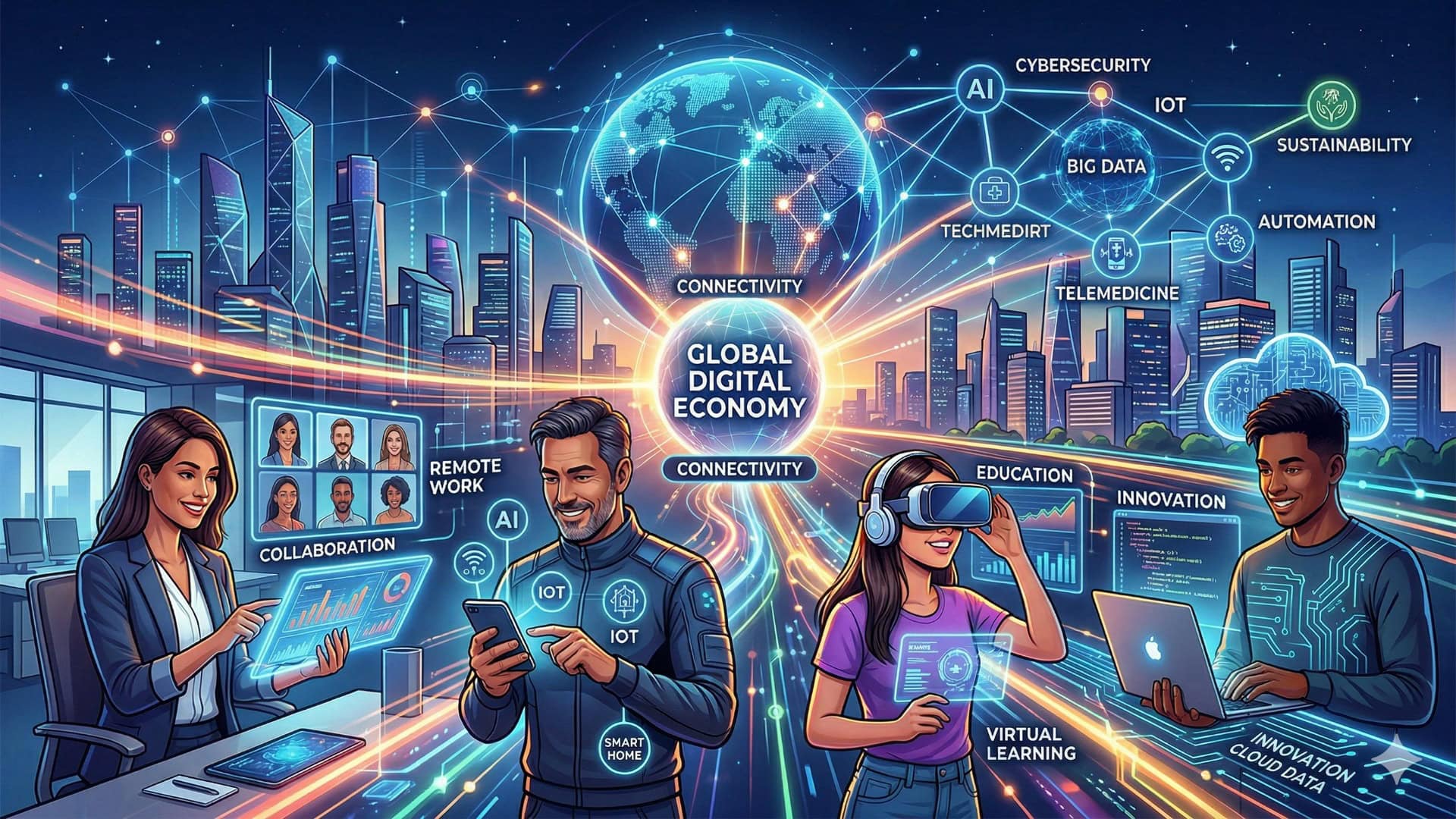
In an era defined by rapid innovation, the role of technology in a digital world extends far beyond simple convenience. It has fundamentally reshaped how we live, work, communicate, and understand the universe around us. We are currently experiencing a profound digital transformation, moving from isolated, analog systems into a globally interconnected tech ecosystem.
Whether you are a business leader aiming to streamline operations, an educator fostering digital literacy, or simply an individual navigating modern life, understanding this technological landscape is no longer optional—it is essential.
This comprehensive guide explores the multifaceted impact of modern technology, the driving forces behind the digital era, and how we can foster an inclusive, accessible future for everyone.
Understanding the Digital Era: A Paradigm Shift
The “digital world” refers to the pervasive integration of digital technologies into all aspects of human society. Unlike previous industrial revolutions driven by steam or electricity, the current paradigm is driven by information technology and data.
Historically, information was siloed. Today, the digitization of information means that data can be shared globally in milliseconds. This shift has democratized knowledge, breaking down geographical and socioeconomic barriers that once restricted access to education and opportunity. The digital era is characterized by:
- Hyper-connectivity: Billions of devices communicating constantly.
- Data-driven decision-making: Leveraging vast amounts of information to predict trends.
- Automation: Delegating repetitive tasks to software and machinery.
- Agility: The ability of systems and societies to adapt rapidly to new inputs.
To fully grasp this shift, we must look at the core pillars where technology has left its most indelible marks.
Core Pillars of Technological Impact
1. Communication and Global Connectivity
At its heart, technology is about connection. The evolution from the telegraph to landlines, and now to smartphones and high-speed internet, has effectively shrunk the globe. Social media platforms, instant messaging applications, and video conferencing tools have transformed interpersonal relationships and business communications.
Today, a team distributed across multiple continents can collaborate in real-time as efficiently as if they were in the same room. However, this hyper-connectivity also requires a new kind of social etiquette and digital literacy to ensure interactions remain respectful, inclusive, and productive.
2. Revolutionizing the Modern Workplace
The concept of the workplace has been entirely redefined. Automation and productivity software have optimized supply chains, streamlined project management, and minimized human error in administrative tasks.
Perhaps the most visible shift is the normalization of remote work. Supported by cloud infrastructure and unified communication tools, professionals can now contribute from anywhere. This flexibility not only improves work-life balance but also allows organizations to tap into a truly global talent pool.
Read More: For deeper insights into managing distributed teams, explore our comprehensive guide on remote team collaboration and productivity strategies.
3. Education and Accessible Learning
Educational Technology (EdTech) has democratized learning. Massive Open Online Courses (MOOCs), interactive virtual classrooms, and AI-driven personalized learning paths allow students to learn at their own pace.
Furthermore, technology plays a crucial role in making education accessible to neurodivergent learners and people with disabilities. Text-to-speech software, closed captioning, and adaptive interfaces ensure that learning environments cater to diverse cognitive and physical needs, championing a more inclusive educational framework.
4. Healthcare and Telemedicine Innovations
The intersection of medicine and technology has led to unprecedented advancements in patient care. Electronic Health Records (EHRs) ensure continuity of care, while wearable technology (like smartwatches) monitors vital signs in real time, shifting healthcare from a reactive model to a proactive, preventative one.
Telemedicine has been a game-changer, particularly for individuals in rural or underserved areas. Patients can now consult specialists hundreds of miles away via video link. For a broader perspective on how global health bodies view this shift, you can read the World Health Organization’s global strategy on digital health.
Key Technologies Driving the Digital World
To understand the role of technology, we must examine the specific innovations powering our modern infrastructure. These are the LSI (Latent Semantic Indexing) keywords that define the digital zeitgeist.
Artificial Intelligence (AI) and Machine Learning (ML)
Artificial Intelligence is arguably the most transformative technology of our time. From predictive text on our phones to complex algorithms capable of diagnosing diseases from medical imagery, AI is ubiquitous. Machine Learning, a subset of AI, allows systems to learn and improve from experience without being explicitly programmed. Generative AI models are now augmenting human creativity, assisting in everything from writing code to designing architecture.
The Internet of Things (IoT) and Smart Living
The Internet of Things refers to the network of physical objects embedded with sensors, software, and connectivity, allowing them to exchange data. In our homes, IoT translates to smart thermostats, automated lighting, and voice-activated assistants. On a larger scale, Industrial IoT (IIoT) optimizes manufacturing plants, while “smart cities” use connected sensors to manage traffic flow, reduce energy consumption, and improve public safety.
Cloud Computing and Big Data Analytics
The cloud is the backbone of the digital world. By providing on-demand access to computing resources and data storage over the internet, cloud computing has eliminated the need for businesses to maintain expensive, physical servers.
This vast storage capacity enables Big Data Analytics. Organizations can now analyze massive datasets to uncover hidden patterns, market trends, and consumer preferences, allowing for highly targeted services and informed strategic planning.
Related Content: Discover the top benefits of migrating your business operations to the cloud.
Cybersecurity in a Connected Ecosystem
With increased connectivity comes increased vulnerability. As our reliance on digital infrastructure grows, so does the sophistication of cyber threats. Cybersecurity is the critical practice of protecting systems, networks, and programs from digital attacks. Modern security paradigms focus on “Zero Trust” architecture—the principle that no entity, internal or external, should be trusted by default. robust encryption, multi-factor authentication, and AI-driven threat detection are vital to maintaining the integrity of the digital world.
The Human Element: Inclusivity and Accessibility in Tech
A truly advanced digital world must be built for everyone. Historically, technological advancements have sometimes left marginalized communities behind, creating a phenomenon known as the digital divide—the gap between demographics and regions that have access to modern information and communications technology, and those that do not.
Designing for Neurodiversity and Accessibility
Inclusive design is a fundamental requirement of modern software and hardware development. This involves creating products that are usable by people with a wide range of abilities and disabilities.
- Visual Impairments: Screen readers, high-contrast modes, and alternative text for images.
- Hearing Impairments: Real-time captioning, visual alerts, and sign language avatars.
- Motor Disabilities: Voice control, adaptive keyboards, and eye-tracking software.
- Neurodivergence: Clear, uncluttered interfaces, the ability to minimize animations, and customizable reading formats (like dyslexia-friendly fonts).
Bridging the Digital Divide
Access to high-speed internet and digital devices is increasingly viewed as a fundamental human right, akin to access to electricity or water. Initiatives to expand broadband infrastructure into rural and economically disadvantaged areas are crucial. Furthermore, digital literacy programs must be funded to ensure that people not only have the tools but also the knowledge to navigate the internet safely, evaluate the credibility of information, and participate fully in the modern economy.
Environmental Impact: The Rise of Green Tech
The digital world has a physical footprint. The massive data centers powering cloud computing, the manufacturing of billions of smart devices, and the resulting electronic waste (e-waste) pose significant environmental challenges.
However, technology is also the key to solving these issues. Green Tech is focused on sustainability:
- Smart Grids: AI-optimized electrical grids that balance power loads and seamlessly integrate renewable energy sources like solar and wind.
- Precision Agriculture: Using IoT sensors and drones to optimize water usage and reduce pesticide application, maximizing crop yields while minimizing environmental harm.
- Circular Economy: Developing modular devices that are easily repairable and recyclable, reducing the sheer volume of e-waste ending up in landfills.
By prioritizing sustainable technology practices, we can ensure that digital progress does not come at the expense of our planet’s ecological health.
Challenges, Ethics, and Responsibilities
As we integrate deeper into the digital realm, we must confront profound ethical questions.
Data Privacy: In a data-driven economy, personal information is a highly valuable commodity. Regulations like the European Union’s General Data Protection Regulation (GDPR) are vital steps toward giving individuals control over their own data, but the tension between corporate data collection and personal privacy remains a pressing issue.
Algorithmic Bias: AI systems are only as objective as the data they are trained on. If historical data contains human biases, AI models can inadvertently learn and amplify those biases, leading to discriminatory outcomes in areas like hiring, lending, and law enforcement. Cultivating diverse engineering teams and implementing strict algorithmic auditing are essential to mitigate this.
Digital Wellbeing: The design of many digital platforms leverages psychological principles to maximize user engagement, leading to concerns about screen addiction, social isolation, and the impact of curated social media feeds on mental health. Promoting digital well-being features (like screen time limits and focus modes) and cultivating mindful tech habits are necessary counterbalances.
Future Trends: What Lies Ahead?
The technological horizon is constantly expanding. Several emerging trends promise to further redefine the role of technology in our world:
- Web3 and Decentralization: The push toward a decentralized internet, built on blockchain technology, aims to return ownership and control of data back to the users, moving away from centralized corporate platforms.
- The Metaverse and Spatial Computing: Augmented Reality (AR) and Virtual Reality (VR) are evolving from gaming novelties into powerful tools for training, virtual collaboration, and immersive commerce. Spatial computing will blend the physical and digital worlds seamlessly.
- Quantum Computing: While still in its infancy, quantum computing promises to solve complex problems—from drug discovery to climate modeling—at speeds unimaginable with classical computers.
Conclusion
The role of technology in a digital world is both a reflection of human ingenuity and a catalyst for human progress. From revolutionizing how we cure diseases to fundamentally altering how we communicate across oceans, technology is the scaffolding of modern society.
However, technology is inherently neutral; its impact is determined by how we choose to wield it. As we move forward, the collective goal must be to harness these powerful tools responsibly. By prioritizing inclusivity, ethical development, and environmental sustainability, we can ensure that the digital transformation benefits humanity as a whole, creating a future that is connected, equitable, and profoundly empowering.
Frequently Asked Questions (FAQ)
What is meant by the “digital transformation”?
Digital transformation is the integration of digital technology into all areas of a business, society, or process. It fundamentally changes how operations are conducted and how value is delivered to people. It involves a cultural shift that requires organizations to continually challenge the status quo and experiment with new tech.
How is technology impacting mental health?
The impact is dual-sided. On one hand, technology provides unprecedented access to mental health resources, teletherapy, and supportive online communities. On the other hand, excessive screen time, cyberbullying, and the comparison culture fostered by social media can negatively impact mental well-being. Mindful tech usage is highly recommended.
What is the “digital divide” and why is it important?
The digital divide is the gap between those who have access to modern information and communication technology (like high-speed internet and computers) and those who do not. It is a critical issue because lacking digital access severely limits educational opportunities, career prospects, and access to essential services in today’s world.
How does Artificial Intelligence affect daily life?
AI is deeply woven into daily routines. It powers the algorithms that recommend what you watch on streaming services, filters spam from your email, optimizes GPS routing to avoid traffic, and enables voice assistants like Siri or Alexa to understand and execute your commands.
What are the main cybersecurity threats for individuals today?
Common threats include phishing (deceptive emails or messages designed to steal credentials), malware (malicious software), and identity theft. Protecting yourself involves using strong, unique passwords, enabling multi-factor authentication, and maintaining a healthy skepticism regarding unsolicited communications.
Can technology help fight climate change?
Yes. While the tech industry produces emissions, “Green Tech” is crucial for mitigation. Innovations include smart energy grids, advanced battery storage for renewable energy, AI models that optimize supply chains to reduce waste, and precision agriculture tools that minimize environmental resource depletion.
Leave a Reply