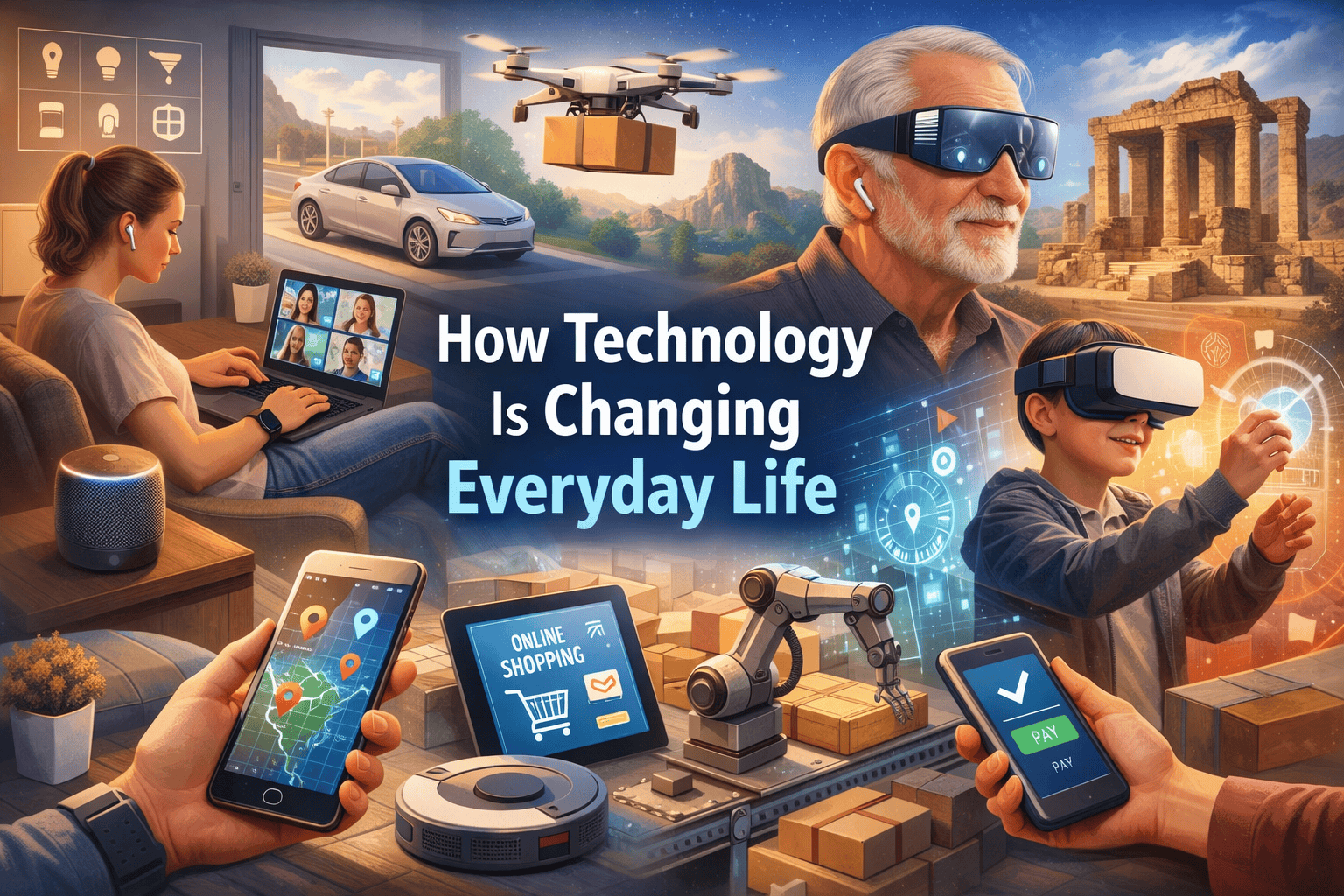
From the moment our smartphone alarms wake us up to the AI-curated algorithms that help us wind down with evening entertainment, the question isn’t if technology impacts us, but rather how deeply it weaves into our daily routines. The digital transformation of society has moved beyond mere convenience; it is fundamentally altering human behavior, redefining global connectivity, and reshaping the very fabric of our everyday lives.
Whether you are a digital native who grew up with a tablet in hand or someone adapting to the rapid pace of modern innovation, understanding how technology is changing everyday life is crucial for navigating the modern world. In this comprehensive guide, we will explore the profound technological advancements driving this shift, examining everything from smart home devices and the future of remote work to wearable health tech and the evolution of digital education.
1. The Digital Transformation of the Modern Household: Enter the Smart Home
A decade ago, the concept of a “smart home” felt like science fiction. Today, the Internet of Things (IoT) has turned our living spaces into interconnected ecosystems designed to optimize comfort, security, and energy efficiency.
Automating Daily Routines
At the heart of the modern smart home are centralized hubs and voice assistants. Devices like smart speakers allow individuals to control lighting, adjust thermostats, and manage household schedules using simple voice commands. This level of automation is not just about luxury; it represents a monumental leap in accessibility. For older adults or individuals with mobility challenges, voice-activated technology provides newfound independence, allowing them to manage their environment without physical strain.
Energy Efficiency and Sustainability
Climate change and environmental awareness have pushed technology to prioritize sustainability. Smart thermostats learn our daily habits, adjusting heating and cooling systems to conserve energy when no one is home. Smart appliances—from refrigerators to washing machines—can now operate during off-peak energy hours, reducing both carbon footprints and utility bills. This integration of eco-friendly tech demonstrates how artificial intelligence in daily life can contribute to broader global sustainability goals.
Enhanced Security Systems
Home security has evolved from simple alarms to sophisticated, AI-driven surveillance networks. High-definition smart cameras, video doorbells, and motion sensors provide real-time alerts directly to our smartphones, regardless of where we are in the world. Modern systems can even differentiate between a passing car, a stray animal, and a potential intruder, minimizing false alarms and providing peace of mind.
[Internal Link: Curious about upgrading your space? Read our beginner’s guide to building a smart home ecosystem.]
2. Redefining the Workplace: Remote Work Trends and the Hybrid Ecosystem
Perhaps nowhere is the impact of technology more evident than in how we earn a living. The traditional 9-to-5 cubicle model is rapidly making way for flexible, digital-first work environments.
The Rise of Remote Collaboration
High-speed internet, cloud computing, and advanced communication platforms have decoupled work from physical office spaces. Video conferencing software and asynchronous project management tools enable global teams to collaborate seamlessly across different time zones. This shift has democratized the workforce, allowing companies to hire top talent regardless of geographical location and giving employees the flexibility to design work-lives that suit their personal needs.
Artificial Intelligence as the New Co-Worker
Artificial intelligence is no longer looming on the horizon; it is sitting at the desk next to us. Generative AI tools are automating repetitive administrative tasks, drafting emails, analyzing massive datasets, and even writing code. Far from replacing human workers entirely, these tools are acting as digital assistants, freeing up human professionals to focus on creative problem-solving, strategic planning, and emotionally intelligent leadership.
The Challenge of the “Always-On” Culture
However, this technological advancement comes with caveats. The ability to work from anywhere often translates to the expectation of working from everywhere. The blurring of boundaries between professional and personal life has led to an increase in digital burnout. As we navigate the future of technology in the workplace, establishing healthy digital boundaries and promoting the “right to disconnect” will be just as important as the software we use to connect.
[Internal Link: Discover strategies for maintaining work-life balance in a remote work environment.]
3. Healthcare at Our Fingertips: Wearables and Telemedicine
The intersection of technology and healthcare is shifting the medical paradigm from reactive treatments to proactive, personalized wellness.
The Telemedicine Revolution
Telehealth has dismantled geographical barriers to healthcare access. Through secure video links, patients can now consult with specialists located hundreds or thousands of miles away. This is particularly life-changing for individuals in rural communities or those with chronic illnesses who find frequent hospital visits physically or financially taxing. Digital prescriptions, virtual therapy sessions, and remote triage are making healthcare more inclusive and responsive.
Wearable Health Tech: The Quantified Self
Smartwatches and fitness trackers have evolved from simple step-counters to sophisticated medical monitors. Today’s wearable health tech can track heart rate variability, blood oxygen levels, sleep architecture, and even detect irregular heartbeats (like atrial fibrillation). By providing a continuous stream of biometric data, these devices empower individuals to take charge of their health. They also provide physicians with a more comprehensive view of a patient’s well-being than a standard bi-annual checkup ever could.
Personalized Medicine and AI Diagnostics
Behind the scenes, machine learning algorithms are revolutionizing medical research and diagnostics. AI can analyze complex medical imagery—such as MRIs and X-rays—with incredible speed and accuracy, often catching early signs of disease that the human eye might miss. Furthermore, genomic sequencing technology is paving the way for personalized medicine, where treatments and pharmaceuticals are tailored to the specific genetic makeup of the individual, drastically improving efficacy and reducing side effects.
4. Moving Forward: The Future of Transportation and Mobility
How we move from point A to point B is undergoing a radical transformation, driven by the urgent need to reduce emissions and the rapid advancement of autonomous systems.
The Electric Vehicle (EV) Boom
The transition from internal combustion engines to electric vehicles is one of the most visible technological shifts of the decade. Advances in lithium-ion battery technology have significantly increased the range of EVs while driving down costs. Accompanied by a growing global infrastructure of fast-charging stations, EVs are becoming a practical, everyday reality for millions of commuters, directly impacting our daily carbon footprint.
Autonomous and Connected Vehicles
Self-driving technology is gradually moving from testing facilities to public roads. While fully autonomous, steering-wheel-less cars are still navigating regulatory and technical hurdles, advanced driver-assistance systems (ADAS) are already commonplace. Features like adaptive cruise control, lane-keeping assist, and automatic emergency braking are utilizing sensors, radar, and cameras to make our daily commutes safer and less stressful.
Micro-Mobility and Urban Planning
Technology is also reshaping urban transit through micro-mobility solutions. App-based electric scooters and bike-sharing programs provide efficient “last-mile” transportation, reducing traffic congestion in densely populated cities. Furthermore, GPS and real-time transit data integrated into our smartphones allow individuals to navigate public transportation with unprecedented ease, encouraging more sustainable commuting habits.
[Internal Link: Read more about how smart cities are utilizing data to improve urban living.]
5. Education Without Borders: E-Learning and Lifelong Development
The traditional classroom is expanding beyond four physical walls. The impact of technology on society is profoundly visible in how we acquire knowledge, share information, and develop new skills.
The Democratization of Knowledge
Online learning platforms and Massive Open Online Courses (MOOCs) have made world-class education accessible to anyone with an internet connection. Whether someone wants to learn a new coding language, understand ancient history, or develop leadership skills, the barrier to entry has never been lower. This democratization is vital in a rapidly changing economy where lifelong learning and continuous reskilling are necessary to stay competitive.
Immersive Learning: VR and AR in the Classroom
Virtual Reality (VR) and Augmented Reality (AR) are turning abstract concepts into tangible experiences. Medical students can practice complex surgeries in risk-free virtual environments. History students can take virtual field trips to ancient Rome, while engineering students can interact with 3D models of complex machinery. By engaging multiple senses, these immersive technologies cater to diverse learning styles and improve knowledge retention.
AI-Powered Personalization
Just as personalized medicine treats the individual, AI in education aims to personalize the learning journey. Intelligent tutoring systems can adapt to a student’s pace, identifying areas where they struggle and providing customized exercises to reinforce those specific concepts. This tailored approach ensures that advanced students remain engaged while providing crucial support to those who need extra time to master a subject.
6. Rethinking Entertainment and Social Connection
Technology has not only changed how we work and learn; it has completely overhauled how we relax, consume media, and connect with our communities.
The Streaming Revolution
The days of scheduling our evenings around television guides or visiting video rental stores are long gone. On-demand streaming services use sophisticated algorithms to analyze our viewing habits, serving up highly personalized recommendations. This shift has led to the rise of binge-watching culture and transformed the dynamics of the entertainment industry, with technology companies becoming some of the largest producers of original film and television content
Social Media and the Global Village
Social networking platforms have transformed how we maintain relationships and build communities. They allow us to stay connected with family across the globe, find niche communities of like-minded individuals, and mobilize social movements at lightning speed. However, this hyper-connectivity requires mindful navigation. The curation of perfect online lives can impact mental health, and the algorithms designed to maximize user engagement often create echo chambers that polarize public discourse.
The Evolution of Gaming
Video gaming has evolved from a solitary, pixelated pastime into a massive, interconnected cultural phenomenon. Cloud gaming allows individuals to play high-fidelity games on basic devices without expensive hardware. Furthermore, multiplayer online games and e-sports have become massive social hubs where millions gather not just to play, but to converse, collaborate, and form lasting friendships.
[Internal Link: Explore our deep dive into the psychological effects of social media algorithms.]
7. The Financial Landscape: FinTech and Digital Economies
The way we manage, spend, and invest our money has been completely digitized, stripping away the friction of traditional banking.
Cashless Societies and Mobile Payments
Physical wallets are increasingly being replaced by digital ones. Mobile payment applications, powered by near-field communication (NFC) technology, allow for instant, secure transactions with a tap of a smartphone or smartwatch. Peer-to-peer payment apps have made splitting bills or sending money to friends seamless, accelerating the global shift toward truly cashless societies.
Democratized Investing
Historically, stock market investing was gated by high broker fees and a lack of accessible information. Today, micro-investing apps and robo-advisors use algorithms to manage portfolios based on an individual’s risk tolerance. This has opened up wealth-building opportunities to younger generations and lower-income demographics who were previously excluded from traditional financial markets.
The Blockchain and Decentralization
While still highly volatile, cryptocurrency and blockchain technology represent a fundamental rethinking of trust and digital ownership. Beyond just digital currency, the underlying blockchain technology offers secure, transparent ledgers that have the potential to revolutionize supply chain management, digital identity verification, and secure voting systems in the future.
8. Navigating the Challenges: The Ethical Implications of Tech
While celebrating technological advancements, it is crucial to address the ethical challenges and societal frictions they create. Acknowledging these issues is essential for shaping a future that benefits everyone.
The Digital Divide
Not everyone is experiencing this digital transformation equally. The “digital divide” refers to the gap between those who have access to modern information and communications technology and those who do not. Factors such as income, geography, and education can limit access to high-speed internet and reliable devices. Addressing this inequality is critical; without equitable access, technology threatens to widen existing socioeconomic disparities rather than close them.
Data Privacy and Security
As our daily lives become increasingly digitized, we generate a massive digital footprint. Every online purchase, web search, and GPS movement is data that is collected, analyzed, and often sold. Navigating the future requires robust conversations and legislation regarding data privacy. Individuals must become more literate in cybersecurity, utilizing multi-factor authentication and understanding the terms of service they agree to.
The Impact on Human Interaction
While technology connects us globally, it can sometimes isolate us locally. The phenomenon of “phubbing” (snubbing someone in favor of a mobile phone) and the reduction of face-to-face interactions can impact our capacity for deep empathy and active listening. Finding a balance—leveraging technology to enhance our lives without allowing it to replace genuine, in-person human connection—remains one of our greatest modern challenges.
Conclusion: Embracing the Digital Tomorrow
The story of how technology is changing everyday life is an ongoing narrative. We are living in a transitional era where the boundaries between the physical and digital worlds are continuously blurring. From the smart thermostats that warm our homes to the wearable health tech that monitors our vital signs, these innovations are tools designed to augment human capability.
However, technology is merely a mirror reflecting our priorities. As we move forward into an increasingly automated and AI-driven future, the goal should not be technological advancement for the sake of it. Instead, we must focus on intentional, inclusive innovation. By championing accessibility, protecting digital privacy, and prioritizing human well-being, we can ensure that the technology of tomorrow creates a more connected, healthy, and equitable world for everyone.
Frequently Asked Questions (FAQ)
1. What are the negative effects of technology on daily life?
While technology offers immense benefits, negative effects can include digital eye strain, decreased physical activity due to sedentary screen time, privacy vulnerabilities, and mental health challenges related to social media comparison and digital burnout. Maintaining digital boundaries and practicing mindful tech consumption can mitigate these issues.
2. How is artificial intelligence used in everyday life today?
AI is deeply integrated into daily routines. It powers the voice assistants in smart home devices, curates the recommendations on streaming services, filters spam from email inboxes, provides predictive text on smartphones, and optimizes navigation routes on GPS applications.
3. Will automation and AI completely replace human jobs?
While AI and automation are phasing out certain repetitive and manual tasks, they are concurrently creating new industries and roles. The future of work is likely a collaborative one, where humans leverage AI tools to enhance productivity, requiring a shift toward skills like emotional intelligence, complex problem solving, and technological literacy.
4. What is the “Internet of Things” (IoT)?
The Internet of Things refers to the network of physical objects—”things”—embedded with sensors, software, and other technologies that connect and exchange data with other devices and systems over the internet. Examples include smart refrigerators, fitness trackers, and internet-connected security cameras.
5. How can I protect my privacy in a highly technological world?
To protect digital privacy, use strong, unique passwords combined with two-factor authentication (2FA). Regularly review privacy settings on social media and applications, be cautious about the personal information you share on public Wi-Fi networks, and consider using reputable VPNs and privacy-focused web browsers.
Reference Links
-
Pew Research Center – Internet & Technology: Provides comprehensive, data-driven insights into how digital adoption impacts society, privacy, and demographics. https://www.pewresearch.org/internet/
-
World Health Organization (WHO) – Digital Health: Explores the global standards and impact of telemedicine, wearables, and digital health strategies. https://www.who.int/health-topics/digital-health
-
MIT Technology Review: A trusted authority on emerging technologies, AI advancements, and the ethical implications of modern tech. https://www.technologyreview.com/
-
Brookings Institution – Technology & Innovation: Offers deep analysis on the economic and policy impacts of tech, including the digital divide and the future of work. https://www.brookings.edu/topic/technology-innovation/
Leave a Reply