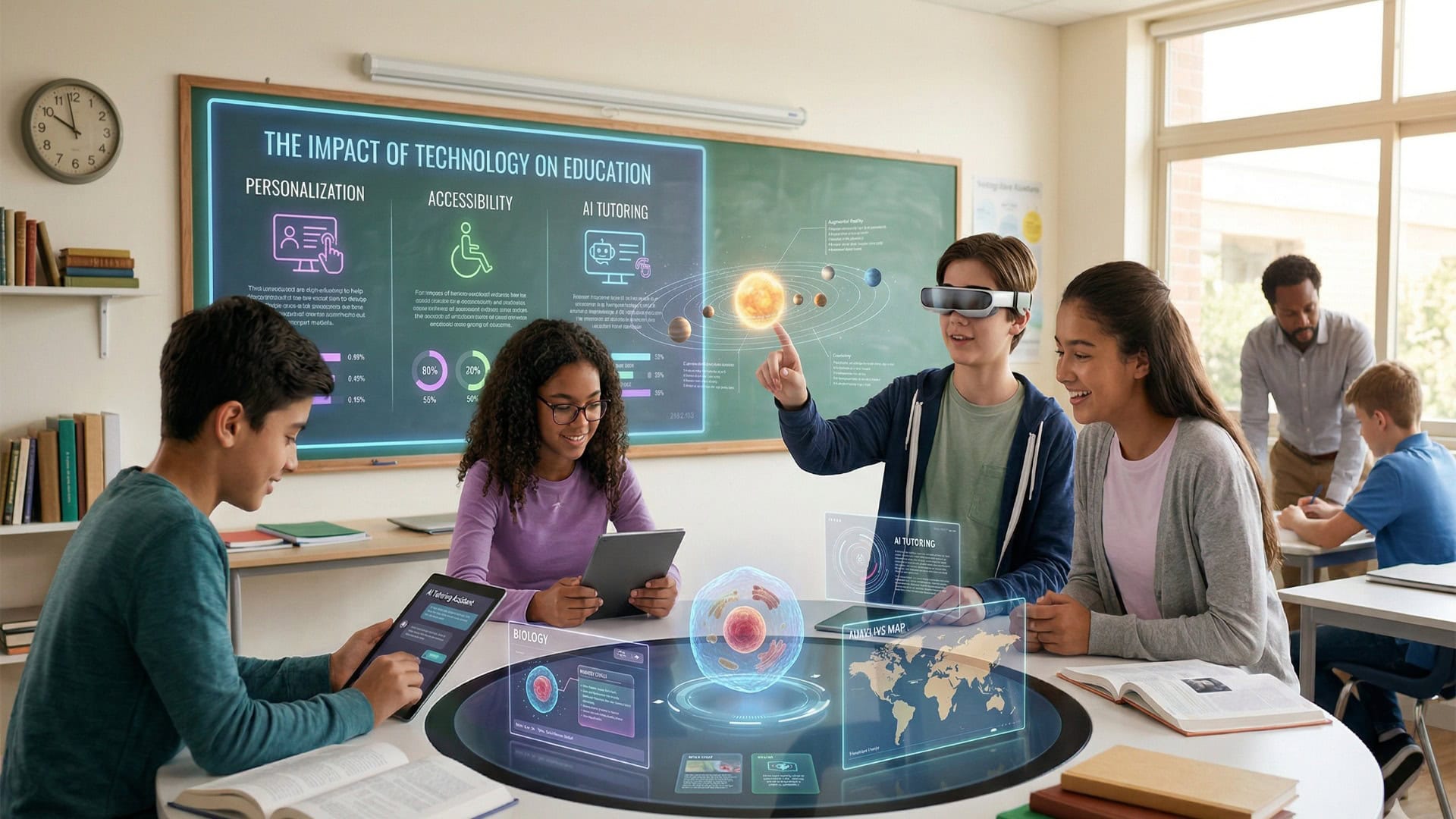
The classroom of today looks remarkably different from the classroom of just two decades ago. The chalkboard has been replaced by interactive smartboards, heavy textbooks have given way to lightweight tablets, and the traditional lecture format is increasingly making room for personalized, digital-first learning experiences. The impact of technology on education is profound, far-reaching, and continually evolving. It is reshaping how educators teach, how learners acquire knowledge, and how institutions operate on a global scale.
However, integrating technology into education is not simply about placing a screen in front of a student. It is about fundamentally rethinking pedagogy to foster engagement, accessibility, and critical thinking. As we navigate this digital renaissance, it is crucial to examine both the incredible opportunities and the persistent challenges that educational technology (EdTech) brings to the table.
This comprehensive guide explores the evolution of digital classrooms, the tangible benefits of EdTech, the challenges we must overcome to ensure equitable access, and what the future holds for learners worldwide.
The Evolution of the Modern Classroom
To understand the current impact of technology on education, it is helpful to look back at how we arrived here. The integration of technology in learning spaces has occurred in distinct phases, moving from basic administrative tools to deeply immersive learning environments.
1. The Analog Era and Early Digitization
In the late 20th century, classroom technology was largely limited to overhead projectors, VHS tapes, and the occasional desktop computer reserved for typing class or playing early educational games like The Oregon Trail. Technology was an “event” rather than an integrated part of the daily curriculum.
2. The Information Age and Internet Access
With the proliferation of the internet in the late 1990s and early 2000s, the world’s information became accessible from a single terminal. Research shifted from physical encyclopedias to search engines. Schools began building computer labs, but access was still tethered to specific rooms and times.
3. The 1:1 Device Movement and Cloud Computing
The true paradigm shift occurred when schools began adopting 1:1 device programs—providing every student with a laptop, Chromebook, or tablet. Coupled with cloud-based platforms like Google Workspace for Education and Microsoft Teams, learning was no longer confined to the four walls of a classroom. Students could collaborate on documents in real-time, submit assignments digitally, and communicate with educators outside of school hours.
4. The Era of Intelligent and Immersive Learning
Today, we are entering an era defined by Artificial Intelligence (AI), Virtual Reality (VR), Augmented Reality (AR), and adaptive learning algorithms. Technology is no longer just a delivery mechanism for information; it is an active participant in the learning process, capable of analyzing student performance and tailoring content to individual needs.
Key Benefits of Technology in Education
The widespread adoption of educational technology has unlocked a multitude of benefits for students, educators, and administrators alike. When implemented thoughtfully, technology empowers users and creates more inclusive, effective learning environments.
1. Personalized and Differentiated Learning
Historically, education has operated on a “one-size-fits-all” model. A teacher delivered a lesson at a set pace, and students were expected to keep up. Technology has shattered this model by enabling personalized learning.
- Adaptive Learning Software: Platforms can assess a student’s current understanding of a topic in real-time. If a learner struggles with a specific math concept, the software automatically provides additional practice and alternative explanations until mastery is achieved. Conversely, students who grasp the material quickly are challenged with advanced concepts, preventing boredom.
- Self-Paced Exploration: Digital platforms allow students to learn at their own speed. They can pause, rewind, and re-watch recorded lectures or interactive modules, ensuring they fully comprehend the material before moving forward.
2. Enhanced Accessibility and Inclusive Education
One of the most significant impacts of technology on education is its ability to break down barriers for learners with disabilities and those from diverse linguistic backgrounds. EdTech provides vital accommodations that foster true inclusivity.
- Assistive Technologies: Tools such as text-to-speech (TTS), speech-to-text transcription, and screen readers empower students with visual impairments, dyslexia, or physical disabilities to access curriculum independently.
- Translation and Captioning: For students learning in a non-native language, real-time translation tools and closed captioning on educational videos provide crucial support, ensuring that language barriers do not impede academic achievement.
- Diverse Representation: Digital resources allow educators to easily curate content that reflects diverse cultures, perspectives, and histories, moving beyond the limitations of outdated, standardized textbooks.
3. Fostering Collaboration and Communication
Technology has redefined what it means to work on a group project. It breaks down geographical barriers and encourages collaboration both within the classroom and across the globe.
- Real-Time Collaboration Tools: Applications like collaborative word processors and digital whiteboards allow students to brainstorm, edit, and create together simultaneously, even when they are not in the same room.
- Global Connectivity: Classrooms can now connect via video conferencing with experts, authors, or peer classrooms halfway across the world. This global exchange of ideas fosters cultural competency and broadens students’ worldviews.
4. Engaging Multimedia and Interactive Content
Attention spans are evolving, and modern students process information differently than previous generations. Technology caters to various learning styles by providing rich, multimedia experiences.
- Gamification: Incorporating game design elements—such as points, badges, and leaderboards—into learning activities increases motivation and engagement. Learning becomes an interactive quest rather than a passive chore.
- Virtual and Augmented Reality: Complex subjects become tangible through immersive tech. Students can virtually dissect a frog, walk through ancient Rome, or explore the human circulatory system from the inside. This experiential learning deeply cements knowledge.
5. Data-Driven Insights for Educators
For educators, technology acts as a powerful diagnostic tool. Learning Management Systems (LMS) and educational software generate vast amounts of data on student performance.
- Early Intervention: Teachers can identify which students are falling behind and exactly where they are struggling before a major exam. This allows for timely, targeted interventions.
- Curriculum Refinement: By analyzing aggregate data, schools can determine which lesson plans are highly effective and which need to be revised.
The Role of Artificial Intelligence in the Classroom
Artificial Intelligence is arguably the most disruptive force in education today. It is important to ground our understanding of AI in reality: AI is not here to replace human educators. Instead, it serves as an incredibly capable assistant, freeing up teachers to do what they do best—mentor, inspire, and connect with students on a human level.
Intelligent Tutoring Systems
AI-powered chatbots and tutoring systems are available 24/7 to answer student queries, explain complex concepts, and guide learners through homework problems. These systems use natural language processing to understand the student’s intent and provide conversational, step-by-step assistance.
Automating Administrative Tasks
Educators spend a significant portion of their week on administrative duties. AI tools can automate grading for multiple-choice and short-answer tests, organize digital files, and even help draft email communications to parents. This reduction in administrative burden helps combat teacher burnout.
Lesson Planning and Content Generation
Generative AI tools can assist teachers in brainstorming lesson plans, creating custom reading passages tailored to specific reading levels, and generating quiz questions. This allows educators to quickly assemble highly customized resources for their classrooms.
Navigating the Challenges: The Reality of EdTech Integration
While the benefits are immense, the integration of technology in education is not without significant hurdles. To build an equitable future, we must candidly address these challenges.
1. The Digital Divide and Educational Equity
The most pressing issue regarding technology in education is the digital divide. Not all students have reliable access to high-speed internet or modern devices outside of school.
- The Homework Gap: When assignments require internet access, students from low-income households or rural areas are disproportionately disadvantaged. Schools and policymakers must work together to provide mobile hotspots, subsidized internet programs, and community Wi-Fi initiatives to ensure equitable access to learning resources. For more on digital equity, explore research by the Pew Research Center.
2. Screen Time and Digital Well-being
Replacing physical books and active play with prolonged screen time raises valid concerns regarding student physical and mental health.
- Cognitive Overload: Constant notifications and digital multi-tasking can fragment attention spans and increase stress.
- Mindful Integration: Educators must balance digital tasks with “unplugged” activities. Technology should be used when it adds pedagogical value, not simply for the sake of using a screen.
3. Data Privacy and Security
As schools rely more on digital platforms, they collect massive amounts of sensitive student data—from grades and attendance to behavioral records.
- Protecting Student Information: Institutions must rigorously vet the privacy policies of the EdTech vendors they use, ensuring compliance with laws like the Family Educational Rights and Privacy Act (FERPA) in the US, or the General Data Protection Regulation (GDPR) in Europe. Safeguarding students against data breaches and unauthorized tracking is paramount.
4. The Need for Comprehensive Teacher Training
You can place the most advanced technology in a classroom, but if the educator does not know how to effectively integrate it into their pedagogy, it becomes an expensive paperweight.
- Professional Development: Schools must invest heavily in ongoing professional development. Teachers need time to explore new tools, collaborate on best practices, and learn how to shift from being the “sage on the stage” to the “guide on the side.”
The Future of Learning: What Comes Next?
As we look toward the future, the relationship between technology and education will only deepen. Here are the trends shaping the next decade of learning.
The Rise of Blended and Hybrid Learning
The COVID-19 pandemic forced a global experiment in remote education. While purely remote learning has its drawbacks, the future is undeniably blended. Hybrid models—where students combine face-to-face classroom instruction with self-paced digital learning—offer flexibility and cater to a wider variety of learning preferences.
Micro-credentials and Lifelong Learning
The rapid pace of technological advancement means that skills become obsolete faster than ever before. Education is shifting from a one-time event (e.g., a four-year degree) to a continuous journey of lifelong learning. We will see a rise in digital micro-credentials, boot camps, and modular courses that allow adult learners to upskill and reskill throughout their careers.
Deep Immersive Experiences
As hardware becomes more affordable, VR and AR will become standard classroom tools. Imagine architectural students building and walking through 3D models of their designs, or history students virtually participating in the signing of the Declaration of Independence. The transition from 2D screens to 3D immersive environments will revolutionize experiential learning.
Conclusion
The impact of technology on education is a complex, multifaceted phenomenon. It has the power to democratize access to information, personalize the learning journey, and prepare students for a rapidly digitizing workforce. However, technology is simply a tool; its effectiveness depends entirely on how it is utilized.
To harness the full potential of EdTech, we must prioritize digital equity, protect student privacy, and empower educators with the training they need. By balancing the incredible capabilities of digital tools with the irreplaceable value of human mentorship, we can create an inclusive, engaging, and highly effective educational ecosystem for generations to come.
Frequently Asked Questions (FAQ)
1. What is educational technology (EdTech)?
Educational technology, or EdTech, refers to the hardware, software, and digital platforms designed to enhance teacher-led instruction and improve student learning outcomes. This includes everything from interactive whiteboards and tablets to learning management systems, adaptive software, and AI-powered tutoring tools.
2. How does technology improve student engagement?
Technology improves engagement by catering to different learning styles and moving away from passive lecturing. Tools like gamified learning apps, interactive multimedia, video content, and virtual reality make lessons more dynamic, visually stimulating, and hands-on, which helps capture and retain student attention.
3. What is the “digital divide” in education?
The digital divide refers to the gap between students who have robust access to the internet and modern digital devices, and those who do not. This disparity creates unequal educational opportunities, as students without home internet access (often referred to as the “homework gap”) struggle to complete assignments, conduct research, or participate in remote learning.
4. Will AI replace teachers in the future?
No, AI is highly unlikely to replace teachers. Education is fundamentally a human endeavor that requires empathy, emotional intelligence, moral guidance, and complex behavioral management—traits AI does not possess. AI will, however, automate administrative tasks and provide intelligent tutoring support, allowing teachers to spend more time directly interacting with and mentoring their students.
5. How can parents help manage screen time for educational purposes?
Parents can help by distinguishing between active screen time (creating digital art, coding, writing, or interactive learning) and passive screen time (mindlessly scrolling or watching videos). Setting boundaries, encouraging screen-free breaks, and engaging in conversations about what children are learning online can help maintain a healthy digital balance.
6. Is technology in the classroom safe for student privacy?
It can be, provided that schools and districts rigorously vet the applications they use. Educational institutions must ensure that the software complies with regional data protection laws (like FERPA or GDPR), uses secure encryption, and explicitly prohibits the selling of student data to third-party advertisers.
For further reading on best practices for technology integration in the classroom, visit trusted resources for educators such as Edutopia and the International Society for Technology in Education (ISTE).
Leave a Reply