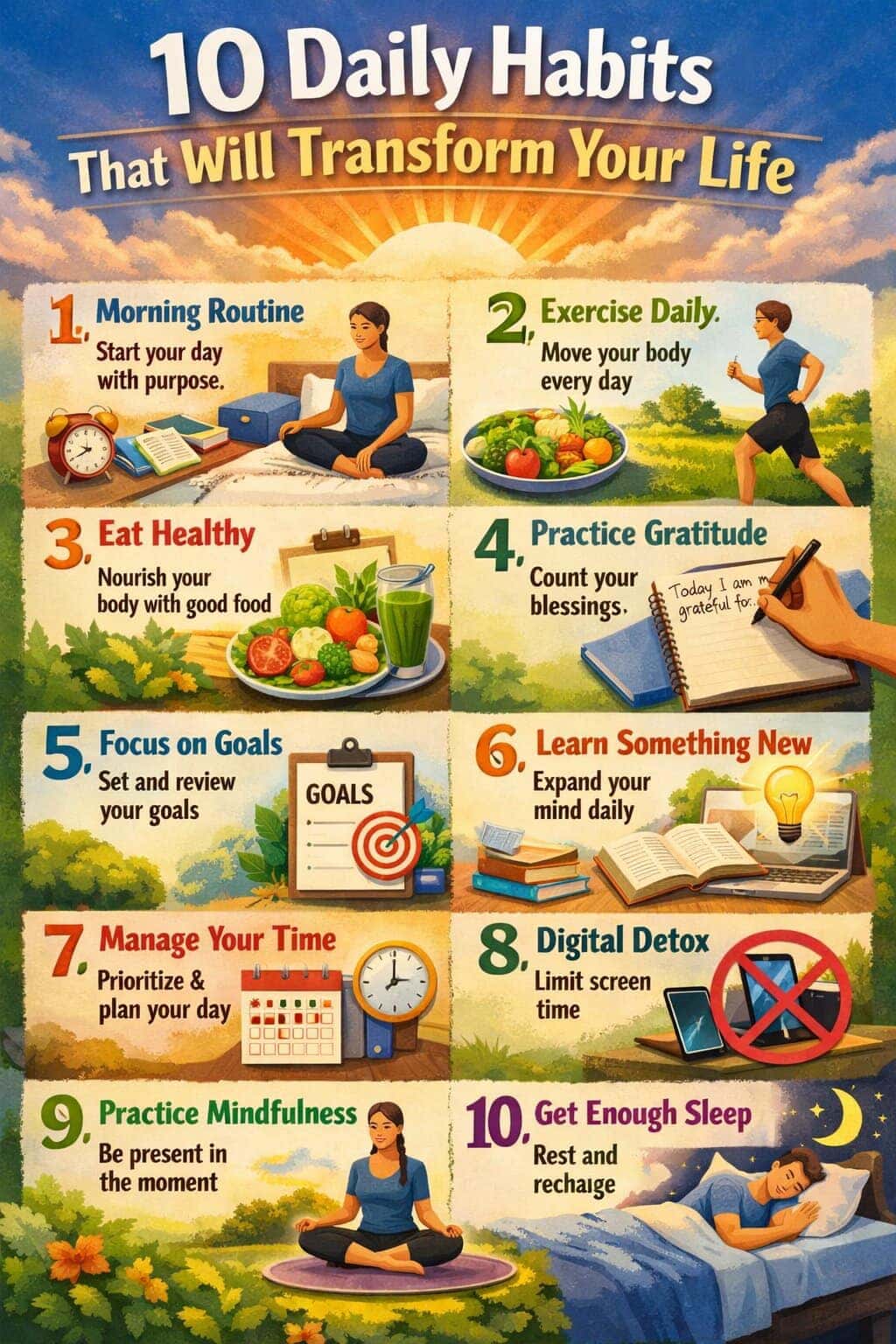
We live in a world that frequently glorifies overnight success and dramatic transformations. We are constantly bombarded with stories of people who seemingly flipped a switch and completely overhauled their existence. However, the reality of human behavior is far less cinematic. True, lasting transformation does not happen in a single, earth-shattering moment. Instead, it is the quiet, compounding result of the small choices we make every single day.
Whether you are looking to boost your career, improve your mental health, enhance your relationships, or simply find more peace in your daily routine, the secret lies in your habits. Our lives are essentially the sum of our routines. When we take control of those routines, we take control of our future.
This comprehensive guide explores 10 daily habits backed by behavioral science, psychology, and wellness research that can fundamentally shift your life’s trajectory. This is not about striving for unreachable perfection or adhering to a rigid, punishing schedule. It is about building a supportive, sustainable framework that honors your unique circumstances, abilities, and goals.
Let’s dive into the daily practices that can help you build a more intentional, fulfilling life.
1. Prioritize Restorative Sleep Over the “Hustle”
For decades, hustle culture promoted the dangerous myth that sleep deprivation was a badge of honor. Today, science tells us unequivocally that sleep is the foundational pillar of all human health and performance. Without adequate, restorative sleep, our cognitive function, emotional regulation, and physical health suffer drastically.
Why It Works
During sleep, your brain is far from inactive. It is busy clearing out neurotoxins that accumulate during waking hours, consolidating memories, and repairing cellular damage. Consistent, high-quality sleep regulates the hormones that control appetite, reduces stress cortisol levels, and bolsters the immune system.
How to Implement It
Focus on sleep hygiene rather than forcing yourself to be a “morning person” if your natural chronotype leans otherwise.
- Establish a consistent sleep schedule by going to bed and waking up at the same time every day, even on weekends.
- Create a wind-down routine 60 minutes before bed that excludes screens.
- Ensure your sleeping environment is cool, dark, and quiet.
Overcoming the Roadblock
If you struggle with racing thoughts at night, keep a notepad by your bed. Write down tomorrow’s to-do list or any anxieties to mentally “offload” them from your brain onto the paper.
2. Practice Mindful Hydration and Nourishment
It is easy to view food and water simply as fuel to keep us going, but what we consume directly impacts our mood, energy levels, and long-term vitality. Mindful nourishment is not about restrictive dieting or labeling foods as “good” or “bad.” It is about tuning into what your body needs to function optimally.
Why It Works
Even mild dehydration (as little as 2%) can cause brain fog, fatigue, and mood swings. Similarly, blood sugar spikes and crashes from highly processed, sugar-heavy foods can lead to irritability and an inability to focus. Providing your brain with steady, nutrient-dense energy and adequate water keeps your cognitive engine running smoothly.
How to Implement It
- Start your morning with a large glass of water before reaching for coffee or tea.
- Keep a reusable water bottle within your line of sight throughout the day.
- Aim to incorporate a source of protein and complex carbohydrates into your first meal of the day to stabilize your blood sugar.
Important Note: Hydration and nutrition needs vary wildly based on individual health conditions, activity levels, and body types. Always consult with a healthcare or nutritional professional for personalized guidance rather than following internet trends.
3. Engage in Intentional Movement
The human body was designed to move, yet modern lifestyles keep many of us tethered to desks and screens for hours on end. Transforming your life through movement does not require a costly gym membership or running a marathon. It simply requires a commitment to breaking up sedentary behavior.
Why It Works
Physical activity releases endorphins, the brain’s natural mood elevators. It also increases blood flow to the brain, enhancing creativity and problem-solving skills. Regular movement has been proven to reduce symptoms of anxiety and depression while improving cardiovascular health and mobility.
How to Implement It
Find a form of movement that feels joyful and accessible to you.
- If you have mobility limitations, explore seated stretching or adaptive yoga.
- Take a brisk 15-minute walk during your lunch break.
- Put on your favorite music and dance in your living room.
- The goal is simply to elevate your heart rate and engage your muscles daily.
Overcoming the Roadblock
The biggest hurdle is often the “all-or-nothing” mindset. If you don’t have 45 minutes for a full workout, do not skip it entirely. Five minutes of stretching is infinitely better than zero minutes of stretching.
4. Cultivate a Mindfulness or Meditation Practice
In a world filled with constant notifications, breaking news, and endless demands on our attention, our minds are perpetually stimulated. Mindfulness is the practice of anchoring yourself in the present moment without judgment. It is a vital antidote to modern anxiety.
Why It Works
Neuroscience shows that regular meditation can physically change the brain. It can increase the density of the prefrontal cortex (responsible for rational decision-making) and shrink the amygdala (the brain’s fear and stress center). This means you become less reactive to daily stressors and more capable of handling challenges with grace.
How to Implement It
- Start incredibly small. Commit to just two minutes of focused breathing each day.
- Try “box breathing”: Inhale for 4 seconds, hold for 4 seconds, exhale for 4 seconds, hold for 4 seconds.
- Use a guided meditation app if sitting in silence feels overwhelming.
Overcoming the Roadblock
Many people quit meditation because they think they are “doing it wrong” when their mind wanders. A wandering mind is entirely normal. The actual practice of mindfulness is the act of noticing your mind has wandered and gently bringing your focus back to your breath.
5. Consume Educational Content Daily
Lifelong learning is a hallmark of highly successful and adaptable individuals. When we stop learning, our perspectives stagnate. Committing to daily education keeps your brain sharp, introduces you to new ideas, and fosters a growth mindset.
Why It Works
Learning creates new neural pathways in the brain, a concept known as neuroplasticity. Exposing yourself to new information, philosophies, or skills enhances your cognitive reserve, which can protect against age-related mental decline. It also sparks creativity by allowing you to connect seemingly unrelated concepts.
How to Implement It
- Read 10 pages of a non-fiction book every morning.
- Listen to an educational or industry-specific podcast during your commute.
- Watch a short documentary or a TED Talk instead of scrolling through social media.
- Audiobooks and accessible formats absolutely count toward your daily learning.
6. Implement the “Two-Minute Rule”
Procrastination is a universal human struggle. Often, we put off tiny tasks until they snowball into a massive, overwhelming mountain of anxiety. The “Two-Minute Rule,” popularized by productivity expert David Allen, is a highly effective circuit breaker for procrastination.
Why It Works
Procrastination is rarely about laziness; it is usually an emotional regulation problem. We avoid tasks that make us feel bored, anxious, or overwhelmed. The Two-Minute Rule bypasses this emotional resistance by lowering the barrier to entry. It creates instant momentum and gives you a quick hit of dopamine from completing a task.
How to Implement It
The rule is simple: If a task takes less than two minutes to complete, do it immediately.
- Replying to a quick email.
- Wiping down the kitchen counter.
- Putting your shoes in the closet instead of leaving them by the door.
- Filing a document.
Overcoming the Roadblock
Be careful not to let two-minute tasks derail you from deep, focused work. Apply this rule during transitions in your day, such as right after you finish a meeting or right before you take a lunch break.
7. Express Gratitude Actively and Specifically
Gratitude is often discussed as a fluffy, feel-good concept, but it is actually a rigorous psychological practice with profound benefits. Human brains have a built-in “negativity bias”—we are evolutionary wired to notice threats and flaws more readily than positive events. Active gratitude rewires this default setting.
Why It Works
Regularly practicing gratitude stimulates the hypothalamus (which regulates stress) and the ventral tegmental area (part of the brain’s reward circuitry). It literally trains your brain to scan the world for the positive, leading to sustained increases in baseline happiness and resilience against depression.
How to Implement It
Move beyond generic statements like “I am grateful for my family.” Specificity is the key to feeling the emotion.
-
Keep a journal and write down three specific things you are grateful for each evening. For example: “I am grateful for the way the sun hit my desk at 3 PM,” or “I am grateful that my coworker helped me troubleshoot that software error.”
8. Disconnect with a Daily Digital Detox
Our smartphones are incredible tools, but they are also designed as slot machines for our attention. Constant connectivity blurs the lines between work and rest, leading to chronic burnout and a phenomenon known as “doomscrolling.”
Why It Works
Taking intentional breaks from screens reduces eye strain and prevents the overstimulation of your nervous system caused by rapid-fire content consumption. It creates space for boredom, which is actually the birthplace of creativity and deep self-reflection.
How to Implement It
- Establish “tech-free zones” in your home, such as the bedroom or the dining table.
- Schedule a 30-to-60-minute window each evening where all devices are put away.
- Use this time to connect with loved ones, read a physical book, or engage in a hobby.
Overcoming the Roadblock
The fear of missing out (FOMO) will likely strike hard in the first few days. Remind yourself that very few things require your immediate, split-second attention. The world will keep spinning if you are offline for an hour.
9. Plan Your Day the Night Before
Starting your morning by frantically trying to figure out what you need to do sets a reactive, stressful tone for the entire day. By shifting your planning to the evening prior, you wake up with a clear roadmap.
Why It Works
Every decision you make throughout the day drains a little bit of your mental energy, leading to “decision fatigue.” If you spend your morning deciding what to wear, what to eat, and what task to tackle first, you deplete the cognitive resources needed for your actual important work. Planning the night before preserves your willpower for when it matters.
How to Implement It
- At the end of your workday, write down your top 3 most important tasks (MITs) for the following day.
- Lay out your clothes or prepare your lunch in advance.
- Review your calendar so you know exactly what meetings or commitments are coming up.
10. Cultivate Meaningful Social Connections
We are in the midst of a global loneliness epidemic, which health experts warn is as damaging to our physical health as smoking 15 cigarettes a day. In our hyper-individualistic society, we must make a conscious, daily effort to connect with others.
Why It Works
Strong social ties are consistently ranked as the number one predictor of human happiness and longevity. Connecting with others releases oxytocin (the bonding hormone), which lowers stress and promotes feelings of trust and safety.
How to Implement It
Connection does not require hosting a dinner party every night. Small, daily micro-moments matter.
- Send a text to a friend you haven’t spoken to in a while just to say you are thinking of them.
- Have a genuine, present conversation with a colleague or a neighbor.
- Express appreciation to someone who supports you.
Habit Implementation Summary
To help you visualize how these habits fit together without overwhelming your schedule, use this quick reference guide:
| Habit Category | Daily Action Example | Time Commitment | Benefit Focus |
| Physical Wellness | Prioritize sleep, hydrate upon waking, stretch for 10 mins. | Varies | Energy, longevity, mood stability. |
| Mental Clarity | 2-minute meditation, read 10 pages, plan tomorrow tonight. | 15-20 mins | Focus, reduced anxiety, growth. |
| Productivity | Apply the 2-minute rule to small tasks. | Varies | Momentum, reduced overwhelm. |
| Emotional Health | Write 3 specific gratitudes, text a friend, unplug for 1 hour. | 10 mins | Resilience, happiness, connection. |
Frequently Asked Questions (FAQ)
Q: How long does it actually take to form a new habit?
You have likely heard the myth that it takes 21 days to form a habit. However, research from University College London shows that, on average, it takes about 66 days for a new behavior to become automatic. The exact time varies from 18 to 254 days depending on the complexity of the habit and the individual. Patience and consistency are much more important than an arbitrary timeline.
Q: Should I try to start all 10 of these habits at the exact same time?
Absolutely not. Attempting to overhaul your entire life overnight is a recipe for burnout and failure. Your brain views massive change as a threat. Instead, pick one or two habits that resonate with you the most. Focus on those until they feel natural, and then slowly layer in additional habits.
Q: What should I do if I miss a day or fall off track?
Show yourself compassion. Missing one day does not erase your progress. A helpful rule to adopt is the “Never Miss Twice” philosophy. If you skip your workout or forget to journal one day, simply acknowledge it without judgment and make it your primary goal to get back on track the very next day. Perfection is the enemy of progress.
Q: Do I need special tools or apps to track these habits?
No special tools are required. While habit-tracking apps can provide helpful visual reinforcement and reminders, a simple piece of paper or a digital note on your phone works just as well. The best tool is the one you will consistently use.
Conclusion
Transforming your life is not about finding a magic bullet; it is about embracing the power of daily, microscopic shifts. By prioritizing your physical well-being through sleep, movement, and nourishment, and protecting your mental space through mindfulness, learning, and boundaries, you build a resilient foundation.
Remember that personal growth is a deeply individual journey. Adapt these 10 habits to fit your unique lifestyle, abilities, and season of life. Celebrate your small victories, offer yourself grace when you stumble, and keep showing up for yourself day after day. The life you want to live is built quietly in the routines of your present.
References & Further Reading
-
Clear, J. (2018). Atomic Habits: An Easy & Proven Way to Build Good Habits & Break Bad Ones. Avery.
-
Walker, M. (2017). Why We Sleep: Unlocking the Power of Sleep and Dreams. Scribner.
-
Lally, P., van Jaarsveld, C. H. M., Potts, H. W. W., & Wardle, J. (2010). How are habits formed: Modelling habit formation in the real world. European Journal of Social Psychology, 40(6), 998–1009.
-
Allen, D. (2001). Getting Things Done: The Art of Stress-Free Productivity. Penguin Books.
-
Emmons, R. A., & McCullough, M. E. (2003). Counting blessings versus burdens: An experimental investigation of gratitude and subjective well-being in daily life. Journal of Personality and Social Psychology, 84(2), 377–389.
Leave a Reply