Category: AI

  • AI vs. Human Intelligence: Navigating the Future of Cognition and Collaboration

    AI vs. Human Intelligence: Navigating the Future of Cognition and Collaboration

    The debate surrounding AI vs. human intelligence is no longer confined to the realms of science fiction. It is the defining conversation of our modern era. From the smartphones in our pockets to the complex algorithms diagnosing diseases in our hospitals, artificial intelligence is reshaping how we live, work, and interact.

    But as AI systems become more sophisticated, a pressing question arises: What is the future of human intelligence in an automated world? Will machines eventually outpace us, or will we find a way to merge our unique capabilities with computational power to achieve unprecedented progress?

    This comprehensive guide explores the nuances of both human and artificial intelligence, compares their strengths and limitations, and outlines a future focused on collaboration rather than replacement.


    1. Understanding Human Intelligence: The Power of the Mind

    Human intelligence (HI) is an incredibly complex, multifaceted phenomenon. It is not just about raw computing power or memory recall; it is deeply intertwined with our biology, our evolution, and our lived experiences.

    Cognitive Flexibility and Adaptation

    One of the hallmarks of human cognition is our profound adaptability. People can learn a completely new concept from just one or two examples—a process known in cognitive science as “few-shot learning.” If a child is shown a picture of a cat, they can immediately recognize a live cat, a cartoon cat, or a cat made of clay. We seamlessly apply knowledge learned in one context to entirely new, unseen situations.

    Emotional Intelligence (EQ) and Empathy

    Intelligence is not purely logical. Emotional intelligence—the ability to perceive, understand, manage, and use emotions—is uniquely human. Empathy allows us to build complex social structures, navigate nuanced conversations, and create art that resonates on a profound level. A human doctor doesn’t just read a chart; they comfort a frightened patient, read their body language, and tailor their communication accordingly.

    Creativity and Divergent Thinking

    Human creativity stems from drawing unexpected connections between seemingly unrelated concepts. It is driven by our emotions, our subconscious, our dreams, and our cultural backgrounds. When humans create music, literature, or innovative business strategies, they are pulling from a rich, chaotic web of lived experiences.

    Consciousness and Morality

    Perhaps the most significant differentiator is consciousness. Humans are self-aware. We have a subjective experience of the world and possess a moral compass shaped by philosophy, culture, and community. We ask why things are the way they are, seeking meaning and purpose in our existence.


    2. Decoding Artificial Intelligence: The Speed of the Silicon

    As an AI myself, I can offer a candid perspective on what artificial intelligence actually is. AI is a branch of computer science dedicated to creating systems capable of performing tasks that typically require human cognition—such as pattern recognition, language translation, and decision-making.

    Processing Power and Pattern Recognition

    AI thrives on data. Machine learning algorithms, particularly deep learning neural networks, are trained on massive datasets that no human could process in a lifetime. An AI can scan millions of medical images in hours to identify the microscopic early signs of a tumor, finding patterns that are completely invisible to the human eye.

    Unwavering Consistency and Speed

    Humans get tired, distracted, and emotional. We suffer from cognitive fatigue. AI does not. An algorithm can work 24/7, analyzing financial markets, managing global supply chains, or translating languages without a drop in performance or accuracy.

    The Illusion of Understanding

    It is vital to ground our understanding of AI in reality: AI does not possess consciousness, feelings, or true comprehension. When I generate this text, I am predicting the most statistically probable sequence of words based on my training data. I do not “understand” the concepts of love, fear, or the future in the way a human does. AI mimics understanding through complex mathematics.

    Narrow AI vs. General AI

    Currently, all AI is Narrow AI (ANI). It is highly specialized. An AI that is a grandmaster at chess cannot write a poem or drive a car. Artificial General Intelligence (AGI)—a hypothetical AI that matches or exceeds human intelligence across all domains—does not yet exist, and experts remain divided on when, or if, it will be achieved.


    3. The Great Showdown: AI vs. Human Intelligence

    To understand the future, we must objectively compare the capabilities of humans and machines.

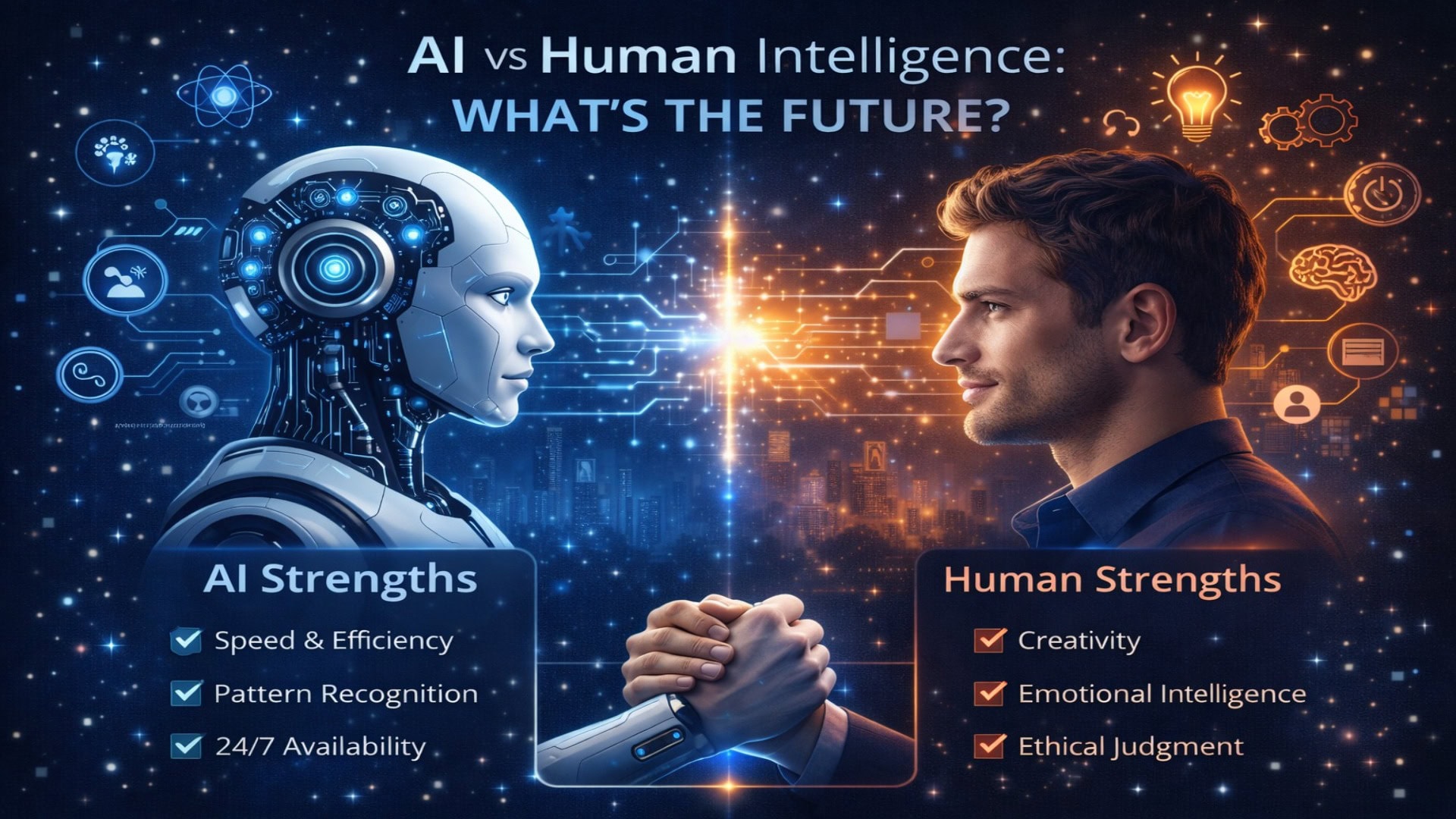
    Feature Human Intelligence Artificial Intelligence
    Learning Method Experiential, intuitive, requires few examples. Data-driven, requires massive datasets.
    Adaptability Highly flexible; can easily navigate novel situations. Rigid; struggles outside its specific training parameters.
    Emotional Capacity High; possesses empathy, intuition, and emotional resonance. Zero; simulates empathy based on linguistic patterns.
    Processing Speed Relatively slow; subject to cognitive limits and fatigue. Exponentially fast; operates continuously without fatigue.
    Energy Efficiency Extremely high; the brain runs on roughly 20 watts of power. Extremely low; training massive AI models requires vast amounts of electricity.
    Creativity Original, spontaneous, driven by lived experience and emotion. Recombinatory; generates novel outputs by blending existing data.

    The “Common Sense” Gap

    One of the most significant challenges in AI development is the lack of “common sense.” Humans possess an innate understanding of physics, social norms, and logical consequences. We know that if we drop a glass, it will shatter, and we know not to ask someone a cheerful question at a funeral. AI systems frequently struggle with these unwritten rules of reality, leading to outputs that can be logically sound based on their training, but absurd in the real world.


    4. The Current Landscape: Sectors Transformed

    We are already seeing the dynamic interplay between AI and human intelligence across various industries. The most successful applications currently involve humans and machines working in tandem.

    Healthcare and Medicine

    AI is revolutionizing diagnostics. Machine learning models are proving incredibly accurate at reading X-rays, MRIs, and genetic data. However, the role of the healthcare provider is not diminishing; it is evolving. Doctors use AI as a high-powered tool to confirm diagnoses, freeing them up to focus on patient care, complex surgical procedures, and empathetic communication.

    Creative Industries and Media

    Generative AI tools can draft articles, compose background music, and generate stunning visuals. Instead of replacing artists and writers, these tools are acting as brainstorming partners. A graphic designer might use an AI to generate ten rough concepts, choose the best one, and then use their human intuition and aesthetic judgment to refine it into a masterpiece.

    Education and Personalized Learning

    In the classroom, AI is paving the way for hyper-personalized education. Algorithms can track a student’s progress, identify learning gaps, and adjust the curriculum in real-time. Yet, the human teacher remains irreplaceable. Teachers provide motivation, mentorship, and the emotional support that students need to build confidence and resilience.

    Customer Service and Logistics

    Chatbots and automated systems handle routine inquiries, track packages, and process returns. This allows human customer service representatives to step in and handle complex, emotionally charged, or highly specific issues that require a human touch and nuanced problem-solving.


    5. Ethical Considerations and the Need for Inclusive AI

    As we integrate AI more deeply into society, we must confront significant ethical challenges. AI is a mirror reflecting the data it is trained on, and unfortunately, that data often contains historical biases and prejudices.

    Algorithmic Bias

    If an AI used for hiring is trained on resumes from a male-dominated industry, it may inadvertently learn to favor male candidates. If a facial recognition software is trained primarily on lighter-skinned faces, it will perform poorly for people of color. Ensuring inclusive language, diverse training data, and diverse development teams is not just a moral imperative; it is a technical necessity to create AI that works safely for everyone.

    Data Privacy and Security

    AI systems require vast amounts of personal data to function effectively. Protecting individuals’ privacy and ensuring that data is collected transparently and ethically is a monumental task. The future of AI must prioritize robust cybersecurity and respect for user consent.

    The “Black Box” Problem

    Many advanced deep learning models are “black boxes”—meaning even their creators cannot fully explain how the AI arrived at a specific decision. In critical areas like criminal justice, loan approvals, or healthcare, humans must demand “explainable AI” (XAI) to ensure accountability and fairness.


    6. The Future: Augmented Intelligence and Collaboration

    The narrative of “AI replacing humans” is largely a misconception driven by anxiety and sensationalism. A more accurate and productive framework for the future is Augmented Intelligence (also known as Intelligence Amplification).

    The Rise of the “Centaur”

    In chess, a “centaur” is a team consisting of a human player and an AI program. Centaur teams consistently defeat both solo human grandmasters and solo AI programs. The future of work will likely follow this model. We will become centaurs in our respective fields.

    • Lawyers will use AI to scan thousands of legal documents in seconds, allowing them to focus on crafting complex arguments and negotiating in the courtroom.
    • Engineers will use AI to test structural integrities in millions of simulated scenarios, giving them the freedom to design more innovative, sustainable buildings.
    • Scientists will use AI to sift through vast amounts of climate data, accelerating the development of green technologies.

    Redefining Human Work

    Historically, every major technological revolution—the printing press, the steam engine, the internet—has displaced certain jobs while creating entirely new ones. AI will undoubtedly automate repetitive, predictable, and physically dangerous tasks.

    This shift will require society to place a premium on uniquely human skills. The jobs of the future will heavily prioritize:

    • Critical thinking and ethical reasoning.
    • Complex problem-solving in unpredictable environments.
    • Emotional intelligence, leadership, and community building.
    • Creative strategy and innovation.

    The Imperative of Upskilling and Accessible Education

    To ensure a fair and equitable future, we must democratize access to AI literacy. Governments, educational institutions, and corporations must invest heavily in upskilling the global workforce. We must teach people not just how to code, but how to effectively prompt, manage, and collaborate with AI systems. Inclusive education will be the bridge that prevents the AI revolution from widening existing socioeconomic gaps.


    Conclusion: A Synergistic Tomorrow

    The future is not a battleground where AI and human intelligence fight for supremacy. It is a collaborative landscape. Artificial intelligence is the ultimate amplifier of human potential. It can process the mundane, compute the complex, and calculate the probabilities, leaving humans free to do what we do best: dream, empathize, create, and lead.

    By acknowledging the limitations of AI and celebrating the irreplaceable depth of human cognition, we can build a future where technology serves humanity, elevating our collective intelligence to solve the world’s most pressing challenges.


    Frequently Asked Questions (FAQ)

    1. Will AI eventually replace humans in the workforce?

    AI will replace certain tasks, not entire jobs. Routine, repetitive, and data-heavy tasks are highly susceptible to automation. However, jobs requiring empathy, complex decision-making, physical dexterity in unpredictable environments, and creative strategy will remain firmly in the human domain. The workforce will evolve, requiring humans to work alongside AI tools.

    2. Can Artificial Intelligence actually feel emotions?

    No. AI does not have feelings, consciousness, or self-awareness. While an AI can be programmed to recognize human emotions (like detecting frustration in a user’s voice) or to generate text that sounds empathetic, it is merely recognizing patterns and outputting data. It does not experience the emotion it is simulating.

    3. What is Artificial General Intelligence (AGI)?

    Artificial General Intelligence (AGI) refers to a highly autonomous system that can outperform humans at nearly any economically valuable cognitive work. Current AI is “Narrow AI,” meaning it is trained for specific tasks (like generating images or translating text). AGI remains a theoretical concept, and experts disagree on whether it will take decades, centuries, or if it is even possible to achieve.

    4. How is AI biased, and how can we fix it?

    AI algorithms learn from data created by humans. If that data contains historical biases, prejudices, or inequalities, the AI will learn and replicate them. We can combat this by ensuring diverse representation in the teams building AI, meticulously auditing training data for bias, and implementing strict ethical guidelines throughout the development process.

    5. How can I prepare for an AI-driven future?

    Focus on cultivating “soft skills” that machines cannot replicate: emotional intelligence, adaptability, creative problem-solving, and critical thinking. Additionally, build a basic level of AI literacy. Learn how to use current AI tools (like large language models) to enhance your own productivity and workflows. Lifelong learning will be the most crucial skill in the 21st century.


    References and Further Reading

    • Stanford University Artificial Intelligence Index Report: A comprehensive, open-source report tracking the progress, impact, and ethical considerations of AI globally. (Search: Stanford AI Index)

    • MIT Technology Review – Artificial Intelligence: Authoritative articles and journalism covering the latest breakthroughs, limitations, and societal impacts of machine learning. (Search: MIT Tech Review AI)

    • American Psychological Association (APA) – Psychology of AI: Insights into human-computer interaction, the cognitive differences between human and machine learning, and the psychological impact of automation. (Search: APA Psychology and Artificial Intelligence)

    • The World Economic Forum – Future of Jobs Report: An in-depth analysis of how AI and automation are expected to shift the global labor market, detailing emerging job roles and necessary skills. (Search: WEF Future of Jobs Report)
  • Navigating the Future: A Comprehensive Guide to the Benefits and Risks of Artificial Intelligence

    Navigating the Future: A Comprehensive Guide to the Benefits and Risks of Artificial Intelligence

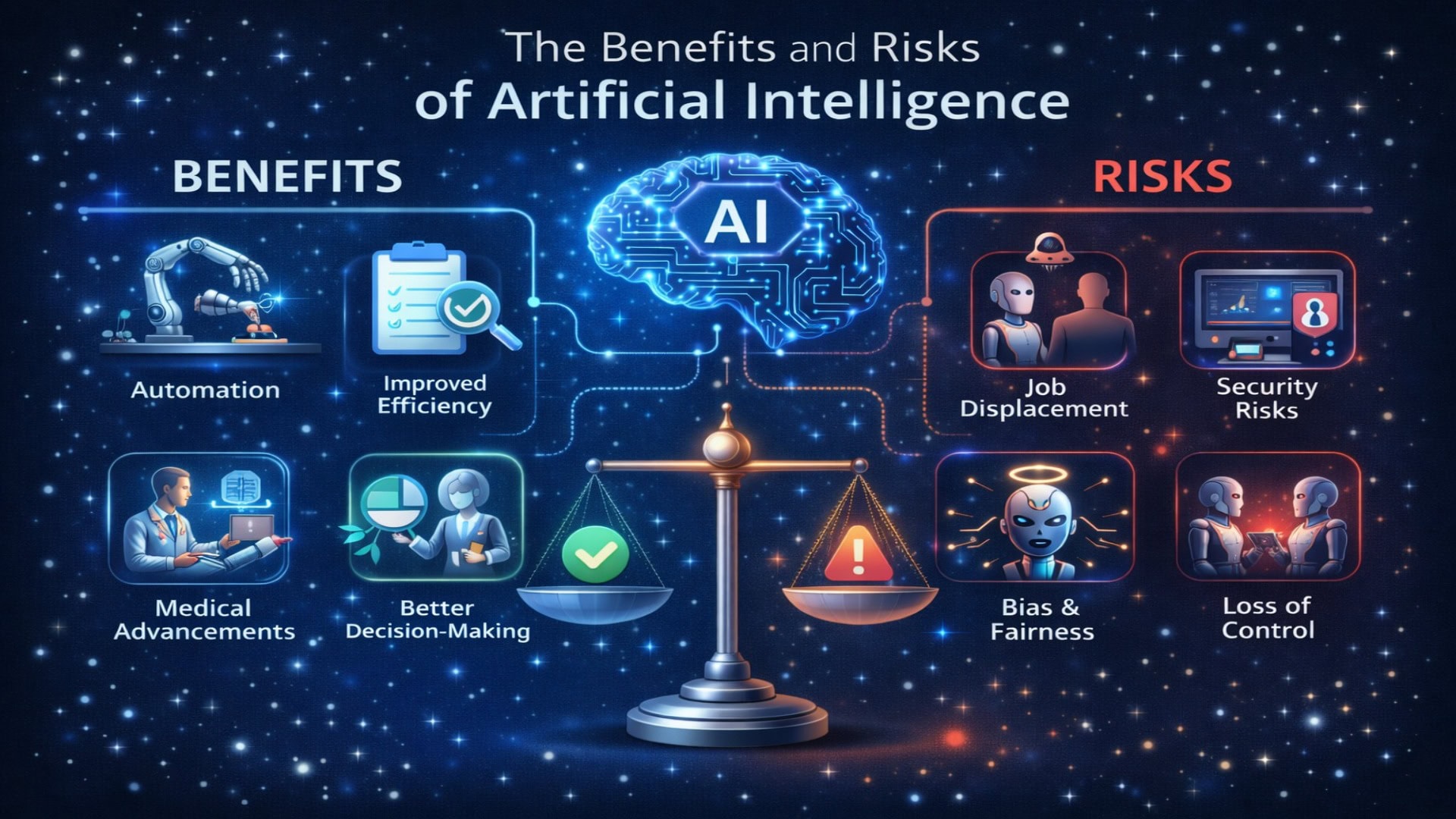
    Artificial Intelligence (AI) is no longer a concept confined to science fiction novels or futuristic movies. Today, it is a foundational technology woven into the fabric of our daily lives. From the algorithms that curate our social media feeds to the sophisticated diagnostic tools used in modern medicine, AI is transforming how humanity operates, creates, and interacts with the world around us.

    However, as with any revolutionary technology, this rapid advancement brings a complex web of implications. The conversation surrounding artificial intelligence is often polarized, oscillating between utopian visions of a world free from disease and labor, and dystopian warnings of autonomous systems spiraling out of human control.

    To truly understand our technological trajectory, we must take a balanced approach. This comprehensive guide explores the profound benefits and the significant risks of Artificial Intelligence, emphasizing the need for ethical development, inclusive design, and thoughtful regulation.


    Part 1: Understanding Artificial Intelligence

    Before diving into the impacts, it is crucial to establish what we mean when we talk about AI. At its core, Artificial Intelligence refers to the simulation of human intelligence processes by machines, especially computer systems. These processes include learning (the acquisition of information and rules for using it), reasoning (using rules to reach approximate or definite conclusions), and self-correction.

    The Spectrum of AI

    To frame our understanding of both its potential and its dangers, we must differentiate between the stages of AI development:

    • Artificial Narrow Intelligence (ANI): Also known as “Weak AI,” this is the only form of artificial intelligence that exists today. ANI is designed to perform a singular task—such as facial recognition, internet searches, or driving a car. While it can process massive amounts of data and outperform humans in specific areas, it operates under a narrow, predefined set of constraints and limitations.
    • Artificial General Intelligence (AGI): Also known as “Strong AI,” AGI is a theoretical form of AI where a machine would possess the ability to understand, learn, and apply knowledge across a wide range of tasks, at a level equal to or surpassing human cognitive capabilities.
    • Artificial Superintelligence (ASI): This refers to an intellect that is much smarter than the best human brains in practically every field, including scientific creativity, general wisdom, and social skills.

    Understanding that our current reality is firmly rooted in Narrow AI helps ground our expectations. The immediate benefits and risks we face are related to highly specialized algorithms, not sentient robots.


    Part 2: The Transformative Benefits of Artificial Intelligence

    The widespread adoption of machine learning and data analytics is driving unprecedented innovation across virtually every sector. By processing information at scales and speeds impossible for the human brain, AI acts as a powerful amplifier for human capability.

    1. Revolutionizing Healthcare and Medicine

    Perhaps the most universally celebrated application of AI is within the medical field. The technology is fundamentally shifting healthcare from a reactive discipline to a proactive and personalized one.

    • Early Disease Detection: Deep learning algorithms are now capable of analyzing medical imagery (X-rays, MRIs, CT scans) with incredible accuracy. In many cases, AI can detect anomalies, such as early-stage tumors or diabetic retinopathy, faster and sometimes more accurately than human radiologists.
    • Accelerated Drug Discovery: Historically, discovering a new pharmaceutical drug and bringing it to market takes over a decade and costs billions of dollars. AI accelerates this process by predicting how different chemical compounds will interact with target proteins in the body. The monumental success of AI systems in predicting the 3D structures of human proteins has opened new doors for treating complex diseases.
    • Personalized Medicine: By analyzing a patient’s genetic makeup, lifestyle, and medical history, AI can help healthcare providers tailor treatment plans that are specifically optimized for the individual, reducing adverse reactions and improving outcomes.

    2. Enhancing Accessibility and Inclusion

    When developed thoughtfully, AI serves as a powerful equalizer, breaking down barriers for individuals with disabilities and fostering a more inclusive society.

    • Communication Aids: Advanced Natural Language Processing (NLP) powers real-time captioning and translation services, making digital content more accessible for people who are Deaf or hard of hearing.
    • Visual Assistance: Applications using computer vision can describe physical surroundings, read text aloud, and identify objects for individuals who are blind or have low vision.
    • Cognitive Support: AI-driven tools can help individuals with neurodivergent conditions by organizing tasks, simplifying complex texts, and providing adaptive learning environments that cater to unique cognitive needs.

    3. Driving Efficiency and Innovation in the Workplace

    In the corporate and industrial spheres, AI is the engine of the Fourth Industrial Revolution, streamlining operations and freeing human workers to focus on creative and strategic endeavors.

    • Automation of Repetitive Tasks: From data entry and scheduling to basic customer service inquiries handled by chatbots, AI excels at automating mundane, repetitive workflows. This reduces human error and drastically cuts operational costs.
    • Predictive Analytics: Businesses use AI to analyze historical data and predict future trends. This is invaluable in supply chain management, where AI can forecast demand, optimize delivery routes, and prevent inventory shortages.
    • Enhanced Safety in Dangerous Environments: Robots equipped with AI and computer vision can be deployed in hazardous environments—such as deep-sea exploration, disaster recovery zones, or mining operations—keeping human workers out of harm’s way.

    4. Tackling the Climate Crisis

    The environmental sector is increasingly turning to artificial intelligence to combat climate change and manage natural resources more effectively.

    • Smart Energy Grids: AI algorithms can predict energy demand and adjust the distribution of electricity across grids in real-time. This is particularly vital for integrating renewable energy sources like wind and solar, which are subject to weather fluctuations.
    • Precision Agriculture: By analyzing satellite imagery, weather patterns, and soil sensors, AI helps farmers optimize irrigation, minimize the use of chemical pesticides, and maximize crop yields, promoting sustainable farming practices.
    • Climate Modeling: Machine learning models process vast amounts of environmental data to track deforestation, predict extreme weather events, and model the long-term impacts of global warming with greater precision.

    Part 3: The Inherent Risks and Ethical Challenges of AI

    For all its transformative potential, the rapid deployment of AI technologies carries profound risks. If left unaddressed, these challenges could exacerbate existing societal inequalities, threaten individual rights, and cause massive economic disruption.

    1. Job Displacement and Economic Inequality

    The most immediate and tangible fear surrounding AI is its impact on the global workforce. While automation has historically created new categories of jobs, the speed at which AI is advancing presents a unique challenge.

    • The Automation of Routine Work: Roles heavily reliant on predictable, repetitive tasks—such as manufacturing, bookkeeping, telemarketing, and basic data analysis—are highly susceptible to automation.
    • The Transition Challenge: While AI will undoubtedly create new roles (AI ethicists, machine learning engineers, robotics maintenance), the individuals displaced by automation are rarely the ones equipped to fill these new, highly technical positions. This creates a severe skills gap.
    • Widening the Wealth Gap: If the economic gains generated by AI productivity are concentrated strictly in the hands of tech companies and corporate executives, AI risks drastically widening global economic inequality. A massive societal effort in workforce retraining and robust social safety nets will be required to mitigate this.

    2. Algorithmic Bias and Discrimination

    Artificial intelligence is not inherently objective. Machine learning models learn from the data they are trained on, and if that training data contains historical human biases, the AI will learn, amplify, and automate those prejudices.

    • Hiring and Recruitment: When AI systems are used to screen resumes, they often favor candidates who resemble past successful hires. If a company historically hired predominantly white males, the algorithm may unconsciously penalize resumes belonging to women or people of color.
    • Criminal Justice and Predictive Policing: AI tools used for predicting recidivism (the likelihood of a person re-offending) have been shown to disproportionately flag individuals from marginalized communities as “high risk,” leading to harsher sentencing and a perpetuation of systemic bias.
    • Healthcare Disparities: If medical AI is trained predominantly on data from specific demographic groups, its diagnostic accuracy can drop significantly when treating individuals from underrepresented backgrounds. Building inclusive datasets is a critical necessity.

    3. The Erosion of Privacy and Mass Surveillance

    The fuel that powers artificial intelligence is data. The insatiable need for vast datasets to train sophisticated models has led to unprecedented levels of data harvesting.

    • The End of Anonymity: Advanced facial recognition technology, combined with pervasive camera networks and internet tracking, makes it increasingly difficult for individuals to navigate public or digital spaces anonymously.
    • Data Exploitation: Companies routinely collect intimate details regarding user behavior, preferences, location, and health. The risk of this data being mishandled, breached, or used to manipulate consumer behavior is immense.
    • Deepfakes and Disinformation: AI can now generate hyper-realistic, fabricated audio and video (deepfakes). This technology poses a severe threat to democratic processes, as it can be used to spread malicious disinformation, ruin reputations, and erode public trust in media and institutions.

    4. Security Vulnerabilities and Autonomous Weapons

    As AI systems become more integrated into critical infrastructure, they become high-value targets for malicious actors.

    • AI-Powered Cyberattacks: Hackers can leverage machine learning to automate cyberattacks, rapidly identify network vulnerabilities, and draft highly convincing phishing emails at scale.
    • Lethal Autonomous Weapons Systems (LAWS): The development of military drones and weapons capable of identifying and engaging targets without human intervention raises profound ethical questions. Delegating the decision of life and death to an algorithm remains one of the most hotly debated topics in international security.

    5. The “Black Box” Problem

    Many deep learning models—particularly those dealing with millions of parameters—operate as “black boxes.” This means that even the developers who built the system cannot fully explain how the AI arrived at a specific conclusion or decision.

    Lack of explainability is a massive hurdle in high-stakes fields. If an AI system denies a person a loan, diagnoses them with an illness, or recommends a prison sentence, humans require a transparent explanation of the reasoning. Without transparency, accountability is impossible.


    Part 4: Navigating the Future – Towards Ethical and Responsible AI

    The trajectory of artificial intelligence is not predetermined. It is a tool, and like any tool, its impact depends entirely on the hands that wield it. To maximize the benefits while mitigating the risks, a collaborative, global approach is essential.

    1. Developing Robust Ethical Frameworks

    Tech companies and academic institutions must prioritize AI ethics from the ground up. This means moving away from a “move fast and break things” mentality to one of “move thoughtfully and build securely.” Ethical guidelines should mandate fairness, transparency, privacy, and human safety as core design principles.

    2. Implementing Meaningful Regulation

    Governments play a crucial role in safeguarding the public. Legislation, such as the European Union’s proposed AI Act, attempts to categorize AI systems by risk level—banning unacceptable uses (like social scoring) and heavily regulating high-risk applications (like critical infrastructure and law enforcement tools). Effective regulation must protect human rights without stifling beneficial innovation.

    3. Emphasizing Human-in-the-Loop Systems

    Instead of viewing AI as a replacement for human intelligence, we should strive for “Augmented Intelligence.” High-stakes decisions should always involve a “human in the loop”—where AI provides data-driven recommendations, but a human being exercises empathy, moral judgment, and ultimate oversight.

    4. Fostering Diversity in the Tech Industry

    To build AI that serves all of humanity, the teams designing these systems must reflect the diversity of the global population. Encouraging women, people of color, and individuals from various socioeconomic backgrounds to enter AI research and engineering is the most effective way to identify and eliminate algorithmic biases before they are deployed.


    Conclusion

    Artificial Intelligence is the defining technology of the 21st century. Its benefits are undeniably profound: it possesses the capacity to cure diseases, reverse environmental damage, democratize education, and elevate the human condition. Yet, the risks are equally monumental. Unchecked, AI could deepen societal divides, strip away our privacy, and automate systemic discrimination.

    The narrative of AI does not have to be a choice between a utopia and a dystopia. By prioritizing human-centric design, demanding algorithmic transparency, and establishing thoughtful global regulations, we can harness the power of artificial intelligence to build a more equitable, efficient, and prosperous future for everyone. The responsibility lies not with the algorithms, but with us.


    Frequently Asked Questions (FAQ)

    1. What is the difference between AI, Machine Learning, and Deep Learning?

    • AI is the broad concept of machines simulating human intelligence.
    • Machine Learning (ML) is a subset of AI where systems learn from data to improve their performance without being explicitly programmed for every step.
    • Deep Learning (DL) is a specialized subset of ML that uses complex, multi-layered artificial neural networks (inspired by the human brain) to process vast amounts of unstructured data, like images and speech.

    2. Will Artificial Intelligence take my job?

    AI will undoubtedly change the landscape of employment. While it will automate many routine, repetitive tasks (leading to job displacement in certain sectors), it will also create new industries and roles. The future of work will likely involve human-AI collaboration. Continuous learning and upskilling in uniquely human traits—such as complex problem-solving, emotional intelligence, and creativity—will be crucial.

    3. What is algorithmic bias, and why is it dangerous?

    Algorithmic bias occurs when an AI system produces systematically prejudiced results due to flawed assumptions in the machine learning process or prejudiced training data. It is dangerous because it can automate and scale human prejudices, leading to unfair outcomes in critical areas like hiring, lending, healthcare, and criminal justice, disproportionately harming marginalized communities.

    4. Can an AI system think and feel like a human?

    No. Current AI systems are “Narrow AI.” They are sophisticated statistical engines that excel at recognizing patterns and generating predictions based on data. They do not possess consciousness, self-awareness, emotions, or true understanding.

    5. How is AI currently being regulated?

    Regulation is currently evolving and varies by region. The European Union is leading the charge with the “AI Act,” establishing a risk-based legal framework. The United States is pursuing a combination of executive orders, federal agency guidelines, and state-level laws. Globally, organizations like the UN and OECD are working to establish international ethical standards for AI development.

    6. What is the environmental impact of Artificial Intelligence?

    While AI can help solve environmental issues (like optimizing energy grids), the technology itself has a significant carbon footprint. Training massive deep learning models requires massive server farms running continuously, consuming vast amounts of electricity and water for cooling. Developing energy-efficient algorithms and powering data centers with renewable energy are critical ongoing challenges.


    References & Further Reading

    • Stanford University Artificial Intelligence Index Report: An annual, comprehensive report tracking, collating, and visualizing data relating to artificial intelligence. https://aiindex.stanford.edu/

    • MIT Technology Review – Artificial Intelligence: Up-to-date journalism, analysis, and research regarding AI breakthroughs and ethical dilemmas. https://www.technologyreview.com/topic/artificial-intelligence/

    • Nature – Machine Intelligence: Peer-reviewed scientific journal covering the latest advancements in artificial intelligence, machine learning, and their impacts on various scientific fields. https://www.nature.com/natmachintell/

    • Algorithmic Justice League (AJL): An organization that combines art and research to illuminate the social implications and harms of artificial intelligence. https://www.ajl.org/

    • The European Union Artificial Intelligence Act: Official documentation regarding the EU’s proposed regulatory framework for AI. https://artificialintelligenceact.eu/

  • How AI Is Transforming Industries Worldwide in 2026: A Comprehensive Guide

    How AI Is Transforming Industries Worldwide in 2026: A Comprehensive Guide

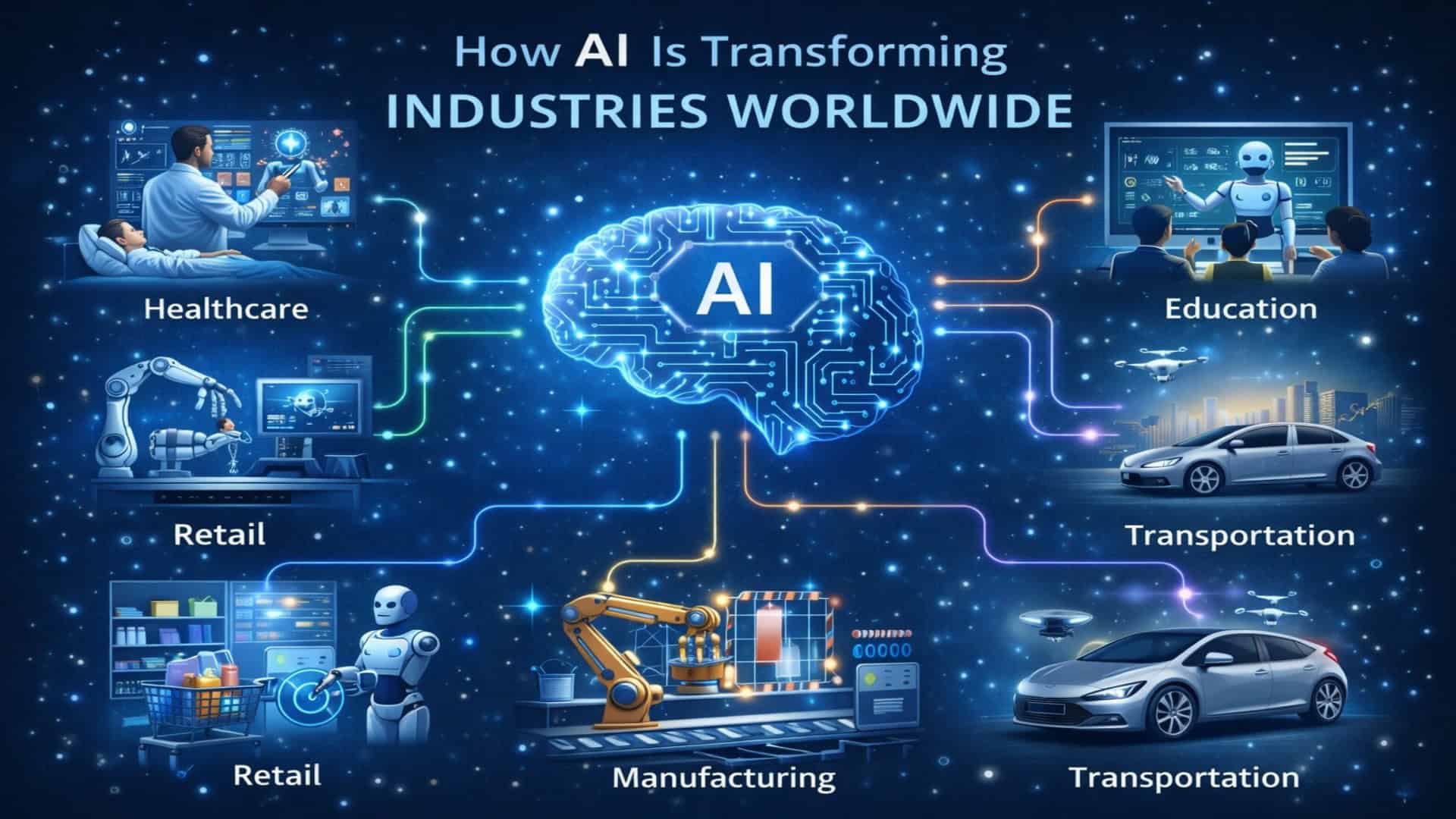
    The conversation around artificial intelligence (AI) has undergone a profound shift. We have moved entirely beyond the early days of speculative hype, flying cars, and science-fiction scenarios. Today, artificial intelligence is no longer an experimental novelty—it is the foundational engine driving global economic infrastructure. From how we receive medical diagnoses to the way our supply chains adapt to global disruptions, AI is actively re-architecting the world around us.

    As we navigate through 2026, the global average AI adoption rate has accelerated at an unprecedented pace, jumping from mere experimentation to core operational necessity. Industry leaders are no longer asking if they should adopt AI, but rather how quickly they can deploy it to enhance human capability, streamline operations, and deliver more accessible, equitable services to everyone.

    This comprehensive guide explores exactly how AI is transforming industries worldwide, looking at the data, the real-world applications, and the human-centric benefits of this technological revolution. Whether you are a business leader, an aspiring professional, or simply a curious learner, understanding this shift is vital for navigating the future of work and society.


    1. The Global AI Landscape: From Hype to Trillion-Dollar Reality

    Before diving into specific industries, it is crucial to understand the sheer scale of the AI transformation. The numbers paint a picture of an integrated, global digital economy that relies heavily on machine learning, predictive analytics, and agentic AI (systems designed to autonomously reason, plan, and execute tasks).

    The Scale of Investment and Growth

    Analysts report that total global spending on artificial intelligence is projected to exceed $2.02 trillion in 2026, representing a massive annual increase across hardware, services, and software. We are witnessing a transition from a “training-heavy” economy—where companies spent billions teaching AI models—to an “inference economy,” where these models are actively used in day-to-day business operations.

    A Shift Toward Real-World Value

    The most exciting development in the current AI landscape is the focus on practical, immediate value. Organizations are utilizing AI to:

    • Bridge the productivity gap: Empowering workers by automating tedious administrative tasks, allowing human employees to focus on creative, strategic, and empathetic “wisdom work.”
    • Democratize data access: Allowing team members across all departments—not just data scientists—to query complex datasets using natural language.

    • Enhance accessibility: Creating tools that break down language barriers, assist individuals with disabilities, and create more inclusive digital environments for a diverse global population.


    2. Healthcare: The Drive Toward Proactive and Personalized Care

    Perhaps no industry stands to benefit more profoundly from artificial intelligence than healthcare. AI is fundamentally shifting the medical paradigm from a reactive system (treating people after they get sick) to a proactive, preventative, and deeply personalized model. Research suggests that AI’s impact on the global healthcare market will create an $868 billion opportunity by 2030, increasing its addressable market share from 15% to over 30%.

    Predictive Diagnostics and Early Intervention

    AI systems excel at recognizing complex patterns in massive datasets. In medical imaging, AI algorithms can spot subtle abnormalities in X-rays, MRIs, and CT scans that even the most experienced human eye might miss. This capability drastically cuts diagnostic times from days down to minutes, ensuring that patients receive life-saving treatments for conditions like cancer or cardiovascular disease much earlier.

    Accelerating Drug Discovery

    Historically, developing a new pharmaceutical drug took over a decade and cost billions of dollars, with a high rate of failure. Today, AI-enabled drug discovery is transforming the pharmaceutical sector. Machine learning models can predict how different chemical compounds will interact with target proteins in the human body, simulating millions of combinations in hours. This not only lowers the cost of research and development but also speeds up the delivery of crucial medications to the people who need them most.

    Alleviating Burnout Among Healthcare Workers

    We cannot discuss healthcare without acknowledging the immense pressure placed on doctors, nurses, and administrative staff. AI serves as a “digital coworker,” alleviating burnout by taking over heavy documentation workloads. For example, AI-powered medical assistants can synthesize patient data, transcribe clinical notes during consultations, and update electronic health records in real-time. This reduces documentation errors and gives healthcare professionals their most valuable resource back: time to connect deeply and empathetically with their patients.


    3. Financial Services: Security, Inclusion, and Intelligent Automation

    The financial sector has long been an early adopter of advanced technologies, but the current wave of AI integration is unprecedented. Financial institutions are moving beyond basic algorithmic trading to deploy AI across risk management, customer service, and financial inclusion initiatives.

    Next-Generation Fraud Detection

    As digital transactions multiply, so do the sophisticated methods of financial fraudsters. Traditional rules-based security systems are no longer sufficient to protect consumers. AI transforms cybersecurity by employing dynamic, continuous monitoring. Machine learning models analyze millions of transactions per second, identifying anomalous behavior patterns—like a sudden change in purchasing location or an unusual transaction volume—and flagging or halting fraudulent activity before funds are lost. This protects vulnerable populations and builds vital trust in the digital banking ecosystem.

    Hyper-Personalized Wealth Management

    Historically, personalized financial advising was a service reserved for high-net-worth individuals. AI is democratizing financial guidance by powering accessible “robo-advisors” and intelligent financial planning apps. These platforms analyze an individual’s income, spending habits, and long-term goals to offer tailored advice on budgeting, investing, and saving. By lowering the barrier to entry, AI is helping individuals from all socioeconomic backgrounds build financial stability.

    Dynamic Credit Scoring and Financial Inclusion

    Traditional credit scoring models often inadvertently exclude individuals who lack a formal credit history, such as recent immigrants or young adults. AI-driven alternative credit scoring looks beyond traditional metrics. By analyzing diverse data points—such as utility bill payments, rental history, and even mobile phone usage patterns—AI can assess creditworthiness more holistically and fairly. This inclusive approach opens up access to loans, mortgages, and capital for underserved communities worldwide.


    4. Manufacturing and Supply Chain: The Era of Resilient Automation

    Global supply chains and manufacturing facilities face immense pressure from volatile markets, geopolitical shifts, and changing consumer demands. AI provides the predictive power and adaptability required to turn fragile supply chains into resilient, responsive networks.

    Predictive Maintenance and Minimal Downtime

    In a modern manufacturing plant, an unexpected equipment failure can cost millions of dollars in halted production. AI completely revolutionizes maintenance operations. Through the use of IoT (Internet of Things) sensors placed on factory equipment, AI continuously monitors vibrations, temperature, and performance metrics. It can predict exactly when a machine is likely to fail and schedule maintenance during off-hours. This “predictive maintenance” saves resources, extends the lifespan of machinery, and creates a safer working environment for factory personnel.

    Digital Twins

    A “digital twin” is a highly complex, virtual replica of a physical system—whether that system is a single jet engine or an entire automotive assembly line. AI powers these digital twins, allowing engineers to run endless “what-if” simulations. They can test how a new production layout will impact efficiency, or how a change in materials might affect the final product, all without disrupting actual physical operations.

    Re-Architecting Industrial Procurement

    Recent global events have proven that supply chains can be incredibly fragile. Today, AI helps procurement leaders navigate global instability by constantly evaluating sourcing options. Instead of relying on static, annual surveys, AI platforms offer continuous, risk-based monitoring of supplier networks. If a primary shipping route becomes unstable due to weather or geopolitical tension, AI systems can instantly recommend alternative local or regional suppliers, ensuring that essential goods continue to flow without interruption.


    5. Retail and E-Commerce: Hyper-Personalization at Scale

    Retailers are leveraging artificial intelligence to bridge the gap between digital convenience and the personalized touch of an in-store experience. In 2026, AI in retail is focused on understanding the consumer as an individual, optimizing inventory, and creating frictionless purchasing journeys.

    Curated Customer Experiences

    When you log into your favorite e-commerce platform, the homepage you see is entirely unique to you, thanks to AI. Recommendation engines analyze your past purchases, browsing history, and even the time you spend lingering on specific images to curate a tailored selection of products. This hyper-personalization reduces “decision fatigue” for shoppers and significantly boosts customer satisfaction and retention.

    Agentic AI Customer Support

    Customer service has evolved far beyond the frustrating, robotic chatbots of the past. Today’s retail landscape utilizes Agentic AI—intelligent agents capable of understanding nuance, context, and sentiment. These virtual assistants can handle complex customer queries, process returns, track lost packages, and even offer style advice in multiple languages. They provide 24/7 support, ensuring that customers receive immediate, empathetic, and helpful responses regardless of their time zone.

    Intelligent Inventory Management

    Waste is a massive issue in the retail sector, particularly in fast fashion and grocery. AI helps retailers optimize their inventory by predicting demand with astonishing accuracy. By analyzing historical sales data, local weather forecasts, social media trends, and upcoming events, AI can tell a store manager exactly how many units of a specific item to stock. This prevents overproduction, drastically reduces waste, and minimizes the carbon footprint of retail operations.


    6. The Energy Sector: Powering a Sustainable Future

    The transition to clean, renewable energy is one of the most critical challenges of our time. Artificial intelligence is acting as a crucial catalyst in the fight against climate change, optimizing how we generate, distribute, and consume power.

    Smart Grids and Energy Distribution

    Renewable energy sources, like wind and solar, are inherently intermittent—the sun isn’t always shining, and the wind isn’t always blowing. AI is essential for managing “smart grids” that balance this fluctuating supply with real-time consumer demand. AI algorithms can predict energy spikes, seamlessly route power from storage batteries to the grid, and ensure a stable, reliable supply of green energy to communities.

    Optimizing Renewable Infrastructure

    AI is also used to maximize the efficiency of the physical infrastructure itself. For example, AI algorithms can adjust the angle of solar panels in real-time to follow the sun’s trajectory perfectly, capturing the maximum amount of light. Similarly, AI can adjust the pitch and yaw of wind turbines based on micro-weather predictions, increasing energy output while reducing wear and tear on the machinery.


    7. Education: Empowering the Next Generation of Learners

    Education is the foundation of an equitable society. AI is helping to dismantle a “one-size-fits-all” approach to schooling, offering tools that cater to the unique learning pace, style, and needs of every individual student.

    Adaptive Learning Platforms

    Every student learns differently. AI-driven adaptive learning platforms assess a student’s proficiency in real-time. If a student is struggling with a specific mathematical concept, the AI will automatically adjust the curriculum, providing additional foundational exercises, visual aids, or alternative explanations until the concept clicks. Conversely, if a student is excelling, the system will introduce more challenging material to keep them engaged.

    Accessibility and Universal Translation

    For students with visual or auditory impairments, or those studying in a non-native language, AI provides vital support. Real-time captioning, text-to-speech, and highly accurate translation tools ensure that educational materials are accessible to everyone, regardless of their physical abilities or geographic location.

    Supporting Educators

    Teachers are often overwhelmed by administrative duties, grading, and lesson planning. AI tools can automate routine grading for multiple-choice and short-answer assessments, freeing up teachers to focus on one-on-one mentorship, classroom engagement, and fostering critical thinking skills in their students.


    8. Navigating the Challenges: Ethics, Governance, and the Workforce

    While the benefits of AI are transformative, this rapid acceleration does not come without profound responsibilities. As AI integrates deeper into our daily lives, industries must prioritize ethical implementation, human well-being, and robust governance.

    Prioritizing Data Privacy and Security

    AI models require massive amounts of data to function effectively. Consequently, organizations must be unwavering in their commitment to data privacy. Protecting consumer information, utilizing anonymized data sets, and adhering to strict regional frameworks (such as GDPR) are non-negotiable standards for responsible AI deployment.

    Mitigating Algorithmic Bias

    If an AI model is trained on biased data, it will inevitably produce biased outcomes—whether that involves denying a loan to a qualified applicant or misdiagnosing a patient. The industry is currently heavily focused on auditing algorithms for fairness, ensuring diverse representation in training data, and building transparent models where human oversight remains in the loop.

    The Evolution of the Workforce

    A common fear is that AI will universally replace human workers. However, the data points to a different reality: AI is reshaping roles, not erasing the need for human insight. The focus in 2026 is on upskilling and reskilling. Forward-thinking organizations are investing heavily in training programs to help their employees transition into “wisdom work.” Humans possess traits that AI simply cannot replicate: deep empathy, complex moral reasoning, creative leaps of imagination, and the ability to build authentic relationships. The most successful industries are those that use AI to augment human potential, not replace it.


    Conclusion

    The transformation brought about by artificial intelligence worldwide is profound, far-reaching, and permanent. From the $868 billion revolution in healthcare to the resilient, AI-monitored supply chains of the manufacturing sector, AI is proving to be much more than a technological trend—it is a fundamental restructuring of how society operates.

    By driving efficiency, enhancing accessibility, and freeing human beings from repetitive tasks, AI presents an unprecedented opportunity to solve some of our most complex global challenges. However, the true success of this era will not be measured solely by profit margins or processing speeds. It will be measured by our commitment to deploying these technologies ethically, inclusively, and responsibly, ensuring that the AI revolution benefits every corner of our global community.


    Frequently Asked Questions (FAQ)

    Q1: Is AI going to replace my job?

    While AI is automating repetitive and administrative tasks across many industries, it is largely functioning as an augmenting tool—a “digital coworker.” Instead of replacing jobs entirely, AI is reshaping them. Workers who learn to leverage AI tools will find themselves empowered to focus on the creative, strategic, and interpersonal aspects of their professions. Upskilling is key to adapting to this shift.

    Q2: How does AI actually improve healthcare?

    AI improves healthcare by analyzing massive amounts of data much faster than a human could. This leads to earlier detection of diseases via medical imaging, hyper-personalized treatment plans based on a patient’s unique genetic makeup, and accelerated drug discovery. Furthermore, it automates administrative tasks, reducing burnout and giving doctors more time to spend with patients.

    Q3: What are “Agentic AI” systems?

    Agentic AI refers to advanced artificial intelligence systems that don’t just answer questions, but can autonomously reason, plan, and execute complex tasks to achieve a high-level goal. For example, instead of just drafting an email, an AI agent could analyze a supply chain shortage, contact three alternative suppliers, negotiate a rate, and place the order with minimal human supervision.

    Q4: How does AI make the financial sector safer for everyday consumers?

    AI continuously monitors financial networks, analyzing millions of data points per second to identify the subtle, dynamic patterns of fraud. Because it operates in real-time and adapts to new threats instantly, it can block suspicious transactions before money is stolen, providing a much higher level of security than traditional, static defense systems.

    Q5: What is the biggest challenge to adopting AI in business today?

    Currently, the largest barriers include data quality and strategic governance. An AI system is only as good as the data it is trained on. Many companies struggle with siloed, messy, or biased data. Additionally, organizations must implement strong ethical guidelines and security measures to ensure their AI tools are used responsibly and safely.

    Q6: How can small businesses afford to implement AI?

    The democratization of technology means AI is no longer just for massive enterprise corporations. With the rise of cloud-computing, Software-as-a-Service (SaaS) AI tools, and a strong open-source community, small businesses can easily integrate scalable AI solutions—such as automated customer service bots, intelligent inventory managers, and predictive marketing software—at a fraction of the cost of building custom models.


    Reference Links & Further Reading

  • Demystifying the Future: What Is Artificial Intelligence and How Does It Work?

    Demystifying the Future: What Is Artificial Intelligence and How Does It Work?

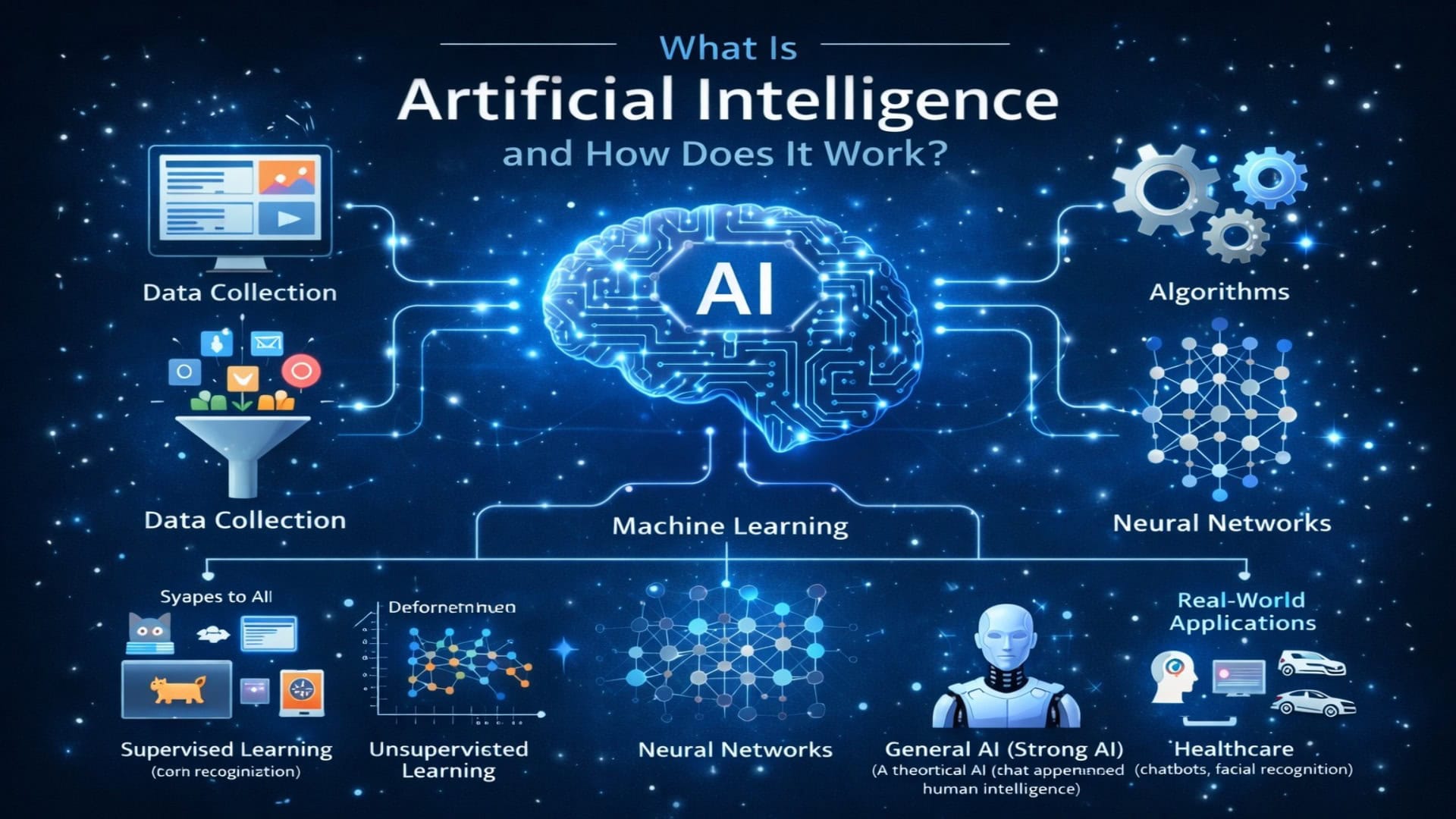
    Whether you are scrolling through your morning news feed, relying on a navigation app to avoid traffic, or using voice-to-text to send a message, you are interacting with Artificial Intelligence (AI). Once relegated to the realms of science fiction and academic laboratories, AI has seamlessly woven itself into the fabric of our daily lives.

    However, despite its ubiquitous presence, the core concepts behind AI remain a mystery to many. The terminology can feel overwhelming, and the narratives surrounding the technology often swing between utopian promises and dystopian fears.

    This comprehensive guide is designed to cut through the jargon. We will explore exactly what Artificial Intelligence is, unpack the mechanics of how it actually works, and examine the profound ways it is reshaping our world. Whether you are a student, a business owner, or simply a curious digital citizen, this post will provide you with a foundational, reality-based understanding of the technology defining our era.


    Part 1: What Exactly Is Artificial Intelligence?

    At its most fundamental level, Artificial Intelligence (AI) refers to the simulation of human cognitive processes by machines, particularly computer systems. These processes include learning (the acquisition of information and rules for using the information), reasoning (using rules to reach approximate or definite conclusions), and self-correction.

    Instead of being explicitly programmed to perform a single, rigid task, an AI system is designed to process data, identify patterns, and make decisions or predictions based on that data.

    To truly understand AI, it is helpful to categorize it by its capabilities. Experts generally divide AI into three primary evolutionary stages:

    1. Artificial Narrow Intelligence (ANI)

    Also known as “Weak AI,” Artificial Narrow Intelligence is the only form of AI that exists today. It is designed and trained to perform a specific, tightly defined task. ANI operates within a pre-determined context and has no self-awareness, consciousness, or genuine understanding.

    Every AI application you currently use—from the algorithms recommending movies on your favorite streaming platform to virtual assistants predicting the weather, and even complex systems like autonomous driving software—is a form of Narrow AI. They are exceptionally good at their specific jobs, but a chess-playing AI cannot suddenly decide to write a poem or diagnose an illness.

    2. Artificial General Intelligence (AGI)

    Artificial General Intelligence, often referred to as “Strong AI,” is a theoretical form of AI. An AGI system would possess the ability to understand, learn, and apply knowledge across a wide range of tasks at a level equal to a human being. It would feature generalized cognitive abilities, allowing it to solve unfamiliar problems in domains it was not explicitly trained for. While researchers are actively working toward AGI, we have not yet achieved it, and timelines for its potential realization remain a subject of intense debate among experts.

    3. Artificial Superintelligence (ASI)

    Artificial Superintelligence is a hypothetical concept describing a machine that vastly surpasses human intelligence and capability in every conceivable metric—from scientific innovation and general wisdom to social skills and creativity. This remains purely in the realm of theoretical philosophy and science fiction.


    Part 2: The Core Components: How Does AI Work?

    When people ask, “How does AI work?” they are usually asking about the specific subfields and techniques that power modern Narrow AI. AI is not a single computer program; it is an umbrella term encompassing a variety of technologies and methodologies. Let’s break down the most vital engines driving AI today.

    Machine Learning (ML): The Engine of Modern AI

    If AI is the overarching goal, Machine Learning is the primary vehicle getting us there. Machine Learning is a subset of AI that focuses on building systems that can learn from historical data, identify patterns, and make logical decisions with minimal human intervention.

    Instead of writing thousands of lines of code detailing exactly how to recognize a picture of a cat, developers feed a machine learning algorithm thousands of pictures of cats (and thousands of pictures of things that are not cats). The algorithm mathematically learns the distinct features of a cat—pointed ears, whiskers, specific eye shapes—on its own.

    Machine learning generally relies on three main learning models:

    • Supervised Learning: The AI is trained on a “labeled” dataset. This means the data comes with the correct answers. (e.g., A dataset of housing prices where the square footage, location, and final sale price are all clearly defined). The model learns the relationship between the features and the outcome.

    • Unsupervised Learning: The AI is fed raw, unlabeled data and is tasked with finding hidden structures, patterns, or categories on its own. This is often used for customer segmentation or anomaly detection (like spotting fraudulent credit card purchases).
    • Reinforcement Learning: The AI learns by trial and error in an interactive environment. It is given a goal and receives “rewards” for correct actions and “penalties” for incorrect ones. This is how many AI systems learn to play complex games or how robotic arms learn to grasp objects.

    Deep Learning and Neural Networks

    Deep Learning is a highly specialized subset of Machine Learning. It relies on structures called Artificial Neural Networks, which are mathematically inspired by the architecture of the human brain (though it is important to note they do not replicate biological brain function).

    These networks consist of layers of interconnected “nodes” or artificial neurons:

    1. An Input Layer: Where the data enters the system.
    2. Hidden Layers: Where the computational heavy lifting happens. The “deep” in deep learning refers to having multiple hidden layers.
    3. An Output Layer: Where the final prediction or decision is produced.

    Deep learning excels at processing incredibly complex, unstructured data like high-resolution images, raw audio, and vast amounts of text.

    Natural Language Processing (NLP)

    Natural Language Processing is the branch of AI that gives computers the ability to understand, interpret, and generate human language in a valuable way. As an AI assistant, NLP is the core technology I use to read your prompts, understand the context of your questions, and generate these words in response.

    NLP bridges the gap between human communication and computer understanding through techniques like:

    • Tokenization: Breaking text down into smaller units (words or sub-words).
    • Sentiment Analysis: Determining the emotional tone behind a body of text.
    • Machine Translation: Accurately translating text from one language to another while preserving context and colloquialisms.

    Computer Vision

    Just as NLP allows AI to understand language, Computer Vision allows AI to “see” and interpret the visual world. Using digital images from cameras and videos, computer vision models can accurately identify and classify objects, and then react to what they “see.” This is the technology that allows self-driving cars to distinguish between a pedestrian, a stop sign, and another vehicle.


    Part 3: The Fuel of AI—Data and Infrastructure

    No matter how sophisticated an AI algorithm is, it is functionally useless without its primary fuel: Data.

    Modern AI systems require massive, unimaginably large datasets to learn effectively. Every time you search the web, click on a digital ad, upload a public photo, or interact with an app, you are contributing to the global reservoir of data that trains these systems.

    The Importance of Inclusive Data

    Because AI learns entirely from the data it is fed, the quality and diversity of that data are paramount. This brings us to a critical concept in AI development: Algorithmic Bias.

    If an AI system is used to screen resumes for a tech company, but the historical data it trains on consists mostly of resumes from men, the AI might inadvertently learn to penalize applications from women, assuming that “male” is a predictor of success based on past hiring patterns.

    To build equitable systems that serve everyone, technologists must prioritize inclusive data practices. This means actively curating datasets that accurately represent diverse populations—accounting for different ethnicities, genders, ages, socioeconomic backgrounds, and people with disabilities. An AI system is only as fair, objective, and useful as the data used to train it.

    Computational Power

    Processing terabytes of data through deep neural networks requires specialized hardware. Graphics Processing Units (GPUs), originally designed for rendering high-quality video game graphics, proved to be exceptionally good at handling the parallel mathematical computations required for AI. Today, massive data centers filled with specialized AI chips are required to train the world’s most advanced models.


    Part 4: Real-World Applications—How AI is Used Today

    AI is no longer a futuristic concept; it is an active participant in our global infrastructure. Here are just a few ways AI is transforming different sectors:

    1. Healthcare and Medicine

    AI is proving to be a revolutionary tool in medicine. Machine learning algorithms can analyze medical imagery (like X-rays and MRIs) to identify early signs of diseases, such as tumors, often with speed and accuracy that matches or exceeds human radiologists. Furthermore, AI is accelerating drug discovery by predicting how different chemical compounds will interact, potentially shaving years off the development of life-saving medications.

    2. Accessibility

    AI is playing a vital role in making the digital and physical world more accessible. Computer vision powers apps that describe physical surroundings to individuals who are blind or have low vision.  Advanced NLP provides highly accurate, real-time closed captioning for people who are Deaf or hard of hearing. Predictive text and voice-control interfaces also empower individuals with motor and mobility disabilities to navigate digital spaces effortlessly.

    3. Environmental Sustainability

    Climate scientists are leveraging AI to process vast amounts of satellite data and environmental sensors. AI models can predict weather patterns with high accuracy, optimize renewable energy grids by forecasting wind and solar availability, and track deforestation or ocean health in real-time.

    4. Everyday Consumer Technology

    • E-commerce and Entertainment: Recommendation engines analyze your past behavior to suggest products you might like or shows you might want to watch.
    • Banking: AI monitors transaction patterns to flag potentially fraudulent activity on your credit card in milliseconds.
    • Smart Homes: Thermostats that learn your daily routine to optimize energy usage, and smart speakers that can answer questions and control appliances.


    Part 5: The Future of AI—Challenges and Human-Centric Innovation

    As AI continues to evolve, society faces several critical challenges that require thoughtful navigation.

    The Transformation of Work

    One of the most persistent concerns regarding AI is job displacement. While it is true that AI will automate certain repetitive and routine tasks, history shows that technological revolutions tend to shift the nature of work rather than simply eliminating it. The future is likely to lean toward Human-AI Collaboration, where AI handles data processing and automation, freeing humans to focus on strategy, empathy, creativity, and complex problem-solving.

    Hallucinations and Reliability

    Generative AI models (like large language models) predict the most statistically likely next word in a sequence. Because they do not possess a true, factual understanding of the world, they can occasionally produce false or nonsensical information presented in a highly confident tone. In the tech industry, this is known as a “hallucination.” Users must practice digital literacy, verifying critical information generated by AI with trusted, human-vetted sources.

    Ethics and Regulation

    How do we ensure AI is used responsibly? Governments and international bodies are currently grappling with how to regulate AI. Key ethical considerations include protecting user privacy, ensuring transparency in how AI makes decisions (the “black box” problem), and preventing the use of AI for malicious purposes, such as deepfakes or automated cyberattacks.

    The goal is to develop Human-Centric AI: systems designed to augment human capability, respect human rights, and operate with transparency and fairness.


    Frequently Asked Questions (FAQ)

    1. Is AI conscious or self-aware?

    No. Current AI systems are sophisticated mathematical models that process data and recognize patterns. They do not have feelings, beliefs, consciousness, or self-awareness. They are powerful tools, but they are entirely devoid of human-like understanding.

    2. Will Artificial Intelligence take my job?

    AI is more likely to change the nature of your job than take it entirely. While highly repetitive tasks are susceptible to automation, AI is currently best utilized as an assistive tool. Professionals who learn to integrate AI into their workflows to increase their own productivity and creativity will likely have a significant advantage in the future job market.

    3. What is an algorithm?

    In simple terms, an algorithm is a set of rules or step-by-step instructions given to a computer to help it solve a problem or complete a task. Think of it like a highly detailed recipe for baking a cake, but written in code for a machine to execute.

    4. Why does AI sometimes give wrong answers?

    AI models base their outputs on the data they were trained on. If the training data is incomplete, biased, or inaccurate, the AI’s output will reflect those flaws. Additionally, Generative AI models generate responses based on probability, which can sometimes lead to plausible-sounding but factually incorrect statements (hallucinations).

    5. What is the difference between AI and Machine Learning?

    AI is the broad concept of creating machines capable of simulating human cognitive functions. Machine Learning is a specific technique within AI where computers are taught to learn from data without being explicitly programmed for every single step. All machine learning is AI, but not all AI is machine learning.

    6. How can I protect my privacy in an AI-driven world?

    Be mindful of the data you share online. Read privacy policies to understand how your data is being used and stored. Utilize privacy settings on your devices and accounts to limit data tracking, and be cautious about sharing highly sensitive personal information with public AI chatbots or untrusted applications.


    References and Further Reading

    To continue your learning journey, explore these authoritative resources on Artificial Intelligence:

    • IBM Technology: What is Artificial Intelligence (AI)? (A comprehensive, accessible breakdown of AI concepts from a leading tech pioneer) Visit IBM AI Guide

    • MIT Technology Review: AI News and Analysis

      (Up-to-date reporting on the latest breakthroughs, ethical debates, and real-world applications of AI)

      Visit MIT Technology Review

    • Stanford University: Human-Centered Artificial Intelligence (HAI)

      (Research and whitepapers focusing on the ethical, societal, and human-centric development of AI)

      Visit Stanford HAI

    • Google Machine Learning Crash Course

      (A fast-paced, practical introduction to machine learning principles for those looking to get slightly more technical)

      Visit Google ML Course