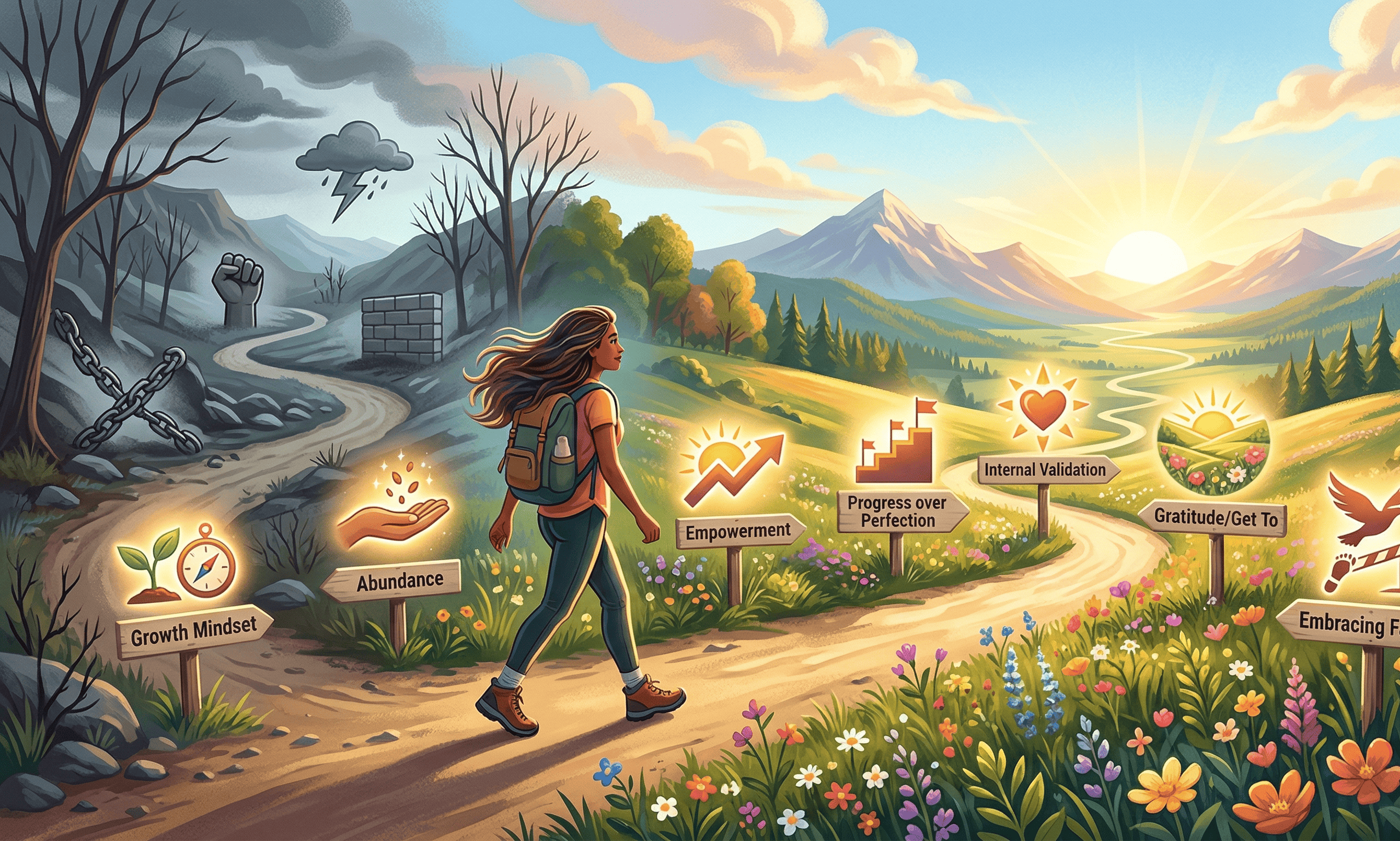
Have you ever felt like you are doing everything right, yet you are still stuck in the same place? We often believe that changing our lives requires drastic, external changes—moving to a new city, switching careers, or finding a new relationship. However, the most profound transformations almost always begin quietly, from within. They begin with our mindset.
Your mindset is the lens through which you view the world. It dictates how you interpret challenges, how you interact with others, and how you perceive your own worth. When we operate with outdated or limiting beliefs, even the best external circumstances will feel inadequate. Conversely, when we cultivate a resilient and expansive way of thinking, we can navigate life’s inevitable storms with grace and purpose.
This comprehensive guide explores 7 mindset shifts that will change your life forever. By adopting inclusive, accessible, and actionable strategies, anyone—regardless of their current circumstances—can begin to reshape their reality.
Why Is Mindset So Powerful?
Before diving into the specific shifts, it is crucial to understand why mindset matters. In psychology, a mindset represents our core beliefs about our abilities, our potential, and our environment.
“The view you adopt for yourself profoundly affects the way you lead your life.” — Dr. Carol S. Dweck
Our brains are incredibly adaptable, thanks to a phenomenon known as neuroplasticity. This means our neural pathways are not entirely fixed; they can grow, reorganize, and strengthen based on our experiences and repetitive thoughts. When you consciously choose to shift your perspective, you are literally rewiring your brain.
By prioritizing inclusivity and self-compassion in this journey, we acknowledge that everyone starts from a different place. The goal is not toxic positivity or ignoring systemic barriers, but rather finding the agency and resilience to navigate your unique path.
Shift 1: From a Fixed Mindset to a Growth Mindset
The concept of fixed versus growth mindsets, pioneered by psychologist Dr. Carol Dweck, is perhaps the most fundamental shift one can make.
The Old Way: The Fixed Mindset
People with a fixed mindset believe that their intelligence, talents, and personalities are static traits. You are either “good at math” or you aren’t. You are either a “natural leader” or you’re not. This belief system breeds a fear of failure, because failing at something implies a permanent lack of ability.
The New Way: The Growth Mindset
A growth mindset is the belief that abilities and intelligence can be developed through dedication, learning, and hard work. Brains and talent are just the starting point. This view creates a love of learning and a resilience that is essential for great accomplishment.
How to Make the Shift:
- Embrace the power of “yet”: When you struggle with a task, instead of saying, “I don’t know how to do this,” reframe it as, “I don’t know how to do this yet.” This simple word opens the door to future potential.
- Praise the process, not the trait: Whether speaking to yourself or others, celebrate the effort, strategy, and focus rather than inherent talent.
- View challenges as gym equipment for your brain: Just as lifting weights builds muscle, navigating complex problems builds cognitive resilience.
Shift 2: From Scarcity to Abundance
The way we view resources, opportunities, and even love profoundly impacts our daily interactions and overall happiness.
The Old Way: The Scarcity Mindset
A scarcity mindset operates on the assumption that there is a limited pie. If someone else gets a piece, that means there is less for you. This applies to money, jobs, success, and relationships. It fosters jealousy, hoarding of information, and a constant underlying anxiety that you will be left behind.
The New Way: The Abundance Mindset
An abundance mindset, a term coined by Stephen Covey, is the paradigm that there is plenty out there for everyone. It is the belief that opportunities are infinite and that someone else’s success does not diminish your own.
How to Make the Shift:
- Celebrate others’ victories: Actively practice being happy for your peers. Their success is proof that success is possible, not a sign that your chance has passed.
- Share your knowledge: Collaboration breeds innovation. When you share resources and ideas, you create a network of mutual support.
- Focus on what you have, rather than what you lack: A daily gratitude practice helps retrain your brain to see the resources already available to you.
Shift 3: From Victimhood to Empowerment (Internal Locus of Control)
Life is often unfair, and many people face systemic injustices and significant hardships. Acknowledging this reality is important. However, how we choose to respond to our circumstances defines our personal trajectory.
The Old Way: The Victim Mentality
Operating from a place of victimhood means believing that life happens to you. You feel at the mercy of external forces—your boss, the economy, your upbringing, or simple bad luck. While your grievances may be entirely valid, staying in this mindset strips you of your agency.
The New Way: The Creator Mentality
Shifting to empowerment means developing an Internal Locus of Control. This is the belief that while you cannot control every event, you have absolute control over your response to those events. You view yourself as the architect of your own life, capable of making choices that influence your future.
How to Make the Shift:
- Audit your language: Catch yourself when you use phrases like “They made me do it” or “I had no choice.” Replace them with “I chose to do it because…” or “My options were limited, but I decided to…”
- Focus on the controllable: Draw a circle on a piece of paper. Inside the circle, write down what you can control (your effort, your attitude, your boundaries). Outside the circle, write what you cannot control (other people’s opinions, the weather, the past). Spend your energy inside the circle.
- Take radical responsibility: Accept ownership of your current situation, not to blame yourself, but to empower yourself to change it.
Shift 4: From Perfectionism to “Progress Over Perfection”
In a society that often highlights polished, flawless end results, perfectionism can easily take root. However, perfectionism is rarely about high standards; it is usually about fear.
The Old Way: The Perfectionist Trap
Perfectionism is an all-or-nothing mindset. If a project isn’t flawless, it’s a failure. If you skip one day of your new workout routine, the whole week is ruined. This mindset leads to severe procrastination, burnout, and an inability to start new things because the fear of not being perfect is paralyzing.
The New Way: Embracing Iteration
The healthiest mindset shift is valuing progress over perfection. It is understanding that growth happens in the messy middle. It is the realization that “done” is almost always better than “perfect,” and that you can only improve upon something that actually exists.
How to Make the Shift:
- Set “good enough” goals: Define what a minimum viable effort looks like for a task and allow yourself to stop when you reach it.
- Celebrate small wins: Did you read three pages of a book instead of the planned chapter? That is still progress. Celebrate it.
- Reframe mistakes as data: Every error is simply information on how to do better next time. It is not an indictment of your character.
Shift 5: From External Validation to Internal Validation
As social beings, it is entirely natural to desire belonging and acceptance. However, outsourcing our self-worth to the opinions of others is a dangerous game.
The Old Way: Seeking External Approval
When we rely on external validation, our self-esteem fluctuates based on social media likes, a manager’s praise, or a partner’s mood. We become chameleons, constantly adjusting our behaviors and boundaries to please others, often at the expense of our own authentic needs.
The New Way: Cultivating Inner Worth
Internal validation means you are the primary judge of your own value. Your self-worth is anchored in your core values, your integrity, and your self-compassion. You still appreciate compliments and constructive feedback, but they do not dictate your foundational sense of self.
How to Make the Shift:
- Define your core values: What matters most to you? Kindness? Honesty? Creativity? When you act in alignment with your values, you generate your own approval.
- Practice self-compassion: Treat yourself with the same kindness and understanding you would offer a good friend.
- Limit social media consumption: Curate your feeds to ensure they inspire you rather than trigger feelings of inadequacy or the need to perform.
Shift 6: From “I Have To” to “I Get To”
The language we use internally profoundly shapes our emotional state. One of the smallest yet most impactful shifts involves changing a single word in our daily vocabulary.
The Old Way: The Burden of Obligation
When we constantly tell ourselves “I have to go to work,” “I have to buy groceries,” or “I have to take care of my family,” we frame our lives as an endless list of burdens. This language creates resentment, heaviness, and chronic stress.
The New Way: The Perspective of Privilege
By shifting “have to” to “get to,” we move from obligation to gratitude. “I get to go to work” acknowledges the privilege of employment. “I get to buy groceries” acknowledges the privilege of resources and food access. “I get to take care of my family” acknowledges the gift of having loved ones in your life.
How to Make the Shift:
- Catch the thought: Pay close attention to your internal monologue during mundane or stressful tasks.
- Make the conscious swap: Verbally correct yourself. If you say, “I have to exercise,” pause and say aloud, “I get to exercise because I have a body capable of movement.”
- Acknowledge the exceptions: This shift is not meant to gloss over genuine hardships or abusive situations. Use it for the daily tasks of life that you genuinely have the privilege to partake in.
Shift 7: From Fearing Failure to Embracing Failure as Feedback
Perhaps the most common barrier to personal and professional transformation is the fear of failing. Society often stigmatizes failure, treating it as an endpoint rather than a stepping stone.
The Old Way: Failure as Defeat
Viewing failure as an ultimate defeat means that when things go wrong, you interpret it as a sign that you should stop trying. The pain of the mistake becomes a permanent deterrent to future risk-taking, keeping your world small and safe.
The New Way: Failure as Necessary Feedback
The most successful and fulfilled people view failure merely as data. Thomas Edison famously viewed his thousands of unsuccessful attempts at inventing the lightbulb not as failures, but as successfully finding ways that did not work. Failure is the universe’s way of providing course correction.
How to Make the Shift:
- Conduct “Post-Mortems” without judgment: When something doesn’t go as planned, sit down and objectively analyze what happened. What worked? What didn’t? What will you do differently next time?
- Redefine the “worst-case scenario”: Often, our fear of failure is based on vague anxieties. Clearly define the absolute worst thing that could happen, and you will usually find it is highly survivable.
- Read biographies: Study the lives of people you admire. You will inevitably find a long trail of failures, rejections, and missteps that preceded their success.
Conclusion
Transforming your life does not happen overnight, and it does not require waiting for the perfect circumstances to arrive. By committing to these 7 mindset shifts—moving toward growth, abundance, empowerment, progress, internal validation, gratitude, and a healthy relationship with failure—you are taking back the steering wheel of your life.
Remember to practice self-compassion as you navigate this journey. Changing deeply ingrained thought patterns is hard work. You will revert to old mindsets from time to time, and that is perfectly okay. The goal is not perfection; it is awareness. The moment you notice you have slipped into a fixed or scarcity mindset, you have already succeeded, because awareness gives you the power to choose again. Start small, be patient with yourself, and watch as your internal shifts begin to profoundly alter your external world.
Frequently Asked Questions (FAQ)
1. How long does it take to permanently change a mindset?
There is no set timeline for changing a mindset, as it depends on how deeply ingrained the old beliefs are. While the popular myth suggests it takes 21 days to form a habit, research shows it can take anywhere from 18 to 254 days for a new habit to become automatic. Mindset shifts are an ongoing, lifelong practice rather than a one-time destination.
2. Is it possible to have a growth mindset in one area of life but a fixed mindset in another?
Absolutely. Dr. Carol Dweck’s research notes that everyone has a mixture of both mindsets. You might have a growth mindset regarding your career, believing you can learn new skills, but hold a fixed mindset about relationships, believing people never change. The key is identifying your fixed mindset triggers.
3. How do I maintain an abundance mindset when facing genuine financial or emotional hardship?
This is a critical nuance. An abundance mindset does not mean ignoring real-world difficulties or systemic inequalities. It means that, within your current reality, you look for collaborative solutions rather than competitive ones. It means celebrating small wins and recognizing non-monetary resources (like community, creativity, and resilience) while you work through the hardship.
4. Can mindfulness and meditation help with these mindset shifts?
Yes. Mindfulness is the practice of observing your thoughts without judgment. To change a mindset, you first have to catch yourself thinking the old thoughts. Meditation builds the “mental muscle” of awareness, making it much easier to pause and choose a new perspective (like swapping “I have to” for “I get to”) before the old thought dictates your behavior.
5. What should I do if the people around me have negative or fixed mindsets?
You cannot force others to change their mindset, but you can protect your own. Set healthy boundaries, limit your engagement in pessimistic conversations, and lead by example. Often, when people see the positive changes in your life and demeanor, they become curious and open to shifting their own perspectives.
Reference Links for Further Reading
-
Understanding the Growth Mindset: Discover more about Dr. Carol Dweck’s foundational research on neuroplasticity and learning at Mindset Works.
-
The Science of Habit Formation: For a deep dive into how long it actually takes to change habits and mental pathways, read the research summary from the European Journal of Social Psychology.
-
Locus of Control: Explore the psychological principles of internal versus external control and how it impacts life satisfaction via the American Psychological Association (APA).
-
Scarcity vs. Abundance: Learn about the origins of the abundance mindset in Stephen Covey’s work, frequently discussed in resources like the Harvard Business Review.
-
Self-Compassion: To build the internal validation needed for these shifts, Dr. Kristin Neff’s research on self-compassion is highly recommended at Self-Compassion.org.
Leave a Reply