
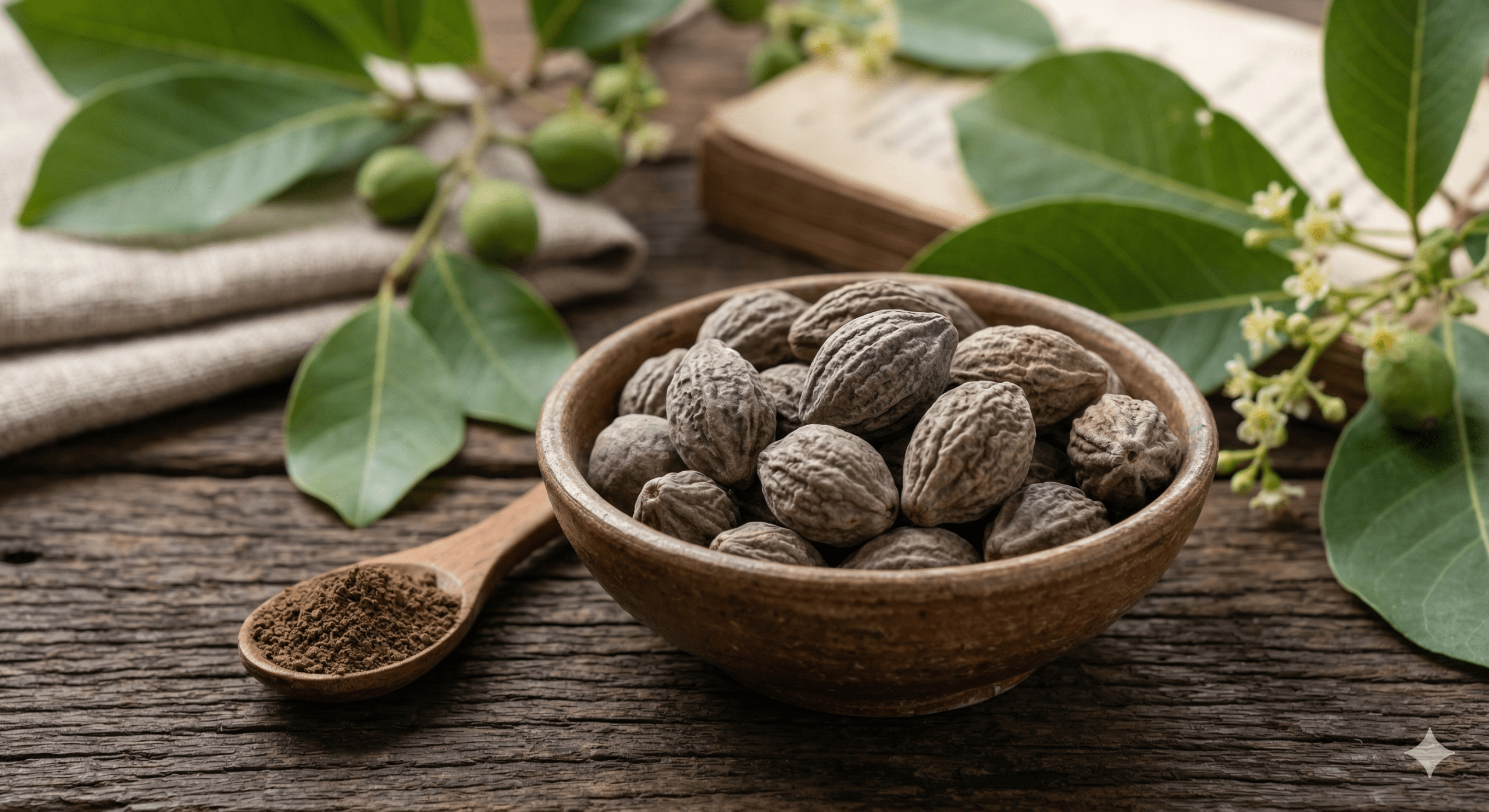
Known as “the king of medicines” in some parts of the world, Terminalia Chebula has a long and storied history in traditional medicine systems, particularly Ayurveda. This humble fruit, often called Haritaki, is a powerful adaptogen and holds promise for a wide range of health concerns. But what exactly is it, what can it do, and is it right for you? In this deep dive, we’ll unpack the multifaceted nature of Terminalia Chebula, exploring its traditional uses, scientific standing, and potential side effects.
What is Terminalia Chebula?
Terminalia Chebula is a deciduous tree native to South Asia, including India, Nepal, Sri Lanka, and parts of China. It’s a key ingredient in many Ayurvedic formulations and is deeply embedded in the traditional healing systems of these regions. The tree bears green, olive-like fruits that turn yellowish-brown or even black upon ripening. The fruit is incredibly tough and is typically dried and ground into a powder, known as haritaki churna, for medicinal use.
Understanding the “Triphala” Connection
If you’ve heard of the popular Ayurvedic remedy Triphala, you’ve already encountered Terminalia Chebula. Triphala, which translates to “three fruits,” is a classic blend of Haritaki (Terminalia Chebula), Amalaki (Emblica Officinalis, or Indian Gooseberry), and Bibhitaki (Terminalia Belerica).
While Terminalia Chebula contributes significantly to the benefits of Triphala, especially in terms of its gentle laxative effect and overall detoxifying properties, it also holds substantial medicinal value on its own.
Terminalia Chebula: A Closer Look at the Active Compounds
The profound effects of Terminalia Chebula stem from its rich and complex chemical composition. Some of the key bioactive compounds identified in this potent fruit include:
Tannins: Terminalia Chebula is exceptionally rich in tannins, including chebulic acid, chebulinic acid, corilagin, and ellagic acid. Tannins are well-known for their antioxidant, anti-inflammatory, and antimicrobial properties. They also contribute to the fruit’s astringent taste.
Flavonoids: These are another group of powerful antioxidants that help protect cells from oxidative stress and support overall immune function.
Phenolic Acids: This group of compounds also possesses strong antioxidant and anti-inflammatory activities, further contributing to the medicinal properties of the fruit.
Triterpenoids: Some studies have suggested that specific triterpenoids in Terminalia Chebula may possess potential anti-cancer properties.
Anthraquinones: While in smaller quantities, these compounds can contribute to the gentle laxative effect associated with Haritaki.
Vitamins and Minerals: Terminalia Chebula contains essential vitamins and minerals, although it’s primarily consumed for its bioactive plant compounds.
It’s the complex interplay of these diverse compounds that likely accounts for the wide range of health benefits attributed to Terminalia Chebula.
Traditional Uses of Terminalia Chebula: More Than Just a Laxative
In Ayurveda, Haritaki is classified as a “rasayana,” which means it’s considered to have rejuvenating and anti-aging properties. It’s believed to improve overall vitality and promote a long, healthy life. While it’s frequently used to manage digestive issues, its traditional applications are far-reaching. Here are some of the key traditional uses:
1. Digestive Health: The Most Prominent Use
This is perhaps the most well-known traditional use of Terminalia Chebula. It is used as a gentle laxative to relieve constipation, promote regular bowel movements, and improve digestion overall. Unlike many over-the-counter laxatives, it is thought to cleanse the digestive tract without causing dependency or intense cramping. Ayurveda suggests that it helps restore balance (specifically to the Vata dosha) and strengthens the intestinal walls.
It is also used to manage other digestive concerns like indigestion, bloating, and gas. Some traditional practitioners use it to help with conditions like hemorrhoids and dysentery, although severe cases should always be treated by a qualified healthcare professional.
2. Detoxification: Cleansing the Body from the Inside Out
Haritaki is considered an important detoxifying agent in Ayurveda. It’s thought to help the body eliminate toxins (known as “ama”) that have accumulated due to poor diet, lifestyle, and other environmental factors. This detoxification process is believed to support the health of various organs, including the liver and kidneys. By encouraging elimination and potentially supporting healthy liver function, Haritaki is thought to play a role in promoting overall systemic well-being.
3. Immune System Support: Strengthening the Body’s Defenses
The rich antioxidant content of Terminalia Chebula is believed to contribute to its immune-boosting effects. By neutralizing free radicals and potentially modulating the immune response, it may help the body better cope with illness and infections. In traditional medicine, it is often used during periods of illness or as a preventative measure.
4. Respiratory Health: Addressing Cough and Cold Symptoms
Traditional practices sometimes use Terminalia Chebula to manage respiratory conditions. Its astringent and potentially antimicrobial properties are believed to help reduce inflammation in the airways and loosen mucus. It might be used as a remedy for cough, sore throat, and bronchitis, although, as with other conditions, serious symptoms require professional medical advice.
5. Skin Health: A Remedy for Both Inside and Out
Both internal consumption and external application of Haritaki are used in Ayurveda to promote skin health. Internally, its detoxifying properties are thought to contribute to a clearer complexion. Externally, pastes made from the dried fruit powder are applied to treat various skin concerns, including wounds, inflammation, and potentially fungal infections. Its astringent nature is also believed to help tighten pores.
6. Cognitive Function and Mental Health: Beyond Physical Well-being
Interestingly, traditional medicine systems also attribute cognitive benefits to Haritaki. It’s sometimes used to support memory, concentration, and mental clarity. Some sources suggest it may have adaptogenic properties that could help the body manage stress and anxiety. While scientific evidence is more robust in other areas, this highlights the holistic approach of traditional systems like Ayurveda.
7. Mouth and Throat Health: A Gentle Cleanser and Soother
Gargling with solutions containing Haritaki or applying a paste is a traditional remedy for sore throats, mouth ulcers, and gingivitis. Its astringent and antimicrobial properties are believed to help reduce inflammation and combat potential oral pathogens.
Scientific Evidence: What the Research Says About Terminalia Chebula
While the traditional uses of Terminalia Chebula are well-documented, modern science is starting to catch up, exploring and validating some of these ancient claims. Here’s a look at what the research currently says:
1. Digestive Health: Validating the Traditional Claims
Studies have, to a degree, supported the traditional use of Haritaki as a gentle laxative. Research suggests it can increase bowel movement frequency and improve overall digestion. The mechanism behind this likely involves its tannin and potentially anthraquinone content, along with its ability to stimulate smooth muscle contraction in the digestive tract. Some preliminary research also suggests it may help with certain types of gut inflammation, which could be beneficial for individuals with conditions like irritable bowel syndrome (IBS), although more robust studies are needed.
2. Antioxidant and Anti-inflammatory Effects: Strong Scientific Foundation
This is perhaps the most well-supported area of scientific research on Terminalia Chebula. Numerous studies have confirmed its potent antioxidant activity. The high concentration of tannins, flavonoids, and phenolic compounds makes it a formidable force against free radical damage. By reducing oxidative stress, it has the potential to mitigate chronic inflammation, which is linked to a wide array of diseases, including cardiovascular conditions and certain types of cancer.
3. Antimicrobial and Antiviral Properties: Potential Applications
Terminalia Chebula has demonstrated antimicrobial activity in various studies. Test tube and some animal research have shown that it can effectively combat certain bacteria and fungi. Some studies have also investigated its potential against specific viruses, with some showing promising results. These findings provide scientific plausibility for its traditional use in managing infections and supporting mouth and throat health. However, much more research, especially clinical trials, is necessary to determine its effectiveness against specific pathogens and optimal dosages for antiviral and antibacterial applications in humans.
4. Blood Sugar Management: Emerging Evidence
Some preclinical studies, predominantly on animals, suggest that Terminalia Chebula might help in managing blood sugar levels. It appears to potentially inhibit certain enzymes involved in carbohydrate digestion and absorption, which could prevent rapid spikes in blood glucose. However, human clinical trials are currently very limited, and this application is far from being established.
5. Potential Anti-cancer Activity: Preclinical Investigations
Initial test-tube and animal research has hinted at the potential anti-cancer properties of specific compounds in Terminalia Chebula. Some studies have shown that it can inhibit the growth of certain types of cancer cells and induce apoptosis (programmed cell death) in vitro. These findings are intriguing and warrant further investigation, but it’s important to understand that they are far from proving that Terminalia Chebula is a cancer cure or prevention in humans.
6. Cognitive Function: Preliminary Research
While the traditional connection to cognitive function is fascinating, scientific evidence in humans is very sparse. Some animal studies have shown potential neuroprotective and cognitive-enhancing effects, perhaps linked to its antioxidant properties and potential ability to modulate neurotransmitter levels. Considerably more research, especially high-quality human clinical trials, is needed to confirm if Haritaki truly offers cognitive benefits for people.
Summary of Scientific Standing:
The strongest scientific support exists for Terminalia Chebula’s antioxidant, anti-inflammatory, and gentle laxative properties. While antimicrobial and potential blood sugar management effects have promising preclinical evidence, human studies are limited. Research into its anti-cancer and cognitive benefits is still in its very early stages.
Important Note on Scientific Evidence
It’s vital to recognize that while preclinical research (test-tube and animal studies) is crucial for identifying potential mechanisms of action, it doesn’t always translate directly to effects in humans. Human clinical trials are the gold standard for evaluating safety and efficacy, and for many applications of Terminalia Chebula, robust clinical evidence is still lacking. As always, consult a healthcare provider for any medical advice.
Uses of Terminalia Chebula: Practical Applications and Dosing
How can you actually use Terminalia Chebula? As mentioned, the dried fruit powder (haritaki churna) is the most common form. It’s often used in Ayurvedic practice in specific ways. Here are some of the practical applications:
1. Constipation Relief
The most common use of Terminalia Chebula is as a mild laxative for relieving constipation and promoting regularity. The suggested dosage varies depending on individual needs and the advice of a qualified practitioner. A common range is often cited as 1/2 to 1 teaspoon of the powder mixed with warm water, typically taken before bed. This gentle nature makes it a popular option for those seeking a more natural solution than harsh chemical laxatives.
2. Digestive Support
Beyond constipation, Haritaki can be used to improve overall digestion, manage bloating and gas, and encourage the elimination of toxins. In these instances, smaller dosages, sometimes taken after meals, are typically recommended. The specific preparation and timing are often determined by the Ayurvedic concept of “Anupana” – the vehicle or substance (like warm water, honey, or ghee) with which the herb is taken to enhance its effects.
3. Detoxing Protocols
Terminalia Chebula is frequently incorporated into Ayurvedic detoxification programs, particularly during seasonal cleanses or “Panchakarma.” Its primary role in these protocols is to promote regular elimination and support the body’s natural processes of eliminating metabolic waste. The dosage and specific protocols would be carefully managed by a trained Ayurvedic practitioner.
4. Mouth and Throat Care
As traditional practices suggest, Haritaki can be used as a natural remedy for throat and oral discomfort. Gargling with a solution made from a small amount of haritaki powder dissolved in warm water can provide relief for sore throats and reduce mouth inflammation. A paste could potentially be used externally on gums, though professional advice is recommended for persistent conditions.
5. Skin Application
A paste made with haritaki powder and water can be applied topically to address skin conditions such as minor wounds, insect bites, and localized inflammation, reflecting its traditional use. As always, a small patch test is wise before widespread application, especially for sensitive skin.
Important Dosing Guidelines and Safety Considerations
When it comes to using Terminalia Chebula, or any herbal supplement, proper dosing is critical. Dosages can vary greatly depending on factors like:
Individual health conditions
The specific reason for use
Age
Tolerance
The form and potency of the supplement
The dosages mentioned above are general guidelines and should not replace personalized advice from a qualified healthcare professional. Overdosing can lead to unwanted effects, so it’s always best to start with a smaller dose and monitor your body’s response.
Potential Side Effects and Precautions
While Terminalia Chebula is generally considered safe when used appropriately and in moderate dosages, it’s not without potential side effects and precautions. It’s essential to be aware of these before incorporating it into your routine.
1. Digestive Discomfort: The Common Thread
The most commonly reported side effects, as you might expect given its laxative properties, are digestive. This can include:
Loose stools or diarrhea
Abdominal cramping or bloating
Stomach upset
These effects are usually mild and may subside as the body gets used to the herb. However, if they persist or are severe, you should stop taking it and consult a healthcare provider.
2. Potential for Dehydration
If Terminalia Chebula leads to diarrhea, especially when taken in excessive amounts, it can increase the risk of dehydration. It’s essential to stay well-hydrated when using any laxative.
3. Contraindications: Who Should Avoid Haritaki?
Due to its potent effects, certain individuals should avoid using Terminalia Chebula, particularly:
Pregnancy: It is generally recommended to avoid Haritaki during pregnancy due to the potential risk of inducing uterine contractions.
Breastfeeding: While conclusive evidence is sparse, it’s typically advised for breastfeeding mothers to exercise caution as active compounds could potentially pass into breast milk.
Severe Diarrhea and Dehydration: Individuals experiencing severe diarrhea or who are significantly dehydrated should not use Haritaki, as it can worsen these conditions.
Intestinal Blockage: If there’s a suspected intestinal obstruction or blockage, using laxatives, even natural ones, can be dangerous and is strongly contraindicated.
4. Drug Interactions: A Crucial Consideration
Terminalia Chebula can interact with certain medications. This is a critical area, and you should always discuss its use with your doctor if you are taking any prescription or over-the-counter drugs. Possible interactions include:
Anticoagulants and Antiplatelet Drugs: The high tannin content in Haritaki may have mild anti-clotting effects, which could potentially enhance the effects of medications like warfarin or aspirin, increasing the risk of bleeding.
Blood Sugar Medications: Since preliminary studies suggest that Haritaki might affect blood sugar levels, it could interact with medications used to manage diabetes, potentially causing blood sugar levels to drop too low. Close monitoring is essential.
Other Laxatives: Combining Haritaki with other laxatives can intensify their effects and increase the risk of severe diarrhea and dehydration.
Conclusion: Terminalia Chebula – An Age-Old Remedy with Modern Potential
Terminalia Chebula is a truly fascinating example of a traditional medicine that is gaining increasing recognition from modern science. This versatile fruit has a powerful chemical makeup that supports its historical use as a digestive tonic, antioxidant, and anti-inflammatory agent. While its potential application for other concerns is exciting, it’s important to approach them with realistic expectations, mindful of the limited clinical evidence in humans.
Ultimately, whether you are considering Terminalia Chebula for digestive relief, detoxification support, or its antioxidant properties, it is essential to do so responsibly. Focus on sourcing high-quality products, adhere to recommended dosages, and critically, consult with a qualified healthcare professional, particularly if you have underlying health conditions or are taking any medications. Terminalia Chebula, with its ancient wisdom and modern scientific validation, certainly holds significant potential as a supportive herb for maintaining a healthy lifestyle.
Frequently Asked Questions (FAQs) about Terminalia Chebula
To help you quickly navigate the most important facts about this “King of Herbs,” here are the answers to the most common questions:
1. What is the most common name for Terminalia Chebula?
While its botanical name is Terminalia chebula, it is most widely known as Haritaki in Ayurvedic medicine. In Tibet, it is often referred to as the “Big Black Myrobalan.”
2. How long does it take for Haritaki to work for constipation?
Most people notice a gentle laxative effect within 6 to 12 hours of consumption. It is typically taken at night before bed with warm water so that it works overnight to encourage a bowel movement the following morning.
3. Can I take Terminalia Chebula every day?
In traditional Ayurveda, small doses are often taken daily as a “Rasayana” (rejuvenative). However, for modern supplemental use, it is best to consult a practitioner. Using it as a chronic high-dose laxative is not recommended, as your body may become reliant on it for bowel movements.
4. Does it help with weight loss?
While not a “fat burner” in the clinical sense, Haritaki supports weight management by improving digestion and assisting the body in regular waste elimination. By preventing toxin buildup and improving nutrient absorption, it can be a helpful addition to a healthy diet and exercise routine.
5. Is Terminalia Chebula safe for children?
Generally, it is considered safe for older children in very small, age-appropriate doses to treat occasional constipation. However, you should always consult a pediatrician before giving any herbal supplement to a child, as their dosage needs are much lower than adults.
6. Can I use the powder as a face mask?
Yes. Due to its antibacterial and astringent properties, a paste made of Haritaki powder and water (or rose water) is often used to treat acne, skin inflammation, and large pores. Always perform a patch test on your inner arm first to check for sensitivity.
7. How does it taste?
Be prepared—pure Haritaki powder has a very strong, complex flavor. It is primarily astringent and bitter, with a slightly sour and pungent aftertaste. Many people prefer taking it in capsule form or mixing it with honey to mask the intense flavor.
8. What is the difference between Haritaki and Triphala?
Haritaki is just one of the three fruits that make up Triphala. While Haritaki focuses heavily on the colon and “Vata” energy, Triphala is a balanced formula containing Amalaki and Bibhitaki, making it a more “all-purpose” digestive tonic suitable for almost everyone.
Note: If you are currently taking blood-thinning medication or medication for diabetes, please speak with your doctor before adding Terminalia Chebula to your routine to avoid potential interactions.