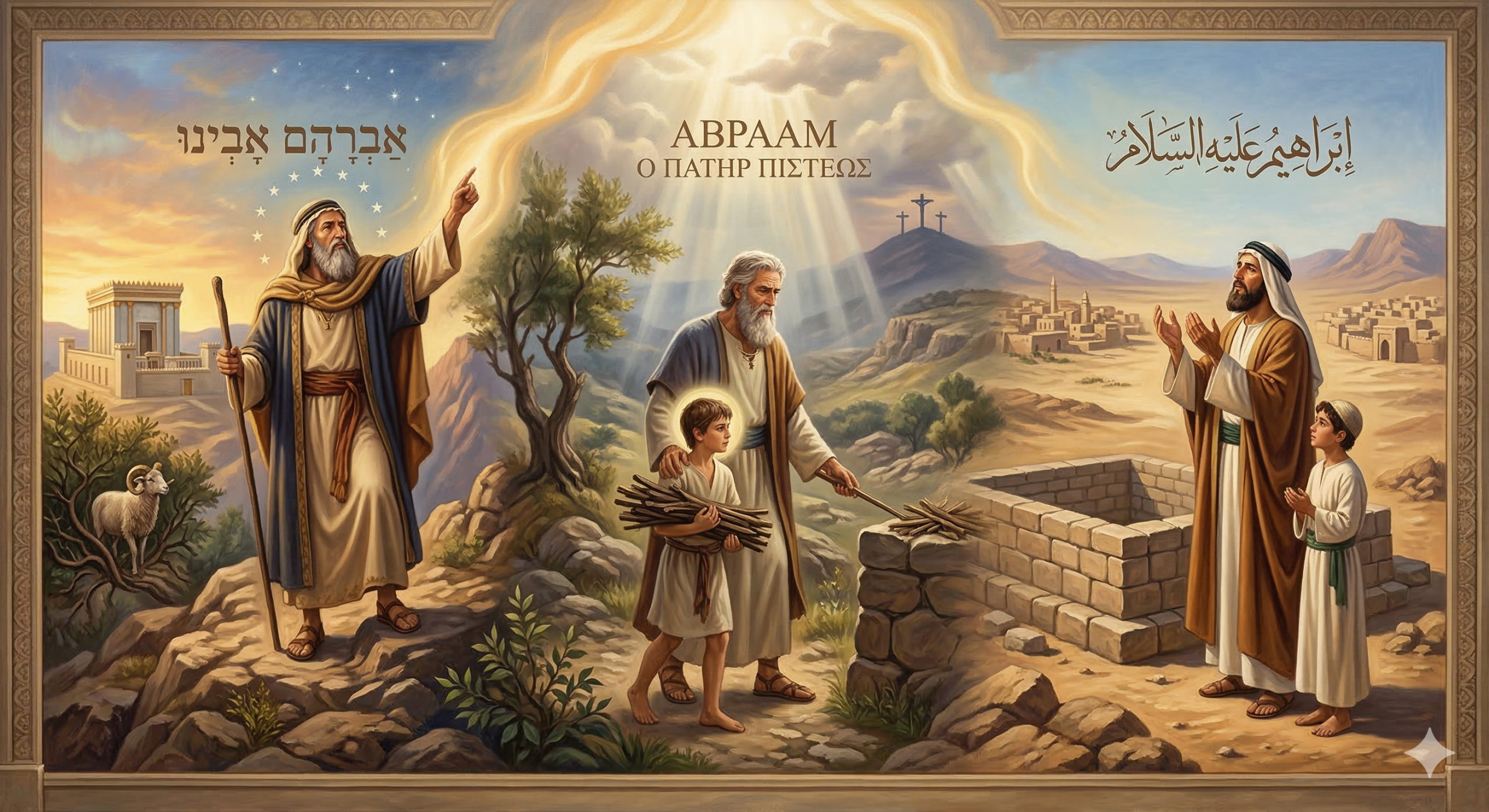
In the landscape of human faith, few figures loom as large or as revered as Abraham. He is a cornerstone, a father figure, and a prophet whose story is woven into the very fabric of Judaism, Christianity, and Islam. While each of these Abrahamic faiths offers a distinct lens through which to view his life and legacy, a common thread of profound devotion, obedience, and an unshakeable connection to the divine runs through them all.
This article delves into the diverse and fascinating descriptions of Abraham across these three major world religions, exploring how his narrative has shaped and continues to inspire billions of people globally.
The Jewish Patriarch: A Story of Covenant and Foundation
For the Jewish people, Abraham is the undisputed progenitor, the first patriarch, and the founder of their nation. His story, as recounted in the Book of Genesis, is not merely a historical account; it’s a foundational narrative that defines Jewish identity and their relationship with God.
A Man of Unwavering Faith and Obedience
Genesis introduces Abraham as Avram, a man living in the city of Ur. God’s first call to him is dramatic and life-altering: “Leave your country, your people, and your father’s household and go to the land I will show you.” (Genesis 12:1). With remarkable faith, Avram obeys, setting in motion a journey that will establish a new nation.
The Covenant: A Foundation of Identity
The central theme in the Jewish narrative of Abraham is the covenant (B’rit). This isn’t a one-time agreement but an ongoing relationship between God and Abraham’s descendants. God promises Abraham:
- A Great Nation: His descendants will become as numerous as the dust of the earth and the stars in the sky.
- A Promised Land: A specific land (Canaan, now Israel) is designated for his people.
- Blessings and Protection: God will bless him and make his name great, and he will be a blessing to others.
- The Mark of the Covenant: Circumcision is established as the physical sign of this eternal covenant.
The Ultimate Test: The Binding of Isaac
Perhaps the most powerful and demanding moment in Abraham’s life is the Akedah, the binding of Isaac. God commands Abraham to offer his beloved son, Isaac, as a sacrifice. In an act of unparalleled faith, Abraham complies, raising the knife to fulfill the command. However, at the last moment, an angel intervenes, revealing that it was a test of obedience, and a ram is provided for the sacrifice. This narrative illustrates Abraham’s total submission to the divine will, even at the cost of his own son.
Abraham: A Role Model of Virtue
In Jewish tradition, Abraham is celebrated not only for his faith but also for his many virtues:
- Hospitality: He is depicted as a man of exceptional hospitality, readily welcoming strangers into his home.
- Compassion: He famously bargains with God to spare the sinful city of Sodom, pleading for the sake of the righteous living there.
- Wisdom: Later Jewish texts portray him as a wise and learned philosopher who discovered monotheism through his observation of nature.
The Christian View: Abraham, the Father of All Who Believe
Christianity builds upon the Jewish foundation, embracing Abraham as a pivotal figure in salvation history. However, the Christian perspective shifts the emphasis from national identity to a broader, spiritual understanding of his legacy.
The Paragon of Justification by Faith
In the New Testament, Abraham is a central figure in discussions about salvation and grace. The Apostle Paul, in his letters to the Romans and Galatians, presents Abraham as the quintessential example of justification by faith. He argues that it was Abraham’s faith, not his adherence to the law (which didn’t yet exist), that made him righteous in God’s eyes. Paul famously quotes Genesis 15:6: “Abraham believed God, and it was credited to him as righteousness.” This principle becomes a cornerstone of Christian theology.
The Abrahamic Covenant: A Global Vision
Christianity views the covenant with Abraham not as exclusive to the Jewish people but as a promise that ultimately extends to all nations through Jesus Christ. Christ is seen as the ultimate fulfillment of the seed of Abraham, the one through whom “all nations will be blessed.”
- Spiritual Descendants: Paul argues that anyone who shares in the same kind of faith that Abraham had—regardless of whether they are Jewish or Gentile—becomes a spiritual child of Abraham and an heir to the divine promises.
- The Role of Faith: This universalization of the covenant underscores the idea that faith in Christ, not bloodline or adherence to Jewish law, is the key to being part of God’s family.
The Binding of Isaac: A Prefiguration of the Cross
Christian theology often interprets the binding of Isaac (the Akedah) as a prefiguration of the sacrifice of Jesus.
- A Shadow of the Future: The willingness of Abraham to offer his son is seen as a foreshadowing of God the Father’s willingness to sacrifice his only Son, Jesus, for the sins of the world.
- Isaac and Jesus: Isaac, carrying the wood for his own sacrifice and submissively allowing himself to be bound, is viewed as a model for the submissive obedience of Christ, who carried his own cross to Calvary.
Other Christian Depictions
- The Example of Hope: The author of Hebrews praises Abraham’s faith as the very definition of hope, noting how he patiently waited for the fulfillment of God’s promises, even when they seemed impossible.
- The Ultimate Patriarch: While focusing on his spiritual role, Christianity still acknowledges Abraham’s position as a revered figure and a critical link in the chain of God’s plan for humanity.
Ibrahim: The Hanif and the Prophet of Islam
In Islam, Abraham (known as Ibrahim) is revered as one of the greatest prophets, a staunch monotheist, and a paragon of absolute submission to the will of Allah (God). The Qur’an dedicates substantial space to his story, illuminating his profound faith and his role in establishing key practices of the Islamic faith.
A Pure Monotheist: The Archetypal Hanif
A central description of Ibrahim in the Qur’an is that of a “Hanif”—someone who naturally and intuitively turned away from idolatry and worshipped only the one true God, Allah.
- The Inquirer: Even before receiving formal revelation, Ibrahim is depicted as questioning the idol worship of his people. He observes the stars, the moon, and the sun, but rejects them as deities because they set and are part of the creation. His journey is one of rational discovery leading to an unwavering belief in a single, all-powerful Creator.
- The Iconoclast: Ibrahim’s commitment to monotheism brings him into direct conflict with his father and his people. He famously smashes the idols of his community, leaving only the largest one intact to force his people to reflect on the futility of worshipping inanimate objects.
The Ideal Submitter: An Inspiration for All Muslims
The very word “Islam” means “submission to the will of God,” and Ibrahim is viewed as the ultimate model for this total surrender. He faces immense trials with unwavering faith:
- The Trial of the Fire: When his people attempt to burn him alive for destroying their idols, Allah intervenes, making the fire “coolness and peace” for him.
- The Sacrifice: Like the biblical narrative, the Qur’an describes Ibrahim’s test to sacrifice his son (often identified as Ismail in Islamic tradition, though Isaac is also sometimes mentioned). Ibrahim’s willingness to obey is absolute. When he informs his son of the vision, the son’s response reflects the same spirit of submission: “O my father, do as you are commanded.” Again, Allah intervenes at the last moment, providing a ram for sacrifice.
The Father of Prophets and the Builder of the Kaaba
Ibrahim is revered as the father of many prophets who followed him, including his sons Ismail and Ishaq (Isaac), and ultimately, Prophet Muhammad. This lineage underscores the shared heritage and unity of the Abrahamic faiths in Islam.
- The Kaaba: One of the most significant roles attributed to Ibrahim in Islam is the building (or rebuilding) of the Kaaba in Mecca, the holiest site in the Muslim world. He and his son Ismail are credited with constructing this “House of Allah,” which served as a beacon of monotheism.
- The Hajj: Many of the rites of the annual Hajj pilgrimage, one of the Five Pillars of Islam, are directly linked to the stories of Ibrahim, Ismail, and Hajar. These rituals commemorate their faith, struggles, and submission to God’s will.
A Legacy that Connects
Despite the unique facets of Abraham’s depiction in each tradition, a powerful and undeniable commonality remains. Abraham is a shared ancestor and a common ethical compass for billions of people.
- The Foundation of Faith: In all three faiths, he is the exemplar of faith—a man who believes in God’s promises even against all odds.
- A Call to Obedience: His life serves as a timeless call to submit to the divine will, regardless of the cost.
- A Model of Character: Abraham’s virtues of hospitality, compassion, and unwavering commitment to what is right continue to be a source of moral guidance.
Abraham in the Modern World: A Potential for Unity?
While the Abrahamic faiths have often been characterized by conflict and division throughout history, the shared figure of Abraham offers a potential point of connection. In a world increasingly defined by fragmentation, rediscovering the common roots and the unifying figure of the Father of Faith could be a pathway towards understanding, respect, and mutual cooperation.
By looking past the theological differences that have sometimes divided us, we can appreciate the profound impact of this man whose simple act of faith continues to ripple through time, shaping the world’s major religions and inspiring untold generations.
What are your thoughts on how Abraham is viewed differently, yet similarly, across these faiths? Share your insights in the comments below!