Jesus of Nazareth is perhaps the most written-about, most painted, and most debated figure in human history. For billions, he is the savior. For others, a prophet. For some, a wise philosopher, and for others still, a point of significant theological division. His influence transcends the boundaries of the religion founded in his name, leaving an indelible mark on the scriptures, traditions, and folklore of multiple global faiths.
Understanding Jesus solely through a single lens is to miss the staggering breadth of his impact. When we travel across the religious landscape, we discover that “Jesus” is not a static concept but a multifaceted figure whose story has been told and retold, adapting to different cultural and theological needs.
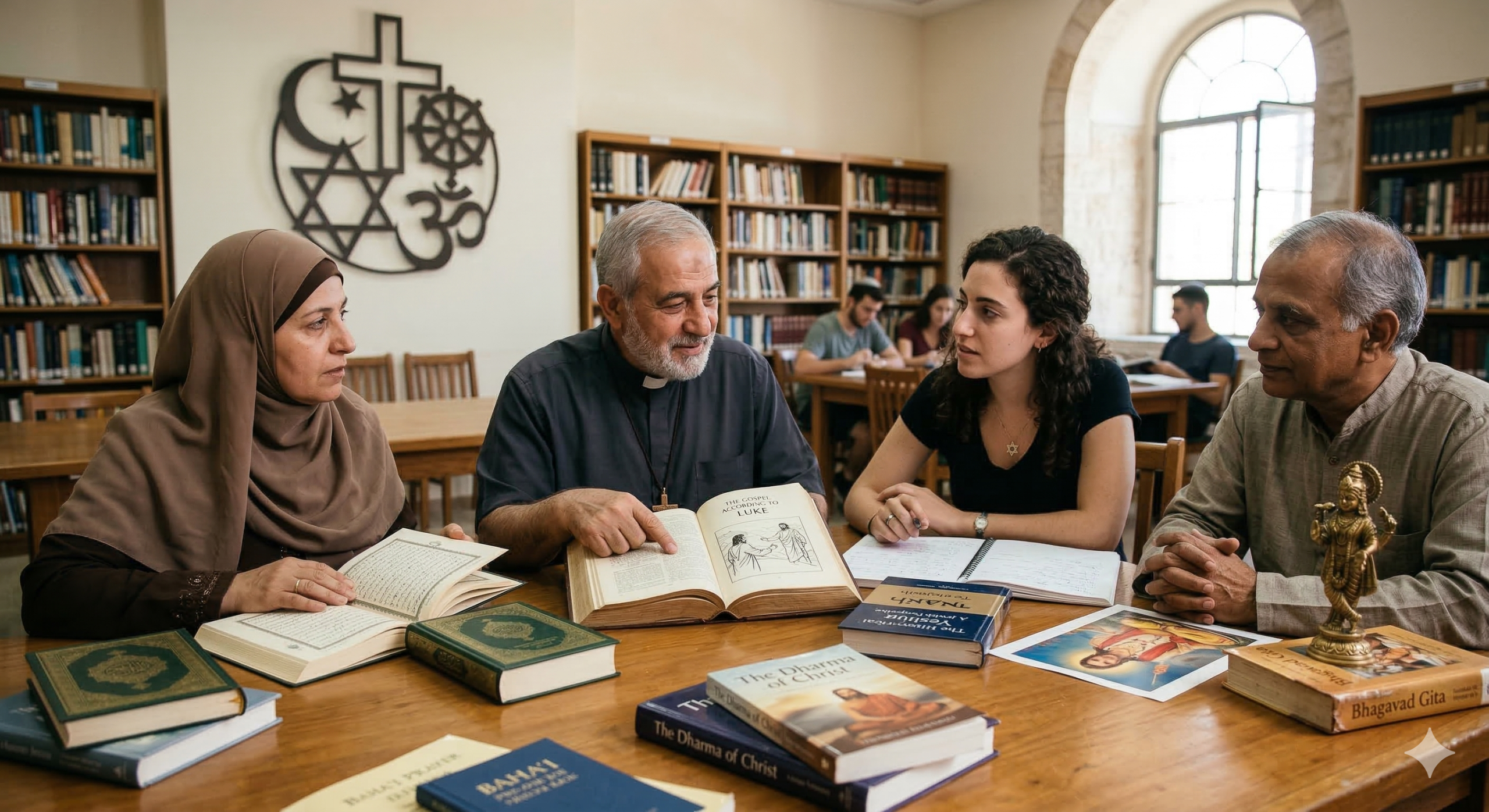
This article provides a comprehensive overview of how Jesus is described, revered, and understood across the world’s major and some minor religious traditions, revealing a portrait that is both unifying and deeply divided.
1. Christianity: The Son of God and Savior
For the world’s 2.4 billion Christians, Jesus is not merely a figure of history; he is the central pillar of their faith, worship, and concept of reality. The description of Jesus in Christianity is complex, primarily drawn from the four Gospels of the New Testament (Matthew, Mark, Luke, and John) and the theological letters that follow.
The Incarnate Word
The core of Christian doctrine is that Jesus is the Son of God. This title signifies that he is not just a divinely inspired human, but the second person of the Trinity—co-equal and co-eternal with God the Father and the Holy Spirit. He is the Word made flesh (Logos), the very being of God taking on human form to live among humanity.
This “Hypostatic Union”—the concept of being fully divine and fully human—is central. He experienced hunger, pain, and joy like any man, yet possessed the authority to forgive sins and perform miracles that demonstrated mastery over nature and death.
Messiah and Savior
Christianity teaches that Jesus is the Messiah (meaning “Anointed One” in Hebrew, or Christos in Greek) foretold in the Old Testament. He came to fulfill centuries of prophecy, but his mission was not the political liberation expected by many of his day.
His primary role was that of Savior. Through his sinless life, sacrificial death on the cross, and bodily resurrection, Christians believe he paid the penalty for human sin. His death is seen as an act of perfect obedience that reconciled a fallen humanity to a holy God, offering salvation and the promise of eternal life to all who believe in him.
Teacher and Lord
Beyond his savior role, Jesus is revered as the ultimate Teacher and Lord. His “Sermon on the Mount” is considered the foundational ethical treatise of the faith, emphasizing love for neighbors (and enemies), humility, mercy, and purity of heart. For Christians, a life of faith is a continuous attempt to imitate his example. He is also the awaited Judge who will return at the end of age to judge the living and the dead.
2. Islam: The Beloved Prophet Isa (AS)
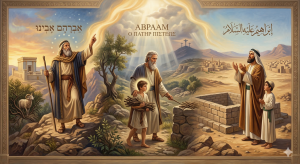
Jesus is a highly revered figure in Islam, known by his Arabic name, Isa. He is considered one of the five “arch-prophets” of the faith, alongside Noah, Abraham, Moses, and Muhammad (Peace Be Upon Them all). His name appears throughout the Quran—more than that of Prophet Muhammad—and he is mentioned in many Surahs (chapters), most notably Surah Maryam (Mary).
A Miraculous Messenger
The Quran explicitly affirms the Virgin Birth of Jesus. He was conceived in Maryam (Mary), a woman of perfect chastity, through the breathing of God’s spirit. Like the biblical narrative, his birth is a sign of God’s power. In the Quran, Jesus also speaks from the cradle as an infant, declaring his status as a servant of God and a prophet.
He is described as a great Messenger sent specifically to the Children of Israel to confirm the Torah and bring a new revelation, the Injil (the Gospel). The Quran attributes numerous miracles to him, performed always by the permission of God, including healing the blind and lepers, raising the dead, and creating life from clay birds.
Title of Messiah
Islam gives Jesus the distinguished title of al-Masih (the Messiah). While it does not mean “savior from sin” as it does in Christianity, it signifies his unique station as a divinely appointed leader. Classical commentators describe him as sinless, blessed, and a bearer of great wisdom.
The Crucial Distinction: Prophet, Not Son
While Islam shares the miraculous nature of his birth with Christianity, it draws a sharp, non-negotiable line regarding his divinity. The Quran rejects the idea of the Trinity and the concept that Jesus is the “Son of God.” It emphasizes a strict, absolute monotheism (Tawhid): God has no partners, no children, and cannot be embodied in human form. To attribute divinity to Jesus is considered Shirk (idolatry), the greatest sin in Islam.
In the Islamic view, Jesus was a Muslim—in the literal sense of “one who submits to God”—and on the Day of Judgment, he will deny ever claiming divinity for himself or his mother. Furthermore, most Muslims do not believe that Jesus was crucified. Instead, they believe that God saved him from his enemies, raising him alive into Heaven, and making it appear to the Jews as if they had executed him. He is also a key figure in Islamic eschatology, expected to return before the Day of Judgment to defeat the Dajjal (Antichrist).
3. Judaism: A Wise but False Messiah
The Jewish view of Jesus is complex, largely defined by the historical reality that Jesus was a Jew who lived and taught within the 1st-century Jewish context, yet his followers founded a religion that became a separate and often hostile entity to Judaism.
The Historical Fellow
Most mainstream Jewish scholars and historians acknowledge that Yeshua (Jesus) was a historical figure—a Jewish teacher and preacher in the Galilee and Judea. He lived a Jewish life, followed Jewish law, and gathered Jewish disciples.
In modern times, some Jewish perspectives have shifted towards a greater appreciation of his ethical teachings. Scholars like Martin Buber and Leo Baeck have spoken of him positively, viewing him as a “brother” or a great ethical master within the Jewish tradition.
The Rejection of Messiahship and Divinity
However, the overwhelming majority of Jews, both historically and today, explicitly reject Jesus as the Messiah. The primary reason is that he did not fulfill the established Jewish Messianic prophecies. According to Jewish scripture, the Messiah will:
- Bring about universal peace (the “wolf will lie down with the lamb”).
- Gather all Jewish exiles to the land of Israel.
- Rebuild the Holy Temple in Jerusalem.
- Uphold and perfect the observance of Jewish Law (Torah).
Because Jesus died without accomplishing these things, and because the world did not change in the expected way, Judaism considers him a false claimant. The idea of a “second coming” is a Christian innovation to resolve this lack of fulfillment, not a Jewish concept.
Furthermore, the Christian doctrines that Jesus is the “Son of God,” that he is part of a Trinity, or that he can forgive sins, are considered blasphemous in Judaism, violating the absolute oneness of God and the commandment against worshiping any other being. In Jewish tradition, no human can be God, and there is no need for a human mediator to God.
4. Hinduism: An Avatar or Enlightened Guru
Hinduism is an incredibly diverse, pluralistic family of traditions that can easily accommodate multiple paths to the divine. There is no single “Hindu view” of Jesus, but he is widely regarded with respect, often integrated into the rich tapestry of Hindu deities and masters.
An Avatar of God
Many Hindus view Jesus as an Avatar—a Sanskrit word meaning “descent”—a divine manifestation or incarnation of God who appears on Earth to restore righteousness (dharma) during times of decline. Just as Rama and Krishna are revered as avatars of Vishnu, Jesus is seen as a similarly powerful, divinely empowered being who was sent for a specific mission to a specific people. This perspective allows Hindus to worship Jesus alongside their other gods without any conflict, though they reject the Christian claim that he is the only incarnation of God.
A Perfected Master (Guru)
Other Hindus approach Jesus through the lens of yoga and Vedanta philosophy, seeing him as a Satguru (true teacher) or a Jivanmukta (one who is liberated while alive). In this view, Jesus is a supreme example of self-realization, a human being who achieved the highest state of consciousness and union with the divine (Brahman). His life of service, compassion, and renunciation makes him an inspiring model for spiritual seekers.
Many modern Hindu spiritual teachers, such as Swami Vivekananda and Paramahansa Yogananda, spoke highly of Jesus, interpreting his teachings on the “Kingdom of God is within you” as a mystical message about discovering one’s own inner divinity. There is even a popular Hindu belief, though not supported by historical evidence, that Jesus traveled to India during his “missing years” (ages 12-30) to learn the wisdom of Yoga and Vedanta before returning to Galilee.
5. Buddhism: A Bodhisattva or Enlightened Being
Buddhism, as a philosophy focusing on the relief of suffering and the path to enlightenment, generally has little canonical intersection with Christianity. There is no historical or scriptural mention of Jesus in Buddhist texts.
However, when modern Buddhists do encounter the figure of Jesus, they often interpret him positively according to their own system of thought.
The Compassionate Bodhisattva
Many Buddhists revere Jesus as a Bodhisattva—a term signifying a highly evolved spiritual being who has vowed to attain enlightenment but delays their own complete liberation (Nirvana) out of boundless compassion to help all other sentient beings. His life of service, his emphasis on compassion, forgiveness, and love, fits well within the Buddhist ideal of a Bodhisattva.
An Enlightened Teacher
Other Buddhists see Jesus as a wise, enlightened master, similar in station to the Buddha himself. The Dalai Lama has spoken of Jesus, describing him as a very high-level spiritual being, and has drawn parallels between his ethical teachings and those of Buddhism. This view recognizes Jesus’s great influence for good, but does not ascribe divinity to him.
Fundamental differences remain. Buddhism does not believe in a creator God, a savior from sin, or eternal damnation, making the central Christian doctrines regarding Jesus’s role incompatible with core Buddhist philosophy.
6. The Baha’i Faith: A Manifestation of God
The Baha’i Faith, a relatively newer religion that teaches the essential worth of all religions, holds Jesus in a very high and sacred station. Central to Baha’i doctrine is the concept of Progressive Revelation: God reveals His will to humanity in a series of “Manifestations” who appear at different times and in different cultures to guide human evolution.
One of the Chain of Prophets
Baha’is believe Jesus was one of these Manifestations of God, alongside Moses, Buddha, Zoroaster, Muhammad, The Bab, and Baha’u’llah (the founder of the Baha’i Faith). In this view, each Manifestation is like a perfect mirror reflecting the attributes of the divine into the human world. They are all considered to be the same “Sun of Truth” appearing at different points on the horizon.
Revering His Stations
Baha’is unequivocally acknowledge the divine station of Jesus. They fearlessly assert his “Sonship” and divinity, recognize the divine inspiration of the Gospel, and believe in the Virgin Birth. Baha’u’llah refers to Christ as the “Lord of the visible and invisible” and the “Essence of the Spirit.” However, they do not interpret his divinity to mean that the infinite God was contained within a single human body. Instead, he is a perfect divine channel for the age in which he lived.
Baha’is believe his teachings were perfect for his time, and that his sacrificial life infused a “fresh capacity” into all created things. They do not celebrate his holy days, but they reverence him as one of the greatest beings to have ever walked the earth.
Conclusion: The Universal Mirror
In surveying how Jesus is described across these diverse global religions, a remarkable and complex portrait emerges. While a small subset of religions may view him negatively or treat him as irrelevant, the vast majority revere him as a figure of towering spiritual significance.
He is the Son of God, the Savior, the Prophet Isa, the Satguru, the Avatar, the Bodhisattva, and the Manifestation of God.
These diverse descriptions highlight a profound truth: Jesus of Nazareth has become a universal mirror in which humanity sees its own highest ideals and deepest theological yearnings reflected. The specific doctrines differ, the barriers of divinity remain, yet his core message of compassion, sacrifice, and the search for the divine continues to echo across every religious boundary, making him, truly, a figure of the world.