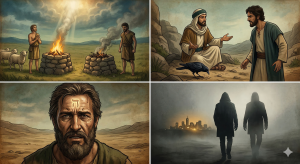
The story of the Exodus—the epic deliverance of the Israelites from bondage in Egypt and the dramatic collapse of the mighty Pharaoh—is one of the most powerful and enduring narratives in human history. It is a tale of faith against oppression, divine power versus human arrogance, and the triumph of the spirit over the sword.
While the core elements of the story are universally recognized, it is fascinating to observe how this seminal event is recounted, interpreted, and emphasized differently within the world’s major monotheistic religions: Judaism, Christianity, and Islam. Let’s embark on a journey through these diverse perspectives.
Judaism: The Founding Narrative
For the Jewish people, the Exodus is not just a historical event; it is the absolute foundational narrative of their faith and identity. It marks the moment a group of scattered, enslaved tribes was forged into a nation, covenanted with God.
The Source Text: The narrative is detailed primarily in the Book of Exodus (Shemot) in the Torah, the central text of Judaism.
The Narrative Focus:
- Bondage and Oppression: The story begins with a description of the Israelites’ harsh slavery in Egypt, their numbers feared by a new Pharaoh who did not know Joseph. The brutal order to kill all newborn Hebrew boys sets the stage for Moses’ miraculous survival.
- The Divine Call: Moses, after fleeing Egypt, encounters God in the burning bush on Mount Horeb. God reveals His name and commands Moses to return to Egypt to lead His people to freedom.
- The Ten Plagues: The core of the confrontation is the series of ten devastating plagues unleashed upon Egypt. These plagues are not merely acts of destruction; each one is seen as a direct challenge to the power and authority of the Egyptian gods.
- Passover (Pesach): The tenth plague, the death of the firstborn, leads to the institution of Passover. The Israelites mark their doors with the blood of a lamb so that the Angel of Death “passes over” their homes. This event is commemorated annually with the Passover Seder, a foundational ritual where the story is retold and relived.
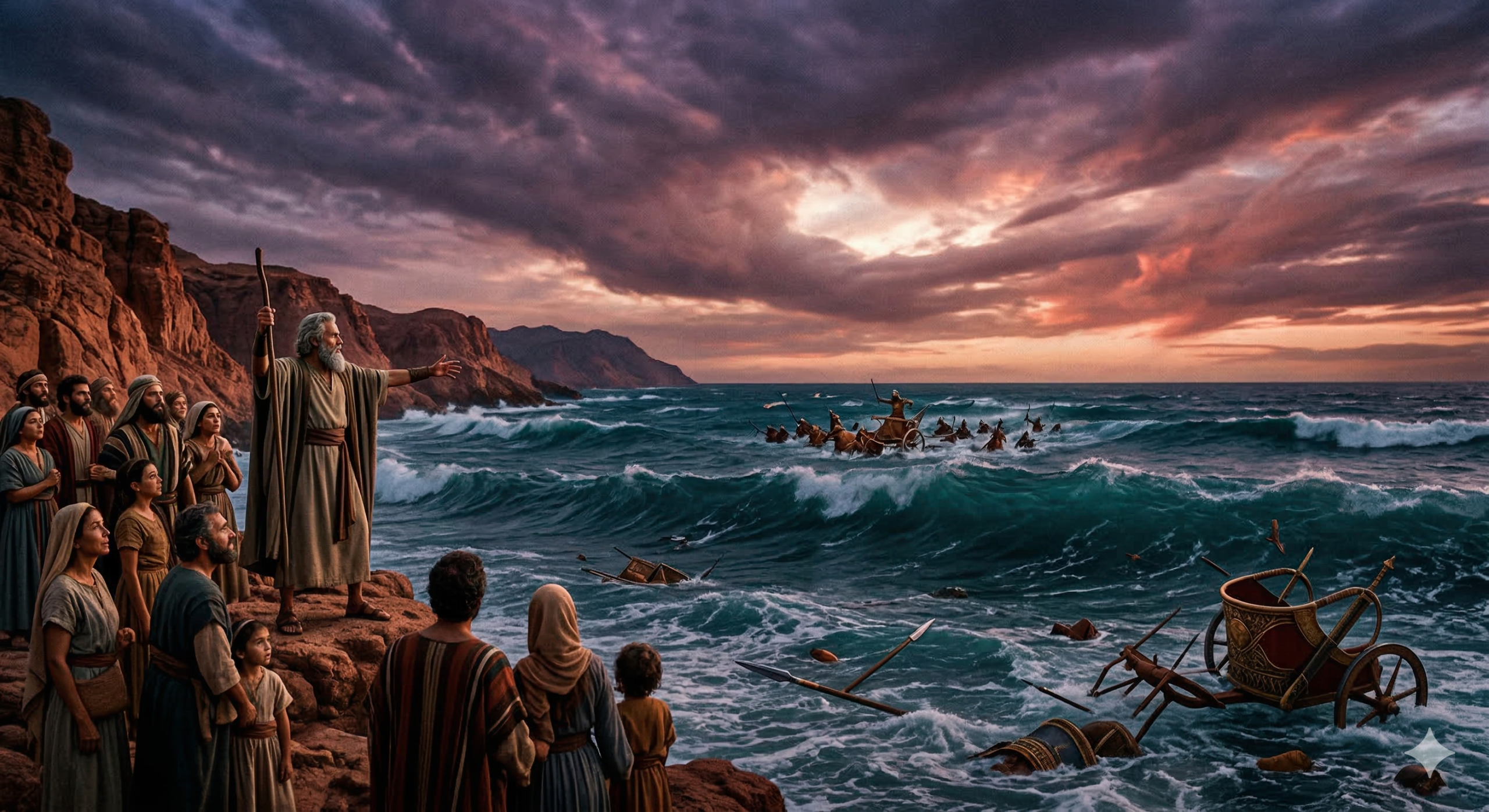
- The Parting of the Sea: The dramatic climax occurs at the Red Sea (or Sea of Reeds). With the Egyptian army in hot pursuit, God parts the waters, allowing the Israelites to cross on dry land. When the Egyptians attempt to follow, the waters crash down, drowning Pharaoh and his entire host.
- The Covenant at Sinai: The defeat of Pharaoh is immediately followed by the journey to Mount Sinai, where the Israelites receive the Ten Commandments and enter into a binding covenant with God. The purpose of their freedom is to serve God and follow His laws.
In Jewish Life: The Exodus is not a past event; it’s a present reality. It’s recounted in daily prayers, referenced in numerous commandments, and is the central theme of Passover, which is more than just a celebration; it’s a commandment to remember and personally feel the journey from slavery to freedom.
Christianity: Type, Shadow, and Salvation
In Christianity, the story of Moses and the defeat of Pharaoh is revered and viewed through a lens of fulfillment. Early Christians saw the events of the Old Testament as prefigurations, or “types,” of the life and work of Jesus Christ.
The Source Text: Christians read the story in the Old Testament, specifically the Book of Exodus, and also find its theological interpretation in the New Testament.
The Narrative Focus:
- A Prefiguration of Christ: Moses is seen as a profound “type” of Christ—a lawgiver, a mediator, and a redeemer. His deliverance of the Israelites from physical slavery is viewed as a prefiguration of Jesus’ deliverance of humanity from the spiritual slavery of sin and death.
- The Passover Lamb: The sacrifice of the Passover lamb is heavily interpreted as a prefiguration of Jesus, who is called the “Lamb of God” in the New Testament. His blood, like the lamb’s, is believed to offer protection and salvation.
- Baptism: The crossing of the Red Sea is often interpreted in Christian theology as a type of baptism. Just as the Israelites were “baptized” into a new life of freedom through the water, Christians enter a new life in Christ through the waters of baptism.
- The Ultimate Defeat: The total defeat of Pharaoh and his army is seen as a powerful symbol of the ultimate victory of God over the forces of evil, sin, and Satan.
In Christian Life: The Exodus narrative is a vital part of Christian scripture and liturgy, especially during Easter. It serves as a reminder of God’s faithfulness and a powerful allegory for the personal journey of salvation.
Islam: The Final Warning and the Ultimate Triumph
In Islam, Moses (Prophet Musa) is a revered figure, mentioned more often in the Quran than any other prophet. The story of his confrontation with Pharaoh is recounted in detail across multiple chapters (Surahs).
The Source Text: The narrative is central to the Quran, with key accounts in Surahs such as Al-A’raf, Ta-Ha, and Al-Qasas.
The Narrative Focus:
- Prophetic Mission: Musa is sent with clear “signs” (miracles) and authority to Pharaoh, who is portrayed as the epitome of human arrogance, declaring himself a god. Musa’s mission is to call Pharaoh to the worship of the one true God (Allah) and to demand the release of the Children of Israel.
- The Battle of Miracles: The Quran details the dramatic contest between Musa and Pharaoh’s magicians. When the magicians see Musa’s staff turn into a real serpent that swallows their illusions, they immediately recognize the divine origin of his power and submit to God, defying Pharaoh’s threats.
- Pharaoh’s Arrogance: Pharaoh’s refusal is rooted in stubborn pride and arrogance. He is warned repeatedly of the consequences of his actions.
- The Ten Plagues: Islam acknowledges the plagues, referring to them as “signs distinct.”
- The Parting of the Sea: The climax at the sea is described in powerful terms. The sea splits into “two masses like mountains,” creating a dry path. When the Israelites have crossed, Pharaoh and his army are completely overwhelmed by the waves.
- Pharaoh’s Final Moments: In a unique and significant detail in the Quran, as Pharaoh is drowning, he tries to repent and professes belief in the God of Musa. However, his repentance is rejected as it comes too late. His body is then preserved and cast ashore as a “sign” for future generations—a reminder of the fate of those who defy God.
In Islamic Life: The story of Musa and Pharaoh is a source of profound moral and spiritual guidance. It is a testament to the power of God, a warning against arrogance, and a story of comfort for believers, demonstrating that truth and righteousness will ultimately prevail over oppression. Muslims may observe a voluntary fast on the day of Ashura, which commemorates the day God saved Musa and the Children of Israel.
Conclusion: A Single Thread, Woven Differently
The story of the defeat of Pharaoh by Moses is a shared thread that runs through the tapestry of Judaism, Christianity, and Islam. While each tradition interprets the narrative through its own theological lens and highlights different aspects, the core message remains powerful and universal.
It is a story that speaks of:
- The absolute sovereignty and power of God.
- The human capacity for great arrogance and its inevitable downfall.
- The strength and resilience of faith against overwhelming odds.
- The promise of deliverance from oppression.
Whether as a foundational national epic, a prefiguration of spiritual salvation, or a final warning from God, the triumph of Moses over Pharaoh continues to inspire and resonate with billions of people around the world, a testament to its enduring power and significance.