Tired of ordinary table salt? If you’re looking to enhance your culinary experiences and potentially gain health benefits, look no further than bamboo salt. This unique type of salt, originating from Korea, has been gaining popularity worldwide due to its distinct production method, intriguing properties, and cultural significance.
In this comprehensive guide, we will delve into the fascinating world of bamboo salt, exploring what makes it so special and why it’s worth considering adding to your pantry.
1. What is Bamboo Salt?
Bamboo salt, known as Jukyeom (죽염) in Korean, is a special type of salt that undergoes a painstaking and lengthy production process rooted in traditional Korean medicinal practices. It’s not your average sea salt or table salt; rather, it’s a product of meticulous craftsmanship and ancient wisdom.
This salt is renowned for its specific flavor profile, high mineral content, and historical association with holistic wellness. Its origins are deeply intertwined with Korean culture, where it has been used for centuries not only as a seasoning but also for various therapeutic purposes.
2. The Tradition Behind Bamboo Salt
The roots of bamboo salt production can be traced back hundreds of years in Korea. Traditionally, it was prepared in Buddhist temples as a medicinal remedy for a wide range of ailments. The original process was highly guarded and considered a form of sacred art.
Later, in the 20th century, a Korean herbalist named Dr. Kim Il-Hoon further refined the processing technique and popularized bamboo salt beyond the walls of temples. His work brought this unique salt into mainstream Korean society, solidifying its place in Korean culture as a valuable health supplement and culinary ingredient.
To this day, authentic bamboo salt is still produced using time-honored methods in dedicated roasting facilities in Korea, preserving the traditional knowledge passed down through generations.
3. The Intricate Production Process: A Work of Art
What truly sets bamboo salt apart is its intensive and labor-intensive manufacturing process. It involves a sequence of specific steps, including stuffing, roasting, and melting, which can be repeated multiple times. The number of roasting cycles directly affects the quality, color, and properties of the final product.
Here is a breakdown of the typical production process for high-quality, 9-times roasted bamboo salt (紫竹鹽 or Violet Bamboo Salt), which is considered the finest grade:
-
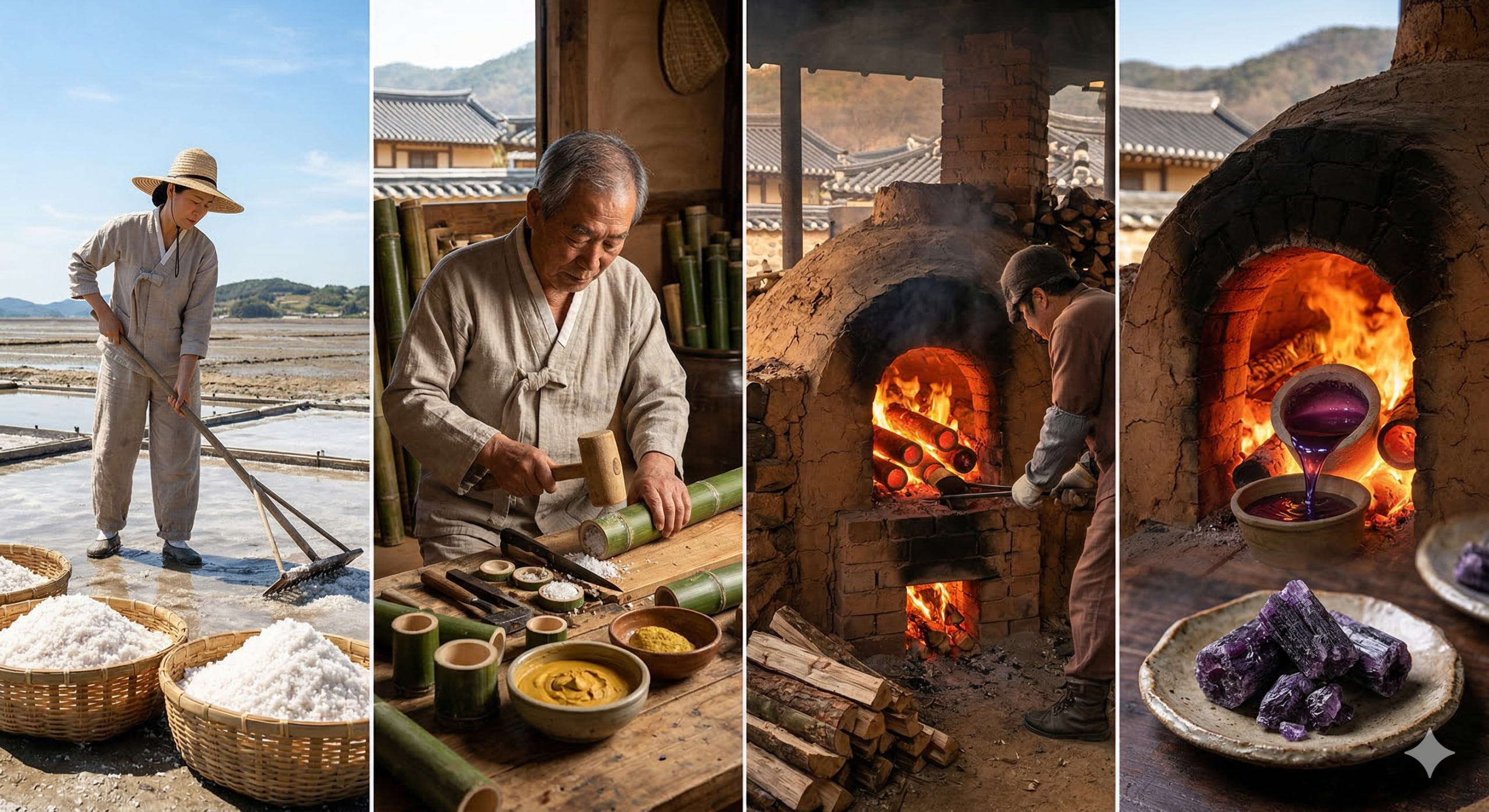
Step 1: Harvesting and Preparation:
-
Natural sea salt, often harvested from the mudflats of Korea’s west coast, is used as the base ingredient.
-
Mature bamboo stalks, typically 3-5 years old, are cut into sections, leaving one end intact with a knot to create a cylinder.
-
Clay, preferably yellow clay (Ochwuk) sourced from deep underground, is prepared for sealing the bamboo cylinders.
-
-
Step 2: Stuffing:
-
The sea salt is tightly packed inside the bamboo cylinders.
-
Both ends of the packed bamboo sections are then sealed securely with the yellow clay.
-
-
Step 3: Roasting (Multiple Cycles):
-
The salt-stuffed and clay-sealed bamboo cylinders are placed in a specialized furnace, often a traditional brick kiln fueled by pine wood.
-
The cylinders are roasted at high temperatures (around 800°C to 1,300°C) for several hours or even days. During this process:
-
The bamboo burns and releases its beneficial components (like bamboo oil and bamboo ash) into the salt.
-
The yellow clay absorbs toxins and impurities from the salt.
-
The sea salt begins to fuse and solidify.
-
-
-
Step 4: Cooling and Re-stuffed:
-
After the roasting cycle is complete, the furnace is allowed to cool.
-
The remaining solid chunks of roasted salt are collected. The burnt bamboo residue and clay are discarded.
-
The solid salt is crushed and stuffed into new bamboo cylinders, sealed with fresh yellow clay, and the entire roasting process (Step 2 and 3) is repeated. This cycle is repeated multiple times.
-
-
Step 5: The Final Roasting and Melting (for 9-times roasted salt):
-
For the 9th and final roasting cycle, the salt is subjected to even higher temperatures (reaching over 1,500°C to 2,000°C) using special high-temperature burners.
-
At this stage, the salt completely melts and transforms into a molten state, which then hardens into a large, dark, crystal-like block as it cools. This dramatic melting phase is believed to further purify the salt and maximize its mineral content.
-
-
Step 6: Crushing and Grinding:
-
The solid salt blocks are finally broken down, crushed, and ground into various forms, such as coarse crystals, fine powder, or small granules, ready for packaging and consumption.
-
The result of this elaborate process is a salt that is vastly different from its original form, boasting a unique color, aroma, and chemical composition.
4. Why is it Called “Bamboo Salt”?
The name “Bamboo Salt” is entirely literal. It’s called so because the key step that gives this salt its distinctive characteristics involves roasting the salt inside sections of bamboo stalks.
The bamboo is not merely a container; it plays a crucial role in the transformation of the salt. As the bamboo burns during roasting, it infuses the salt with minerals, active compounds, and a subtle bamboo-like aroma and flavor. This unique processing method is central to the identity and value of bamboo salt.
5. What Makes Bamboo Salt So Special? A Closer Look
So, why go through all that trouble? What makes bamboo salt truly stand out compared to ordinary salt? Here are the key factors:
a. High Mineral Content
The repeated roasting process in bamboo, along with the interaction with yellow clay, is believed to significantly increase the concentration of trace minerals in bamboo salt. While the exact mineral profile can vary depending on the production method and number of roasting cycles, bamboo salt typically contains higher levels of minerals such as:
-
Potassium: Essential for heart health, blood pressure regulation, and nerve function.
-
Magnesium: Involved in hundreds of biochemical reactions in the body, including muscle and nerve function, blood sugar control, and blood pressure regulation.
-
Calcium: Crucial for strong bones and teeth, muscle function, and nerve transmission.
-
Phosphorus: Needed for bone and tooth formation, kidney function, and energy storage.
-
Sulfur: A key component of several amino acids and other molecules, important for various bodily functions.
-
And more: Iron, zinc, manganese, and other trace elements.
b. Distinctive Taste
One of the most noticeable features of bamboo salt is its taste. It’s not just “salty”; it has a complex and nuanced flavor profile. The lower roasting cycle bamboo salts (like 1-time or 3-times roasted) have a slightly stronger bamboo-like aroma and a slightly smoky flavor.
As the roasting cycles increase (especially for the 9-times roasted violet salt), the flavor becomes smoother, milder, and more sophisticated. Many describe it as having a unique, almost umami-like quality, with a subtle hint of roasted bamboo or even a slight sweetness. This makes it a popular choice among gourmet cooks for seasoning dishes without overpowering them with an harsh saltiness.
c. Lower Sodium Content (Sometimes)
While bamboo salt is still primarily composed of sodium chloride, some studies and producer claims suggest that the repeated roasting and purification processes may lead to a slightly lower sodium concentration compared to standard table salt. However, it’s crucial to understand that it is not a low-sodium salt alternative in the traditional sense. It’s still salt and should be used in moderation, especially by individuals with sodium-related health concerns.
d. Alkaline Nature
Many types of bamboo salt, particularly the higher-roasted varieties, tend to have an alkaline pH, often ranging from 9 to 11. This stands in contrast to common table salt, which is usually acidic or neutral. Some proponents of alkaline diets believe that consuming alkaline foods can help balance the body’s pH levels, although scientific evidence for the overall health benefits of alkaline water or food is still debated.
e. Potential Health Benefits (Traditional and Emerging)
In traditional Korean medicine, bamboo salt has a long history of being used as a remedy for various conditions, including:
-
Digestive Issues: Aiding digestion, reducing indigestion, and alleviating bloating.
-
Dental Health: Combating bad breath, treating gum disease (gingivitis), and strengthening teeth.
-
Skin Problems: Applying externally to treat acne, eczema, and skin inflammation.
-
Anti-inflammatory Effects: Reducing inflammation throughout the body.
-
Detoxification: Helping to rid the body of toxins.
While many of these traditional uses have been practiced for centuries, scientific research is still ongoing to validate the extent of these health benefits. Some studies have suggested that bamboo salt may possess antioxidant properties, anti-inflammatory effects, and even potential antibacterial activity, particularly against bacteria responsible for dental problems.
Disclaimer: It’s important to consult with a healthcare professional before using bamboo salt or any other supplement for medicinal purposes, especially if you have existing health conditions or are taking medications.
6. Understanding the Different Roasting Cycles
Bamboo salt is available in various grades, primarily distinguished by the number of times it has been roasted. This number directly impacts its color, flavor, mineral content, and price.
-
1-Time or 3-Times Roasted Bamboo Salt: These are often used as everyday seasonings, in cooking, or for applications like making salted vegetables. They typically have a lighter color (grayish-white) and a more pronounced bamboo aroma.
-
9-Times Roasted Bamboo Salt (Violet/Purple Bamboo Salt): This is the highest and most sought-after grade. The intense melting process during the 9th roasting cycle gives it a dark violet or purple hue. It’s considered the purest form with the smoothest flavor and highest mineral concentration. It’s often consumed directly in small quantities as a health supplement, used in premium culinary applications, or for specific therapeutic uses.
Generally, the more times bamboo salt is roasted, the more expensive it is, reflecting the increased labor, time, and resources required for its production.
7. Uses of Bamboo Salt
The versatile nature of bamboo salt allows for various applications:
-
As a Seasoning: Use it just like you would ordinary salt to flavor soups, stews, salads, grilled meats, fish, and other dishes. Start with a smaller amount and adjust to taste, as the flavor can be more intense than table salt.
-
Direct Consumption: Some people consume small pinches of high-quality bamboo salt (especially 9-times roasted) directly, particularly after meals to aid digestion, or dissolve it in water.
-
Dental Care: Use it for gargling or brushing your teeth to combat bad breath and improve gum health. You can find bamboo salt toothpastes on the market.
-
Skin Care: Dissolve bamboo salt in water and use it as a toner, or mix it into a paste for spot treatment of skin blemishes. You can also find skincare products like facial washes or masks infused with bamboo salt.
-
Gifts: Due to its cultural significance and premium reputation, high-quality bamboo salt makes for a thoughtful and unique gift, especially during Korean holidays.
8. Is Bamboo Salt Worth It?
The decision of whether bamboo salt is worth its higher price tag depends on your priorities and interests.
Bamboo salt is particularly worth considering if:
-
You’re a culinary enthusiast: Its complex flavor profile can elevate the taste of your dishes.
-
You’re interested in traditional practices: It offers a tangible connection to Korean heritage and ancient wellness wisdom.
-
You’re exploring potentially more natural alternatives: While still salt, its less processed nature (compared to refined table salt) and higher mineral content appeal to those seeking whole-food options.
-
You’re curious about its potential health benefits: You may wish to experiment with it for digestive support, dental care, or other traditional uses.
However, bamboo salt might not be the best choice if:
-
Your primary concern is strictly sodium reduction: While potentially having slightly less sodium, it’s still salt and not a low-sodium substitute.
-
You’re on a very tight budget: It is significantly more expensive than standard table salt or common sea salt.
-
You prefer a simple, clean salty taste: Its unique flavor might not be to everyone’s preference.
9. In Conclusion
Bamboo salt is much more than just a seasoning; it’s a testament to ancient traditions, a product of painstaking craft, and a fascinating ingredient with unique properties. Its high mineral content, distinct flavor, cultural significance, and potential wellness associations make it truly special and a captivating subject for those interested in exploring the diverse world of culinary ingredients and holistic wellness practices.
Whether you’re curious about its potential health benefits or simply seeking to add a unique dimension to your cooking, bamboo salt offers an intriguing experience that bridges the gap between ancient tradition and modern lifestyle. By understanding its intricate production, its varied forms, and its multiple uses, you can make an informed decision on whether this exceptional salt deserves a place in your kitchen and in your life.
Explore the world of bamboo salt and discover for yourself why it’s considered a treasure of Korean tradition!